
Affiliate Disclosure
Some links on this page are affiliate links. As an Amazon Associate, we earn from qualifying purchases — at no extra cost to you. We do not buy, test, or physically handle the products we cover; our rankings come from aggregated owner reviews, ratings and expert consensus. Commissions never change our verdicts. How we rank & full disclosure.
Air Compressor
A motor-and-tank machine that stores pressurized air for continuous, high-volume work. It tops up tires easily, but its real purpose is running air tools and handling big shop jobs.
Best for: Home garages, DIYers running impact wrenches and air tools, and anyone inflating a lot of tires or large-volume items
Typically $100–$250 for a 6-gallon pancake unit; $300–$700+ for larger 20–60 gallon compressors
- Runs air tools — impact wrenches, ratchets, die grinders, blow guns, paint sprayers
- Continuous duty: a tank plus motor won't overheat on back-to-back tasks the way a small pump does
- Far faster on large volumes — truck tires, trailers, air mattresses, dust cleanup
- One tool covers dozens of jobs, from seating a tire bead to finish nailing
- A stored tank delivers a burst of high CFM that a 12V pump simply can't match
- Bulky and heavy — even a pancake unit is a two-hands, floor-space item
- Overkill and slower to deploy if all you ever do is top up tire pressure
- Needs 120V wall power (or a big battery/generator); useless on the roadside
- Loud — pancake compressors commonly run 78–85+ dB
Tire Inflator
A compact 12V or cordless pump built for one job: adding air to tires. Modern units have a digital gauge and auto-shutoff, so you set the target PSI and it stops itself.
Best for: Drivers who just want to keep tire pressure correct, carry something in the trunk for emergencies, or top up bikes and sports balls
Typically $30–$70 for a 12V corded inflator; $60–$120 for a good cordless (battery) model
- Truly portable — cordless models fit in a glovebox or trunk for roadside top-ups
- Cheap: a capable digital inflator costs a fraction of even a small compressor
- Set-and-forget auto-shutoff at your target PSI, so you never over-inflate
- No wall outlet needed — 12V plugs into the car; cordless runs off a battery pack
- Quiet enough to use in a driveway or apartment garage without complaints
- Can't run air tools — it has no tank and nowhere near the required CFM
- Small pumps heat up and can duty-cycle out on back-to-back large tires
- Slow to inflate a fully flat tire compared with a tank compressor
- Limited to tires and small inflatables — not a shop tool
How they score, side by side
Scores reflect aggregated owner reviews and expert consensus — not our own bench testing.
- Everyday tire top-ups79
- Roadside / trunk portability310
- Air-tool & shop versatility101
- Inflation speed from flat95
- Upfront affordability59
- Storage & convenience49
- Continuous / large-volume jobs93
Spec-by-spec comparison chart
| Factor | Air Compressor | Tire Inflator |
|---|---|---|
| Primary purpose | Powering air tools + high-volume inflation | Topping up tire pressure |
| Power source | 120V wall outlet (some cordless jobsite units) | 12V car socket or rechargeable battery |
| Typical max pressure | ~120–175 PSI | ~100–150 PSI (varies by model) |
| Air volume (CFM) | Meaningful CFM with a stored tank | Very low — no tank, tool use impossible |
| Top up a car tire (2–5 PSI) | Yes, very fast | Yes — its core job |
| Inflate a fully flat tire | Fast | Slow; small units may need a cool-down |
| Run an impact wrench / ratchet | Yes (check tool CFM rating) | No |
| Portability | Low — heavy, needs an outlet | High — trunk/glovebox friendly |
| Noise | Loud (~78–85+ dB pancake) | Moderate |
| Typical price | $100–$250 (pancake); $300–$700+ larger | $30–$120 |
| Storage footprint | Large — floor space required | Tiny — shoebox or smaller |
Our Top 3 Picks
The three highest-rated options in this category, if you'd rather skip straight to a proven pick.
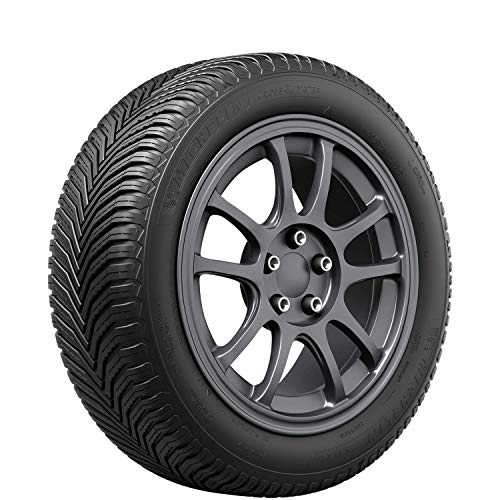
Best for the best all-round grip, wear and light-snow ability
- V-shaped tread with 3-peak-mountain-snowflake rating
- Class-leading wet and dry braking
- 60,000-mile treadwear warranty
- Real light-snow traction for an all-season
Why buy it: the tire owners and experts keep crowning as the best all-rounder — it brakes shorter in the wet than most rivals and genuinely handles snow, so it fits almost any driver in a four-season climate.

Best for the longest tread life on a sedan or minivan
- Up to 80,000-mile treadwear warranty
- Quiet, comfortable highway ride
- Strong wet grip and even wear
- Michelin’s longest-lasting all-season
Why buy it: the set-and-forget touring tire owners rate for outlasting everything else — fit it once and forget about tires for years.

Best for premium wet braking at a mid-range price
- Up to 80,000-mile treadwear warranty
- EcoPlus compound for shorter wet stops
- Fuel-efficient, low rolling resistance
- Wear indicators built into the tread
Why buy it: a hugely popular touring tire that delivers premium-brand wet performance and an 80k warranty for less than the flagships.
Prices are pulled from Amazon and were accurate as of Aug 22, 2026, 6:54 PM EDT. Product prices and availability are subject to change — the live price is shown on Amazon.
What actually separates them
People search "air compressor vs tire inflator" as if they're two versions of the same tool, but they sit at opposite ends of a spectrum. Both push compressed air, and both can put air in a tire — that overlap is the whole reason the question exists. The difference is scope, and it comes down to one thing you can't see in a photo: a tank and the airflow it enables.
A tire inflator is a small piston pump with a motor, a hose, a digital gauge and, on any decent model, an auto-shutoff. It has no air storage. It pumps directly, one steady stream, until it hits your target pressure and stops. That's perfect for topping up tires because tire top-ups need pressure (PSI), not a large sustained volume of air. A cordless unit lives in your trunk and handles a low reading in the parking lot without you ever finding an outlet.
An air compressor adds a tank and a much stronger motor. It compresses air ahead of time and banks it in the tank, so when you pull the trigger on a tool you get a burst of high airflow — measured in cubic feet per minute, or CFM — that a tankless pump can't produce. That stored volume is what spins an impact wrench, drives a nailer, or seats a stubborn tire bead. Inflating tires is something a compressor does easily on the side; running tools is something only a compressor can do at all.
The cleanest way mechanics frame it: a tire inflator is about pressure, a compressor is about volume. If your job only asks for pressure — a firmer tire — the small tool wins on cost, size and convenience. The instant your job asks for sustained volume, the small tool is the wrong category entirely.
When a tire inflator is all you need
For most drivers, honestly, an inflator covers everything they'll ever ask of "an air thing." Aggregated owner reviews consistently show the same use cases dominating:
- Monthly pressure checks. Tires lose roughly 1 PSI a month naturally, plus about 1 PSI for every 10°F drop in temperature. That's exactly the small 2–5 PSI top-up an inflator handles in under a minute per tire.
- Roadside and emergency use. A cordless inflator in the trunk reinflates a slow-leaking tire enough to reach a shop — the reason so many owners keep one alongside a plug kit.
- Bikes, sports balls, air mattresses, kids' floats. Most units ship with a Presta/Schrader adapter and needle tips for exactly this.
- Set-and-forget accuracy. The digital auto-shutoff is the feature owners praise most — you dial in 35 PSI and it stops itself, so you never over-inflate by ear.
The trade-off owners flag is duty cycle. Small pumps generate heat, and inexpensive models can get hot and slow down if you inflate four large SUV tires back to back from very low. For top-ups that's a non-issue; for regularly filling big tires from flat, it's a real limitation worth respecting. A cordless model with a genuine brand battery platform (so you're not buying a whole new tool for a spare battery) is the sweet spot the consensus points to.
When you actually need an air compressor
The compressor earns its space, weight and price the moment you want to do work rather than just add air. The dividing line is air tools. If any of the following is on your list, an inflator won't cut it and you're firmly in compressor territory:
- Running an impact wrench or air ratchet to break loose lug nuts and suspension bolts — the single most common reason a home mechanic buys a compressor.
- Seating a tire bead when mounting a new tire, which demands a sudden high-volume blast a tankless pump can't deliver.
- Blow guns, die grinders, cut-off tools, air sanders and paint/undercoating sprayers — all volume-hungry.
- Brad and finish nailers for trim, framing and general shop projects.
- High-volume inflation — big truck and trailer tires, or filling many tires quickly, where a tank compressor is simply faster and won't overheat.
Here the key number is CFM, not PSI. Each air tool lists a CFM requirement at 90 PSI, and your compressor has to meet or beat it. A typical 1/2-inch impact wrench wants around 4–5 CFM; a continuous-run tool like a die grinder can demand 5–8 CFM or more. The consensus mistake buyers make is fixating on tank gallons while ignoring CFM — a big tank with a weak pump just means you wait longer between bursts. For most home garages a 6-gallon pancake or a small "hot dog" tank runs an impact wrench and inflates tires happily; dedicated bodywork or continuous grinding pushes you toward a 20–60 gallon unit.
Speed, PSI and CFM — what the numbers mean
The spec sheet confusion is worth clearing up, because it's where buyers overspend or under-buy. PSI (pressure) is how hard the air pushes — it's what a tire needs, and both tools have plenty for tires (a car tire lives around 30–35 PSI, well under either tool's max). CFM (volume) is how much air flows per minute, and it's the number that actually separates these two categories.
A tire inflator's CFM is tiny and it has no tank, so it can never feed a tool no matter how high its PSI rating climbs. A compressor's stored tank lets it dump a high-CFM burst on demand. That's why a $50 inflator rated to 150 PSI still can't budge a lug nut, while a compressor rated to a lower 120 PSI spins an impact wrench all day — the impact wrench doesn't care about your maximum pressure, it cares about sustained volume.
On raw inflation speed, the compressor wins from flat because the tank gives it a running head start, but the gap is small for routine top-ups. If you're only ever adding a few PSI, the inflator's slower flow is invisible in real use — you're done in seconds either way. Spec sheets show the difference matters most when you're filling a large, very low tire, where a small pump's duty cycle and lower flow start to drag.
Real cost and value over time
The price gap is real but it tracks capability. A capable cordless tire inflator runs $60–$120; a corded 12V version can be had for $30–$70. A home-garage pancake compressor starts around $100–$150 and climbs to $300–$700+ for larger tanks — and then you're buying air tools and hoses on top, so the true entry cost of "getting into air tools" is several hundred dollars once you add an impact wrench, a coupler set and a decent hose.
That's the honest value math: if you will never run an air tool, paying compressor money to inflate tires is spending three to five times more for a machine that's harder to store, heavier to move, and louder to run — while doing the one job you actually need slightly faster and far less conveniently. Conversely, if you already know you want to pull suspension apart or seat your own tires, buying a cheap inflator first is money you'll spend twice, because you'll end up buying the compressor anyway. Owners who bought "up" to a compressor purely for tires frequently report it lives in a corner while a small inflator does the day-to-day work.
Plenty of well-equipped garages keep both — a compressor bolted in the corner for tools and beads, and a cheap cordless inflator in each car for the road. They're inexpensive enough that the pair is a common, sensible setup rather than a splurge.
Common myths and mistakes
"A tire inflator with high PSI can run air tools." No. Air tools need CFM (volume from a tank), not peak PSI. A tankless inflator rated to 150 PSI still can't feed an impact wrench — it has no stored volume to deliver.
"Bigger tank means more power." Only partly. Tank gallons buy you longer runtime between refills, but the pump's CFM output is what determines whether a tool works at all. A huge tank with a weak pump just makes you wait longer while it catches up.
"A compressor is always the better buy because it does more." Not for the majority of drivers. If you only top up tires, the compressor is slower to deploy, harder to store, louder, and needs an outlet you may not have where you park. "Does more" isn't value if you never use the extra.
"Cheap inflators are all the same." They aren't. The consensus rewards models with a real digital gauge, auto-shutoff, and a battery on a platform you already own. Bargain units that lack auto-shutoff over-inflate, read inaccurately, and overheat on the second or third tire.
Which should you buy
There's no universal winner here — the right pick is set by your workload, not by which tool is more capable on paper. Start from the job, not the tool.
Buy a tire inflator if your goal is keeping pressure correct, having an emergency top-up in the trunk, and occasionally filling bikes or sports gear. Choose a cordless model with a digital auto-shutoff gauge, ideally on a battery platform you already use, and you're set for a fraction of a compressor's cost and none of its bulk.
Buy an air compressor if you want to run air tools — an impact wrench for lug nuts and suspension work is the classic trigger — seat your own tire beads, or handle high-volume inflation. Size it by the CFM rating of your thirstiest tool at 90 PSI, not by tank gallons alone; a 6-gallon pancake suits most DIYers, larger tanks suit continuous grinding and bodywork.
Buy both if you have a working garage. It's the setup most experienced wrenchers land on: a compressor for shop work and a cheap cordless inflator riding in each car. Identify what you'll actually ask of the tool, and the "which one" question answers itself.
Recommended Products
Our top picks in this category, ranked on aggregated owner reviews.
Best for the best all-round grip, wear and light-snow ability
- V-shaped tread with 3-peak-mountain-snowflake rating
- Class-leading wet and dry braking
- 60,000-mile treadwear warranty
- Real light-snow traction for an all-season
Why buy it: the tire owners and experts keep crowning as the best all-rounder — it brakes shorter in the wet than most rivals and genuinely handles snow, so it fits almost any driver in a four-season climate.
Best for the longest tread life on a sedan or minivan
- Up to 80,000-mile treadwear warranty
- Quiet, comfortable highway ride
- Strong wet grip and even wear
- Michelin’s longest-lasting all-season
Why buy it: the set-and-forget touring tire owners rate for outlasting everything else — fit it once and forget about tires for years.
Best for premium wet braking at a mid-range price
- Up to 80,000-mile treadwear warranty
- EcoPlus compound for shorter wet stops
- Fuel-efficient, low rolling resistance
- Wear indicators built into the tread
Why buy it: a hugely popular touring tire that delivers premium-brand wet performance and an 80k warranty for less than the flagships.

Best for the most tire for the money
- Up to 75,000-mile treadwear warranty
- "Replace Tire" wear indicator in the tread
- Reliable wet braking and light-snow grip
- Backed by Continental’s parent company
Why buy it: the value pick owners rate again and again — a genuinely good touring tire with a 75k warranty at a bargain price.

Best for confidence in rain and winter slush
- 3-peak-mountain-snowflake certified
- Evolving Traction Grooves for wet grip
- 60,000-mile treadwear warranty
- Strong all-weather safety focus
Why buy it: the pick for drivers who see a lot of rain and the occasional storm — a true all-weather tire that carries the winter certification most all-seasons lack.

Best for sporty cars that still need year-round use
- Ultra-high-performance all-season design
- Excellent dry, wet and light-snow grip
- Tread wear indicators (DWS letters)
- A perennial enthusiast favorite
Why buy it: the enthusiast’s all-season — near-summer-tire dry grip with real wet and light-snow ability, so a sports sedan can run one set all year.
Prices are pulled from Amazon and were accurate as of Aug 22, 2026, 6:54 PM EDT. Product prices and availability are subject to change — the live price is shown on Amazon.