
Affiliate Disclosure
Some links on this page are affiliate links. As an Amazon Associate, we earn from qualifying purchases — at no extra cost to you. We do not buy, test, or physically handle the products we cover; our rankings come from aggregated owner reviews, ratings and expert consensus. Commissions never change our verdicts. How we rank & full disclosure.
Short version: wiper blades are the cheapest safety part on your car and the one almost everyone runs too long. A worn blade does not fail politely — it smears a film of water and road grime across your line of sight at the exact moment you need to see, usually in heavy rain at night with headlights coming the other way. This hub ranks blades and washer fluid by aggregated owner ratings, review volume and value, and covers the fitment details that trip up most first-time buyers.
Two honest warnings before you spend anything. First, wipers are a fitment part: length and connector type are model-specific, and the ASIN in any roundup is only a representative size. Confirm yours in wiper blade size by car first. Second, if your problem is streaks and haze rather than torn rubber, the glass may be the culprit, not the blade — that is glass and visibility territory.
The Four Blade Types, Honestly Compared
Conventional blades use an exposed metal frame with pivoting claws. They are cheap, they work, and they are what most cars shipped with a decade ago. Their weakness is winter: the frame packs with ice and the claws freeze, so the blade stops conforming to the glass. Beam blades replace the frame with a single curved tensioned spring inside a rubber shell — even pressure across the whole blade, nothing exposed to freeze, and a quieter, cleaner wipe at highway speed. Hybrid blades wrap a conventional frame in an aerodynamic shell to split the difference on price. Silicone blades swap the natural rubber squeegee for silicone, which resists UV and heat far better and typically lasts about twice as long.
For most American drivers on a modern curved windshield, a beam blade is the default recommendation — see the ranked field in best windshield wiper blades. If you want maximum service life, start with best silicone wiper blades instead.
Buy for Your Climate, Not the Packaging
Where you drive matters more than which brand you pick. In the snow belt, a conventional blade is the wrong tool from November onward — the frame ices up and the blade rides on frozen slush. A beam blade or a boot-style winter blade is the fix, and we rank both in best winter wiper blades. In the sunbelt, the failure mode is the opposite: UV bakes the squeegee until it hardens, cracks and chatters, which is why owners in hot states consistently report shorter blade life and why silicone earns its premium there.
Drivers who split the difference — real rain, mild winters, hot summers — are usually best served by a well-rated all-weather beam. That field is ranked in best all-season wiper blades. Pickup and SUV owners have an extra wrinkle: taller, flatter glass and longer arms that put more load on the blade, covered in best wiper blades for trucks.
Fitment: Length and Connector, Every Time
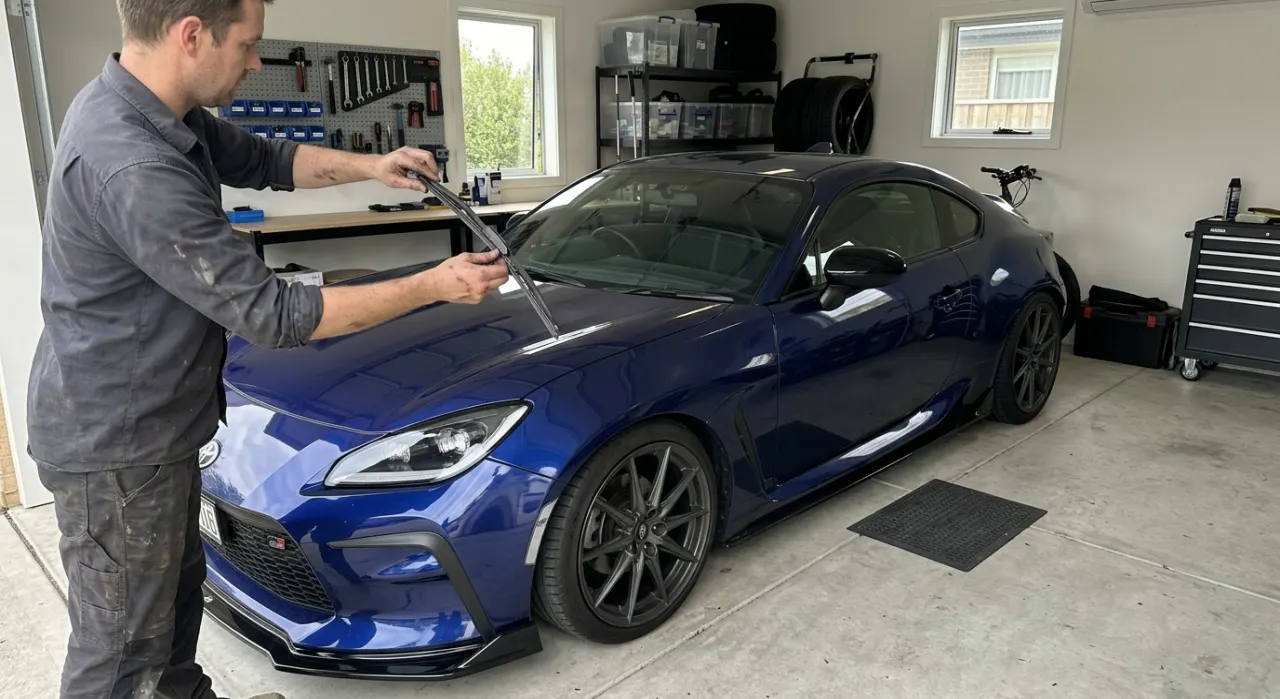
Every wiper roundup on this site carries the same caveat, because it matters more here than almost anywhere else on the car. A blade model is sold in lengths from roughly 11 to 28 inches, and your car almost certainly uses two different lengths front to front. Then there is the connector: the J-hook is by far the most common in the US market, but pinch tab, bayonet and side pin all exist, and a blade that will not click onto your arm is a wasted order. Look yours up in wiper blade size by car, read the connector explainer in J-hook wiper blades explained, and then do the swap with how to change wiper blades. It is a five-minute job with no tools.
Washer Fluid Is Not All the Same Blue Liquid
The jug matters more than people assume, and it changes with the season. Winter fluid is rated to a freezing point — commonly 0°F, or -20°F to -30°F for the extreme-temperature formulas — and its real job is melting light frost and keeping the reservoir, lines and nozzles from freezing solid. Summer fluid is a detergent formula built to dissolve bug protein and the greasy road film that makes low sun unbearable. Running summer fluid through a Minnesota January is how people crack a washer pump. We sort the whole category, including the concentrates worth mixing yourself, in best windshield washer fluid.
One boundary worth naming: washer fluid cleans, but it is not a rain repellent. If you want water to bead and fly off the glass at highway speed, that is a coating job — see best windshield water repellent over in the glass hub.
Making Blades Last Longer
Most blades die before their time for avoidable reasons. Wiping dust and bug residue off the squeegee with a damp cloth once a month genuinely extends life — the method is in how to clean wiper blades. Never run wipers on a dry or frozen windshield; scrape ice off first rather than letting the motor drag a blade across it. Park in shade where you can, and lift the arms off the glass before an ice storm so the rubber does not freeze to the windshield and tear when you pull it free. If your blades chatter or streak on a car with fresh rubber, the problem is usually a film on the glass — start with cleaning the windshield streak-free before buying anything.
Where to Start
Look up your sizes, then buy one good set of beam blades from the main ranking and a jug of the right seasonal fluid from the washer fluid ranking. That is the whole visibility kit for well under fifty dollars, and it is the highest safety-per-dollar spend on this entire site. On a tight budget, best budget wiper blades shows exactly where cheap is fine and where it is not. And if you are prepping the car for a hard winter, pair fresh blades with the cold-weather gear in roadside emergency — clear glass and a stocked trunk solve most winter driving problems between them.