
Affiliate Disclosure
Some links on this page are affiliate links. As an Amazon Associate, we earn from qualifying purchases — at no extra cost to you. We do not buy, test, or physically handle the products we cover; our rankings come from aggregated owner reviews, ratings and expert consensus. Commissions never change our verdicts. How we rank & full disclosure.
The short version: the beam blade won. Almost every new car sold in America now leaves the factory with frameless wipers, and the reason is not styling — it is that a single tensioned spring holds even pressure across the whole blade where a jointed frame cannot. Ranked across aggregated owner ratings and review volume, our #1 beam is the Bosch ICON. The value pick is the Bosch Clear Advantage. The longest-lasting is the Rain-X Silicone Endura. If you are still deciding whether to switch at all, read beam vs conventional wiper blades first.
Before you order. Wiper blades are a fitment part. Every blade here is sold in a range of lengths, most vehicles use two different lengths front to front, and arms use different connectors — J-hook, pinch tab, bayonet or side pin. The ASIN on each card is a representative size, not a universal fit. Confirm the correct length and connector for your exact year, make and model in wiper blade size by car first. Ordering the wrong size is a far more expensive mistake than buying the cheaper blade.
Top Picks at a Glance
Our #1 Pick: The Bosch ICON
The ICON is the blade the rest of this category gets compared against, and it earns that position on a single engineering idea executed well. The steel spring inside the shell is stamped with more curvature than any windshield it will be fitted to. When the arm presses it down, the spring flattens, and the force it takes to flatten it is distributed along the whole length of the wiping edge. That is the entire trick — and it is why the recurring line in ICON owner reviews is not "it wipes well" but "the streak in the middle went away".
Bosch layers two more things on top. The shell is shaped so airflow moving up the windshield pushes the blade down rather than lifting it, which is what keeps the wipe clean at 75 mph in rain. And the ClearMax 365 compound is formulated to resist the UV hardening that ends most blades. Bosch claims up to 40% longer life than other premium blades. We cannot verify a manufacturer figure, but the aggregate review data across tens of thousands of buyers is notably light on the "chattering after six months" complaints that dominate cheaper listings, which is at least consistent with the claim.
The honest limitations are two. Price is the obvious one — around $32 a blade means roughly $64 to do the front of a car, against about $20 for a pair of basic conventional blades that will also clear water on the day you fit them. And the ICON adapter situation, while broad, is not universal: a handful of arms need a specific version rather than the standard J-hook fitting. Check before you buy, not after.
If the price is the sticking point, the Bosch Clear Advantage at rank two is the same structural idea from the same manufacturer for a third less. You give up compound quality, not geometry.
Best Beam Wiper Blades 2026: The Ranked Field

Best for the benchmark beam blade in the US market
- DynamicFit tension spring arcs to the glass
- ClearMax 365 compound resists UV hardening
- Bosch claims up to 40% longer life than rivals
- Sold in lengths from 13" to 28"
Why buy it: the blade the whole category gets measured against — a single pre-curved spring loading the entire wiping edge, and the aggregate review data is unusually light on the six-month chatter complaints that plague cheaper blades.

Best for real beam geometry at a mid-range price
- Frameless beam with integrated spoiler
- Dual rubber compound wiping edge
- Tension spring follows windshield curve
- Available from 13" to 28"
Why buy it: the cheapest way into genuine beam behavior from a brand with a record — you trade some of the ICON longevity, but the day-one wipe and the wind-lift resistance are close enough that most owners never feel the gap.

Best for the longest service life of any beam here
- Silicone squeegee with graphite coating
- Rated from -20°F to +194°F
- Beam profile, no exposed frame
- Claimed 2x life of natural rubber
Why buy it: a beam blade whose edge is the part that usually dies first, solved — silicone resists the UV and heat cycling that hardens natural rubber, and owners in hot states routinely report it outlasting two sets of standard blades.
Best for interstate speeds and heavy airflow
- Rated for wind speeds over 135 mph
- Memory-curve steel beam distributes load
- HighGlide treated squeegee runs quieter
- Pre-installed adapter for common arms
Why buy it: the beam engineered explicitly around aerodynamic load rather than just looking sleek — owners who tow, drive tall vehicles or spend their lives on the interstate report it staying planted where lighter blades start to lift.

Best for European cars that shipped with a Valeo blade
- Built by a tier-one OE wiper supplier
- Frameless beam with integrated spoiler
- Natural rubber element with a treated edge
- Multi-connector adapter set included
Why buy it: the quiet insider pick — Valeo supplies wiper systems to a large share of European manufacturers, so on many cars the ULTIMATE is functionally the same blade the factory fitted, without the dealer part number.
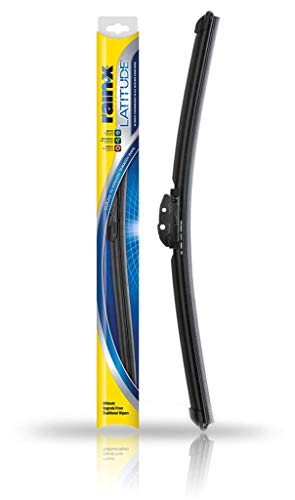
Best for the safest crowd-verified pick
- Contoured beam holds even pressure
- Advanced synthetic rubber compound
- Universal adapter pre-installed
- Aerodynamic profile reduces wind lift
Why buy it: the single most-bought beam blade in America, which makes its rating the most statistically meaningful number in this table — buyers who want to be sure rather than optimal keep landing here.
Prices are pulled from Amazon and were accurate as of Aug 22, 2026, 6:44 PM EDT. Product prices and availability are subject to change — the live price is shown on Amazon.
How a Beam Blade Actually Works
A conventional wiper is a suspension system. The arm presses on a central bridge, which splits the load into two, then four, then eight smaller yokes, each ending in a claw that grips the squeegee. It works, and for decades it was the only affordable way to make a rigid rubber strip follow a curved surface. Its weakness is that all those pivots are wear points and freeze points, and the pressure between the claws is always lower than the pressure under them.
A beam does the same job with no moving parts. The spring steel core is pre-stressed into a tighter arc than the glass, so flattening it against the windshield stores energy along its entire length. The rubber shell around it does three jobs at once: it holds the squeegee, it seals the spring from water and salt, and it acts as an airfoil. Fewer parts, no pivots to seize, no exposed metal to rust, and a continuous pressure profile.
The practical consequences show up in four places. Aging — a beam degrades by losing edge quality, evenly, while a frame blade degrades by losing contact in specific spots. Winter — there is nothing for slush to pack into, which is why beams dominate our winter blade ranking even though most are not marketed as winter products. Noise — no yokes means no clatter. Speed — the low profile and shaped shell turn lift into downforce.
Beam Blade Specs Decoded
Spring steel versus composite core. Premium beams use a stamped spring steel core, which holds its curve for years. Some budget beams use a composite or thinner-gauge core that relaxes over time and starts riding on its ends. You cannot see this from the listing photo, which is exactly why aggregate review data over 12-plus months matters.
Squeegee compound. Natural rubber wipes superbly and dies from UV. Halogen-treated or graphite-coated rubber adds slip so the blade glides rather than judders. Silicone costs more and lasts roughly twice as long, which is the case for the Rain-X Silicone Endura and the field in best silicone wiper blades.
Spoiler integration. On a true beam the shell is the spoiler. On a hybrid there is a separate molded spoiler over a conventional frame — a different design that splits the difference on price and is covered in the main wiper blade ranking.
Connector kit. Look for a pre-installed J-hook fitting plus adapters for pinch tab, bayonet and side pin. Blades that ship with the adapter already fitted are noticeably less frustrating to install. The connector types are explained in J-hook wiper blades explained.
Common Mistakes When Switching to Beam Blades
Assuming a beam fixes streaking. If the glass carries a film of road grime and old wax, a brand new beam will smear exactly like the old blade did. Clean the windshield properly first using how to clean a windshield streak-free, then judge the blade.
Buying two of the same length. Most cars use different driver and passenger lengths, often by three or four inches. Look yours up rather than assuming.
Fitting the adapter upside down. Nearly every "it fell off on the highway" review traces to a connector that clicked halfway. It should snap positively and resist a firm tug. The five-minute method is in how to change wiper blades.
Expecting a beam to push deep snow. It will not, and that is the one thing a heavy boot-style winter blade genuinely does better. If you live where snowfall is measured in feet, read best winter wiper blades before committing to a beam year-round.
How We Rank
We do not run beam blades on a test car, and we will not imply otherwise. We rank by aggregating owner ratings and review volume across the largest listings in the category, reading the specific complaints and endorsements that buyers repeat over time, and weighing that against published construction specs and mechanic and installer consensus. Four factors carry the weight. Pressure consistency — whether owners report full-length contact holding up over months rather than a band reappearing. Longevity — how many seasons before chatter and streaking return, which is where the gap between a premium and a budget beam actually shows. Install experience — adapter coverage and how consistently the connector clicks home first time. And value, judged as cost per month of clean wiping rather than sticker price. Beam blades sell in enormous volume, so aggregate ratings here carry more statistical weight than in almost any other category on this site. Prices were current at the time of writing.
The Verdict
If you are replacing conventional blades with beams for the first time, the Bosch ICON is the pick that most consistently delivers what the design promises, and the Bosch Clear Advantage gets you most of the way there for a third less. Hot, sunny climates should spend the extra on the Rain-X Silicone Endura and buy less often. Highway and towing miles point to the TRICO Force. European cars should check the Valeo ULTIMATE before paying dealer prices for what may be the identical part. Confirm your sizes in wiper blade size by car, read the design case in beam vs conventional wiper blades, and if the budget is tight, best budget wiper blades shows exactly where cheap is fine and where it is not.
Aero Profile and High-Speed Performance
The low, shaped shell of a beam blade is not just styling — it is an aero device. As air moves up the windshield at speed, an aero beam profile turns that flow into downforce that presses the blade tighter to the glass, exactly where a jointed frame blade starts to lift and skip. Owners who tow, drive tall vehicles or spend hours on the interstate consistently report that a well-designed aero beam holds its wipe clean where cheaper blades chatter and streak in heavy rain. Performance in a downpour at 75 mph is where the beam earns its price, clearing water evenly instead of leaving a lifted band across the driver's view.
Silicone Blades, Water Repellency and All-Weather Life
Some beam blades add a water-repellency angle. Rain-X silicone blades lay down a thin hydrophobic film as they wipe, so rain beads and rolls off the glass, improving visibility between sweeps. Silicone also survives UV and heat far better than natural rubber, which is why it holds up through more all-weather seasons before the edge hardens. Owners in hot, sunny states consistently report silicone blades outlasting two sets of standard rubber. The trade-off is a higher price and a break-in period where the repellency coating transfers to the glass. If you want the longest service life and better wet-weather visibility, the silicone route is worth it.
Beam Blade Brands: Bosch, Rain-X, Trico and PIAA
A few brands own the beam category. Bosch ICON is the premium benchmark most blades are measured against. Rain-X leads on value and on its water-repellent silicone line. Trico's Force beams are engineered around high-speed aerodynamic load. PIAA is the enthusiast silicone specialist, known for long-life blades favored on European and performance cars. Owners consistently report that any of these established wiper brands beats an anonymous bargain beam, because the spring-steel core and compound quality — the parts you cannot see in a listing photo — are where cheap blades cut corners. Buy a known brand in the right length and connector for your car.
Quick Comparison
Bosch ICON 26A Premium Beam Wiper Blade (26")
Best for the benchmark beam blade in the US market
Best Value
BOSCH 22CA Clear Advantage Beam Wiper Blade (22")
$15.79 · Check Price on Amazon
Best Premium
Rain-X 830126 Silicone Endura Wiper Blade (26")
$26.48 · Check Price on Amazon
Best High-Speed Beam
TRICO Force 25-260 Beam Wiper Blade (26")
Check Price on Amazon
Best OE-Quality Beam
Valeo 900267B Frameless ULTIMATE Wiper Blade (26")
$29.62 · Check Price on Amazon
Best Most-Reviewed Beam
Rain-X 5079279-1 Latitude Beam Wiper Blade (22")
$26.90 · Check Price on Amazon
Prices are pulled from Amazon and were accurate as of Aug 22, 2026, 6:44 PM EDT. Product prices and availability are subject to change — the live price is shown on Amazon.