
Affiliate Disclosure
Some links on this page are affiliate links. As an Amazon Associate, we earn from qualifying purchases — at no extra cost to you. We do not buy, test, or physically handle the products we cover; our rankings come from aggregated owner reviews, ratings and expert consensus. Commissions never change our verdicts. How we rank & full disclosure.
The short version: a cheap wiper blade fitted today wipes as cleanly as an expensive one. What you give up is time — plainer rubber hardens faster in the sun and an exposed frame ices up in winter. Treat budget blades as an annual consumable and they are a perfectly sensible buy. Ranked across aggregated owner ratings and review volume, our #1 pick is the Rain-X WeatherBeater at around $12. The absolute cheapest blade worth owning is the ANCO 31-Series. Stretch to $20 and the Bosch Clear Advantage gets you a genuine beam blade.
Before you order. Wiper blades are a fitment part. Every blade here is sold in a range of lengths, most vehicles use two different lengths front to front, and arms use different connectors — J-hook, pinch tab, bayonet or side pin. The ASIN on each card is a representative size, not a universal fit. Confirm the correct length and connector for your exact year, make and model in wiper blade size by car first. Ordering the wrong size is a far more expensive mistake than buying the cheaper blade.
Top Picks at a Glance
Our #1 Pick: Rain-X WeatherBeater
The WeatherBeater is the blade that makes the whole premium argument optional for a lot of drivers. It is an unapologetically conventional design — a galvanized steel frame with pivoting claws pressing a graphite-treated natural rubber squeegee onto the glass — and it sells for around $12. What earns it the top spot is the sheer weight of owner evidence behind it: tens of thousands of reviews across an enormous range of vehicles and climates, holding a strong average, with the recurring theme being that it simply wipes clean.
That review volume matters more than it might seem. A budget blade does not need to be clever; it needs to be consistent across thousands of different windshield curvatures and arm pressures. A product with 40,000 reviews and a 4.5 average has been proven across a far wider range of real cars than a newcomer with a few hundred, and that breadth is exactly what you want when you are buying on price.
The honest limitations are structural, and they are the same ones every conventional blade has. The exposed frame packs with wet snow and freezes, so this is not a winter blade in the snow belt — for that, see best winter wiper blades. The tall profile catches air, so it can lift and skip above about 70 mph. And plain natural rubber hardens under UV faster than a premium synthetic compound, which is why you should plan on replacing it annually rather than hoping for three years.
None of that is a criticism at this price. It is the deal: you spend a third as much and you replace it more often. For a commuter in a mild climate, that deal is straightforwardly good.
Best Budget Wiper Blades 2026: The Ranked Field

Best for the cheap blade most people should buy
- Galvanized steel frame resists rust
- Graphite-treated natural rubber squeegee
- Universal adapter fits most J-hook arms
- Meets or exceeds OEM wipe quality
Why buy it: the budget blade with the largest pile of satisfied owner reviews in the category — a genuinely clean wipe for around a third of premium money, which is all most drivers need from an annual part.

Best for the lowest price that still wipes clean
- KwikConnect installation system
- DuraKlear rubber wiping element
- Vented bridge reduces wind lift
- One of the longest-running blade lines in the US
Why buy it: the parts-counter standard that has been on American cars for decades — nothing clever, nothing premium, and owners consistently report it doing the job for the price of a sandwich.

Best for a real beam blade at the top of the budget
- Patented beam design, no exposed frame
- Graphite-treated natural rubber edge
- Click-On adapter fits multiple arm types
- Low wind lift at highway speed
Why buy it: the point where budget stops meaning compromise — a proper frameless beam with the structural advantages that matter in winter, for meaningfully less than the flagship blades.

Best for covered-frame protection on a budget
- Hybrid frame inside a protective shell
- Smart-Flex design follows glass curvature
- EZ-Lok connector for tool-free fitment
- Independent suspension across the blade
Why buy it: the cheapest way to get a covered frame — the joints stay out of the slush, which is the single biggest weakness of a bare budget blade once the weather turns.
Best for doing the whole windshield for one price
- Matched driver and passenger pair
- Frameless beam construction
- Extra rubber refills included
- Sold in dozens of length combinations
Why buy it: the value play for buying both blades at once — a matched pair of beam blades plus spare refills for roughly what one premium blade costs.
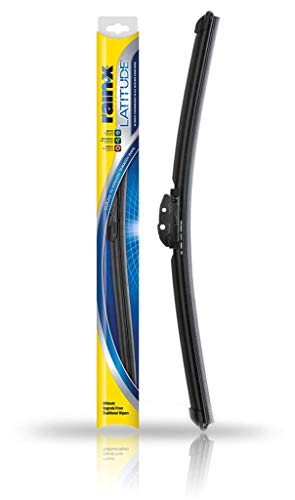
Best for stepping up without leaving the budget
- Contoured beam, even full-length pressure
- Advanced synthetic rubber compound
- Universal adapter pre-installed
- Aerodynamic profile reduces lift
Why buy it: the most-reviewed beam blade in America at a price that still counts as budget — the obvious upgrade when a conventional blade keeps skipping bands on curved glass.
Prices are pulled from Amazon and were accurate as of Aug 22, 2026, 6:44 PM EDT. Product prices and availability are subject to change — the live price is shown on Amazon.
Where the Money Actually Matters
Here is the honest breakdown of what an extra $20 a blade buys, so you can decide whether you need it.
Winter structure — worth paying for. This is the biggest real difference. A bare frame with pivoting claws will pack with slush and freeze rigid, and once it does, the blade rides on two points and leaves wide unwiped bands. A beam or covered hybrid removes that failure entirely. If you get real snow, this alone justifies the upgrade.
Squeegee compound — worth paying for in the sun. UV is what kills blades, not rain. In a hot, sunny state the premium compound genuinely stretches replacement intervals, and silicone stretches them further still — see best silicone wiper blades.
Highway aerodynamics — worth paying for if you commute fast. A tall frame blade can lift at speed, especially in crosswinds or behind a truck. A low beam blade stays planted.
Brand and packaging — not worth paying for. Between two well-reviewed blades of the same type, the difference is marginal. Buy the cheaper one.
Extreme premium tiers — usually not worth it on a budget car. The gap between a $20 beam and a $32 flagship beam is real but small. The gap between a $9 frame blade and a $20 beam is much larger. If you are going to spend once, spend it there.
How to Choose Budget Blades
Decide first whether you are buying cheap or buying value. If the goal is the lowest possible outlay and you drive a mild-climate commute, the ANCO 31-Series at around $9 is honest, proven and fine — replace it every spring. If the goal is the best blade you can get for under $20, buy the Bosch Clear Advantage or the Rain-X Latitude: both are real beam blades, both remove the winter icing problem, and both behave better at highway speed.
Two situational picks worth knowing. If you need both blades and your car takes an uneven pair, a matched set like the AERO Voyager is usually cheaper than two singles. And if you want a covered frame without beam pricing, the Michelin 5022 Stealth hybrid sits neatly in between.
Whatever you buy, do not economize on washer fluid — a blade dragged across dry, gritty glass tears fast, and an empty reservoir is the most expensive $6 you never spent. Seasonal picks are in best windshield washer fluid.
Common Mistakes
Buying two blades of the same length. Most cars use two different lengths. This is the number one budget-blade ordering error.
Running a cheap blade until it scratches the glass. Once the rubber tears through and the metal frame contacts the windshield, you are cutting permanent arcs into laminated glass. A $9 blade can cause a four-figure problem.
Assuming a new blade fixes streaking. If the glass carries road film or wax overspray, fresh blades smear too. Clean it properly first — the streak-free method is here.
Chasing unbranded no-name blades. Below about $8 a blade, the review data gets thin and inconsistent fast. The savings are a couple of dollars; the risk is a blade that chatters from day one.
How We Rank
We do not test blades on a car, and we will not pretend otherwise. We rank by aggregating owner ratings and review volume, reading the complaints and endorsements buyers repeat over time, and comparing published construction specifications alongside mechanic and parts-counter consensus. For budget blades we weight two signals unusually heavily. Review breadth — a cheap blade has to work across thousands of different windshield curves and arm pressures, and a very large review base with a strong average is the only practical evidence that it does. And time-to-complaint — for a blade whose entire proposition is price, the question is not whether it wipes but how many months before owners start reporting streaks. We also weigh wipe quality, winter behavior, and cost per year of realistic service rather than sticker price alone. Prices were current at the time of writing.
The Verdict
If you want the safest cheap buy, the Rain-X WeatherBeater has the deepest evidence base in the budget field and costs about $12. If you want the lowest price that still wipes clean, the ANCO 31-Series is the honest answer. And if you can stretch to $20, the Bosch Clear Advantage is where budget stops meaning compromise — a real beam blade that will not ice up in January. Confirm your two lengths and your connector in wiper blade size by car, compare against the full field in best windshield wiper blades, and see the rest of the visibility kit in the wiper blades & washer fluid hub.
Budget Blade Brands to Know: Rain-X, ANCO and DuraLast
A handful of names own the cheap end, and buying a known one is the easiest way to avoid a blade that chatters from day one. Rain-X is the review-volume leader, spanning the conventional WeatherBeater up to the Latitude beam. ANCO is the decades-old parts-counter standard — nothing clever, just proven. Bosch supplies the budget-beam step-up. And worth knowing at the store: DuraLast, the house brand many owners pick up when buying wipers in person, performs fine as an annual consumable. The through-line is that these brands all carry large, long-standing review bases, which on a budget blade is the single most useful signal that it wipes clean across a wide range of cars and climates.
Do Cheap Wiper Blades Repel Water?
Not on their own. The hydrophobic beading that makes rain roll off the glass comes from a water-repellent coating, and most budget blades use plain graphite-treated rubber that does not apply one. Rain-X blades pair naturally with the brand's separate glass treatment, and premium silicone blades transfer their own repellent film as they wipe — a genuine feature you are not paying for at $9 to $12. The practical takeaway: a cheap blade clears water perfectly well by physically wiping it, it just will not make the windshield bead between passes. If you love that effect, add a bottle of glass sealant rather than assuming a budget blade provides it.
How Budget Blades Stack Up to the Bosch ICON
The blade budget shoppers most often measure themselves against is the Bosch ICON — the flagship beam wiper that tops most premium charts. It is worth being clear-eyed about what the ICON buys you: a tensioned beam that will barely lift at highway speed, a long-life exclusive rubber compound, and a dual-rubber edge that many owners report staying quiet and streak-free for a couple of years rather than one season. On the day you fit them, a $12 WeatherBeater and a $32 Bosch ICON wipe about the same; the difference shows up months later and in winter. Other step-up beams like the Trico Avenger sit between the two on price. The honest call: if you replace blades annually and could not tell you the last time you checked them, a budget blade is fine — just confirm your two lengths against a size chart first. If you want to fit once and forget for years, the ICON is where the money goes.
Quick Comparison
Rain-X RX30222 WeatherBeater Wiper Blade (22")
Best for the cheap blade most people should buy
Best Value
ANCO 31-22 31-Series Wiper Blade (22")
Check Price on Amazon
Best Premium Pick
BOSCH 22CA Clear Advantage Beam Wiper Blade (22")
$15.79 · Check Price on Amazon
Best Hybrid Under $20
Michelin 5022 Stealth Hybrid Wiper Blade (22")
Check Price on Amazon
Best Two-Blade Set
AERO Voyager Premium Beam Wiper Blades (26" + 16" Set)
Check Price on Amazon
Best Beam Upgrade
Rain-X 5079279-1 Latitude Beam Wiper Blade (22")
$26.90 · Check Price on Amazon
Prices are pulled from Amazon and were accurate as of Aug 22, 2026, 6:44 PM EDT. Product prices and availability are subject to change — the live price is shown on Amazon.