

Affiliate Disclosure
Some links on this page are affiliate links. As an Amazon Associate, we earn from qualifying purchases — at no extra cost to you. We do not buy, test, or physically handle the products we cover; our rankings come from aggregated owner reviews, ratings and expert consensus. Commissions never change our verdicts. How we rank & full disclosure.
The short version: washer fluid is the cheapest thing in your garage and the one most likely to be the wrong fluid for the month you are in. Ranked across aggregated owner ratings and review volume, our #1 pick is Rain-X All Season 0°F 2-in-1 De-Icer & Bug Remover — enough freeze protection for a normal winter, enough detergent for bug season, and cheap enough to keep a spare jug in the trunk. Live somewhere genuinely cold? Step up to the Rain-X -30°F Extreme Temperature formula. Want the cleanest possible glass? Mix your own from nextzett Kristall Klar concentrate.
Fluid is only half the job. If your wipers are smearing rather than clearing, new blades will do more for you than any jug — and remember that wiper blades are a fitment part: every model is sold in multiple lengths and several connector types (J-hook, pinch tab, bayonet, side pin), and most cars use two different lengths. Confirm yours in wiper blade size by car before ordering, then see the ranked field in best windshield wiper blades.
Top Picks at a Glance
Our #1 Pick: Rain-X All Season 0°F 2-in-1
The top spot goes to the fluid that solves the most common washer-fluid problem, which is not cleaning power — it is having the wrong jug in the car when the weather turns. Most drivers buy one gallon, pour it in, and forget about it until something goes wrong. A summer bug wash with no freeze protection in that reservoir on a 20°F morning is how people crack washer pumps. A pure winter de-icer in July is a fluid with no real detergent package facing a windshield covered in insect protein.
Rain-X All Season splits the difference with a 0°F freeze rating and a bug-and-grime detergent package in the same jug. Zero Fahrenheit is not extreme protection, and we are not going to pretend it is — if you live where January mornings are routinely below zero, buy the -30°F formula instead. But 0°F covers the overwhelming majority of US winters, and the aggregated owner reviews reflect that: the recurring praise is that it clears frost on cold mornings and handles a bug-covered windshield in August without a mid-year swap.
The second thing owners repeat is the light water-repellent residue it leaves behind. It is not a substitute for a proper glass coating — for that, see best windshield water repellent — but it does make rain bead noticeably better than plain blue fluid, and the effect refreshes every time you use the washers.
The honest downsides: the 0°F rating is genuinely marginal in the northern tier, and like every de-icer formula it has a chemical smell that some owners find strong through the cabin vents on the first few sprays.
Best Windshield Washer Fluid 2026: The Ranked Field
Best for one jug that handles frost and bugs
- Freeze protection down to 0°F
- Melts light frost and thin ice
- Bug and road-film detergent package
- Leaves a light water-beading residue
Why buy it: the jug that covers the most American driving conditions without a seasonal swap — enough freeze protection for a normal winter, enough detergent for bug season, at gas-station money.

Best for summer bug splatter and road grime
- Summer formula, no freeze protection
- Dissolves insect protein and road film
- Water-beading additive for clearer glass
- Widely stocked, consistently cheap
Why buy it: the cheapest fluid worth putting in the reservoir between spring and fall — owners consistently report it clearing bug splatter that plain blue fluid just smears around.

Best for streak-free, glare-free glass at any price
- 1:200 concentrate makes 13+ gallons
- Contains water softeners — no mineral haze
- Smear-free and glare-free formulation
- NO freeze protection — summer use only
Why buy it: the enthusiast choice detailers keep recommending — one small bottle makes over a dozen gallons, and the water softeners stop hard tap water leaving the mineral film that causes night-time glare.

Best for sub-zero mornings and salted highways
- Freeze protection to -30°F
- Melts frost and light ice on contact
- Cuts road salt film and winter grime
- Protects reservoir, lines and nozzles
Why buy it: the jug to run when the forecast has a minus sign in it — the extreme freeze rating is what keeps the reservoir, pump and nozzle lines from turning into an expensive repair.

Best for year-round use in a mixed climate
- Cleans, de-ices and repels in one fluid
- Freeze protection for typical winters
- Bug and grime detergent package
- Water-beading additive for wet-weather visibility
Why buy it: the sensible single jug for drivers who do not want to keep two fluids in the garage — competent at all three jobs rather than excellent at any one of them.
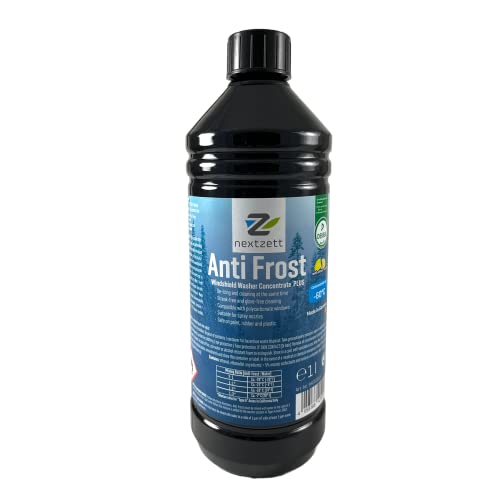
Best for mixing your own winter fluid to strength
- Concentrate — dilute to the strength you need
- Strong freeze protection when mixed neat
- Anti-frost formula for cold-climate driving
- Compact bottle instead of hauling jugs
Why buy it: the pick for anyone who wants to set their own freeze point instead of trusting a pre-mixed jug — dilute it lightly for a mild winter, run it strong when the forecast turns brutal.
Prices are pulled from Amazon and were accurate as of Aug 22, 2026, 6:44 PM EDT. Product prices and availability are subject to change — the live price is shown on Amazon.
De-Icing vs Bug Season: The Distinction That Matters
Washer fluid is not one product. It is three, and running the wrong one is the difference between clear glass and an expensive repair.
Winter de-icer fluid is built around a freeze point — commonly 0°F for standard formulas and -20°F to -30°F for extreme-temperature versions. Its primary job is not really melting ice; it is staying liquid so the reservoir, pump, lines and nozzles do not freeze solid. Its secondary job is cutting the salt-and-grime film that coats a windshield on a treated highway, which is the single worst visibility condition most American drivers face. Winter fluids carry a thinner detergent package because alcohol content is doing the heavy lifting.
Summer bug-season fluid is the opposite: little or no freeze protection, a much stronger surfactant and detergent package aimed at insect protein and the greasy road film that turns low sun into a wall of glare. Anyone who has driven the interstate at dusk in July knows that plain fluid just smears bugs into a translucent film. A real bug wash dissolves them.
All-season 2-in-1 and 3-in-1 fluids attempt both at a moderate freeze rating. They are a compromise by design — competent at everything, exceptional at nothing — and for most drivers in most states that compromise is exactly right.
The rule of thumb: if you get real winters, run a de-icer from November through March and a bug wash from May through September. If you do not, one all-season jug is fine.
How to Choose Washer Fluid
Start with your coldest realistic morning, not your average one. Pick a freeze rating with headroom below it — a fluid rated to 0°F in a climate that sees -10°F is not protection, it is a slow-motion repair bill. Next, consider your glass problem. If it is bugs and road film, prioritize the detergent package. If it is salt haze and frost, prioritize the freeze rating. If it is streaking and night glare, the culprit is often hard tap water minerals in cheap fluid, and a concentrate with water softeners — like the nextzett Kristall Klar — solves it in a way another jug of blue fluid will not.
Then consider format. Pre-mixed gallons are cheap, heavy and take garage space. Concentrates cost more per bottle but far less per gallon, store in a fraction of the space, and let you set your own dilution — genuinely useful if your winter swings from mild to severe. And skip anything marketed purely on smell or color; neither has anything to do with how the fluid performs.
Common Mistakes
Topping up winter fluid over summer fluid. Dilution destroys the freeze rating. Run the reservoir low before the seasonal switch.
Using washer fluid as an ice scraper. De-icer melts frost and thin ice. It will not clear a quarter inch of overnight ice, and blasting a frozen windshield with cold fluid can stress already-cold glass. Scrape first.
Running the reservoir dry. That is how blades get dragged across dry, gritty glass — the fastest way to tear a squeegee edge. Full reservoir, always.
Assuming fluid fixes a smearing windshield. If the glass has a greasy film or the blades are shot, no fluid saves you. Clean the glass properly first (streak-free method here), then check the blades.
How We Rank
We do not run freeze-point tests in a lab, and we are not going to imply we do. We rank washer fluid by aggregating owner ratings and review volume across each product, reading the complaints buyers repeat over months and seasons, and comparing published freeze ratings and formulation claims across the field. Washer fluid is a category where aggregate review data is unusually honest: smearing, residue, nozzle clogging, chemical odor through the vents, and fluid that gelled above its stated rating all surface loudly and fast in review text, because the failure is immediate and obvious. We weight four things — cleaning power against bugs and road film, freeze-rating honesty, residue and glare on the glass after it dries, and cost per usable gallon. Prices were current at the time of writing.
The Verdict
For most drivers, one jug of Rain-X All Season 0°F 2-in-1 covers the year and costs less than a sandwich. If your winters are severe, keep the Rain-X -30°F Extreme Temperature formula in the garage from November onward. If your summers are a windshield full of bugs, the Prestone Bug Wash is the cheap, correct answer. And if you care about genuinely glare-free glass at night, mix your own from nextzett Kristall Klar — the water softeners alone justify it in hard-water areas. Pair whichever you choose with fresh blades from the main wiper blade ranking, and see the rest of the visibility kit in the wiper blades & washer fluid hub and the glass & visibility hub.
Quick Comparison
Rain-X All Season 0°F 2-in-1 De-Icer & Bug Remover (1 Gallon)
Best for one jug that handles frost and bugs
Best Value
Prestone AS257 Bug Wash Windshield Washer Fluid (1 Gallon)
Check Price on Amazon
Best Premium
nextzett Kristall Klar Washer Fluid Concentrate (8.5 oz)
$14.97 · Check Price on Amazon
Best for Deep Winter
Rain-X -30°F Extreme Temperature De-Icer Washer Fluid (1 Gallon)
Check Price on Amazon
Best All-Season Do-Everything
Prestone AS658P All Season 3-in-1 Washer Fluid (1 Gallon)
$14.25 · Check Price on Amazon
Best Winter Concentrate
nextzett 94252015 Anti-Frost Winter Washer Fluid Concentrate (33.8 oz)
Check Price on Amazon
Prices are pulled from Amazon and were accurate as of Aug 22, 2026, 6:44 PM EDT. Product prices and availability are subject to change — the live price is shown on Amazon.