
Affiliate Disclosure
Some links on this page are affiliate links. As an Amazon Associate, we earn from qualifying purchases — at no extra cost to you. We do not buy, test, or physically handle the products we cover; our rankings come from aggregated owner reviews, ratings and expert consensus. Commissions never change our verdicts. How we rank & full disclosure.
Short version: If Rain-X is the appetizer, this is the full menu. Windshield water repellents fall into two camps: cheap wipe-on treatments you reapply monthly, and longer-lasting silica or ceramic coatings that hold for months. The best pick depends entirely on how you drive. Below I break down what separates them, what to look for, and how to choose the right one for your climate and patience level.
Our Top Windshield Repellent Picks
How water repellents actually work
Every windshield repellent does the same core job: it makes the glass hydrophobic so water can't spread into a flat, light-scattering sheet. Instead the water pulls into beads. At speed, airflow rips those beads off the glass before they even reach your wipers. The result is the almost eerie experience of driving through rain with the wipers barely moving.
Where products differ is the chemistry and how long that effect survives. Simple polymer wipe-ons bond loosely and wear off in weeks. Silica and ceramic coatings form a harder, more durable bond that shrugs off washes, wiper passes, and UV for months. More durability almost always means more prep and a fussier application, so the "best" product is a personal trade-off, not a single answer.
The two camps, honestly compared
Let me save you the marketing noise. Here is what actually separates the categories:
- Wipe-on treatments (Rain-X and similar). Cheap, available at any parts store, apply in ten minutes. They last four to six weeks. Perfect if you want an instant fix, treat your glass often, or just want to try the effect before committing.
- Silica spray coatings. The middle ground. More durable than a basic wipe-on, often three to four months, and still reasonably easy to apply. A great sweet spot for most drivers who don't want a monthly chore but aren't ready for full ceramic prep.
- Ceramic or SiO2 glass coatings. The durability king, six months to a year. These need genuinely clean, decontaminated glass and careful, panel-by-panel application, and they cost more. If you drive a lot in bad weather and hate reapplying, this is the one.
There is no shame in the cheap option. Plenty of people rotate a wipe-on every month and are perfectly happy. But if you have ever cursed yourself for having to redo it right before a road trip, the extra durability of a coating is worth the up-front effort.
What to look for when you buy
Cut through the label hype and judge repellents on four things:
- Durability claim, then halve it. Real-world lifespan on a windshield is always shorter than the box says because wipers physically abrade the coating. A product claiming a year will realistically give you six to eight months of strong performance.
- Wiper compatibility. The best formulas are engineered to play nicely with wiper rubber and minimize chatter. Reviews are your friend here squeak complaints are a red flag.
- Ease of application. Be honest about your patience. A coating you apply badly will streak and perform worse than a simple wipe-on applied well. Match the product to the effort you will actually put in.
- Tint and trim safety. Confirm it is safe on exterior automotive glass and won't stain adjacent paint or rubber if it overspray-lands there.
Match it to your climate and driving
Where and how you drive should drive the decision. If you live somewhere with frequent, heavy rain and do a lot of highway miles, invest in a durable silica or ceramic coating you will feel the benefit constantly and hate reapplying in wet weather. If you get occasional storms and mostly city drive, a cheap wipe-on before rainy season is plenty.
Cold climates add a wrinkle: a good repellent also helps ice and snow release more easily from the glass, which is a genuine winter perk. Hot, sunny climates chew through coatings faster because UV degrades them, so lean toward a more durable, UV-resistant formula if you park outside in the sun.
Getting it to actually last
The single biggest factor in how long any repellent lasts is the glass you put it on. A coating over a dirty, filmy, or spotted windshield bonds poorly and wears off fast. Always start with a proper clean our guide to a streak-free windshield is the foundation and if you have mineral deposits etched in, deal with them first using our water spot removal walkthrough. Clean, decontaminated glass can double the lifespan of whatever you apply.
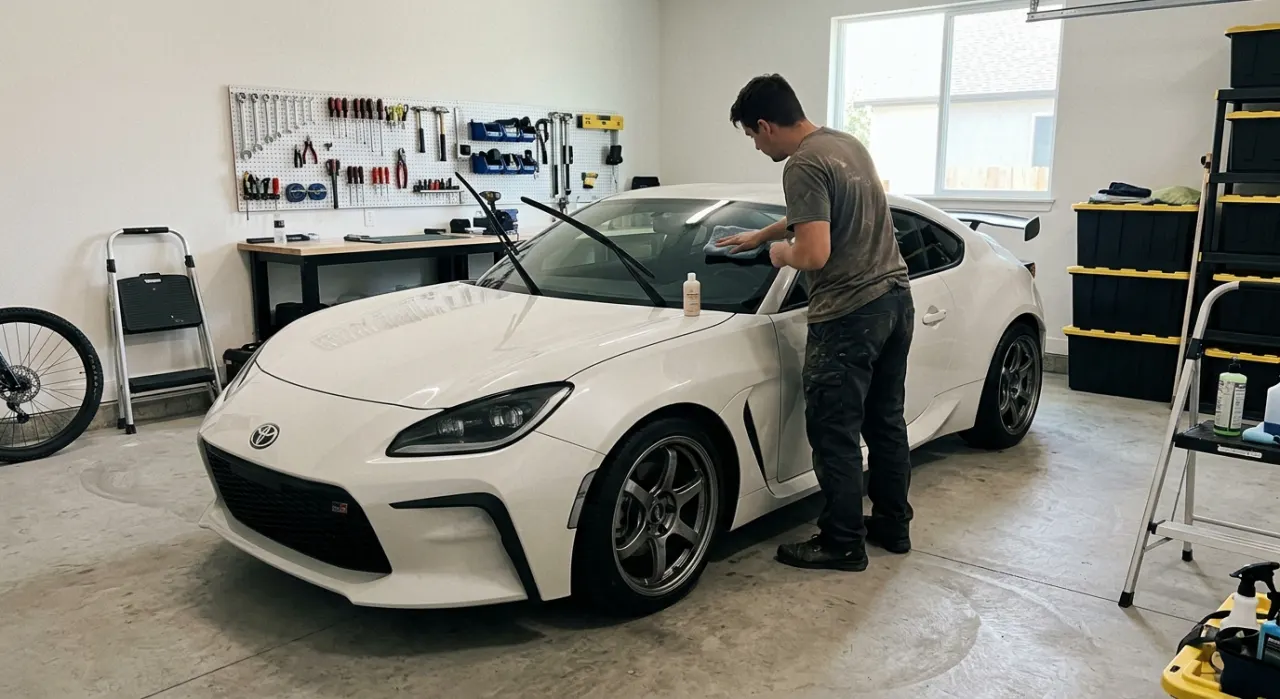
Apply in the shade on cool glass, work in thin even coats, let each layer haze, and buff to a clear finish. For durable coatings, a second layer after the first has cured dramatically improves longevity.
Aquapel and Glaco: The Enthusiast Favorites
Two names come up constantly when drivers compare notes, and both outlast a basic wipe-on. Aquapel is a bonded glass treatment applied from a single-use pack; owners consistently report it lasting several months — well beyond a typical polymer wipe-on — with strong super-hydrophobic beading. Glaco, from Soft99, is a Japanese favorite sold in several strengths, praised for fast, high-repellency beading and easy top-ups. Both aim higher on durability than the drugstore option without the full prep of a ceramic coat, which is why enthusiasts keep recommending them. As always, real-world life on a windshield runs shorter than the box claims because wipers abrade the coating, so start with clean, decontaminated glass and apply in thin, even layers to get the most out of either one.
Performance at Lower Speeds and DIY Options
Every repellent leans on airflow, so the beading effect is weakest at lower speeds and strongest on the highway. In stop-and-go traffic you will still use wipers, but a treated windshield keeps vision clearer because water pulls into beads instead of smearing into a sheet — and the same benefit applies to side windows and mirrors, where it works even when you are barely moving. Some drivers try homemade mixes, but owners consistently report they wear off within days and can leave a haze, so a proper product is worth the small cost. One note on terms: a windscreen is simply the British word for a windshield, and repellents perform the same on windshields whatever the market — judge them on durability and wiper compatibility, not the label wording.
How often to reapply windshield rain repellent
The tell that a rain repellent is fading is simple: the beads get lazy. When water starts clinging and smearing at highway speed instead of flying off, the coating has thinned and it becomes time to redo it. How often that happens depends on the type. A wipe-on repellent typically needs refreshing every four to six weeks; a silica spray holds three to four months; a ceramic glass coat can go six months to a year before the repellent-rain effect drops off. Wiper passes are the main thing that wears it, so the driver's side always fades first — many owners spot-treat that half between full applications. Rather than wait for a downpour to discover it has worn off, reapply on a dry, mild day before your rainy season. Starting with clean, decontaminated glass each time is what makes the fresh coat bond and last, rather than flashing off in a few weeks.
Recommended Windshield Water Repellents
Best for anyone who wants the classic beading effect cheap, today
- The wipe-on that made rain-repellent a household name
- Trigger bottle treats a windshield in about ten minutes
- Realistically lasts four to six weeks per application
- Cheapest way to try the effect before committing to a coating
Why buy it: the safe default — the most widely used windshield repellent there is, dirt-cheap and easy, so you can prove the beading works for you before spending more.
Best for heavy wet-weather drivers who hate reapplying
- SiO2 coating that chemically bonds to the glass
- Manufacturer rates it one to two years of durability
- Needs genuinely clean, decontaminated glass to bond
- Low-smear characteristics made for windscreens
Why buy it: the durability king — a true ceramic-type glass coat that, applied to properly prepped glass, can outlast a season of washes and wiper passes instead of a few weeks.
Best for the enthusiast middle ground between wipe-on and full ceramic
- Bonded fluorinated treatment from a single-use pack
- Owners routinely report several months of beading
- One applicator does a windshield or two side windows
- Far tougher than a basic polymer wipe-on
Why buy it: the enthusiast favorite — a bonded treatment that consistently outlasts drugstore wipe-ons without the full prep of a ceramic coat, which is why drivers keep recommending it.
Best for topping up beading every time you clean the glass
- Cleans and lays down an SiO2 hydrophobic layer in one pass
- Spray, wipe, buff — no separate coating step
- Tint-safe on interior and exterior glass
- Rebuilds the beading a little with every wash
Why buy it: the low-effort coat — it folds a light ceramic layer into your normal glass clean, so the water-repellent effect gets refreshed instead of worn away each time you wipe the windshield.
Best for detailers who want a durable, prep-and-bond coating
- Invisible sealant built to repel rain, sleet and snow
- Designed to pair with a prep step for a reactive bond
- A go-to in the pro detailing kit, sold by the gallon too
- Multi-surface — windshield, side glass, mirrors
Why buy it: the detailer pick — a bond-on sealant meant to be prepped and applied properly for months of beading, the step up you take once a wipe-on stops cutting it.
Best for keeping glass clean and beading in one bottle
- Cleans streak-free and leaves light repellency behind
- One bottle instead of a cleaner plus a treatment
- Easiest possible maintenance between full applications
- Cheap, stocked at any parts store
Why buy it: the sensible everyday buy — it keeps the windshield clean and tops up a little beading in the same pass, ideal for maintaining a proper coat underneath it.
Which should you buy?
For most people, a mid-tier silica spray coating is the smart buy: months of performance without the fussiest ceramic prep. Heavy wet-weather drivers should step up to a full glass coating and enjoy forgetting about it for half a year. Casual drivers who just want to try the effect can't go wrong starting with a classic wipe-on and our honest Rain-X guide covers exactly what to expect there. Still torn between the quick spray and the semi-permanent route? Our glass coating vs Rain-X breakdown settles it. For the specific bottles we recommend, see our ranked picks in the best car glass cleaner roundup, and browse the full glass and visibility hub for everything else.