
Affiliate Disclosure
Some links on this page are affiliate links. As an Amazon Associate, we earn from qualifying purchases — at no extra cost to you. We do not buy, test, or physically handle the products we cover; our rankings come from aggregated owner reviews, ratings and expert consensus. Commissions never change our verdicts. How we rank & full disclosure.
Short version: Water spots are dried mineral deposits from hard water, sprinklers, or rain. If they are fresh, a soak in distilled white vinegar dissolves them. If they are stubborn, a mild glass polish or dedicated water-spot remover with a little mechanical work gets them off. But if they have etched a pit into the glass, that is permanent damage and no amount of scrubbing fixes it. The trick is catching them early and preventing them from ever drying on the glass.
What water spots actually are
When water dries on glass, the water evaporates but the dissolved minerals it carried calcium, magnesium, silica do not. They stay behind as a crusty white or rainbow-edged ring. Hard tap water is the usual source, but the worst offenders are lawn sprinklers, which spray mineral-heavy water onto hot glass over and over, and acid rain, which bakes on in the sun.
There are two stages, and knowing which you are dealing with tells you whether you can win. Stage one is a surface deposit: the minerals are sitting on top of the glass and can be dissolved or gently abraded away. Stage two is etching: the minerals, helped by heat and time, have chemically eaten a tiny pit into the glass. Deposits come off. Etching is damage.
The test that tells you which you have
Before you buy anything, run your fingernail lightly across a dry spot. If it feels like a raised crusty bump, that is a surface deposit and you are in luck it will come off. If the glass feels smooth but you can still see the spot, or it feels like a tiny divot, that is etching, and you should temper your expectations. Surface deposits respond to home methods; etching often needs a professional with a glass-polishing rig, and sometimes even they can only reduce it.
Start with vinegar
For fresh, surface-level spots, distilled white vinegar is cheap and genuinely effective. It is a mild acid that breaks down the mineral bond. Here is the method:
- Mix it half and half. Equal parts distilled white vinegar and distilled water in a spray bottle. Distilled water matters you do not want to add more minerals.
- Soak, do not just spray. The key mistake is spraying and wiping immediately. Instead, soak a microfiber cloth in the solution and lay it flat over the spotted area for three to five minutes. Give the acid time to dissolve the deposit.
- Wipe and check. Wipe firmly, then look at the glass. Fresh spots will be gone. If some remain, repeat the soak they may just need more dwell time.
- Rinse and dry. Rinse the vinegar off with clean water and dry immediately so you do not create new spots.
When vinegar is not enough
Older, harder deposits sometimes need more than acid. Two options escalate the fight:
- Dedicated water-spot remover. These use stronger, glass-safe mild acids formulated for the job. They work faster than vinegar on tough deposits. Follow the label, wear gloves, and keep them off paint and trim.
- A mild glass polish. For deposits that resist chemistry, a fine cerium-oxide glass polish worked with a bit of pressure (by hand or with a polishing pad) mechanically levels the deposit. This is the last stop before etching territory work in small sections and check your progress often.
What I would not do is reach for a razor blade or an aggressive scouring pad on your windshield. It is far too easy to scratch the glass, and scratches in your line of sight are worse than the spots you started with.
When it is baked in for good
If your fingernail test said etching, be realistic. Etched glass is physically pitted, and home methods will not restore a perfectly smooth surface. Professional glass polishing can sometimes reduce mild etching, but deep etching often means living with it or, for a badly damaged windshield, replacement. This is exactly why prevention matters so much the day a spot dries on is the day the clock starts ticking toward permanent etching.
Never fight them again
The whole battle is easier if spots never form. Two habits and one product do it. First, dry your glass promptly after every wash so minerals never get the chance to dry on our streak-free windshield routine covers the technique. Second, keep the car out of sprinkler range and never wash in direct sun. And third, apply a hydrophobic coating so water beads up and rolls off before it can evaporate and leave minerals behind.
That last point is where a water repellent pays off twice: it sheds rain for visibility and it stops spots from forming. Our honest Rain-X guide is the easy entry point, or step up to something more durable from the best windshield water repellent roundup. For the cleaners and spot removers we actually recommend, see our ranked picks in the best car glass cleaner guide, and browse the full glass and visibility hub for the rest.
Recommended Products
We aggregate owner reviews rather than test products ourselves. Two jobs here: a good cleaner to remove fresh spots, and a hydrophobic repellent to stop them ever forming. Note that no over-the-counter product removes true etching — that is physical damage to the glass.

Best for streak-free cleaning and lifting light, fresh spotting
- Residue-free, ammonia-free formula
- Safe on tint
- Excellent for the final streak-free wipe
- Massive, satisfied owner base
Why buy it: the everyday cleaner for keeping glass clear and catching light spots before they set — pair it with a repellent to stop them returning.

Best for a cheap, effective glass cleaner for regular use
- Streak-free everyday cleaning
- Cuts road film and light residue
- Widely stocked and inexpensive
- Good owner rating
Why buy it: no-fuss cleaning that helps you dry glass promptly — the single best habit for stopping spots forming.
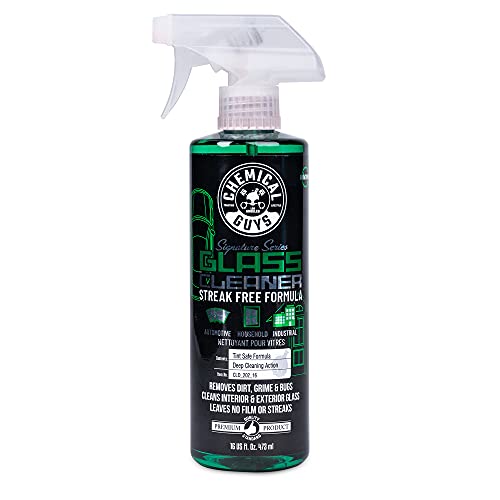
Best for tinted windows and interiors where ammonia is a no-go
- Ammonia-free — tint safe
- Clean, streak-free finish
- Works inside and out
- Popular with detailers
Why buy it: the tint-safe choice for cleaning without the ammonia that can harm film over time.
Best for stopping spots forming by making water bead and roll off
- Hydrophobic treatment — water sheets away
- Less standing water means fewer mineral deposits
- Also improves wet-weather visibility
- Cheap and easy to apply
Why buy it: the honest fix for the root cause: if water never dries on the glass, minerals never get left behind.
Best for owners who want a longer-lasting hydrophobic layer
- Bonds more durably than basic treatments
- Strong, long-lasting beading
- Single-use applicator per windshield
- A long-time enthusiast pick
Why buy it: the step-up in durability if you would rather not re-apply repellent as often.
Best for cleaning and adding a ceramic hydrophobic layer in one step
- Cleans and lays down a light ceramic coat together
- Adds beading while you wipe
- Convenient single-product routine
- Good for maintenance between deeper treatments
Why buy it: the convenient combo — clean the glass and leave hydrophobic protection behind in the same pass.
Prices are pulled from Amazon and were accurate as of Aug 22, 2026, 6:54 PM EDT. Product prices and availability are subject to change — the live price is shown on Amazon.