

Affiliate Disclosure
Some links on this page are affiliate links. As an Amazon Associate, we earn from qualifying purchases — at no extra cost to you. We do not buy, test, or physically handle the products we cover; our rankings come from aggregated owner reviews, ratings and expert consensus. Commissions never change our verdicts. How we rank & full disclosure.
The short version: wiper blades are the cheapest safety part on your car and the one almost everyone runs six months too long. Ranked across hundreds of thousands of aggregated owner reviews, our #1 pick is the Bosch ICON — a tensioned beam blade owners consistently praise for quiet, even wiping that outlasts cheaper rubber. On a budget, the Rain-X WeatherBeater wipes clean for about a third of the price. For snow country, the Michelin Stealth Ultra hybrid keeps its frame covered and its joints free.
Read this before you order. Wipers are a fitment part. Every blade here is sold in a range of lengths, most cars use two different lengths front to front, and arms use different connectors — J-hook, pinch tab, bayonet or side pin. The ASIN on each card is a representative size, not a universal fit. Confirm the correct length and connector for your exact year, make and model in wiper blade size by car before you buy.
Top Picks at a Glance
Our #1 Pick: The Bosch ICON
The Bosch ICON is the blade that keeps winning arguments in owner forums, and the reasons are structural rather than marketing. It is a true beam blade: instead of a metal frame with claws that press on the squeegee at six or eight points, a single pre-curved tensioned spring runs the whole length inside a rubber shell. That produces even contact pressure end to end, which is exactly what a modern strongly curved windshield needs, and it is why owners describe the wipe as clean in one pass rather than clean in the middle and smeared at the edges.
The second reason is the rubber. Bosch calls the compound ClearMax 365 and claims up to 40% longer life than other premium blades. We cannot verify a manufacturer longevity claim, and we do not pretend to — but what we can read is the shape of the aggregated review data, and complaints about the ICON going streaky within a few months are noticeably rarer than they are for cheap conventional blades. That pattern holds across a very large review base, which is the kind of signal that matters for a wear part.
The third reason is winter behavior. There is no exposed frame, so there are no joints for slush to freeze solid — the failure mode that makes a conventional blade useless by the third snowstorm. It is not a dedicated winter blade, and in genuinely brutal conditions a boot-style wiper still has an edge (see best winter wiper blades), but for a driver who wants one blade that behaves all year, the ICON is the consensus answer.
The honest downside is price. At roughly $32 a blade, a pair costs more than some people have ever spent on wipers, and a $12 conventional blade genuinely does wipe a windshield clean the day you fit it. What you are paying for is consistency over months, not a better first wipe.
Best Windshield Wiper Blades 2026: The Ranked Field

Best for the beam blade owners keep going back to
- Tensioned beam — no exposed frame to ice up
- ClearMax 365 rubber resists heat and UV
- Bracketless design cuts wind lift at speed
- Sold in lengths from 13" to 28"
Why buy it: the blade with the deepest well of long-term owner praise in the category — quiet, even pressure across curved glass, and a squeegee that keeps wiping clean well past the point cheap blades start chattering.

Best for a clean wipe for the least money
- Galvanized steel frame resists rust
- Natural rubber squeegee, graphite-treated
- Universal adapter fits most J-hook arms
- Meets or exceeds OEM wipe quality
Why buy it: the default cheap blade that actually works — owners across a huge review base report a clean, streak-free wipe on day one, which is all most drivers need from a part they replace annually.

Best for a hybrid blade that shrugs off bad weather
- Hybrid frame inside an aerodynamic shell
- Smart-Flex arms follow windshield curve
- EZ-Lok connector, no adapters to fumble
- Sold as a matched driver + passenger pair
Why buy it: the premium hybrid owners rate for all-weather composure — the covered frame keeps snow and slush out of the joints while the shell keeps the blade planted at highway speed.
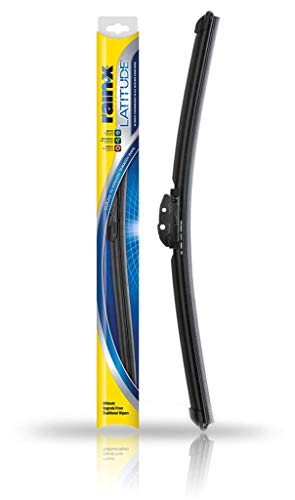
Best for wet-weather visibility on a curved windshield
- Contoured beam applies even pressure
- Advanced synthetic rubber compound
- Universal adapter pre-installed
- Aerodynamic profile reduces wind lift
Why buy it: the beam blade owners most often name when the complaint is rain — the contour holds full-length contact on modern curved glass instead of skipping bands the way a tired frame blade does.
Best for highway speed, towing and open interstate
- Rated for wind speeds over 135 mph
- Memory-curve steel beam, full-length load
- HighGlide treated squeegee runs quieter
- Pre-installed adapter for common arms
Why buy it: the beam blade built around aerodynamic load — owners who drive fast, tow, or live with crosswinds report it staying planted where lighter blades start to lift and skip.

Best for beam-style behavior at a mid-tier price
- Graphite-coated steel with aero spoiler
- Covered frame keeps debris out of joints
- Independent suspension follows the glass
- Tool-free install on J-hook arms
Why buy it: the sensible middle ground — most of a beam blade’s quiet, even wipe for meaningfully less money, and a covered frame that handles winter far better than a bare conventional blade.
Prices are pulled from Amazon and were accurate as of Aug 22, 2026, 6:44 PM EDT. Product prices and availability are subject to change — the live price is shown on Amazon.
Blade Types Decoded
Conventional. An exposed metal frame with pivoting claws that press a rubber squeegee onto the glass. Cheap, proven, and what most cars wore a decade ago. Weaknesses: pressure is uneven on a strongly curved windshield, the tall profile catches air at speed, and the frame packs with ice in winter until the claws stop pivoting.
Beam. One pre-curved tensioned spring inside a molded rubber shell — no frame, no claws. Even pressure across the full length, a low profile that resists wind lift, and nothing exposed to freeze. This is the default recommendation for most modern vehicles and the reason four of our six picks are beam designs.
Hybrid. A conventional frame wrapped in an aerodynamic plastic shell. It gets most of the beam blade's quiet, planted behavior and winter resistance for less money, at the cost of a little extra weight and complexity. The Michelin Guardian and Stealth Ultra are the picks here.
Silicone. Any of the above with a silicone squeegee instead of natural rubber. Silicone resists UV, heat and ozone far better and typically lasts roughly twice as long, which is why owners in hot states gravitate to it. It costs more up front — full ranking in best silicone wiper blades.
How to Choose Wiper Blades
Start with fitment, always. Get the two lengths and the connector type right and almost any well-rated blade will work; get them wrong and the best blade in the world sits in a box. After that, buy for your climate. Snow belt: beam or covered hybrid, never a bare conventional frame. Hot and sunny: prioritize the squeegee compound — silicone or a premium synthetic rubber — because UV is what will kill the blade, not rain. Highway commuter: a low-profile beam blade rated for wind lift, because a blade that floats at 75 mph is a blade that is not wiping. Mild climate, low mileage: honestly, a $12 conventional blade replaced annually is a perfectly rational choice, and our budget wiper blade ranking covers that field properly.
One more variable: trucks and large SUVs put longer, heavier blades on taller, flatter glass with more arm load, which changes the calculus slightly — that is covered in best wiper blades for trucks.
Common Mistakes That Kill Blades Early
Running wipers on a dry windshield. The single fastest way to tear a squeegee edge. Use washer fluid first, every time — and keep the reservoir full with the right seasonal fluid from our washer fluid ranking.
Scraping ice with the wipers. The motor is not an ice scraper. Clear the glass first, and lift the arms off the windshield before a freezing night so the rubber does not bond to the ice and tear when you free it.
Blaming the blade for a dirty windshield. A greasy film of road grime, wax overspray or off-gassed dash residue makes brand-new blades chatter and streak. If fresh blades smear, clean the glass properly first — the method is in how to clean a windshield streak-free.
Letting a bad blade scratch the glass. Once the rubber tears through and the metal frame or beam edge contacts the windshield, you are cutting permanent arcs into laminated glass. That is a repair bill, not a $12 part. Replace at the first sign of a torn edge.
How We Rank
We do not test blades on a car, and we are not going to pretend otherwise. We rank by aggregating owner ratings and review volume across each product, reading the themes buyers repeat over time, and weighing in mechanic and installer consensus plus published manufacturer specifications. Four factors carry the most weight. Wipe quality — how consistently owners describe a clean, single-pass wipe with no skipped bands. Longevity — how loudly and how early streaking complaints appear in the review timeline, which is the clearest aggregate signal there is for a wear part. Weather composure — behavior in snow, ice and at highway speed. And value — what you pay per blade against how long owners report keeping it. A product needs a strong rating from a large number of buyers, not a handful of glowing reviews, to reach the top. Prices were current at the time of writing.
The Verdict
For a blade that wipes cleanly, runs quietly and keeps doing both months after a cheap blade has started chattering, the Bosch ICON is the one owners rate above the rest. If you would rather spend a third as much and simply replace blades every year, the Rain-X WeatherBeater is a genuinely sensible choice. Snow-belt drivers should look hard at the Michelin Stealth Ultra hybrid, and anyone chasing maximum service life should read the silicone ranking next. Whatever you choose, confirm your length and connector in wiper blade size by car first, then see the rest of the kit in the wiper blades & washer fluid hub.
Quick Comparison
Bosch ICON 26A Premium Beam Wiper Blade (26")
Best for the beam blade owners keep going back to
Best Value
Rain-X RX30222 WeatherBeater Wiper Blade (22")
$14.95 · Check Price on Amazon
Best Premium
Michelin Stealth Ultra 19-2222SUBA Twin Pack (22" + 22")
Check Price on Amazon
Best for Heavy Rain
Rain-X 5079281-1 Latitude Beam Wiper Blade (26")
Check Price on Amazon
Best for High Winds
TRICO Force 25-260 Beam Wiper Blade (26")
Check Price on Amazon
Best Hybrid Design
MICHELIN Guardian Premium All-Season Hybrid Blade (22")
Check Price on Amazon
Prices are pulled from Amazon and were accurate as of Aug 22, 2026, 6:44 PM EDT. Product prices and availability are subject to change — the live price is shown on Amazon.