
Affiliate Disclosure
Some links on this page are affiliate links. As an Amazon Associate, we earn from qualifying purchases — at no extra cost to you. We do not buy, test, or physically handle the products we cover; our rankings come from aggregated owner reviews, ratings and expert consensus. Commissions never change our verdicts. How we rank & full disclosure.
All-Terrain (A/T)
A jack-of-all-trades tire with a moderate, tightly-spaced tread that balances on-road manners with light-to-moderate off-road grip. Designed to spend most of its life on pavement without punishing you for it.
Best for: Daily-driven trucks and SUVs that see highway miles, gravel, dirt, light trails and the occasional snow
Typically $170–$320 per tire in common 17"–20" truck sizes
- Quiet and civilized on the highway — owners report a mild hum, not a roar
- Long tread life, commonly 40,000–60,000 miles with many carrying a mileage warranty
- Better wet-road grip and shorter stopping distances than an aggressive mud tire
- Improved fuel economy from lower rolling resistance and less tread mass
- Many carry the 3PMSF severe-snow rating for genuine winter capability
- The tight tread packs with mud and loses bite in deep, sticky terrain
- Smaller voids clog with clay and slick rock compared to a true mud tire
- Less sidewall protection and puncture resistance than most M/T casings
- Not the look some buyers want on a lifted rig
Mud-Terrain (M/T)
An aggressive off-road tire with big blocky lugs and wide voids engineered to claw through mud, rock and sand. It trades pavement comfort and efficiency for maximum traction where the road ends.
Best for: Trucks and Jeeps that regularly tackle deep mud, rock crawling, sand and gnarly trails over highway comfort
Typically $220–$420 per tire in common 17"–20" truck sizes
- Deep, wide tread voids self-clean and bite hard in mud, clay and loose terrain
- Thick two- and three-ply sidewalls resist punctures and can be aired down for grip
- Chunky shoulder lugs grab rocks, ruts and off-camber trail edges
- Aggressive looks that suit a lifted or overlanding build
- Loud on the highway — owners consistently describe a persistent drone at speed
- Shorter tread life, often 30,000–40,000 miles, and frequently no mileage warranty
- Worse wet-road grip and longer stopping distances than an all-terrain
- Higher rolling resistance drops fuel economy by a measurable amount
- Most lack the 3PMSF rating and struggle on packed snow and ice
How they score, side by side
Scores reflect aggregated owner reviews and expert consensus — not our own bench testing.
- On-road comfort & quiet94
- Mud & deep off-road510
- Rock & trail traction79
- Wet & snow grip84
- Tread life & value95
- Sidewall / puncture toughness69
Spec-by-spec comparison chart
| Factor | All-Terrain (A/T) | Mud-Terrain (M/T) |
|---|---|---|
| Primary strength | On-road balance + light off-road | Deep mud, rock & sand |
| Highway noise | Low — mild hum | High — persistent drone |
| Tread life | 40,000–60,000 mi (often warrantied) | 30,000–40,000 mi (often no warranty) |
| Wet-road grip | Strong | Reduced — longer stops |
| Deep-mud traction | Moderate — packs up | Excellent — self-cleaning voids |
| Rock & trail grip | Good | Excellent — big shoulder lugs |
| Snow rating | Many carry 3PMSF | Most do not carry 3PMSF |
| Sidewall toughness | Moderate | Heavy — 2–3 ply, puncture-resistant |
| Fuel economy impact | Minimal | Noticeable drop |
| Price each (common sizes) | $170–$320 | $220–$420 |
Our Top 3 Picks
The three highest-rated options in this category, if you'd rather skip straight to a proven pick.
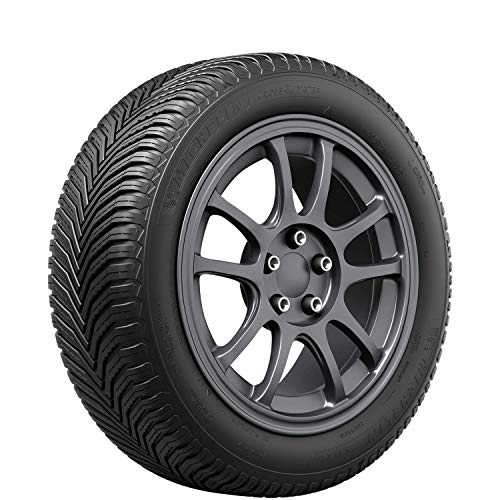
Best for the best all-round grip, wear and light-snow ability
- V-shaped tread with 3-peak-mountain-snowflake rating
- Class-leading wet and dry braking
- 60,000-mile treadwear warranty
- Real light-snow traction for an all-season
Why buy it: the tire owners and experts keep crowning as the best all-rounder — it brakes shorter in the wet than most rivals and genuinely handles snow, so it fits almost any driver in a four-season climate.

Best for the longest tread life on a sedan or minivan
- Up to 80,000-mile treadwear warranty
- Quiet, comfortable highway ride
- Strong wet grip and even wear
- Michelin’s longest-lasting all-season
Why buy it: the set-and-forget touring tire owners rate for outlasting everything else — fit it once and forget about tires for years.

Best for premium wet braking at a mid-range price
- Up to 80,000-mile treadwear warranty
- EcoPlus compound for shorter wet stops
- Fuel-efficient, low rolling resistance
- Wear indicators built into the tread
Why buy it: a hugely popular touring tire that delivers premium-brand wet performance and an 80k warranty for less than the flagships.
Prices are pulled from Amazon and were accurate as of Aug 22, 2026, 6:54 PM EDT. Product prices and availability are subject to change — the live price is shown on Amazon.
What actually separates an A/T from an M/T
Stand two of these tires next to each other and the difference is obvious before you read a single spec: it's all in the tread. An all-terrain uses a moderate, tightly-spaced block pattern with relatively small gaps (the "voids") between the lugs. A mud-terrain uses big, chunky, widely-spaced lugs with deep voids and aggressive shoulder blocks that wrap onto the sidewall. Everything each tire is good and bad at flows directly from that one design choice.
Those tight A/T voids keep more rubber on the road at any moment, which is why an all-terrain is quieter, grips wet pavement better, stops shorter and lasts longer. But pack that same tight tread with mud or clay and it clogs — the gaps fill, the tire turns into a slick, and you lose bite. The wide M/T voids solve exactly that problem: as the tire rotates, the big gaps fling packed mud out (this is what people mean by a "self-cleaning" tread), so fresh lugs keep biting into fresh terrain.
The mud tire also carries structure the all-terrain usually doesn't. Most M/Ts run heavier two- or three-ply sidewalls designed to survive sharp rocks, trail debris and being aired down to single-digit PSI for extra footprint on rock and sand. That toughness is real, but it comes as extra weight and stiffness — which is part of why mud tires ride harder, drone on the highway and drink more fuel. The consensus among off-road shops is simple: you don't get the mud-terrain's off-road toughness for free — you pay for it every mile you're on pavement.
There's also a large and growing middle ground worth knowing about: the "rugged-terrain" or "hybrid" tire (Falken Wildpeak R/T, Nitto Ridge Grappler, Toyo Open Country R/T and similar). These split the difference with an A/T-style center for quieter highway manners and M/T-style shoulders for trail bite. If you keep circling back to "I want both," a hybrid is often the honest answer — but for a clean head-to-head, the classic A/T-vs-M/T decision below still frames the choice.
On-road: noise, economy and wet grip
This is where most owners actually live, and it's where the all-terrain wins convincingly. Because the vast majority of trucks and SUVs spend most of their miles on pavement, the on-road behavior of your tire matters far more than most buyers admit when they're staring at an aggressive M/T tread.
- Noise. Aggregated owner reviews are remarkably consistent here: all-terrains produce a mild hum that fades into the background, while mud-terrains generate a persistent drone that builds with speed and gets tiring on a long highway trip. Tread design and even wear can make an M/T louder over time.
- Wet grip and braking. More rubber contact and tighter siping give the A/T shorter wet stopping distances and more predictable grip in rain. A mud tire's big voids mean less rubber touching wet pavement at any instant, so wet braking and cornering suffer — a genuine safety trade-off, not just a comfort one.
- Fuel economy. Mud tires are heavier and have higher rolling resistance, and owners routinely report a measurable MPG drop after switching to an aggressive M/T — often on the order of 1–3 MPG depending on the vehicle and how far they upsized. The lighter, lower-resistance all-terrain keeps more of your factory economy.
- Ride quality. The stiffer M/T casing transmits more road texture and can feel busier at speed. All-terrains generally ride closer to a stock highway tire.
None of this means mud tires are bad on the road — a modern M/T is far more civilized than one from twenty years ago. But spec sheets and owner consensus both point the same way: if your week is mostly commuting, road trips and errands, the all-terrain is the more pleasant, safer, cheaper tire to live with.
Off-road: mud, rock, sand and sidewalls
Flip the terrain to genuinely rough ground and the mud-terrain earns its keep. The gap between the two is widest in exactly the conditions the M/T was built for:
- Deep mud and clay. This is the M/T's home turf. Wide, self-cleaning voids fling packed mud clear so fresh lugs keep grabbing, while an all-terrain's tighter tread clogs, glazes over and spins. There's no contest in sticky, deep stuff.
- Rock crawling. Big shoulder lugs and tough sidewalls let a mud tire be aired down to grip rock faces and off-camber ledges, and the thick casing shrugs off cuts that would puncture a lighter A/T. All-terrains crawl rock competently, but with less margin.
- Sand. Aired-down mud tires float and paddle well, though on hardpack and lighter trails a good all-terrain is closer than people expect.
- Sidewall protection. The heavy multi-ply M/T casing is the single biggest reason serious trail users choose it — a torn sidewall miles from pavement is a bad day, and the extra plies genuinely reduce that risk.
The honest caveat, and one experienced trail drivers repeat often, is that a quality all-terrain handles far more off-road terrain than most owners will ever actually encounter. Fire roads, gravel, dirt, light-to-moderate trails, mild ruts and packed snow are all comfortable A/T territory. You only truly need the mud-terrain when deep mud, technical rock or soft sand are a regular part of your driving — not a once-a-year camping trip.
Snow and winter — the 3PMSF question
Winter capability is where a lot of buyers guess wrong, because the aggressive mud tire looks like it should be the snow champion. It usually isn't. The number that matters is the Three-Peak Mountain Snowflake (3PMSF) symbol on the sidewall — an industry rating that means the tire passed a standardized severe-snow traction test.
Many modern all-terrains carry the 3PMSF rating, thanks to dense siping and a compound that stays pliable in cold. Most classic mud-terrains do not. The M/T's big widely-spaced lugs are great at churning through deep snow, but on the packed snow and ice most winter drivers actually face, the all-terrain's finer siping and larger contact patch grip better and stop shorter. The consensus for genuine winter duty is clear: look for the 3PMSF symbol, and in most cases that points you toward an all-terrain, not a mud tire. (For true ice and deep-cold climates, a dedicated winter tire still beats both.)
Real cost and tread life over the life of the truck
The sticker gap is only the start. In common 17"–20" truck sizes an all-terrain typically runs $170–$320 per tire while a mud-terrain runs $220–$420 — but the bigger cost difference shows up over time, in three places.
Tread life. All-terrains commonly return 40,000–60,000 miles and frequently ship with a mileage warranty. Mud-terrains, with softer compounds and bigger lugs that wear faster, more often land in the 30,000–40,000 mile range and frequently carry no mileage warranty at all. Over the life of the truck that can mean buying an extra set of mud tires for the same distance an all-terrain would have covered.
Fuel. The M/T's higher rolling resistance quietly taxes you at every fill-up. A 1–3 MPG drop across tens of thousands of miles adds up to real money that rarely makes it into the buying decision.
Rotation and balance. Aggressive tires can be harder to balance and, if not rotated on schedule, are prone to uneven or "heel-toe" wear that shortens their already-shorter life and adds noise. All-terrains are generally more forgiving. Add it all up and the all-terrain is meaningfully cheaper to own per mile — which is why choosing an M/T you don't actually need is one of the most expensive tire mistakes owners make.
Common myths and mistakes
"Mud tires are better in the snow because they're so aggressive." Usually false. On the packed snow and ice most people drive in, a 3PMSF-rated all-terrain grips and stops better. Mud tires only pull ahead in deep, unplowed snow — and even then a dedicated winter tire beats both.
"I have a lifted truck, so I need mud tires." A lift changes clearance and looks, not what terrain you drive. Plenty of lifted trucks that never leave pavement would be quieter, cheaper and safer on all-terrains. Buy for your terrain, not your stance.
"All-terrains can't handle real off-roading." A quality A/T handles gravel, dirt, fire roads, light-to-moderate trails and packed snow with ease — far more than most owners ever actually attempt. The M/T only becomes necessary in deep mud, technical rock and soft sand.
"The most aggressive tread is always the most capable." Only in the M/T's narrow specialty. On wet pavement, in snow, for braking distance and for tread life, that aggressive tread is a liability, not an asset. Capability is about matching the tire to the terrain, not maxing out the tread.
"They're basically the same, just different looks." No. The tread design changes noise, wet grip, braking, fuel economy, tread life and off-road bite. It's a genuine trade-off with real consequences at both ends.
Which should you buy — and how to decide
There's no universal winner — the right tire is the one that matches how you actually drive. The cleanest way to decide is to be honest about your real terrain split, not your aspirational one.
Buy all-terrains if 80% or more of your miles are pavement, gravel, dirt and light trails; if you want a quiet highway ride, strong wet grip and long tread life; if you deal with regular winter weather (look for the 3PMSF symbol); or if you simply want the most sensible, lowest-cost-per-mile tire for a daily-driven truck or SUV. For most owners, this is the answer — including most who assume they need something more aggressive.
Buy mud-terrains if deep mud, rock crawling or soft sand are a genuine, regular part of your driving; if you need the puncture resistance of a heavy multi-ply sidewall for real trail duty; if you air down often for technical terrain; or if you're building a dedicated off-road or overlanding rig and accept the noise, fuel and tread-life costs as the price of admission.
Still torn? Look hard at a rugged/hybrid terrain tire (Ridge Grappler, Wildpeak R/T, Open Country R/T) — they give up a little of each specialty to be genuinely competent at both, and for the "I do a bit of everything" driver they're often the most honest fit. Whatever you choose, buy a full matched set, keep them rotated, and match the tire to the terrain you actually drive — not the terrain you picture yourself conquering.
Recommended Products
Our top picks in this category, ranked on aggregated owner reviews.
Best for the best all-round grip, wear and light-snow ability
- V-shaped tread with 3-peak-mountain-snowflake rating
- Class-leading wet and dry braking
- 60,000-mile treadwear warranty
- Real light-snow traction for an all-season
Why buy it: the tire owners and experts keep crowning as the best all-rounder — it brakes shorter in the wet than most rivals and genuinely handles snow, so it fits almost any driver in a four-season climate.
Best for the longest tread life on a sedan or minivan
- Up to 80,000-mile treadwear warranty
- Quiet, comfortable highway ride
- Strong wet grip and even wear
- Michelin’s longest-lasting all-season
Why buy it: the set-and-forget touring tire owners rate for outlasting everything else — fit it once and forget about tires for years.
Best for premium wet braking at a mid-range price
- Up to 80,000-mile treadwear warranty
- EcoPlus compound for shorter wet stops
- Fuel-efficient, low rolling resistance
- Wear indicators built into the tread
Why buy it: a hugely popular touring tire that delivers premium-brand wet performance and an 80k warranty for less than the flagships.

Best for the most tire for the money
- Up to 75,000-mile treadwear warranty
- "Replace Tire" wear indicator in the tread
- Reliable wet braking and light-snow grip
- Backed by Continental’s parent company
Why buy it: the value pick owners rate again and again — a genuinely good touring tire with a 75k warranty at a bargain price.

Best for confidence in rain and winter slush
- 3-peak-mountain-snowflake certified
- Evolving Traction Grooves for wet grip
- 60,000-mile treadwear warranty
- Strong all-weather safety focus
Why buy it: the pick for drivers who see a lot of rain and the occasional storm — a true all-weather tire that carries the winter certification most all-seasons lack.

Best for sporty cars that still need year-round use
- Ultra-high-performance all-season design
- Excellent dry, wet and light-snow grip
- Tread wear indicators (DWS letters)
- A perennial enthusiast favorite
Why buy it: the enthusiast’s all-season — near-summer-tire dry grip with real wet and light-snow ability, so a sports sedan can run one set all year.
Prices are pulled from Amazon and were accurate as of Aug 22, 2026, 6:54 PM EDT. Product prices and availability are subject to change — the live price is shown on Amazon.