

Affiliate Disclosure
Some links on this page are affiliate links. As an Amazon Associate, we earn from qualifying purchases — at no extra cost to you. We do not buy, test, or physically handle the products we cover; our rankings come from aggregated owner reviews, ratings and expert consensus. Commissions never change our verdicts. How we rank & full disclosure.
Battery Charger
A device that pushes real current back into a low or dead battery to bring it up to full state of charge. Modern "smart" chargers step through bulk, absorption and float stages to refill the battery in hours.
Best for: Reviving a discharged or weak battery, and anyone who needs to recover a car that has been sitting or has a dead cell
Typically $30–$90 for a good smart charger; $120–$300+ for higher-amp or shop-grade units
- Delivers real amperage (typically 4–15A) to actually recharge a depleted battery, not just hold it
- Recovers a dead or deeply discharged battery in a matter of hours, not days
- Most modern units are microprocessor-controlled and taper current automatically as the battery fills
- Higher-amp models can also start-assist or fast-charge before a drive
- Many now include a maintenance/float mode, so a good charger does both jobs
- A dumb (non-smart) high-amp charger left connected can overcharge and cook a battery
- Bulky and pricier than a bare trickle unit
- Fast, high-amp charging generates more heat and stress than a slow top-up
- Overkill if all you need is to keep a healthy battery from self-discharging
Battery Maintainer
A low-current device (often called a trickle charger or "tender") that holds an already-healthy battery at full charge during long storage. It sips a fraction of an amp and idles once the battery is topped off.
Best for: Seasonal and stored vehicles — classics, motorcycles, RVs, boats and daily drivers that sit for weeks
Typically $20–$60 for a quality smart maintainer (e.g. Battery Tender Junior class)
- Perfect for long-term storage — holds a battery at full charge for months without attention
- Low, gentle current (often under 1.5A) that will not overcharge a modern smart unit
- Cheap, compact and easy to leave connected in a garage all winter
- Prevents the slow sulfation that kills batteries left to self-discharge
- Too slow to meaningfully recharge a dead or deeply discharged battery
- A pure "dumb" trickle charger with no float control can slowly overcharge if left for months
- Not a recovery tool — it maintains a good battery, it does not resurrect a flat one
- Low amperage means no start-assist or fast top-up before a drive
How they score, side by side
Scores reflect aggregated owner reviews and expert consensus — not our own bench testing.
- Recharging a dead battery93
- Long-term storage upkeep79
- Speed93
- Gentleness on the battery69
- Affordability69
- All-round versatility95
Spec-by-spec comparison chart
| Factor | Battery Charger | Battery Maintainer |
|---|---|---|
| Primary job | Recharge a low or dead battery | Hold a full battery at charge |
| Typical output current | 4–15A (some 2A trickle to 50A+ shop units) | Roughly 0.75–1.5A |
| Time to recover a dead battery | Hours | Days — or not at all |
| Safe to leave connected for months | Only if it has a smart float stage | Yes (smart units); the whole point |
| Charging stages | Bulk → absorption → float (smart units) | Float / maintenance only |
| Overcharge risk | Real on dumb high-amp units | Low on smart units; slow risk on dumb ones |
| Start / fast-charge assist | Yes on higher-amp models | No |
| Best use case | Recovery, weak battery, occasional fast top-up | Seasonal storage, classics, bikes, RVs |
| Typical price | $30–$90 (smart); $120–$300+ (shop) | $20–$60 |
| Does the other job too? | Often yes — most include a float mode | No — cannot fast-charge a dead battery |
Our Top 3 Picks
The three highest-rated options in this category, if you'd rather skip straight to a proven pick.

Best for recovering a flat car or truck battery in an afternoon
- 10A on 6V and 12V, 12V repair mode
- Selectable AGM and lithium profiles
- Thermal sensor adjusts for ambient temp
- Force mode charges from 0 volts
Why buy it: the 10-amp smart charger owners rate highest — fast enough to refill a dead group-35 battery in a few hours, then safe to leave on float indefinitely.

Best for one car, one charger, no complications
- 5A four-stage switch-mode charging
- Lead-acid, AGM, gel and lithium settings
- Automatic float when charging completes
- Clamps plus quick-connect ring harness
Why buy it: the sensible middle of the range — 5 amps suits a normal car battery, and owners like that it drops to float and can simply stay connected.
Best for app monitoring and adjustable charge profiles
- 15A adaptive multi-stage charging
- Bluetooth app with live and historic data
- IP65 water and dust resistant housing
- Lead-acid and LiFePO4 algorithms
Why buy it: the charger enthusiasts and van owners buy once — you can watch every stage on your phone and tune the profile to the exact battery.
Prices are pulled from Amazon and were accurate as of Aug 22, 2026, 6:44 PM EDT. Product prices and availability are subject to change — the live price is shown on Amazon.
What actually separates a charger from a maintainer
These two devices get lumped together on the same shelf, share the same alligator clips, and both plug into the wall — so it is no surprise buyers treat them as interchangeable. They are not. The cleanest way to understand the difference is by what they do with current: a charger adds charge, a maintainer holds it.
A battery charger is built to move real amperage back into a battery. A typical consumer smart charger delivers somewhere between 4 and 15 amps, and shop-grade units go far higher. That current is enough to take a car battery from flat to full in a handful of hours. The output is the whole point — when a battery is genuinely low, only a charger has the muscle to refill it in a reasonable time.
A battery maintainer — often sold as a "trickle charger" or "battery tender" — does almost the opposite. It puts out a tiny current, frequently under 1.5 amps and sometimes under one, just enough to counter a healthy battery's natural self-discharge. Its job is not to fill an empty tank but to keep a full one from slowly draining while a vehicle sits. Leave one connected to a stored motorcycle all winter and it will hold the battery at full charge without ever overcharging it.
The consensus among owners and technicians is worth memorizing: a charger can usually maintain, but a maintainer cannot really charge. Most modern smart chargers include a float/maintenance stage, so they cover both jobs. A pure maintainer, by contrast, simply does not have the amperage to bring a dead battery back to life — point it at a flat battery and you will wait days for a result that may never fully arrive.
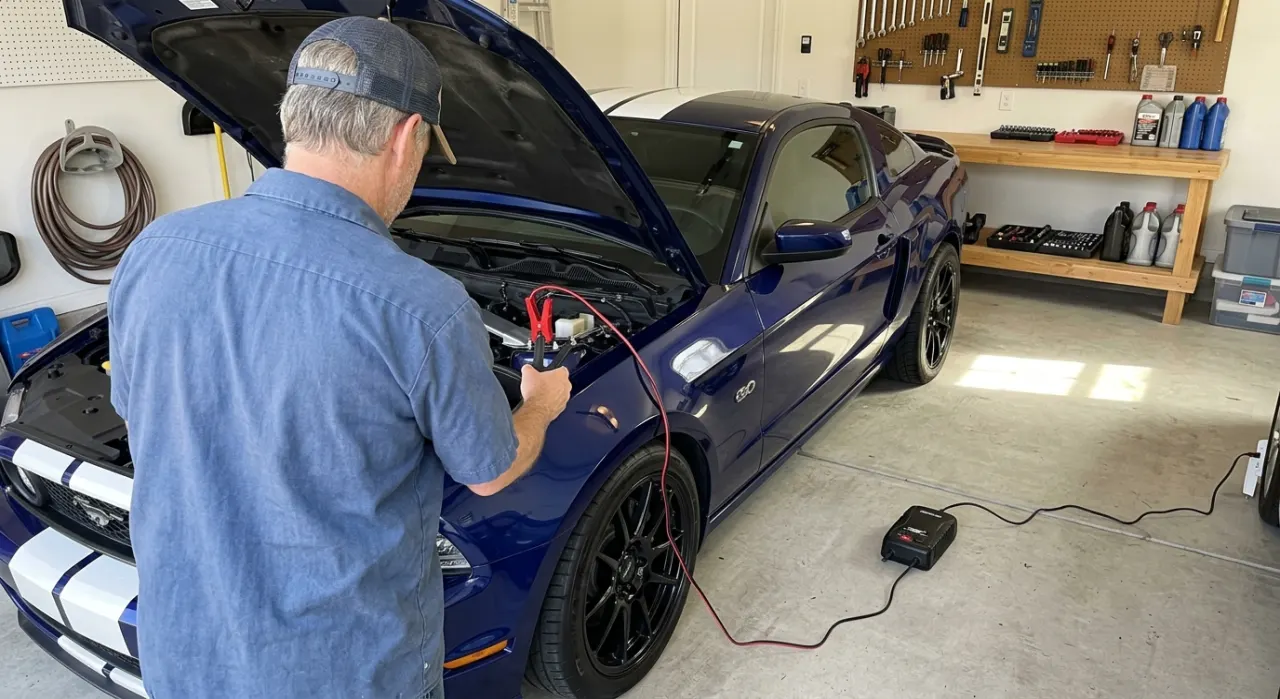
Smart vs dumb: the difference that matters most
Before charger-versus-maintainer, there is a more important split that decides whether either device is safe to leave connected: smart versus dumb. This is the distinction that actually protects (or ruins) your battery.
A smart (microprocessor-controlled) unit reads the battery's voltage and steps through charging stages automatically. It pushes hard during the bulk stage while the battery is low, tapers off through absorption as it fills, then drops to a gentle float voltage — typically around 13.2–13.6V — that holds the battery full without cooking it. Because it self-regulates, a smart charger or maintainer is safe to leave plugged in for weeks or months.
A dumb charger pushes a fixed current regardless of how full the battery is. On a high-amp dumb charger left connected, that is genuinely dangerous — it will keep forcing current into a full battery, boil off electrolyte, and can warp plates or even cause a lead-acid battery to vent gas. Even a dumb low-amp trickle charger can slowly overcharge a battery if left for months, which is exactly the failure people blame on "the charger" when the real culprit is the lack of float control.
The practical rule: for anything you plan to leave connected unattended, buy a smart unit. Nearly every quality maintainer today is smart, and most consumer chargers are too — but confirm it on the box. A smart charger with a float mode is, functionally, both a charger and a maintainer in one housing, which is why it is the single most sensible purchase for the majority of owners.
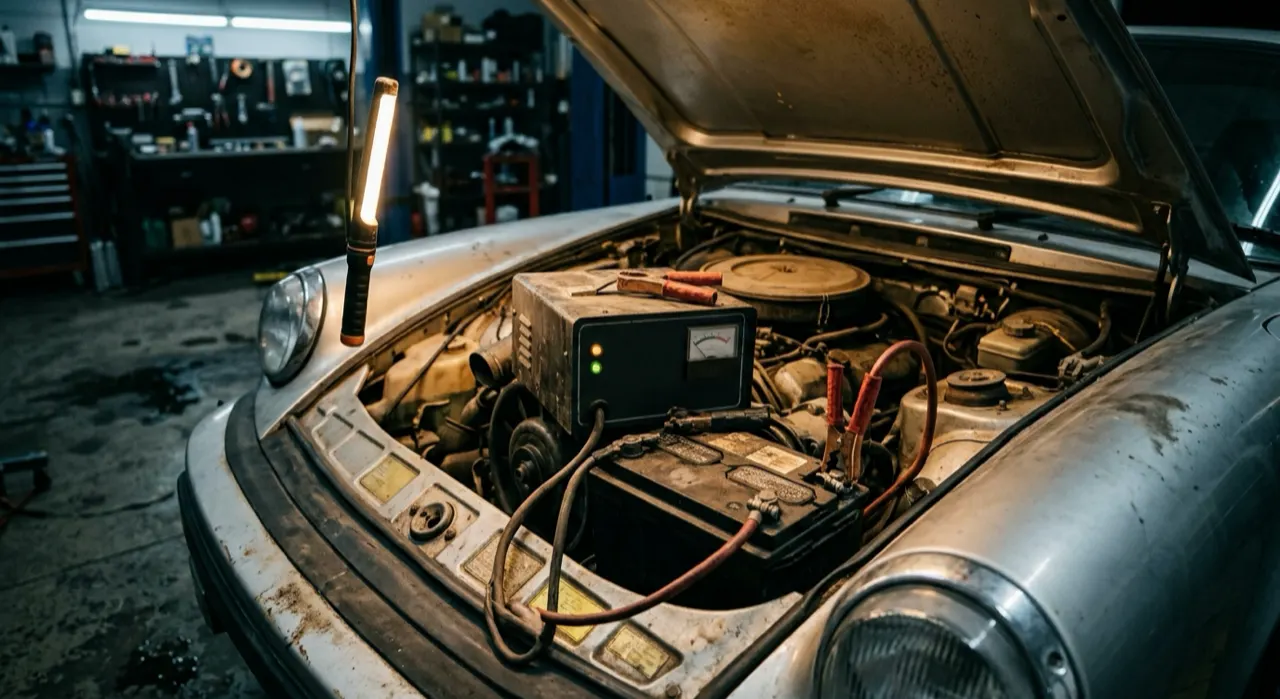
Which one does your situation actually call for?
Because the two devices solve different problems, the honest first question is not "which is better" but "what is my battery actually doing?" Match the tool to the situation:
- You have a dead, weak or deeply discharged battery. You need a charger. A maintainer's trickle simply cannot deliver enough current to recover it in a useful timeframe.
- Your vehicle sits for weeks or months at a time — a classic, a motorcycle, an RV, a boat, a convertible in winter. A maintainer (or a smart charger left in maintenance mode) is exactly right. It holds the battery full through storage.
- Your daily driver keeps going flat from short trips or a small parasitic drain. A charger to top it up periodically, ideally one with a maintenance mode so you can leave it on overnight.
- You want one device to cover everything. Buy a smart charger with a float/maintenance stage. It bulk-charges when the battery is low and switches to maintenance when it is full — the do-it-all answer.
The practical takeaway is that most garages are best served by a single smart charger/maintainer combo, and only add a dedicated cheap maintainer when they have a second stored vehicle that wants its own unit left permanently connected.
Storage, sulfation and why batteries die sitting still
The reason maintainers exist at all comes down to a chemical process called sulfation. A lead-acid battery self-discharges even when nothing is connected — typically a few percent per week — and as it sits partially discharged, soft lead-sulfate crystals form on the plates. Left long enough, those crystals harden and permanently reduce the battery's capacity. This is why a car left parked for two months often cranks slowly or will not start, and why a stored battery that goes flat over winter frequently never fully recovers.
A maintainer breaks that cycle by keeping the battery at full charge, where sulfation cannot take hold. Some smart units add a desulfation or reconditioning mode that pulses higher voltage to break down existing crystals on a mildly sulfated battery — useful, though not a miracle cure for a battery that is already badly degraded.
Owner reports consistently show the payoff: a battery kept on a smart maintainer through storage routinely lasts its full service life, while an identical battery left to self-discharge over repeated winters often fails years early. For AGM and lithium (LiFePO4) batteries, matching the charger's chemistry mode matters even more — lithium in particular needs a charger that will not apply a lead-acid float voltage, so check that your unit has the right mode before you leave it connected.
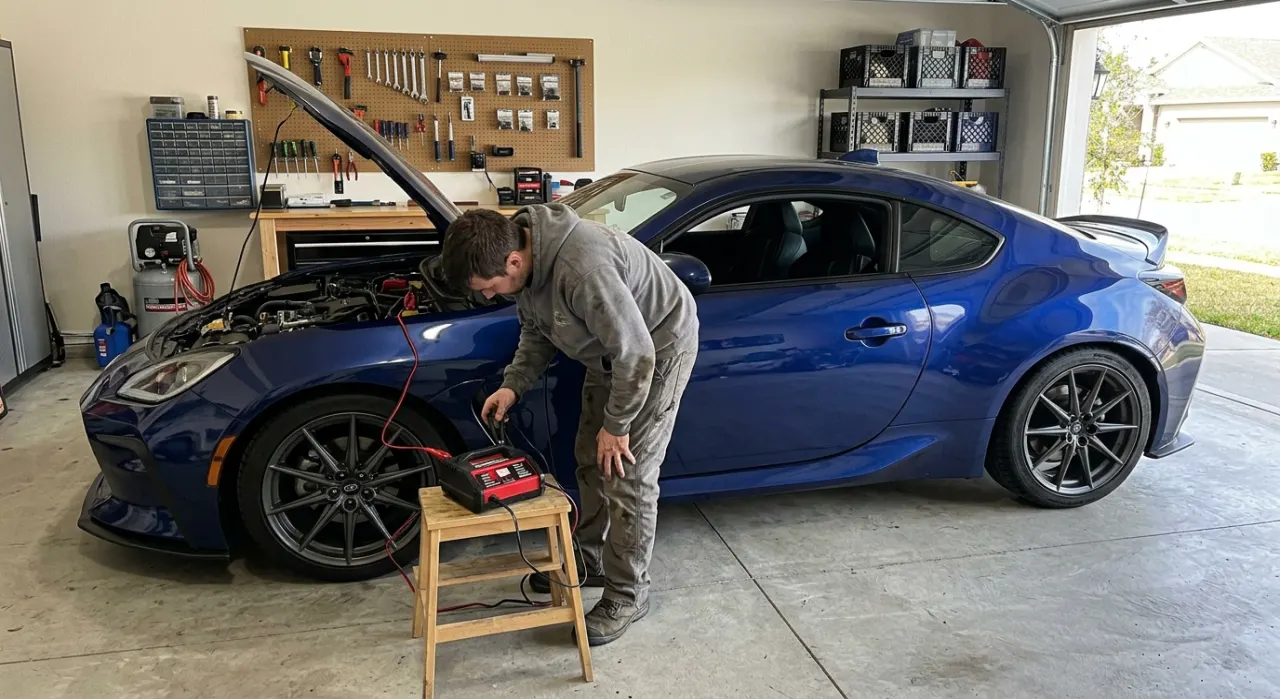
Real cost and value over the life of a battery
On sticker price the two look close — a quality maintainer runs about $20–$60, and a good smart charger $30–$90 — so the pure-dollars gap is small. The better way to judge value is against the battery itself. A decent car battery costs $120–$250 and a premium AGM more, so a $40 device that reliably adds two or three years to that battery's life pays for itself several times over.
The smart charger/maintainer combo is the standout value here. For a small premium over a bare maintainer you get a unit that both recovers a low battery and holds a full one, covering the two jobs most owners will ever face with a single purchase. Buying a dedicated dead-battery charger and a separate maintainer only makes sense once you have multiple vehicles or want a unit permanently parked on a stored bike.
Where the money genuinely differs is at the extremes. A high-amp shop charger with engine-start assist runs $120–$300+ and is worth it if you regularly revive dead batteries or need a fast top-up before a drive. At the other end, if your only need is keeping one stored vehicle alive over winter, a $25 smart maintainer is all the device you need — spending more buys capability you will never use.

Common myths and mistakes
"A trickle charger will recharge my dead battery overnight." It will not. A maintainer's sub-1.5-amp output is designed to hold a full battery, not fill an empty one. On a genuinely dead battery it may take days and still fall short — that job needs a real charger.
"I can leave any charger connected forever." Only if it is smart. A dumb charger with no float stage keeps forcing current into a full battery and will overcharge it, boiling electrolyte and shortening or ending its life. Confirm your unit has automatic float control before you leave it unattended.
"Maintainers and trickle chargers are the same thing." Not quite. The terms get used loosely, but a true maintainer is smart and floats automatically, while an old-school dumb trickle charger puts out constant low current and can slowly overcharge over months. The word on the box matters less than whether it self-regulates.
"My alternator keeps the battery fully charged, so I don't need either." An alternator tops the battery up while you drive, but short trips never fully recharge it, and a parked car self-discharges regardless. A charger or maintainer covers the gap the alternator cannot.
Which should you buy — and how to decide
There is no single winner here because it is not really a versus — it is a question of what you need the device to do. Identify your situation and the answer follows directly.
Buy a smart charger if you ever deal with low, weak or dead batteries, want the flexibility to recover a car that has been sitting, or simply want one device that covers most scenarios. Choose one with a float/maintenance stage and it doubles as a maintainer — for most owners this is the right and only purchase.
Buy a dedicated maintainer if your one clear need is keeping a stored vehicle topped off — a classic, a motorcycle, an RV, a seasonal convertible — and you want a cheap, compact unit to leave connected permanently. It is the ideal set-and-forget tool for storage, and nothing more.
Whatever you choose, insist on a smart, microprocessor-controlled unit with automatic float, match its chemistry mode to your battery (standard lead-acid, AGM or lithium), and size the amperage to the job — low amps for maintenance, higher amps for genuine recharging. Get the situation identified first, and the "which one" question answers itself.
Recommended Products
Our top picks in this category, ranked on aggregated owner reviews.
Best for recovering a flat car or truck battery in an afternoon
- 10A on 6V and 12V, 12V repair mode
- Selectable AGM and lithium profiles
- Thermal sensor adjusts for ambient temp
- Force mode charges from 0 volts
Why buy it: the 10-amp smart charger owners rate highest — fast enough to refill a dead group-35 battery in a few hours, then safe to leave on float indefinitely.
Best for one car, one charger, no complications
- 5A four-stage switch-mode charging
- Lead-acid, AGM, gel and lithium settings
- Automatic float when charging completes
- Clamps plus quick-connect ring harness
Why buy it: the sensible middle of the range — 5 amps suits a normal car battery, and owners like that it drops to float and can simply stay connected.
Best for app monitoring and adjustable charge profiles
- 15A adaptive multi-stage charging
- Bluetooth app with live and historic data
- IP65 water and dust resistant housing
- Lead-acid and LiFePO4 algorithms
Why buy it: the charger enthusiasts and van owners buy once — you can watch every stage on your phone and tune the profile to the exact battery.

Best for a charger that can also crank the engine right now
- 6A charge, 30A boost, 100A engine start
- 6V and 12V, automatic voltage detection
- Built-in battery and alternator tester
- Float mode for long-term maintenance
Why buy it: the do-everything wall charger — owners keep it for the engine-start mode that gets a dead vehicle moving without a second device.

Best for a small charger that still charges properly
- 5A on 6V and 12V, palm-sized housing
- AGM, lithium and repair modes
- Charges batteries down to 1 volt
- Mounting bracket and eyelets included
Why buy it: the charger that fits in a glovebox but behaves like a full smart charger — the best pick if garage wall space is the constraint.

Best for trucks, fleets and deeply discharged big batteries
- 30A bench charge, 80A engine start
- 2A maintainer mode built in
- 120V AC power outlet on the unit
- Digital display with alternator check
Why buy it: the shop-grade unit owners with diesel trucks and multiple vehicles buy — 30 amps refills a big battery fast when time actually matters.
Prices are pulled from Amazon and were accurate as of Aug 22, 2026, 6:44 PM EDT. Product prices and availability are subject to change — the live price is shown on Amazon.