
Affiliate Disclosure
Some links on this page are affiliate links. As an Amazon Associate, we earn from qualifying purchases — at no extra cost to you. We do not buy, test, or physically handle the products we cover; our rankings come from aggregated owner reviews, ratings and expert consensus. Commissions never change our verdicts. How we rank & full disclosure.
Bridgestone
The world's largest tire maker, Japanese-engineered and heavy on original-equipment fitments. Its lineup leans toward crisp dry grip, strong run-flat options and touring tires that punch above their price.
Best for: Drivers who want responsive handling, run-flat availability or a slightly lower price without dropping to a budget brand
Roughly $120–$320 per passenger/SUV tire depending on size and line
- Consistently sharp dry grip and steering response, especially in the Potenza performance range
- Widest run-flat lineup of the two — many OE run-flats and the DriveGuard retrofit line
- Turanza QuietTrack and B-Silent tech earn strong marks for a quiet touring ride
- Often $15–$40 per tire cheaper than the comparable Michelin
- Huge OE presence, so a factory-matched size and compound is usually easy to find
- Tread life trails Michelin in most aggregated owner and survey data
- All-season "grand touring" lines are strong, but Michelin's CrossClimate2 has no direct equal
- Line naming is sprawling — easy to buy a lesser tier by mistake
- Run-flat comfort, as with all run-flats, is firmer than a standard tire
Michelin
The French premium benchmark most owner surveys and Consumer Reports rank at or near the top for tread life and wet grip. You pay more, and the tire is engineered to justify it over the long run.
Best for: Drivers who keep cars a long time and want maximum tread life, wet safety and low noise — and will pay for it
Roughly $150–$360 per passenger/SUV tire depending on size and line
- Class-leading tread life — Defender and CrossClimate2 routinely clear their 60k–80k mile warranties in owner reports
- Top-tier wet braking and hydroplaning resistance via EverGrip and biting-edge tread design
- CrossClimate2 blurs the line between all-season and true winter traction with a 3PMSF rating
- Quiet, compliant ride that owners repeatedly single out for comfort
- Strong resale of ride quality — the tire "feels new" longer as it wears
- The most expensive mainstream brand — typically the price ceiling in any given size
- Fewer run-flat options than Bridgestone in many fitments
- Ultra-high-performance dry grip can trail a fresh Bridgestone Potenza on paper
- Premium pricing means a full set is a real budget decision
How they score, side by side
Scores reflect aggregated owner reviews and expert consensus — not our own bench testing.
- Tread life / longevity89
- Wet grip & safety89
- Dry / performance grip98
- Ride comfort & noise89
- All-season versatility79
- Value for money87
- Run-flat availability96
Spec-by-spec comparison chart
| Factor | Bridgestone | Michelin |
|---|---|---|
| Parent & origin | Bridgestone Corp. (Japan) — owns Firestone | Michelin Group (France) — owns BFGoodrich, Uniroyal |
| Typical price each | $120–$320 | $150–$360 |
| Signature strength | Dry grip, steering response, run-flats | Tread life, wet grip, ride comfort |
| Flagship lines | Turanza, Potenza, Alenza, DriveGuard | Defender, Pilot Sport, CrossClimate2, Primacy |
| Treadwear warranty range | 40,000–80,000 miles by line | 45,000–80,000 miles by line |
| Run-flat availability | Broad — many OE + DriveGuard retrofit | Limited (ZP on select fitments) |
| Wet performance (aggregate) | Strong | Class-leading |
| All-season / light-snow standout | WeatherPeak | CrossClimate2 (3PMSF-rated) |
| Road-noise reputation | Very good (QuietTrack, B-Silent) | Very good — often quietest as it wears |
| Satisfaction / trial guarantee | 90-day Buy & Try | 60-day satisfaction guarantee |
| EV-specific lines | Turanza EV, Alenza AS Ultra | Pilot Sport EV, e.Primacy |
Our Top 3 Picks
The three highest-rated options in this category, if you'd rather skip straight to a proven pick.

Best for the longest realistic tread life and a quiet, comfortable all-season ride
- Class-leading tread life (up to 80k-mi warranty)
- Strong wet grip and quiet ride
- Sedan, coupe & minivan touring tire
- Sold in many passenger sizes
Why buy it: Michelin's touring benchmark — confirm your exact tire size before ordering, as this listing is one specific fitment.
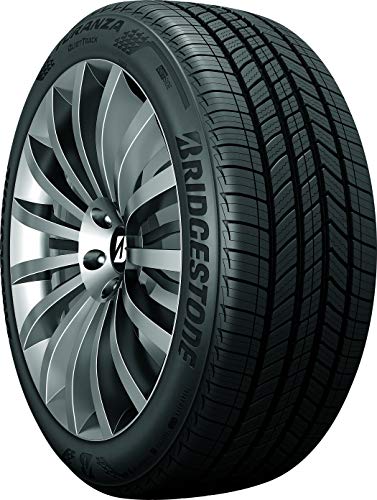
Best for a quiet touring tire with near-premium quality for a little less money
- QuietTrack noise-reduction tech
- Long-wearing touring compound
- Usually undercuts the Michelin on price
- Broad passenger-car fitment range
Why buy it: Bridgestone's value touring pick — confirm your exact tire size before ordering; sizing is listing-specific.
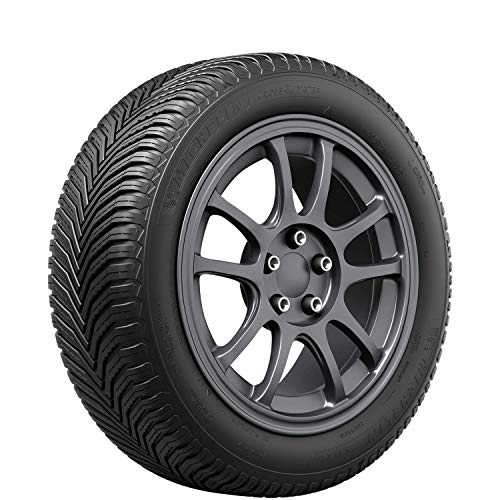
Best for year-round grip with real light-snow capability and no winter tire swap
- 3PMSF severe-snow rated
- Class benchmark for all-weather traction
- Strong wet and dry performance
- Passenger & CUV sizes available
Why buy it: The all-weather class leader — confirm your exact tire size before ordering, as each listing covers one fitment.
Prices are pulled from Amazon and were accurate as of Aug 22, 2026, 6:54 PM EDT. Product prices and availability are subject to change — the live price is shown on Amazon.
What actually separates Bridgestone and Michelin
Start with the honest truth: both Bridgestone and Michelin sit at the top tier of the tire market, alongside Continental and Goodyear. Neither is a "budget" choice, neither is unsafe, and in most sizes you can fit either brand and be happy. So the comparison is not good-versus-bad — it is two excellent companies that have optimized for slightly different priorities, and matching those priorities to how you actually drive is where the real decision lives.
Michelin is the premium longevity benchmark. Across independent owner surveys, Consumer Reports and Tire Rack's large tester-and-buyer databases, Michelin lines like the Defender T+H and CrossClimate2 consistently land at or near the top for tread life and wet grip. The engineering philosophy shows up as compounds and tread designs that hold performance deep into their wear life — owners repeatedly note the tire still "feels new" at 40,000 miles. You pay for that, and Michelin is almost always the price ceiling in any given size.
Bridgestone is the world's largest tire manufacturer and leans toward response and breadth. Its Potenza performance line is a genuine benchmark for dry steering feel, its Turanza touring tires earn strong quiet-ride marks, and critically it offers the widest run-flat catalog of the two — both as original equipment on cars that ship without a spare, and through the aftermarket DriveGuard line. On price, a comparable Bridgestone typically undercuts the Michelin by roughly $15–$40 per tire, which adds up to real money across a set of four.
The clean mental model detailers and mechanics use: Michelin optimizes for the long game — tread life, wet safety, quiet comfort over years of ownership. Bridgestone optimizes for feel, fitment breadth and value — sharp response, run-flats, and near-Michelin quality for a little less. Both build tires the other would be proud of; the tilt is in emphasis.
Matching each brand's tire lines to your car
Here is the mistake that ruins more tire comparisons than any other: judging a brand instead of a line. Both companies sell tires from mud-and-snow truck rubber to track-day performance, and a mismatched line will underwhelm no matter whose name is on it. Buy the category first, then compare the two brands' offerings inside it.
- All-season sedan / crossover (comfort + long life): Michelin Defender T+H or Primacy vs. Bridgestone Turanza QuietTrack. This is Michelin's home turf for tread life; Bridgestone answers with a very quiet, slightly cheaper touring tire.
- All-weather / light snow without a winter swap: Michelin CrossClimate2 vs. Bridgestone WeatherPeak. The CrossClimate2 carries the 3PMSF severe-snow rating and is widely regarded as the class benchmark; the WeatherPeak is a strong, value-priced answer.
- Sport / performance (dry grip and steering): Bridgestone Potenza vs. Michelin Pilot Sport. Both are elite; a fresh Potenza often edges dry steering feel, while the Pilot Sport tends to hold grip and behave predictably longer.
- Truck / SUV touring and all-terrain: Michelin Defender LTX / Primacy vs. Bridgestone Alenza and Dueler. Michelin usually wins the highway-mile longevity race; Bridgestone competes hard on ride and price.
- Run-flat replacement (BMW and similar, no spare): Bridgestone has the deeper catalog, including the DriveGuard line that lets some non-run-flat cars adopt run-flats. Michelin's ZP options exist but are thinner across fitments.
Get the line right and both brands deliver. Get it wrong — say, a bargain touring tire on a car you drive hard, or a stiff performance tire on a comfort commuter — and you'll blame the brand for a choice you made.
Tread life, warranties and long-run cost
This is Michelin's clearest edge, and it is backed by more than marketing. In aggregated owner reviews and long-running tester databases, Michelin's touring lines have a reputation for meeting or exceeding their mileage warranties — the Defender family carries treadwear warranties up to 80,000 miles, and owners frequently report reaching them. That longevity is the quiet argument that offsets the higher sticker: a tire that lasts 70,000 miles at $220 can cost less per mile than one that lasts 50,000 miles at $180.
Bridgestone is not far behind and has closed much of the gap in recent generations — Turanza and Alenza lines now carry warranties in the same 60,000–80,000 mile range depending on speed rating. The consensus in owner data is that Bridgestone touring tires wear well, just typically a notch short of the segment-leading Michelins on identical duty. On the performance side the picture narrows, because summer and ultra-high-performance tires from both brands trade grip for wear and neither will last like a touring tire.
One practical note both brands share: a treadwear warranty is prorated and conditional on documented rotations (typically every 5,000–8,000 miles) and proper alignment. Skip the rotations and neither company will honor the full mileage. Buy in sets of four when the vehicle allows, keep the receipts, and rotate on schedule — that discipline affects real-world life more than the badge does.
Wet grip, dry handling and noise
On wet performance, the aggregate data gives Michelin the nod. Its EverGrip concept and biting-edge tread patterns are engineered so wet braking degrades slowly as the tire wears, and Michelin lines repeatedly post the shortest wet-stopping distances in independent testing. For drivers in rainy climates who prioritize the safety margin, that is a meaningful, measurable advantage — wet stopping distance is where tires save you, and it is where Michelin most consistently leads.
On dry handling and steering feel, Bridgestone often takes it, especially in the performance category. A fresh Potenza is a benchmark for sharp turn-in and linear response, and enthusiasts frequently choose it for exactly that character. The trade-off is that ultra-high-performance grip tends to fade with wear faster than Michelin's, so the advantage is sharpest when the tire is new. For a spirited daily driver, this is a genuine reason some owners prefer Bridgestone.
On noise and comfort, it is close and both brands are excellent. Bridgestone's QuietTrack and B-Silent technologies earn strong quiet-cabin marks, and Turanza owners often cite noise as a highlight. Michelin tends to be praised for staying quiet and compliant deeper into its wear life — the comfort doesn't degrade as the tread ages. Call comfort a near-tie when new, with a slight long-term edge to Michelin.
Real cost and value over a set's life
Sticker price favors Bridgestone: expect to pay roughly $15–$40 less per tire for a comparable line, which is $60–$160 across a set of four. If you swap tires every few years, keep a car for a shorter time, or simply want tier-one quality without the top price, that saving is real and Bridgestone is the value play.
Cost-per-mile can favor Michelin. When a Michelin touring tire genuinely delivers 70,000+ miles against a comparable tire's 55,000, the higher upfront price can work out cheaper over the life of the tire — and you get the wet-grip and comfort dividend along the way. The honest way to decide is to divide the installed set price by the realistic mileage you'll actually get, not the warranty number, and compare the two per-mile figures for your specific size.
Installed, expect a set of four mid-range touring tires to land somewhere around $700–$1,000 for Bridgestone and $850–$1,200 for Michelin once mounting, balancing, valve stems and disposal are added — highly size-dependent. Both brands run frequent rebate promotions (often $70–$100 off a set), so timing the purchase around a manufacturer rebate narrows the price gap and is worth waiting a few weeks for if your current tires are safe.
Common myths and buying mistakes
"Michelin is always the better tire." Not category by category. Michelin leads longevity and wet grip, but a fresh Bridgestone Potenza can out-handle a comparable Michelin on a dry road, and Bridgestone's run-flat catalog is deeper. "Better" depends entirely on what you're buying the tire to do.
"Any Bridgestone or any Michelin will do." The line matters far more than the brand. A budget touring line from either maker will disappoint on a car that needs a performance or all-weather tire. Compare like-for-like lines, not badges.
"Run-flats ride the same as regular tires." No. Run-flats — Bridgestone's strength — use stiffer sidewalls to run temporarily flat, and that firmness is noticeable. If your car didn't come with run-flats and you don't need them, a standard tire from either brand rides softer.
"I can mix one Bridgestone with one Michelin to save money." Strongly discouraged. Different brands, and even different lines, have different grip levels and wear rates. The consensus among mechanics is to run a matched set — four identical tires — for predictable handling, especially on AWD where mismatched circumferences can stress the driveline.
Which should you buy — and how to decide
There is no universal winner, because both are genuine tier-one tires. The decision comes down to your priorities, climate and how long you keep the car — and to picking the right line within whichever brand you choose.
Lean Michelin if you keep vehicles a long time, drive in wet climates, want the longest realistic tread life, or simply value a quiet, comfortable ride that stays that way as the tire wears. The Defender for touring and the CrossClimate2 for all-weather duty are the lines that most reliably justify the premium.
Lean Bridgestone if you want sharper dry handling, need run-flats (or your BMW-style car came with them), or want the same tier of quality for meaningfully less money. The Potenza for performance and the Turanza QuietTrack for a quiet, value-priced touring tire are its strongest arguments.
Whichever badge you land on, buy a matched set of four, pick the line that fits your car and climate rather than the cheapest tier, keep up with rotations and alignment to protect the warranty, and time the purchase around a manufacturer rebate. Do that, and both Bridgestone and Michelin will serve you well — the "which one" question mostly answers itself once you've been honest about how you drive.
Recommended Products
Our top picks in this category, ranked on aggregated owner reviews.
Best for the longest realistic tread life and a quiet, comfortable all-season ride
- Class-leading tread life (up to 80k-mi warranty)
- Strong wet grip and quiet ride
- Sedan, coupe & minivan touring tire
- Sold in many passenger sizes
Why buy it: Michelin's touring benchmark — confirm your exact tire size before ordering, as this listing is one specific fitment.
Best for a quiet touring tire with near-premium quality for a little less money
- QuietTrack noise-reduction tech
- Long-wearing touring compound
- Usually undercuts the Michelin on price
- Broad passenger-car fitment range
Why buy it: Bridgestone's value touring pick — confirm your exact tire size before ordering; sizing is listing-specific.
Best for year-round grip with real light-snow capability and no winter tire swap
- 3PMSF severe-snow rated
- Class benchmark for all-weather traction
- Strong wet and dry performance
- Passenger & CUV sizes available
Why buy it: The all-weather class leader — confirm your exact tire size before ordering, as each listing covers one fitment.

Best for dedicated cold-weather grip on ice and packed snow
- Dedicated winter/snow compound
- Strong ice and packed-snow braking
- For seasonal fitment on a winter set
- Multiple passenger sizes
Why buy it: Bridgestone's winter standout — confirm your exact tire size before ordering; run a matched set of four.

Best for summer performance grip that stays predictable as it wears
- Ultra-high-performance summer tire
- Holds grip predictably deep into wear
- Sharp dry and wet handling
- Sport and performance-car sizes
Why buy it: Michelin's flagship performance tire — confirm your exact tire size before ordering, as fitments are listing-specific.
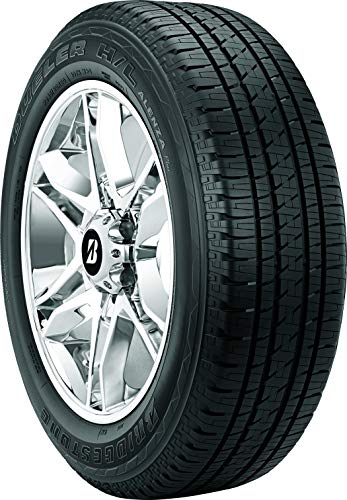
Best for a comfortable, long-wearing highway tire for SUVs and light trucks
- Highway touring for SUV & light truck
- Comfort-tuned, long-wear compound
- Strong ride quality on the highway
- Truck & SUV fitment range
Why buy it: Bridgestone's SUV/truck highway tire — confirm your exact tire size before ordering to match your vehicle.
Prices are pulled from Amazon and were accurate as of Aug 22, 2026, 6:54 PM EDT. Product prices and availability are subject to change — the live price is shown on Amazon.