
Affiliate Disclosure
Some links on this page are affiliate links. As an Amazon Associate, we earn from qualifying purchases — at no extra cost to you. We do not buy, test, or physically handle the products we cover; our rankings come from aggregated owner reviews, ratings and expert consensus. Commissions never change our verdicts. How we rank & full disclosure.
Cat-Back Exhaust
Replaces everything from the outlet of the catalytic converter rearward — typically the mid-pipe, resonator, muffler and tips. It is the larger, more complete of the two upgrades.
Best for: Owners who want a real gain in flow, a fuller tone, and a full system they can build on later
Typically $400–$1,200+ for the kit, plus $150–$350 shop labor
- Replaces the mid-pipe too, so it can widen a restrictive factory pipe diameter, not just the muffler
- Bigger, deeper tone change because more of the exhaust path is opened up
- Best shot at a measurable power gain on a modified or naturally restrictive car
- Higher-quality kits use mandrel-bent, T304 stainless tubing that outlasts the factory pipe
- A complete matched system — resonator, muffler and tips are engineered to work together
- Two to three times the price of an axle-back on most platforms
- Longer install — more hangers, joints and clearance to fight, often needing a lift
- Bigger tone change can drone at highway cruise if the kit skips a resonator
- On a stock, sealed factory car the real dyno gain is often small for the money
Axle-Back Exhaust
Replaces only the last section — from the rear axle back, meaning the muffler and tips. It leaves the factory mid-pipe and converter untouched.
Best for: Owners chasing a better sound and look on a budget, without opening up the whole system
Typically $200–$600 for the kit, plus $80–$200 shop labor
- Cheapest way to change the exhaust note and upgrade the tips
- Easiest install — often two clamps and two hangers, driveway-friendly
- Keeps the factory mid-pipe diameter, so cruise drone is usually milder
- Bolts to the same location as the stock muffler, so fitment is predictable
- Little to no power gain — the restrictive mid-pipe and converter stay put
- Tone change is smaller and shallower than a full cat-back
- If you later add a cat-back, the axle-back muffler is often redundant spending
- Cannot address a narrow factory pipe upstream of the axle
How they score, side by side
Scores reflect aggregated owner reviews and expert consensus — not our own bench testing.
- Sound improvement96
- Power potential63
- Value for money69
- Install ease59
- Build-ready / future-proof94
- Drone control68
Spec-by-spec comparison chart
| Factor | Cat-Back Exhaust | Axle-Back Exhaust |
|---|---|---|
| What it replaces | Cat outlet rearward: mid-pipe, resonator, muffler, tips | Rear axle back only: muffler and tips |
| Touches the mid-pipe | Yes — can widen a restrictive factory pipe | No — factory mid-pipe stays |
| Typical power gain (stock car) | ~5–15 hp on restrictive platforms; often less | Negligible — usually 0–3 hp |
| Tone change | Large — deeper, fuller, more aggressive | Moderate — louder tips, milder character shift |
| Kit price | $400–$1,200+ | $200–$600 |
| Install labor | ~$150–$350 (often needs a lift) | ~$80–$200 (frequently DIY) |
| Install difficulty | Moderate — more joints and clearance | Easy — usually clamp-on |
| Highway drone risk | Higher if resonator is deleted | Lower — factory mid-pipe damps it |
| Emissions / cat status | Leaves the catalytic converter in place | Leaves the catalytic converter in place |
| Upgrade path | Complete system — the end point | Can be superseded later by a cat-back |
Our Top 3 Picks
The three highest-rated options in this category, if you'd rather skip straight to a proven pick.

Best for the most bang-for-buck bolt-on airflow gain
- Washable, reusable cotton-gauze filter
- Polished aluminum intake tube
- Powder-coated heat shield included
- Vehicle-specific fit — check your model
Why buy it: the value default owners keep pointing beginners to — rated 4.5 across thousands of reviews for a real airflow and sound bump at a price that barely dents the build fund.

Best for the cheapest branded way to open up intake sound
- Universal cone filter and tube components
- Cotton-gauze element, cleanable
- Mix-and-match couplers and clamps
- Best for custom or open-element setups
Why buy it: the budget entry point — owners rate it 4.4 for a throaty intake growl and easy airflow gain, ideal if you want the sound and DIY flexibility on the cheap.

Best for the best-known washable filter and finish
- K&N cotton-gauze filter, ~100k-mile service
- Mandrel-bent tube for smooth flow
- Aggressive intake growl on throttle
- Model-specific fit — verify part number
Why buy it: the trusted-name pick — rated 4.6, owners praise the lifetime-washable K&N filter and clean bolt-in fit that turns intake noise into part of the fun.
Prices are pulled from Amazon and were accurate as of Aug 22, 2026, 6:54 PM EDT. Product prices and availability are subject to change — the live price is shown on Amazon.
What actually separates a cat-back from an axle-back
These two terms confuse more shoppers than almost any other exhaust question, and the reason is simple: they describe how much of the same system you are replacing, not two competing designs. Both start at the same point downstream of the engine and both leave the catalytic converter alone. The difference is where each one begins.
An axle-back replaces the exhaust from the rear axle backward. In plain terms, that is the last muffler and the tips. Everything ahead of it — the catalytic converter and the mid-pipe that runs the length of the floor — stays exactly as the factory built it. It is the shortest, cheapest version of an exhaust upgrade.
A cat-back replaces everything from the outlet of the catalytic converter rearward. That includes the mid-pipe, any resonator, the muffler and the tips — essentially the entire system behind the cat. Because it swaps the mid-pipe too, a cat-back can open up a narrow factory pipe diameter that an axle-back can never touch.
The cleanest way to remember the relationship, and the way most enthusiasts frame it: an axle-back is just the rear section of a cat-back. A cat-back contains the axle-back portion plus the mid-pipe ahead of it. So this is rarely a true "which is better" question — it is "how far up the car do you want to spend?" That framing decides almost everything that follows.
Sound: how different do they really make it?
For most buyers, sound is the real reason either part goes on the car, and here the two genuinely diverge. Aggregated owner reviews are consistent on the pattern: an axle-back changes the volume and the tips more than it changes the fundamental character of the car, while a cat-back reshapes the whole voice.
Because an axle-back only swaps the final muffler, it makes the car louder and a bit more aggressive, but the factory mid-pipe and resonator ahead of it still color the tone. Owners routinely describe the result as "the stock sound, turned up" — a worthwhile improvement, especially over a boring factory can, but not a transformation.
A cat-back opens up more of the path, so the change is deeper and fuller. With the mid-pipe and resonator now part of the new system, the exhaust note takes on a different character rather than just more of the same one. The trade-off is drone — the boomy resonance at steady highway rpm. A cat-back that deletes the resonator to chase volume is the classic drone offender, and it is the single most common regret in owner reviews. Kits that retain a resonator, or offer a helmholtz chamber, keep cruise livable. If you commute, read reviews specifically for the word "drone" before you buy.
Power: what each one actually gains
This is where honest expectations matter most, because marketing photos of dyno charts oversell both parts. The mechanic and tuner consensus is blunt: on a stock, otherwise-sealed car, neither an axle-back nor a cat-back is a meaningful power mod. The biggest flow restrictions on a modern car are the catalytic converter and the cylinder head, and neither of these parts touches those.
An axle-back replaces only the rear muffler, which on most cars is not the restriction. Spec sheets and dyno logs put the realistic gain at roughly 0–3 hp — effectively nothing you can feel. Anyone selling an axle-back on horsepower is selling you sound and calling it power.
A cat-back has a better case because it can widen a genuinely restrictive factory mid-pipe. On turbocharged and naturally restrictive platforms, owners and shops report gains in the ballpark of 5–15 hp, with the bigger numbers usually appearing only once the car is also tuned or has other bolt-ons. On a naturally aspirated economy car with an already-adequate pipe, even a cat-back can dyno within the margin of error. The takeaway: buy a cat-back for flow only if your specific platform is known to be pipe-restricted, and expect the gain to arrive as part of a wider build, not on its own.
Real cost, parts and labor, and the redundancy trap
The price gap is the most practical decider. An axle-back kit typically runs $200–$600 and, because it is often a two-clamp, two-hanger job, plenty of owners fit one in a driveway with jack stands and a socket set — or pay $80–$200 to have a shop do it. A cat-back kit is a bigger purchase at $400–$1,200 or more, with more joints, hangers and clearance to fight, so it commonly wants a lift and $150–$350 in labor.
But the number that catches people out is not the sticker — it is the redundancy trap. A very common path is to buy a cheap axle-back first, enjoy it, then later want the fuller sound and flow of a cat-back. The problem: a cat-back includes its own muffler and tips, so it makes the axle-back you already bought completely redundant. You end up paying for the rear section twice. If there is any real chance you will eventually want a cat-back, buying it once is cheaper than buying an axle-back and then a cat-back in sequence.
On build quality, the honest guidance from long-term owner reports is to look past the brand name to the tubing. Quality kits — cat-back or axle-back — use mandrel-bent T304 stainless steel, which keeps a smooth internal diameter through the bends and resists rust for the life of the car. Cheaper aluminized or T409 systems save money up front but can discolor and corrode sooner, especially in salt-belt states.
Legality, emissions and drone
Both upgrades share one important thing: they leave the catalytic converter in place. Neither an axle-back nor a cat-back removes or defeats the cat, which is exactly why both are generally street-legal and emissions-friendly in most states — you are changing what happens behind the converter, not tampering with the emissions device itself. That is a genuine advantage over "cat-delete" or "test pipe" mods, which are off-road-only in the US and will fail an inspection.
Two caveats worth knowing. First, many states enforce noise limits, and a loud, resonator-deleted cat-back can draw attention even with the cat intact; a few states also require aftermarket exhaust parts to carry a compliance stamp. Second, some regions test for tampering visually or by sound, so keep documentation that your system retains the converter. Within those limits, both parts are among the safest, most inspection-friendly exhaust changes you can make.
Common myths and mistakes
"An axle-back will add horsepower." It essentially won't. It swaps the rear muffler, which is rarely the restriction. Buy it for sound and looks — that is what it delivers, and it delivers it well.
"A cat-back is just a louder axle-back." No. A cat-back replaces the mid-pipe too, so it can change flow and reshape tone in a way an axle-back structurally cannot. They overlap in the rear section but the cat-back does more upstream.
"Delete the resonator for the best sound." This is the top source of buyer's remorse. Removing the resonator maximizes volume but is the fastest route to highway drone that gets exhausting on a commute. Keep the resonator unless you truly want the loudest possible setup.
"I'll start with an axle-back and add a cat-back later." That path pays for the rear muffler twice. If a cat-back is your eventual goal, skip the axle-back and buy the cat-back once.
"More tip diameter means more power." Tip size is cosmetic. What matters for flow is the mid-pipe diameter and the cat — the shiny tips at the back are styling, not performance.
Which should you buy — and how to decide
The winner depends entirely on your goal, but for most buyers the axle-back is the smarter first move. It is the cheapest way to make the car sound better, it installs in a driveway, and it keeps cruise drone mild. If sound and a better set of tips are all you want, the axle-back gives you 80% of the emotional payoff for a fraction of the price.
Buy an axle-back if you want a better note on a budget, you value an easy install, you daily-drive the car and hate drone, and you have no plans to chase flow gains later.
Buy a cat-back if you want the fullest, deepest tone change, your platform is known to have a restrictive factory mid-pipe, you are building toward more power with a tune and other mods, or you simply want to buy the complete system once and be done. On a modified or turbo car, the cat-back is the one that can actually contribute to a power figure.
Whichever you choose, prioritize mandrel-bent T304 stainless construction, read owner reviews specifically for drone at your cruising speed, and confirm the kit retains the catalytic converter so you stay inspection-legal. Match the length of the upgrade to your budget and your ears, and — critically — do not buy an axle-back this year if you already know a cat-back is where you want to end up.
Recommended Products
Our top picks in this category, ranked on aggregated owner reviews.
Best for the most bang-for-buck bolt-on airflow gain
- Washable, reusable cotton-gauze filter
- Polished aluminum intake tube
- Powder-coated heat shield included
- Vehicle-specific fit — check your model
Why buy it: the value default owners keep pointing beginners to — rated 4.5 across thousands of reviews for a real airflow and sound bump at a price that barely dents the build fund.
Best for the cheapest branded way to open up intake sound
- Universal cone filter and tube components
- Cotton-gauze element, cleanable
- Mix-and-match couplers and clamps
- Best for custom or open-element setups
Why buy it: the budget entry point — owners rate it 4.4 for a throaty intake growl and easy airflow gain, ideal if you want the sound and DIY flexibility on the cheap.
Best for the best-known washable filter and finish
- K&N cotton-gauze filter, ~100k-mile service
- Mandrel-bent tube for smooth flow
- Aggressive intake growl on throttle
- Model-specific fit — verify part number
Why buy it: the trusted-name pick — rated 4.6, owners praise the lifetime-washable K&N filter and clean bolt-in fit that turns intake noise into part of the fun.
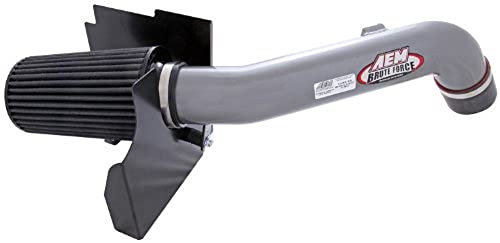
Best for big-engine trucks and SUVs that want more air
- Heavy-duty tube built for larger engines
- Washable AEM synthetic or cotton filter
- Designed for V6 and V8 truck airflow
- Application-specific — confirm fitment
Why buy it: the hauler’s choice — buyers rate it 4.6 for noticeably freer breathing and a deeper note on trucks and SUVs, where the extra tube diameter actually earns its keep.

Best for the cleanest fit-and-finish and intake note
- 6061-T6 aluminum tube, CNC brackets
- SuperNano-Web dry filter, no oiling
- MR Technology tuning for smooth power
- Tuned per application — check your model
Why buy it: the enthusiast’s pick — rated 4.7 for show-quality fit and a crisp intake note, the step up worth stretching for if looks and sound matter as much as airflow.

Best for documented, dyno-tested power gains
- Dyno-proven horsepower and torque figures
- Airbox or heat shield to pull cooler air
- Oversized washable filter element
- Vehicle-specific engineering — verify fit
Why buy it: the pick for owners who want numbers, not vibes — rated 4.7, Mishimoto publishes dyno figures for each application so you know exactly what the intake buys before you bolt it on.
Prices are pulled from Amazon and were accurate as of Aug 22, 2026, 6:54 PM EDT. Product prices and availability are subject to change — the live price is shown on Amazon.