
Affiliate Disclosure
Some links on this page are affiliate links. As an Amazon Associate, we earn from qualifying purchases — at no extra cost to you. We do not buy, test, or physically handle the products we cover; our rankings come from aggregated owner reviews, ratings and expert consensus. Commissions never change our verdicts. How we rank & full disclosure.
Ceramic Coating
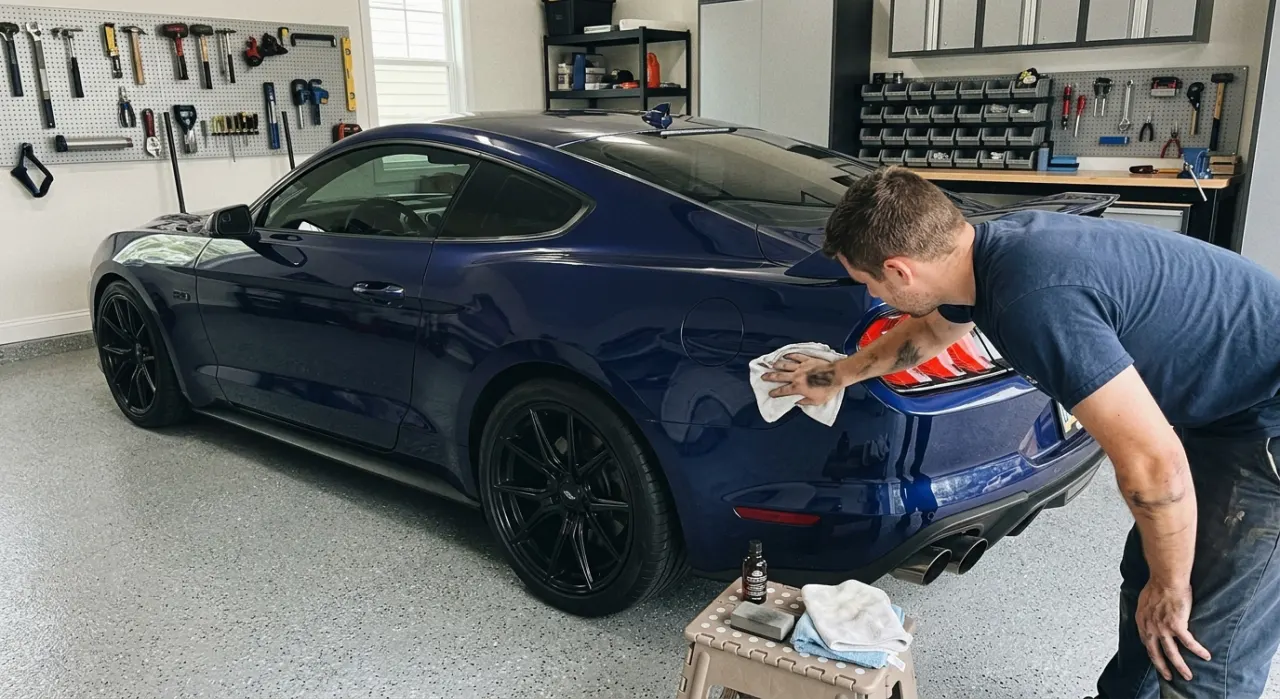
A liquid SiO2 (silica) polymer that chemically bonds to the clear coat and cures into a thin, glass-hard layer. It transforms how the paint sheds water and resists chemicals, but it stays microns thin.
Best for: Owners who want easier washing, deep gloss and chemical/UV protection across the whole car for a moderate price
Consumer DIY bottles $20–$100; professional installs typically $500–$2,000+ depending on prep and coating tier
- Extreme hydrophobicity — water and mud sheet off, so the car stays cleaner and washes faster
- Strong protection against UV fade, bird droppings, bug acids and road chemicals
- Locks in a deep, slick gloss that flat wax cannot match
- Covers the entire vehicle affordably compared with wrapping every panel in film
- Professional coatings commonly carry multi-year warranties (2–7 years)
- Offers almost no impact resistance — rock chips, scratches and door dings still reach the paint
- Success lives or dies on paint correction and prep; a rushed install traps swirls under the coating
- Self-healing is minimal; light marring can still occur from careless washing
- Not a permanent fix — it degrades and eventually needs stripping and reapplication
Paint Protection Film (PPF)
A thick, self-healing thermoplastic urethane film physically applied over the paint. It acts as a clear sacrificial shield, absorbing rock chips and abrasions that would otherwise scar the clear coat.
Best for: Owners who drive highway miles, want rock-chip protection, or are shielding a high-value or leased vehicle
Partial front (bumper, hood, mirrors) $800–$1,800; full-vehicle wrap typically $4,000–$8,000+
- Genuine physical impact protection — absorbs rock chips, sand blasting and light scratches
- Self-healing top coat: many films erase swirl marks and light scuffs with heat from the sun
- Protects resale-critical high-impact zones (bumper, hood, mirrors, rockers)
- Modern films carry 10-year manufacturer warranties against yellowing and cracking
- Removable — it can be peeled off to reveal untouched factory paint underneath
- Expensive, especially a full wrap, and highly dependent on installer skill
- Cheaper or aging film can yellow, lift at the edges or leave visible seams
- Bare film is less hydrophobic and less glossy than a ceramic coating on its own
- Complex curves and full coverage require an expert installer to avoid stretch marks
How they score, side by side
Scores reflect aggregated owner reviews and expert consensus — not our own bench testing.
- Rock-chip / impact defense210
- Gloss & shine96
- Water beading / self-cleaning106
- Chemical & UV resistance97
- Value for whole-car coverage84
- Longevity69
- DIY friendliness72
Spec-by-spec comparison chart
| Factor | Ceramic Coating | Paint Protection Film (PPF) |
|---|---|---|
| Primary job | Chemical shield — gloss, slickness, stain & UV resistance | Physical shield — impact and abrasion protection |
| Rock-chip protection | Essentially none | Yes — its core strength |
| Self-healing scratches | Minimal to none | Yes (heat-activated on most films) |
| Hydrophobicity / water beading | Excellent | Fair (better with a coating on top) |
| Gloss enhancement | High — deep, wet-look shine | Moderate (gloss or matte finishes available) |
| Typical thickness | ~2–3 microns | ~150–200 microns (6–8 mil) |
| Coverage cost | Whole car $500–$2,000 (pro) | Front $800–$1,800; full $4,000–$8,000+ |
| Typical lifespan | 2–7 years (pro), months–2 yrs (DIY) | 7–10 years |
| DIY feasibility | Realistic for DIY on smaller panels | Very difficult; expert install strongly advised |
| Removable / reversible | Requires polishing/stripping to remove | Peels off cleanly, leaving factory paint |
Our Top 3 Picks
The three highest-rated options in this category, if you'd rather skip straight to a proven pick.

Best for the best DIY durability and gloss
- Graphene-infused hardness
- 2–5 year durability
- Slick, high-gloss finish
- Beginner-friendly kit
Why buy it: the best all-round DIY kit — long life and an easy application.

Best for maximum longevity
- Pro-grade hardness
- 2+ year protection
- Deep, warm gloss
Why buy it: a detailer favorite that survives years with proper prep.

Best for fast spray-on protection
- Spray-on / wipe-off
- SiO2 hydrophobic layer
- Great for beginners
Why buy it: spray-on ceramic protection in minutes with no cure fuss.
Prices are pulled from Amazon and were accurate as of Aug 22, 2026, 6:54 PM EDT. Product prices and availability are subject to change — the live price is shown on Amazon.
What actually separates ceramic coating from PPF
This is the comparison people frame as a versus when it usually isn't one. Ceramic coating and paint protection film both live on top of your clear coat, both make the car easier to own, and both get sold as "paint protection" — but they protect against completely different threats, and only one of them will save your bumper from a highway rock chip.
A ceramic coating is a liquid. It's a silica-based (SiO2, sometimes with SiC or other polymers) resin that you apply thin, let flash, and then it chemically cross-links with the clear coat as it cures. What you end up with is a glass-like layer only about two to three microns thick — thinner than a sheet of paper. That layer is spectacular at chemistry: it's extremely hydrophobic so water beads and sheets off, it resists UV fade, and it shrugs off the acids in bird droppings, bug guts and road grime. What it cannot do is stop anything physical. At a couple of microns thick, a coating has no meaningful mass to absorb an impact — a stone hits the coating and goes straight through to the paint.
A paint protection film is the opposite approach: a physical barrier, not a chemical one. It's a thermoplastic urethane film, typically 150–200 microns (6–8 mil) thick, that an installer stretches and squeegees over the panel. That's roughly fifty to a hundred times thicker than a ceramic coating, and that thickness is the entire point — it's a sacrificial layer with enough mass to absorb rock strikes, sand blasting and light scratches before they ever reach the clear coat. Most modern films also have a self-healing top layer: minor swirls and scuffs literally disappear when the film warms up in the sun or under hot water.
The detailer consensus is the clean way to hold both in your head: ceramic coating protects against chemistry, PPF protects against physics. One keeps your paint clean, glossy and stain-free; the other keeps it from getting chipped and gouged. They aren't competing for the same job — which is exactly why so many serious builds run both.
What each one actually protects against
The fastest way to pick correctly is to match the product to the damage you're actually worried about. They barely overlap:
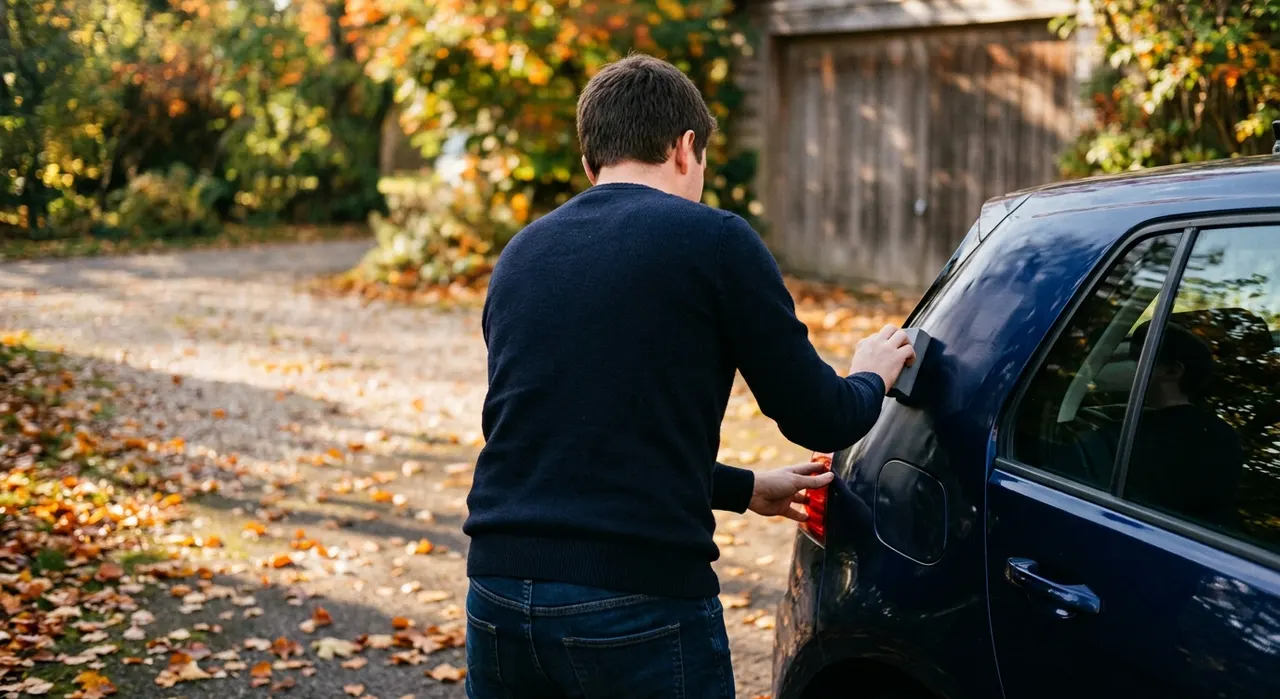
- Rock chips and stone strikes — the number-one paint killer on highway-driven cars. Only PPF stops these. A ceramic coating does nothing; the stone punches straight through.
- Bird droppings, bug splatter and tree sap — acidic and fast-acting on clear coat. A ceramic coating resists the etching and makes them wipe off easily. PPF also blocks them from the paint, but bare film can still stain if left too long.
- UV fade and oxidation — both help, but a ceramic coating is the more complete UV barrier across the whole car for the money.
- Swirl marks and wash-induced marring — PPF's self-healing top coat is the standout here; light swirls vanish with heat. A coating adds some scratch resistance but won't erase existing marring.
- Water spots and general dirt buildup — a ceramic coating wins decisively. Its hydrophobicity means water sheets off and the car stays cleaner between washes.
- Automated car-wash brushes and light abrasion — PPF takes the beating and self-heals; a coating reduces but doesn't eliminate the marks.
Notice the split: the coating dominates everything chemical and cosmetic, the film dominates everything physical and impact-related. If your damage list is "my car looks dull and water-spots badly," that's a coating problem. If it's "the front end is getting sandblasted on my commute," that's a film problem. Most people, honestly, have both problems — which is where the combined approach comes in.
Real cost and value over the life of the car
On sticker price these look worlds apart, and they are — but the honest comparison is what you're getting for the money, and the two are buying different things.
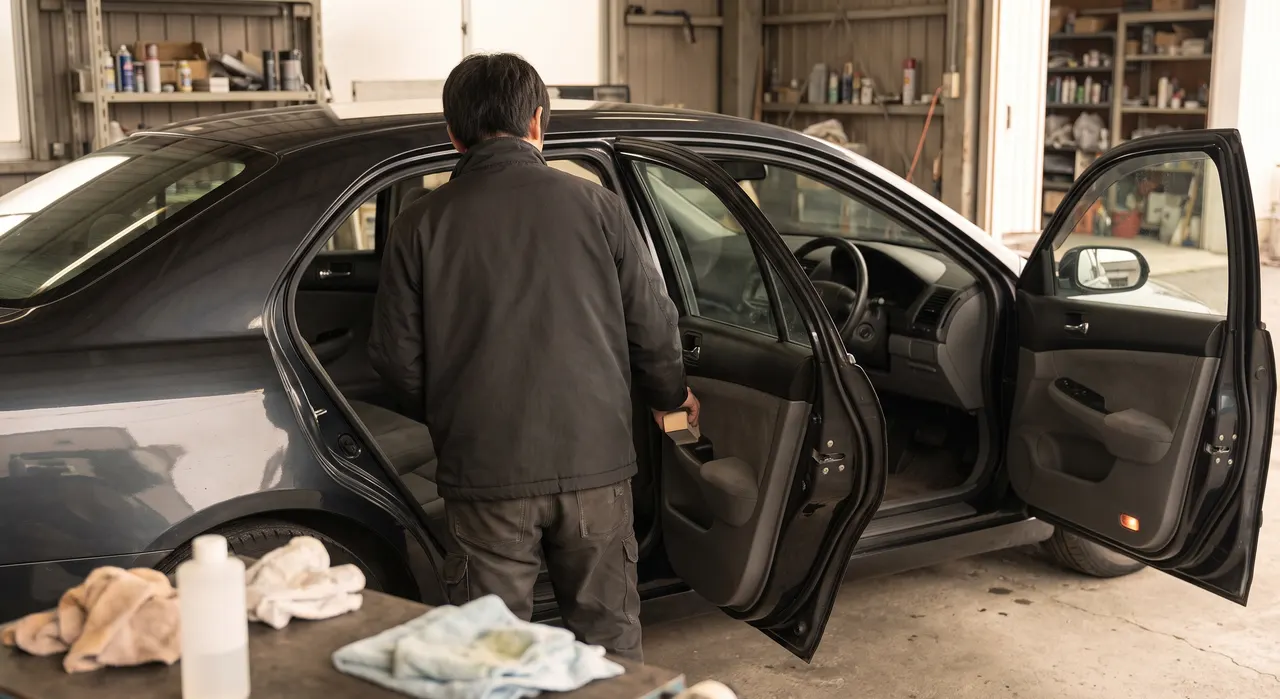
Ceramic coating is the affordable way to protect the whole car. Consumer DIY bottles run $20–$100 and, applied carefully over well-prepped paint, give a real hydrophobic layer for a season or two. A professional coating — which includes the paint correction that makes or breaks the result — typically runs $500–$2,000+ depending on the number of correction stages and the coating tier, and reputable installs carry warranties in the 2-to-7-year range. Crucially, that price covers every painted panel on the car.
PPF is priced by the square foot of coverage, which is why it climbs fast. A partial front package — front bumper, a portion of the hood, mirrors and maybe headlights — commonly lands at $800–$1,800. A full-vehicle wrap is a major investment, frequently $4,000–$8,000+, because it's labor-intensive: an installer is hand-fitting film to every curve. In return you get a genuine 7-to-10-year physical barrier and, on modern film, a 10-year manufacturer warranty against yellowing and cracking.
The value logic that most detailers land on: coat the whole car for a few hundred to a couple thousand and you've solved cleaning, gloss and stain resistance everywhere. Film the high-impact front zones for roughly $1,000 and you've solved rock chips exactly where they happen. Spending full-wrap money only makes sense on a high-value, exotic, or long-term-keep vehicle where preserving factory paint outright is worth it.
Why the best answer is often both
Because they cover opposite weaknesses, the enthusiast-standard build isn't "coating or film" — it's film first, coating on top. The layering matters and the order isn't arbitrary.
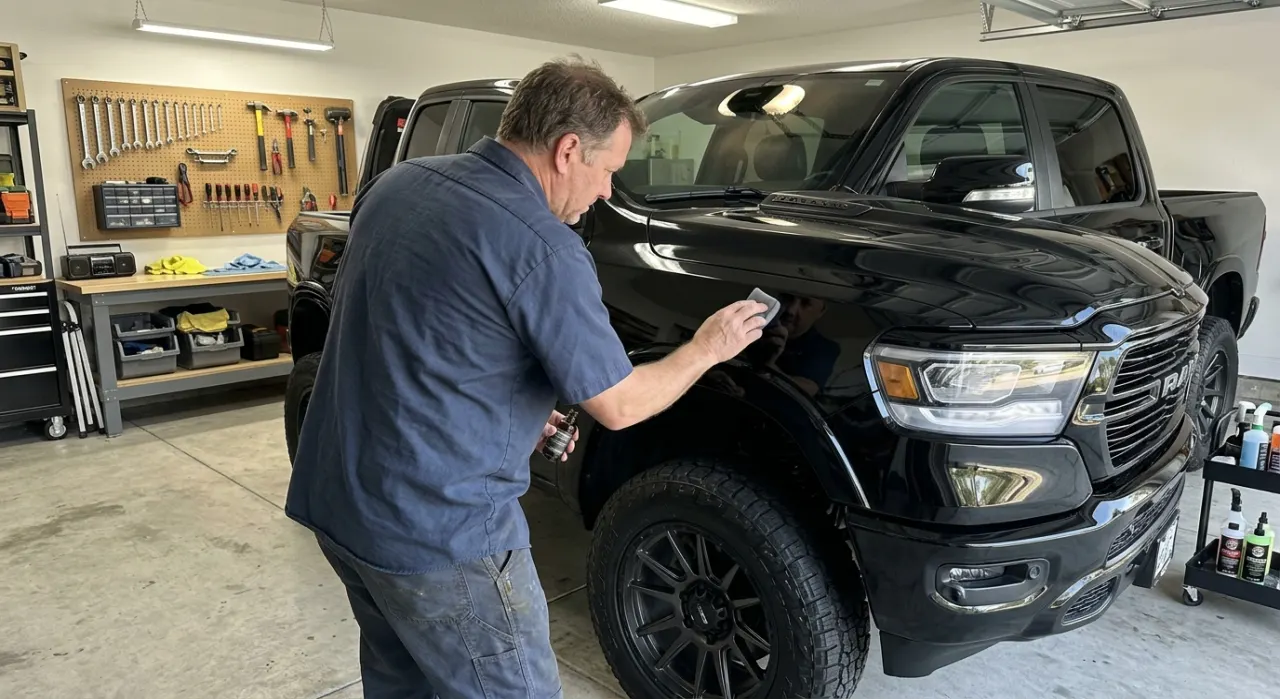
You wrap the high-impact areas (front bumper, hood, mirrors, A-pillars, rocker panels) in PPF to get physical rock-chip protection where the road throws debris. Then you apply a ceramic coating over the entire car — including on top of the film. That last step fixes PPF's two real weaknesses: bare film isn't especially hydrophobic and its gloss is only moderate, so a coating on top makes the film bead water, shed dirt and shine like the rest of the paint. The result is a car that's uniform in appearance, self-cleaning everywhere, and physically armored where it counts.
If a full combo is out of budget, the sensible sequence is: ceramic coat the whole car now for cleaning and gloss, then add front PPF later when funds allow — the coating can be reapplied over the film once it's installed. What you should not do is assume a coating alone will protect a highway car's nose from chips. It won't, and no amount of hydrophobic beading changes that.
Common myths and mistakes
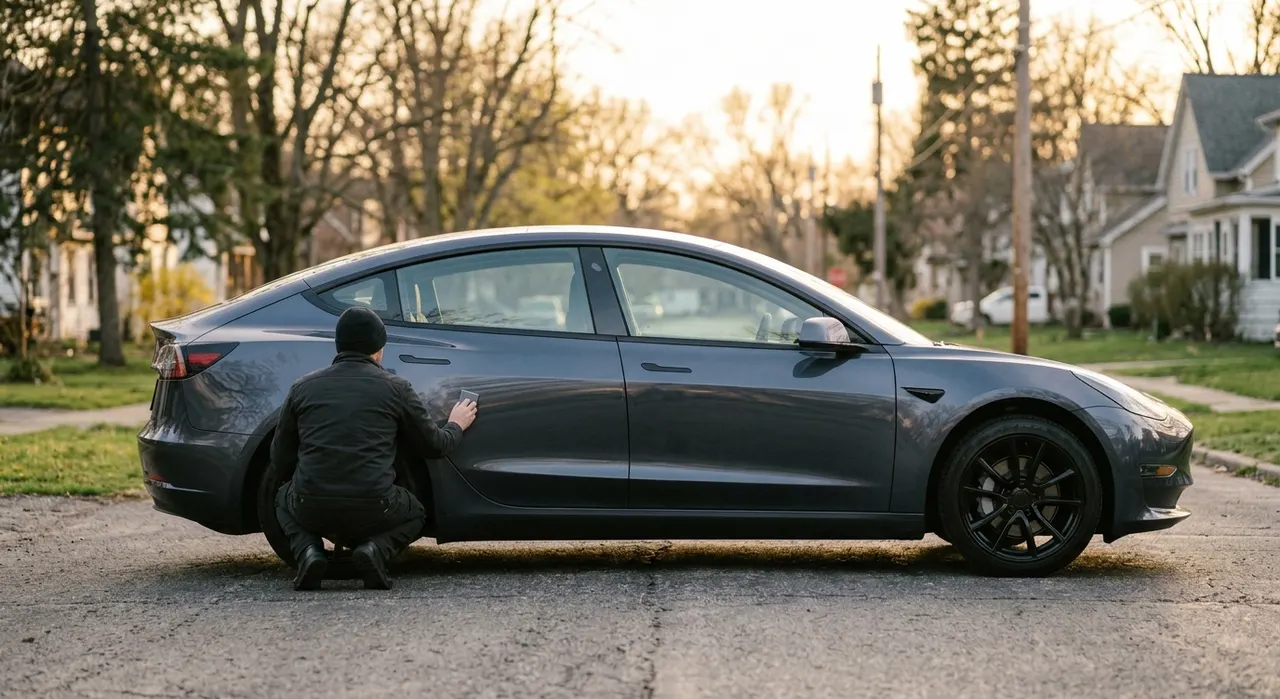
"Ceramic coating makes my car scratch-proof and rock-chip-proof." This is the single biggest misconception, and it comes straight from overselling. A coating is two to three microns thick — it has real chemical and UV resistance and it resists very light marring, but it stops zero rock chips and won't survive a shopping-cart gouge. If you need impact protection, you need film.
"PPF is glossy and slick enough on its own, so I don't need a coating." Modern film looks good, but bare PPF is measurably less hydrophobic and often less glossy than coated paint. That's why detailers routinely put a ceramic coating over the film — it's the finishing step, not an alternative.
"A ceramic coating fixes swirl marks." No. A coating is optically clear and locks in whatever's underneath. If the paint has swirls when you coat it, you've now sealed those swirls under a durable layer. Paint correction before coating is the non-negotiable step — a coating is only as good as the prep beneath it.
"Cheap PPF is basically the same as premium." Film quality varies enormously. Budget or aging film is exactly the stuff that yellows, cracks and lifts at the edges. The installer's skill matters just as much — a bad wrap leaves visible seams and stretch marks. This is a job where paying for a reputable film brand and a proven installer is the whole ballgame.
Which should you buy — and how to decide
There's no universal winner, because they aren't solving the same problem. The right choice comes from what you're actually protecting against and what you can spend — so decide by your situation, not by which product sounds tougher.
Buy ceramic coating if your priorities are easier washing, water-spot resistance, deep gloss and chemical/UV protection across the whole car — and if rock chips aren't your main worry (garage-kept, low-highway, or you simply can't stretch to film). It's also the most realistic DIY option; a careful owner can coat their own car with a quality bottle and good prep.
Buy PPF if you drive highway miles, live on gravel or construction routes, or own a high-value, leased, or long-term-keep vehicle where a chipped front end genuinely costs you. Start with a partial-front package — that's where the debris hits — and expand only if the car warrants it.
Buy both if the budget allows and you want the complete answer: PPF on the high-impact zones for physical defense, ceramic coating over the whole car (film included) for gloss, slickness and self-cleaning. Whichever route you take, spend on prep and installer quality over headline product tier — a mediocre coating over corrected paint beats a flagship coating over swirls, and a mid film by a great installer beats premium film wrapped badly.
Recommended Products
Our top picks in this category, ranked on aggregated owner reviews.
Best for the best DIY durability and gloss
- Graphene-infused hardness
- 2–5 year durability
- Slick, high-gloss finish
- Beginner-friendly kit
Why buy it: the best all-round DIY kit — long life and an easy application.
Best for maximum longevity
- Pro-grade hardness
- 2+ year protection
- Deep, warm gloss
Why buy it: a detailer favorite that survives years with proper prep.
Best for fast spray-on protection
- Spray-on / wipe-off
- SiO2 hydrophobic layer
- Great for beginners
Why buy it: spray-on ceramic protection in minutes with no cure fuss.

Best for the closest thing to a pro coating
- Near-professional hardness
- 5+ year durability
- Superb chemical resistance
Why buy it: pro-tier protection you can still apply at home.
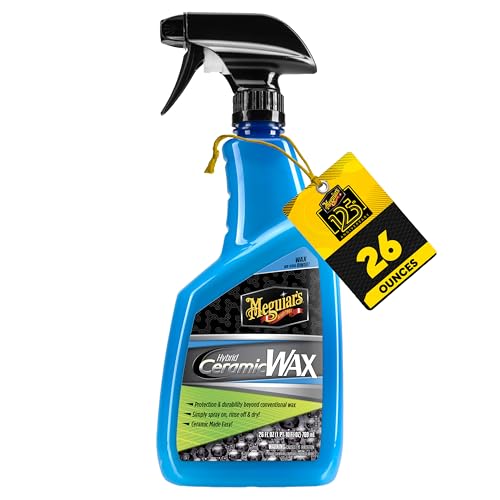
Best for cheap ceramic beading
- Spray on wet or dry
- Strong water beading
- Cheapest per use
Why buy it: the cheapest way to get ceramic-style beading fast.

Best for a complete beginner bundle
- Coating + applicators included
- Simple instructions
- Widely available
Why buy it: an all-in-one beginner bundle with everything you need.
Prices are pulled from Amazon and were accurate as of Aug 22, 2026, 6:54 PM EDT. Product prices and availability are subject to change — the live price is shown on Amazon.