
Affiliate Disclosure
Some links on this page are affiliate links. As an Amazon Associate, we earn from qualifying purchases — at no extra cost to you. We do not buy, test, or physically handle the products we cover; our rankings come from aggregated owner reviews, ratings and expert consensus. Commissions never change our verdicts. How we rank & full disclosure.
Ceramic Coating
A liquid polymer — usually silica dioxide (SiO2) based — that chemically bonds to your clear coat and cures into a hard, semi-permanent layer. It shrugs off water, UV, and chemicals for months to years, not weeks.
Best for: Daily drivers and enthusiasts who want long-term protection and are willing to prep the paint properly (or pay a detailer to)
DIY consumer kits $20–$70; professional installation $500–$2,000+ depending on paint correction
- Lasts far longer — DIY sprays run 6–12 months, pro coatings 2–5 years
- Strong chemical and UV resistance, so it fights oxidation and etching from bird droppings and bug guts
- Intense, lasting hydrophobicity — water beads and sheets off, making washes faster
- Slick, glassy finish that resists light swirls and makes contaminants harder to bond to
- Amortized over its lifespan, it can cost less per year than constant re-waxing
- Only as good as the prep — the paint must be decontaminated, corrected, and wiped clean first
- Less forgiving to apply; work too slowly and you leave streaky "high spots" that are hard to fix
- Needs hours to cure and should stay dry for 24+ hours, so timing and weather matter
- Professional installation is a real expense once paint correction is added
Wax (Carnauba / Synthetic)
A soft protective layer — natural carnauba, a synthetic sealant, or a blend — that sits on top of the clear coat. It is cheap, forgiving, and delivers a warm shine, but it wears off in weeks.
Best for: Weekend cars, dark paint you want to look deep and wet, and anyone who enjoys the process or wants a low-commitment top-up
$10–$30 per tub or bottle; plan to reapply every 4–8 weeks
- Cheap to buy and cheap to redo — the lowest barrier to entry in paint protection
- Very forgiving to apply; wipe on, let it haze, buff off, with little risk of ruining the finish
- Warm, deep "wet" glow that many owners prefer on black and dark metallic paint
- No cure time or paint correction required — you can protect a car in under an hour
- Short-lived — carnauba often lasts only 4–8 weeks before it needs reapplying
- Weaker chemical and heat resistance; it washes and melts off faster than a coating
- Hydrophobic beading fades quickly, so the "slick when wet" feel is temporary
- Frequent reapplication adds up in time and product over a year
How they score, side by side
Scores reflect aggregated owner reviews and expert consensus — not our own bench testing.
- Durability93
- Protection level95
- Ease of application59
- Upfront affordability69
- Shine / finish88
- Value over time96
- Beginner-friendly59
Spec-by-spec comparison chart
| Factor | Ceramic Coating | Wax (Carnauba / Synthetic) |
|---|---|---|
| Primary job | Long-term protection + hydrophobicity | Short-term shine + light protection |
| Typical durability | 6–12 months (DIY spray); 2–5 years (pro) | 4–8 weeks per application |
| Chemical & UV resistance | High — resists etching and oxidation | Low–moderate |
| Hydrophobicity | Strong, long-lasting beading & sheeting | Good at first, fades in weeks |
| Shine character | Glassy, slick, reflective | Warm, deep "wet" glow |
| Surface prep required | Extensive — decon, correct, panel wipe | Minimal — clean and dry |
| Application difficulty | Moderate–hard; work fast, avoid high spots | Easy and forgiving |
| Cure time | Hours to cure; keep dry 24+ hours | None — buff off and drive |
| Upfront cost | DIY $20–$70; pro $500–$2,000+ | $10–$30 per tub |
| Cost per year | Low once amortized over its lifespan | Higher — frequent reapplication |
| Reversibility | Semi-permanent; wears or polishes off | Easily removed and topped up |
Our Top 3 Picks
The three highest-rated options in this category, if you'd rather skip straight to a proven pick.

Best for the best DIY durability and gloss
- Graphene-infused hardness
- 2–5 year durability
- Slick, high-gloss finish
- Beginner-friendly kit
Why buy it: the best all-round DIY kit — long life and an easy application.

Best for maximum longevity
- Pro-grade hardness
- 2+ year protection
- Deep, warm gloss
Why buy it: a detailer favorite that survives years with proper prep.

Best for fast spray-on protection
- Spray-on / wipe-off
- SiO2 hydrophobic layer
- Great for beginners
Why buy it: spray-on ceramic protection in minutes with no cure fuss.
Prices are pulled from Amazon and were accurate as of Aug 22, 2026, 6:54 PM EDT. Product prices and availability are subject to change — the live price is shown on Amazon.
What actually separates a coating from wax
Both products end up as a thin layer on your paint, and both make water bead, so on the shelf they can look like two versions of the same idea. They are not. The difference is in how they hold on and how long they last, and that single distinction drives every other trade-off between them.
Wax — whether natural carnauba, a synthetic sealant, or a blend — sits on top of the clear coat as a soft, sacrificial film. It bonds physically, not chemically, so heat, detergents, rain, and road grime steadily strip it away. That is why a fresh coat of carnauba typically lasts only four to eight weeks. It is forgiving to apply and easy to remove precisely because it is not deeply attached to anything.
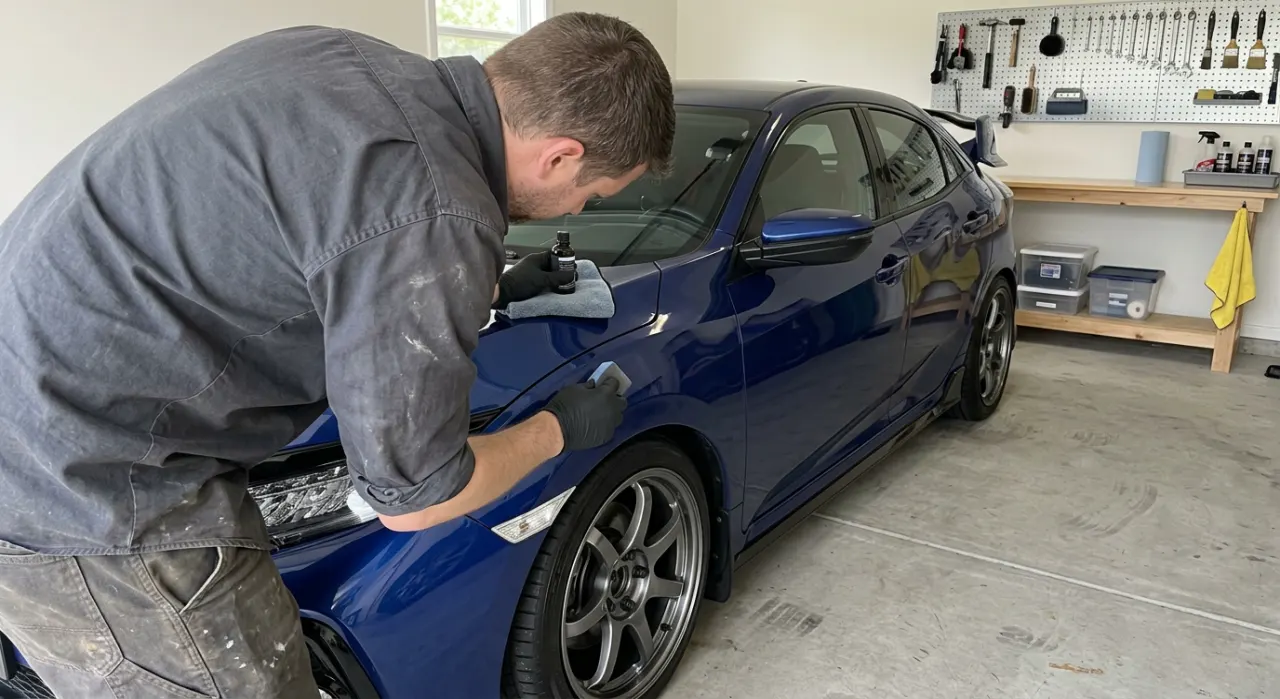
A ceramic coating is a liquid polymer, almost always silica dioxide (SiO2) based, that chemically bonds to the clear coat and cures into a hard, glass-like layer. Once it flashes and cures it becomes semi-permanent — it does not wash off with soap and does not melt in summer heat. Consumer-grade spray or "SiO2 booster" coatings realistically last six to twelve months; a properly installed professional coating can hold up for two to five years. The consensus among detailers is the cleanest way to frame it: wax is a temporary top layer, a coating is a durable bonded layer, and that is why one is measured in weeks and the other in years.
Protection and durability: where the gap is real
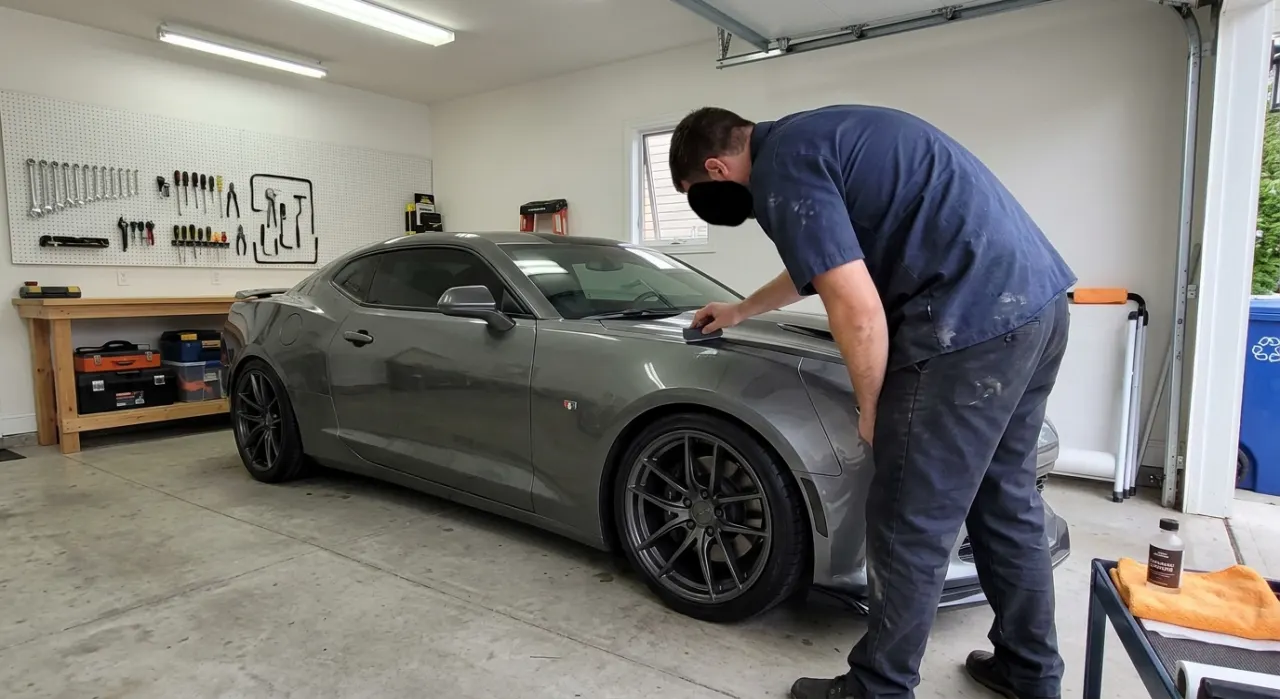
This is the section that decides most buyers, because durability is the one area where the two are genuinely not close. A wax film is thin and soft, so it offers modest UV and oxidation defense but gives way quickly to the things that actually attack paint — acidic bird droppings, bug guts, industrial fallout, road salt, and repeated detergent washes. Owners consistently report a carnauba layer losing its slickness and beading within a month or two, especially on a car left outdoors.
A ceramic coating is harder and chemically resistant, so it buys you real time against etching and staining. The strong hydrophobicity is not just a party trick either: water sheets off instead of clinging, which means less dwell time for contaminants, faster drying, and fewer water spots. Detailer consensus and aggregated owner reviews point to coated cars staying visibly cleaner between washes and needing far less frequent maintenance.
Two honest caveats keep this from being a blowout. First, neither product is scratch-proof. A coating adds meaningful resistance to light swirls from washing, but it will not stop a shopping cart, a careless brush wash, or rock chips — if you want impact protection, that is what paint protection film (PPF) is for. Second, a cheap DIY spray coating and a premium carnauba are closer than the marketing suggests; the huge durability gap really opens up with a properly prepped professional-grade coating.
Why prep decides whether a coating is worth it
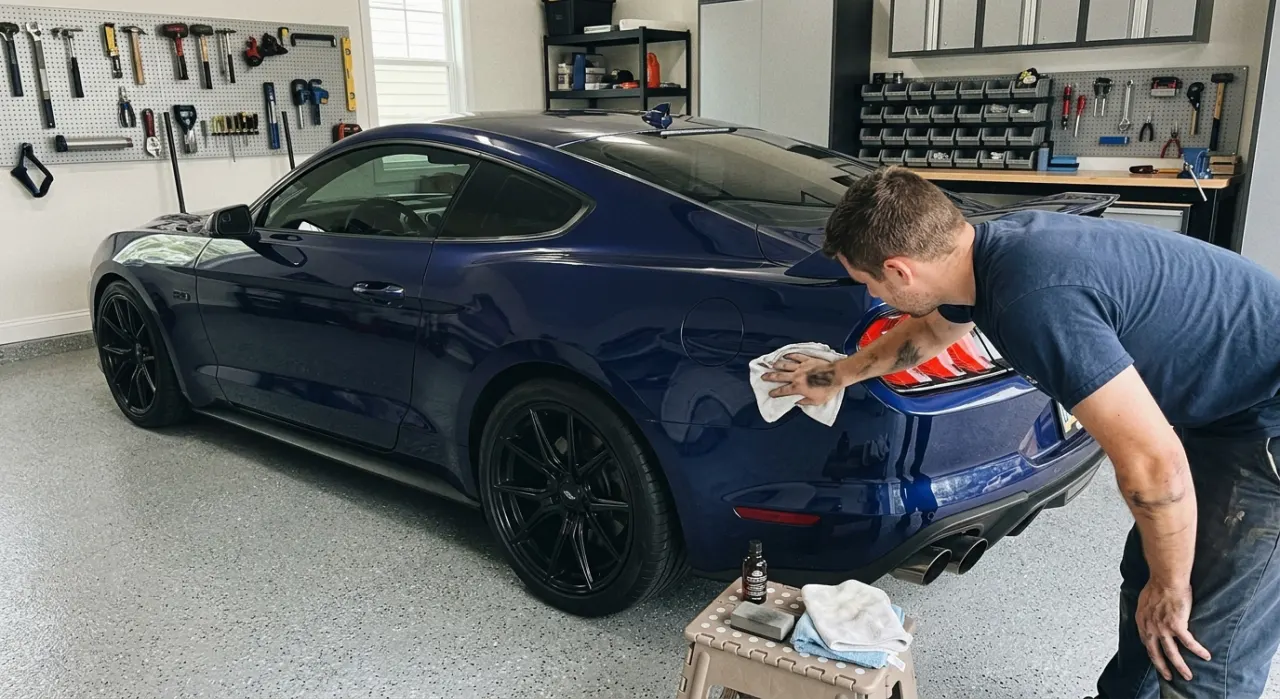
Here is the part the bottle rarely emphasizes: a ceramic coating is only as good as the surface it bonds to. Because it locks in whatever is on the paint at the moment it cures, any contamination, swirl, or water spot underneath gets sealed in for the life of the coating. That makes prep the real work of a coating job, and skipping it is the single most common way people waste their money.
Proper prep means a thorough wash, a chemical decontamination and clay to pull out embedded fallout, ideally a stage of paint correction (machine polishing) to remove swirls, and a final panel wipe with a dedicated prep solvent to strip any oils so the coating can key to bare clear coat. Only then does the coating go on — thin, in small sections, wiped off before it flashes into a hard "high spot." Wax asks for almost none of this. You wash, dry, wipe it on, and buff it off, and if you miss a spot you just do it again next month.
That contrast matters for buyers. If you are not willing to decontaminate and correct the paint, a coating will lock in dull, swirled paint and you would have been better off with wax. If you are willing to do the prep — or pay a detailer to — the coating rewards it with years of easy maintenance. The prep, not the bottle, is what separates a coating that looks incredible for years from one that looks streaky in a week.
Real cost and value over the life of the car
On the sticker, wax wins easily — a good tub is $10–$30, while coatings run $20–$70 for a DIY kit and $500–$2,000+ for a professional install once paint correction is included. But the honest comparison is cost per year of protection, and that reframes things. A $20 tub of wax reapplied every six to eight weeks is roughly six to nine applications a year in product and hours; a $50 DIY spray coating that lasts a year covers the same period in one sitting.
The DIY consumer coating is the value sweet spot for most owners. Modern SiO2 sprays and "ceramic wax" hybrids are nearly as easy to apply as wax, cost only a little more, and stretch protection to six to twelve months — a genuine step up in durability-per-dollar without the price of a pro package. A full professional ceramic install is a different tier: you are paying for multi-stage paint correction and a longer-lived coating, which makes sense on a new car, a repaint, or a vehicle you plan to keep, but it is real money.
Wax is not the expensive option on any single day — it is the expensive option over a year of your time. If you enjoy detailing and the ritual of waxing is part of the appeal, that time isn't a cost. If you want to protect the paint and move on, the coating's front-loaded effort pays back in every wash you don't have to fight.
Shine: glassy and slick vs warm and deep
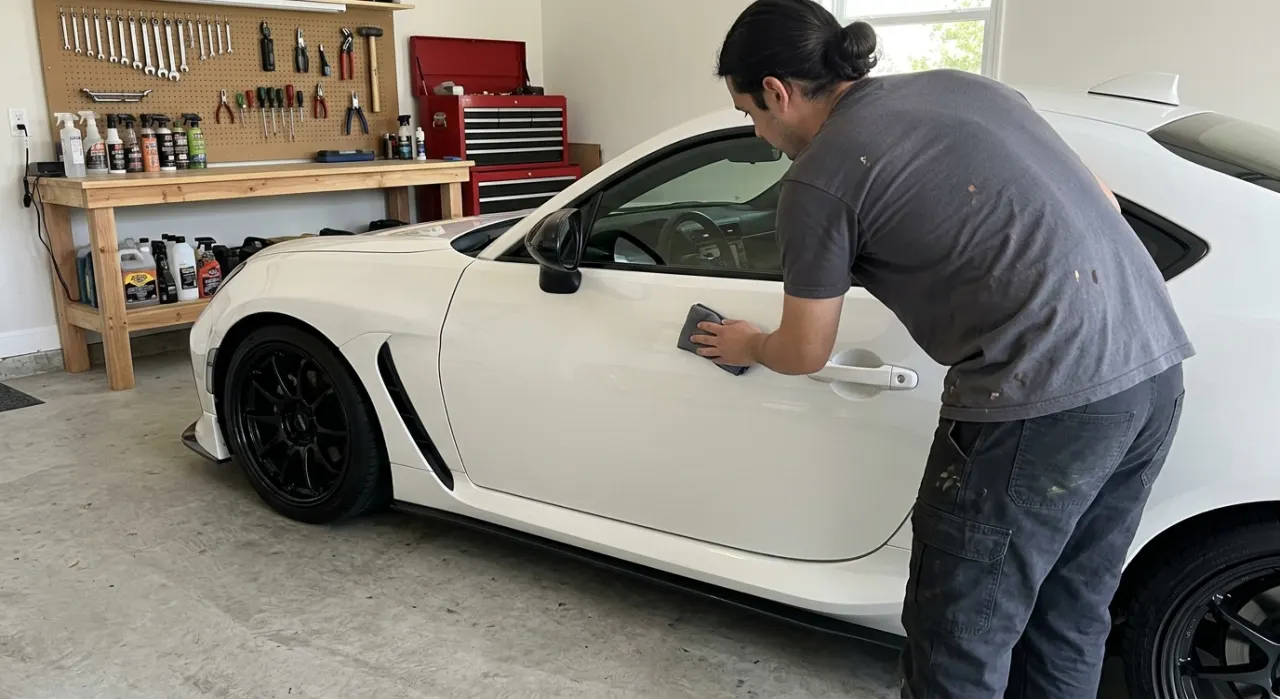
Durability aside, the two finishes genuinely look different, and this is where personal taste — not a spec sheet — should decide. A ceramic coating produces a glassy, slick, high-clarity reflection. Surfaces feel almost frictionless to the touch, and the coating tends to amplify sharpness and depth of gloss, which reads especially well on lighter and metallic colors.
Carnauba wax gives a warm, deep, "wet" glow that many enthusiasts specifically prefer on black and dark paint. It softens reflections slightly and adds a richness that some feel a coating's clarity can look clinical next to. This is why plenty of serious detailers keep both on the shelf: a coating as the durable base and a carnauba on top for a show finish, or wax on a garaged weekend car where longevity doesn't matter and the look does.
The takeaway is that shine is close to a tie, and it is a matter of character, not quality. If you want maximum slickness and reflective pop, lean coating. If you want warmth and depth on dark paint and don't mind renewing it, wax still has a real place.
Common myths and mistakes
"A ceramic coating makes my car scratch-proof." No. It adds resistance to light wash swirls, but it will not stop rock chips, key marks, or automatic-wash brush damage. For impact protection you want paint protection film, not a coating.
"A coating means I never have to wash the car again." Also no. It makes washing far easier and less frequent because dirt struggles to bond and water sheets off — but a coated car still needs regular, gentle washing to stay slick and hydrophobic. Neglect actually shortens a coating's life.
"I can just wipe a coating over dirty or swirled paint." This is the most expensive mistake. A coating seals in whatever is underneath, so poor prep locks in swirls and contamination for years. Prep is the job; the bottle is the easy part.
"Wax and coating are basically the same thing now." The hybrid "ceramic wax" marketing blurs this, but true carnauba wax still lasts weeks while a real SiO2 coating lasts months to years. Read the label for actual durability claims rather than the word "ceramic" on the front.
Which should you buy — and how to decide
For most people, a ceramic coating is the better buy — and for the majority of owners that means a good DIY SiO2 spray, not a four-figure professional package. It protects longer, resists the chemicals that actually damage paint, and saves you time on every wash, which makes it the stronger value over the life of the car.
Buy a coating if you daily-drive the car, park outside, want protection you can forget about for months, and are willing to properly decontaminate and correct the paint first (or pay a detailer to). Choose a DIY spray for value, or a professional install on a new car, a fresh repaint, or a vehicle you plan to keep for years.
Buy wax if you have a garaged weekend or show car, you love the warm depth carnauba gives dark paint, you want the cheapest and most forgiving option, or you simply enjoy the ritual and don't mind topping up every month or two. It is also the right call when the paint isn't corrected and you're not ready to lock a coating over swirls.
The most honest answer is that this is not strictly either/or: a large share of dedicated owners run a coating as the durable base layer and reach for a carnauba when they want that extra show-day glow. Start by deciding how long you want the protection to last and how much prep you'll do — answer those two, and the choice makes itself.
Recommended Products
Our top picks in this category, ranked on aggregated owner reviews.
Best for the best DIY durability and gloss
- Graphene-infused hardness
- 2–5 year durability
- Slick, high-gloss finish
- Beginner-friendly kit
Why buy it: the best all-round DIY kit — long life and an easy application.
Best for maximum longevity
- Pro-grade hardness
- 2+ year protection
- Deep, warm gloss
Why buy it: a detailer favorite that survives years with proper prep.
Best for fast spray-on protection
- Spray-on / wipe-off
- SiO2 hydrophobic layer
- Great for beginners
Why buy it: spray-on ceramic protection in minutes with no cure fuss.

Best for the closest thing to a pro coating
- Near-professional hardness
- 5+ year durability
- Superb chemical resistance
Why buy it: pro-tier protection you can still apply at home.
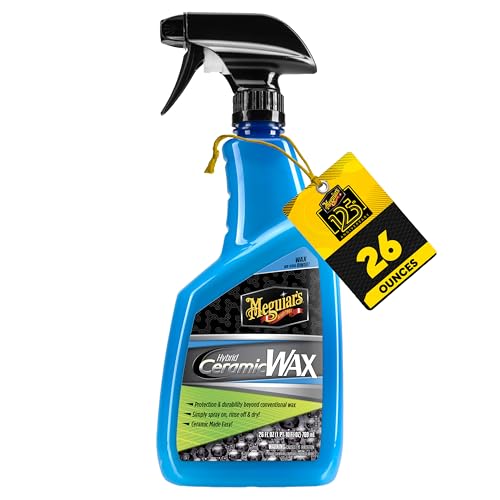
Best for cheap ceramic beading
- Spray on wet or dry
- Strong water beading
- Cheapest per use
Why buy it: the cheapest way to get ceramic-style beading fast.

Best for a complete beginner bundle
- Coating + applicators included
- Simple instructions
- Widely available
Why buy it: an all-in-one beginner bundle with everything you need.
Prices are pulled from Amazon and were accurate as of Aug 22, 2026, 6:54 PM EDT. Product prices and availability are subject to change — the live price is shown on Amazon.