
Affiliate Disclosure
Some links on this page are affiliate links. As an Amazon Associate, we earn from qualifying purchases — at no extra cost to you. We do not buy, test, or physically handle the products we cover; our rankings come from aggregated owner reviews, ratings and expert consensus. Commissions never change our verdicts. How we rank & full disclosure.
Ceramic Tint
Nano-ceramic particles block infrared heat without using metal, so it cuts cabin temperature hard while leaving phone, GPS and radio signals alone.
Best for: Hot climates, daily drivers, anyone keeping the car 5+ years
Typically $350–$800 installed (full car)
- Rejects roughly 40–70% of infrared heat at the same darkness
- Zero signal interference — no metal in the film
- Colour-stable; owners routinely report 10+ years without purpling
- Blocks 99%+ UV, protecting dash, leather and skin
- Usually carries a lifetime warranty against fade and bubbling
- Two to four times the cost of dyed film
- Overkill for a car you plan to sell within a year or two
- Quality varies hugely between brands — "ceramic" is unregulated
Regular (Dyed) Tint
A dyed polyester film that darkens glass and cuts glare. It is the budget standard: cheap, widely available, and perfectly adequate for privacy and looks.
Best for: Budget builds, mild climates, short-term ownership, looks-only jobs
Typically $120–$250 installed (full car)
- Cheapest way to darken glass and gain privacy
- Cuts glare effectively — the same VLT looks identical from outside
- No signal interference (dye is non-metallic)
- Fast, widely available install at almost any shop
- Minimal infrared heat rejection — cabin still bakes
- Dye breaks down under UV; purpling and fading are common after 3–5 years
- Bubbling and delamination are the top owner complaint
- Often warranted for a few years at best, sometimes not at all
How they score, side by side
Scores reflect aggregated owner reviews and expert consensus — not our own bench testing.
- Heat rejection93
- Longevity / fade resistance94
- Optical clarity96
- Signal friendliness1010
- Value for money69
- Warranty strength94
Spec-by-spec comparison chart
| Factor | Ceramic Tint | Regular (Dyed) Tint |
|---|---|---|
| Infrared (heat) rejection | 40–70% — the headline benefit | ~5–15% — negligible |
| UV rejection | 99%+ | 99% (most modern dyed films) |
| Total solar energy rejected | Roughly 45–60% | Roughly 20–35% |
| Signal interference | None — non-metallic | None — non-metallic |
| Fade / colour change | Colour-stable; purpling very rare | Purpling & fading common after 3–5 yrs |
| Typical lifespan | 10+ years | 3–5 years |
| Typical warranty | Lifetime (fade, bubble, delamination) | 1–5 years, sometimes none |
| Cost, full car installed | $350–$800 | $120–$250 |
| Optical clarity | High — minimal haze | Good when new, hazes as dye degrades |
| Legal VLT options | Same range as any film | Same range as any film |
Our Top 3 Picks
The three highest-rated options in this category, if you'd rather skip straight to a proven pick.

Best for the best DIY durability and gloss
- Graphene-infused hardness
- 2–5 year durability
- Slick, high-gloss finish
- Beginner-friendly kit
Why buy it: the best all-round DIY kit — long life and an easy application.

Best for maximum longevity
- Pro-grade hardness
- 2+ year protection
- Deep, warm gloss
Why buy it: a detailer favorite that survives years with proper prep.

Best for fast spray-on protection
- Spray-on / wipe-off
- SiO2 hydrophobic layer
- Great for beginners
Why buy it: spray-on ceramic protection in minutes with no cure fuss.
Prices are pulled from Amazon and were accurate as of Aug 22, 2026, 6:54 PM EDT. Product prices and availability are subject to change — the live price is shown on Amazon.
What actually separates the two films
Both films are thin multi-layer polyester sheets bonded to the inside of your glass, and at the same VLT (Visible Light Transmission) percentage they look essentially identical from the kerb. The difference is entirely in what the middle layer is made of, and that single choice drives every other number on this page.
Dyed film — what most shops mean by "regular tint" — uses a dye suspended in the adhesive or a dedicated dye layer. The dye absorbs visible light, which is why the glass looks darker and glare drops. But absorbing light is not the same as rejecting heat: much of that absorbed energy simply re-radiates into the cabin. Dye is also an organic compound, and organic compounds break down under ultraviolet bombardment. That is the entire story of why cheap tint turns purple.
Ceramic film replaces the dye with nano-ceramic particles that are selective: they let visible light through while reflecting and absorbing a large slice of the infrared spectrum — the part of sunlight you experience as heat on your arm. Because ceramic is inorganic and non-conductive, it neither fades the way dye does nor interferes with radio signals the way older metallic films did.
Owners consistently report that this distinction only becomes obvious in summer. In a mild climate, sitting in a car with 35% dyed film and 35% ceramic film on a spring morning feels much the same. Park both in direct sun at 95°F for an hour and the gap becomes the single most-cited reason people say they would pay for ceramic again.
Heat rejection: the difference you feel
This is the whole ballgame, and it is also where marketing gets slippery. Three different numbers get quoted, and shops rarely say which one they mean:
- VLT (Visible Light Transmission) — how dark it looks. This is the number your state regulates. It says nothing about heat.
- IR rejection — the percentage of infrared blocked. This is the biggest, most flattering number, and the one most often advertised.
- TSER (Total Solar Energy Rejected) — the honest, all-in figure covering visible, infrared and UV. This is the number worth comparing.
A quality ceramic film commonly lands around 45–60% TSER; dyed film typically sits in the 20–35% range, and much of the dyed film's figure comes from simply being dark rather than from selectively rejecting heat. That is why a very dark dyed film can still feel hot: it cut the light, not the energy.
The practical consequence owners describe most often is air-conditioning load. Cabins with ceramic film cool down faster after a hot soak, and the A/C stops fighting a losing battle on long summer drives. For anyone parking outdoors daily, that comfort difference is what justifies the price — not the appearance, which is identical.
Fading and purpling: why dyed film ages badly
Purple tint is not a manufacturing defect; it is chemistry running its course. Dyed films typically use a blend of dyes, and they do not degrade at the same rate. The blue and grey components break down under UV faster than the red, so what is left skews purple. Once it starts, it is irreversible.
Bubbling is the other classic failure, and it is an adhesive problem rather than a dye problem: as the film ages and the adhesive fails, air and moisture work in from the edges. Aggregated owner reviews put fading and bubbling as far and away the top two complaints about budget tint, usually surfacing somewhere between year three and year five.
Ceramic film sidesteps both. The ceramic particles are mineral and effectively UV-proof, so there is no dye to break down, and premium films generally pair them with a better adhesive system. This is why lifetime warranties are standard on ceramic and rare on dyed film — the manufacturer knows the failure mode has been engineered out.
Signal interference — and the metallic-tint myth
A common worry is that tint will wreck phone reception, GPS lock or keyless entry. That concern is real, but it belongs to a third category of film that this comparison does not cover: metallised tint, which uses a sputtered aluminium or similar metal layer. Metal reflects heat well but also attenuates radio frequency, and owners of metallic film do report weaker signal and occasional problems with toll transponders.
Neither ceramic nor dyed film contains metal. Both score a clean 10 on signal friendliness in the chart above. If a shop tells you ceramic will hurt your reception, they are describing metallic film, not ceramic.
Real cost over the life of the car
The sticker gap looks decisive — roughly $150–$250 for dyed versus $350–$800 for ceramic on a typical sedan — but the honest comparison is cost per year of service. Dyed film that purples at year four and gets stripped and replaced effectively costs its purchase price twice, plus the removal labour, which is genuinely unpleasant work and often billed separately.
Run it out over eight years and a single ceramic install frequently lands at or below two dyed installs plus a removal. If you are keeping the car under three years, that maths never gets a chance to play out and dyed film is the rational buy. Past roughly the four-year mark, ceramic usually wins on pure cost, before you even count the comfort.
One caveat worth stating plainly: "ceramic" is a marketing term with no governing standard. There are cheap films sold as ceramic that perform closer to dyed. Ask for the specific brand and film line, then look up its published TSER figure rather than trusting the word on the invoice.
VLT laws apply equally to both
Tint legality is set by VLT percentage and varies by state and by window position — front sides are almost always stricter than rears. Crucially, the law regulates darkness, not technology. A 70% VLT ceramic film is legal anywhere a 70% dyed film is legal, and it will still reject far more heat.
That last point is underappreciated and worth acting on: because ceramic decouples heat rejection from darkness, drivers in strict-VLT states can run a nearly clear film on the windscreen and front sides and still get meaningful heat reduction. With dyed film, the only lever for heat is going darker, which is exactly what the law restricts. Always confirm your current state limits before booking, as they do change.
Which one should you actually buy?
Choose ceramic if you live somewhere hot, park outside, keep cars long-term, need to stay legal while still cutting heat, or you simply want the install to be a one-time job with a lifetime warranty behind it.
Choose dyed if your priority is privacy or appearance, your climate is mild, the car is a short-term proposition, or the budget is genuinely tight — a fresh dyed film still looks sharp and cuts glare properly, and there is nothing wrong with buying the level of performance you actually need.
What we would steer people away from is the middle-ground trap: paying near-ceramic money for a vaguely-labelled "premium" film with no published TSER number. Get the spec sheet, compare TSER rather than IR, and the decision usually makes itself.
Recommended Products
Our top picks in this category, ranked on aggregated owner reviews.
Best for the best DIY durability and gloss
- Graphene-infused hardness
- 2–5 year durability
- Slick, high-gloss finish
- Beginner-friendly kit
Why buy it: the best all-round DIY kit — long life and an easy application.
Best for maximum longevity
- Pro-grade hardness
- 2+ year protection
- Deep, warm gloss
Why buy it: a detailer favorite that survives years with proper prep.
Best for fast spray-on protection
- Spray-on / wipe-off
- SiO2 hydrophobic layer
- Great for beginners
Why buy it: spray-on ceramic protection in minutes with no cure fuss.

Best for the closest thing to a pro coating
- Near-professional hardness
- 5+ year durability
- Superb chemical resistance
Why buy it: pro-tier protection you can still apply at home.
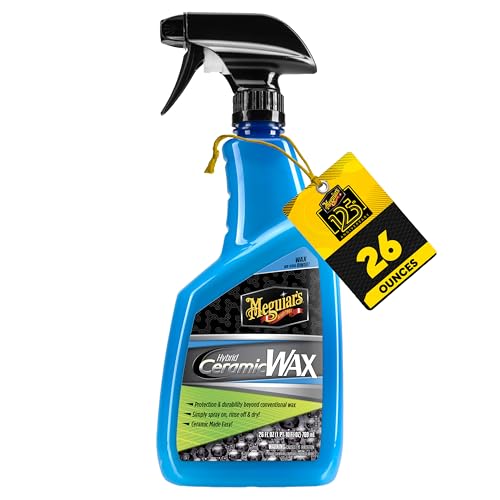
Best for cheap ceramic beading
- Spray on wet or dry
- Strong water beading
- Cheapest per use
Why buy it: the cheapest way to get ceramic-style beading fast.

Best for a complete beginner bundle
- Coating + applicators included
- Simple instructions
- Widely available
Why buy it: an all-in-one beginner bundle with everything you need.
Prices are pulled from Amazon and were accurate as of Aug 22, 2026, 6:54 PM EDT. Product prices and availability are subject to change — the live price is shown on Amazon.