
Affiliate Disclosure
Some links on this page are affiliate links. As an Amazon Associate, we earn from qualifying purchases — at no extra cost to you. We do not buy, test, or physically handle the products we cover; our rankings come from aggregated owner reviews, ratings and expert consensus. Commissions never change our verdicts. How we rank & full disclosure.
Clay Bar
A pliable resin bar you knead by hand and glide over a lubricated panel. The soft clay grabs bonded contaminants — rail dust, brake fallout, overspray — and pulls them out of the clear coat.
Best for: Heavily contaminated paint, tar and overspray removal, and detailers who want maximum bite on a neglected finish
Typically $8–$25 for a 100–200g bar, often bundled with lubricant in a $20–$35 kit
- Maximum grabbing power — the softest, most aggressive option for badly bonded fallout
- You can knead to a fresh, clean face constantly, so it never smears trapped grit back down
- Cheap to buy and conforms into tight recesses, badges and mirror bases
- Fine and medium grades let you match aggressiveness to how bad the paint is
- Time-tested — the decontamination method detailers have trusted for decades
- Ruined the instant you drop it — road grit embeds and it goes in the trash
- Slow going on big vehicles; you re-knead and re-fold constantly
- Marbles and tears in cold weather until you warm it in your hands
- Easy to induce fine marring if you skimp on lubricant or press too hard
Clay Mitt
A microfiber or foam mitt with a rubber-polymer clay coating bonded to one face. You slip it on like a wash mitt and sweep it across a lubricated panel — the coated surface shears off contamination.
Best for: Maintenance decontamination, large panels and SUVs, and anyone who wants speed and a drop-proof, reusable tool
Typically $12–$30 for a mitt, with mid-tier options around $15–$20
- Covers big panels far faster than a bar — often halving the time on an SUV
- Drop it and just rinse it off — no wasted product, unlike a bar
- Reusable for dozens of decon sessions if rinsed and stored clean
- The mitt shape spreads pressure evenly, which lowers the marring risk for beginners
- Less aggressive than a bar on severe tar, overspray or baked-on fallout
- The coating can't be kneaded to a fresh face — trapped grit rides along until rinsed
- A contaminated mitt that isn't rinsed often will scratch, and it hides grit better than clay
- Coating eventually wears through and the whole mitt is retired at once
How they score, side by side
Scores reflect aggregated owner reviews and expert consensus — not our own bench testing.
- Decontamination power97
- Speed on big panels59
- Drop-proof durability29
- Reusability / value58
- Beginner friendliness68
- Tight-area access95
Spec-by-spec comparison chart
| Factor | Clay Bar | Clay Mitt |
|---|---|---|
| What it is | Kneadable resin/clay bar | Mitt with bonded rubber-polymer clay face |
| Speed on a full car | Slow — constant re-kneading | Fast — often ~2x quicker |
| Survives being dropped | No — trash it immediately | Yes — just rinse and continue |
| Reusable | Until dropped or fully soiled | Dozens of sessions if cared for |
| Aggressiveness | Highest — best on severe fallout | Moderate — best for maintenance |
| Fresh-face renewal | Yes — knead & refold anytime | No — must rinse the coating clean |
| Marring risk (beginner) | Higher if under-lubricated | Lower — pressure spread over mitt |
| Gets into tight recesses | Excellent — molds to shape | Fair — bulky around badges/trim |
| Typical price | $8–$25 (bar) / $20–$35 (kit) | $12–$30 |
| Lubricant required | Yes — always | Yes — always |
Our Top 3 Picks
The three highest-rated options in this category, if you'd rather skip straight to a proven pick.

Best for Beginners who want one box that does everything well
- 14 matched pieces covering wash, protect and interior
- Includes shampoo, spray sealant and interior cleaner
- Comes with microfiber towels and applicators
- Products are designed to work together as a system
Why buy it: It is the closest thing to a complete detail in a single box, which is exactly what a first-timer needs — no guesswork about whether the pieces play nicely together.

Best for Enthusiasts who want top-shelf formulas from the start
- Premium formulas with a genuinely slick finish
- Excellent spray sealant and glass cleaner
- High-quality plush microfiber included
- Strong resale-grade presentation and packaging
Why buy it: You pay more, but the products themselves are a noticeable step up in slickness and gloss — the kit you buy when you know you are hooked.

Best for Getting proven, forgiving products for a fair price
- Trusted formulas that are hard to get wrong
- Covers wash, wax and interior basics
- Widely reviewed and consistently reliable
- Great balance of price and performance
Why buy it: Meguiar's has been dialing in beginner-friendly products for decades, and this kit is the safe, sensible middle — nothing flashy, nothing you will regret.
Prices are pulled from Amazon and were accurate as of Aug 22, 2026, 6:54 PM EDT. Product prices and availability are subject to change — the live price is shown on Amazon.
What actually separates a clay bar from a clay mitt
Both tools solve the same problem: over time your clear coat picks up bonded contaminants that washing can't remove — brake dust, industrial fallout, rail dust, tree sap mist, paint overspray and embedded tar. Run your hand over a freshly washed panel and if it feels gritty like fine sandpaper instead of glass, that roughness is contamination sitting proud of the paint. Claying shears those particles off at the surface so the finish is smooth again and ready to polish or seal.
A clay bar is the original tool: a soft, tacky bar of resin-based clay you knead flat in your palm and glide across a well-lubricated panel. The tackiness is what does the work — contaminants stick to the clay and get lifted out of the coating. When the face loads up with grime you fold it in on itself and knead a clean surface back to the front, so you're always presenting fresh clay to the paint.
A clay mitt takes that same idea and bonds a thin rubber-polymer clay layer to the face of a wash-style mitt. Instead of a sticky lump you're wearing a glove, and you sweep the coated palm across the panel. The synthetic coating grabs and shears contamination much like a bar, but because it's a fixed surface on a mitt you can cover a lot of ground in one pass. The consensus among detailers is simple: both remove the same contamination, but the mitt trades a little bite for a lot of speed and durability.
How each one pulls contamination out of paint
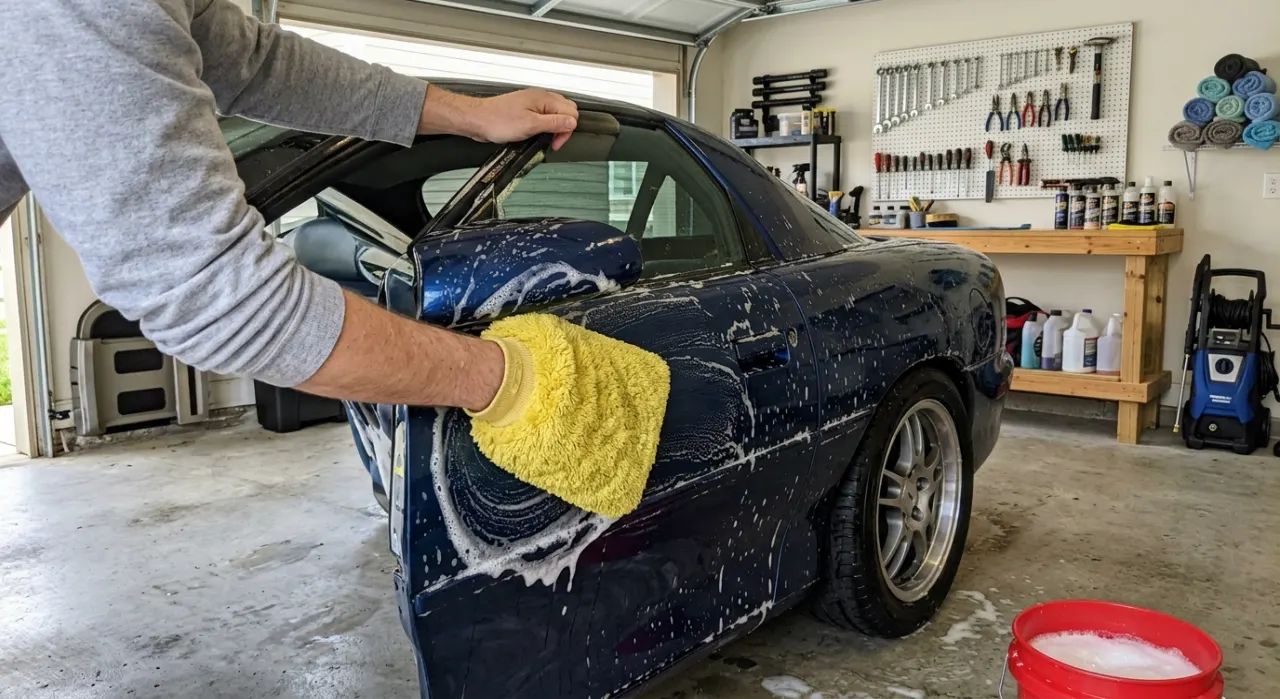
Understanding the mechanism explains every trade-off that follows. Neither tool "melts" or dissolves anything — they physically abrade the tops of bonded particles and encapsulate the debris.
- The clay bar works by tack and conformity. Because it's soft, it molds around raised contaminants and the adhesive resin pulls them free, then traps them inside the clay body. Kneading buries the trapped grit and gives you a clean face, which is why a bar rarely scratches as long as you keep refolding it.
- The clay mitt works by shear. The polymer coating is firmer than a bar and skims the tops of contaminants off as it slides. The debris sits on the coating's surface rather than being kneaded away, so rinsing the mitt frequently under running water is what keeps it from dragging trapped grit — the equivalent of the bar's fold-and-knead step.
That single difference — a bar hides grit inside itself, a mitt holds it on the surface — drives the marring debate. A well-kept bar buries debris; a neglected mitt that never gets rinsed can start carrying grit across the paint. Both are safe when used correctly, but the mitt demands more discipline with rinsing precisely because you can't knead it clean.
Speed, drops and durability — the real deciders
For most owners this is where the decision is actually made, not on some abstract "which cleans better." Owners consistently report two practical advantages that push them toward the mitt.
The first is speed. A clay bar has to be re-kneaded and re-folded every few passes to keep a clean face, and on a large SUV or truck that adds up to a lot of stopping and starting. A mitt covers a whole door or a hood section in continuous sweeps, and aggregated owner reports routinely describe cutting a full-vehicle decon roughly in half compared with a bar. If you're claying a big vehicle, or claying regularly as maintenance, that time saving is the whole argument.
The second is the drop test, and it's the one that converts people. Drop a clay bar on the driveway and it's finished — the surface instantly embeds road grit that you can never fully knead out, and using it again risks putting scratches straight into your clear coat. The safe move is to throw it away. A clay mitt that hits the ground just gets rinsed under the hose and you carry on. Given how easy it is to fumble a slippery, lubricant-soaked tool, that resilience saves both product and frustration. Over its life a single quality mitt can handle dozens of decon sessions, where you might burn through several bars in the same span thanks to drops and heavy loading.
Aggressiveness and when a bar still wins
The mitt's convenience comes with one honest concession: on genuinely severe contamination, a traditional clay bar still has more bite. This isn't marketing — it's a consequence of the bar being soft and kneadable.
When paint is coated in heavy overspray, thick tar, or years of baked-on industrial fallout, the bar's ability to conform around each particle and grab it — then present an endlessly renewable fresh face — pulls out material a mitt's fixed coating can struggle with. Bars also come in graded aggressiveness (fine and medium being the common home-use choices), letting you step up the cut for a badly neglected finish while staying gentle on paint that's only lightly contaminated. Detailers restoring a heavily neglected car, or clearing paint overspray from a nearby job site, still frequently reach for a medium bar first.
There's also the matter of tight recesses. A soft bar molds into the area around badges, mirror mounts, door handles and body-line creases where a bulky mitt simply can't sit flat. If those detailed areas matter to you, a small piece of bar remains the better tool for the fiddly spots even if you do the big flat panels with a mitt. Plenty of experienced detailers keep both for exactly that reason — mitt for the acreage, bar for the corners and the worst spots.
Technique and mistakes that cause marring
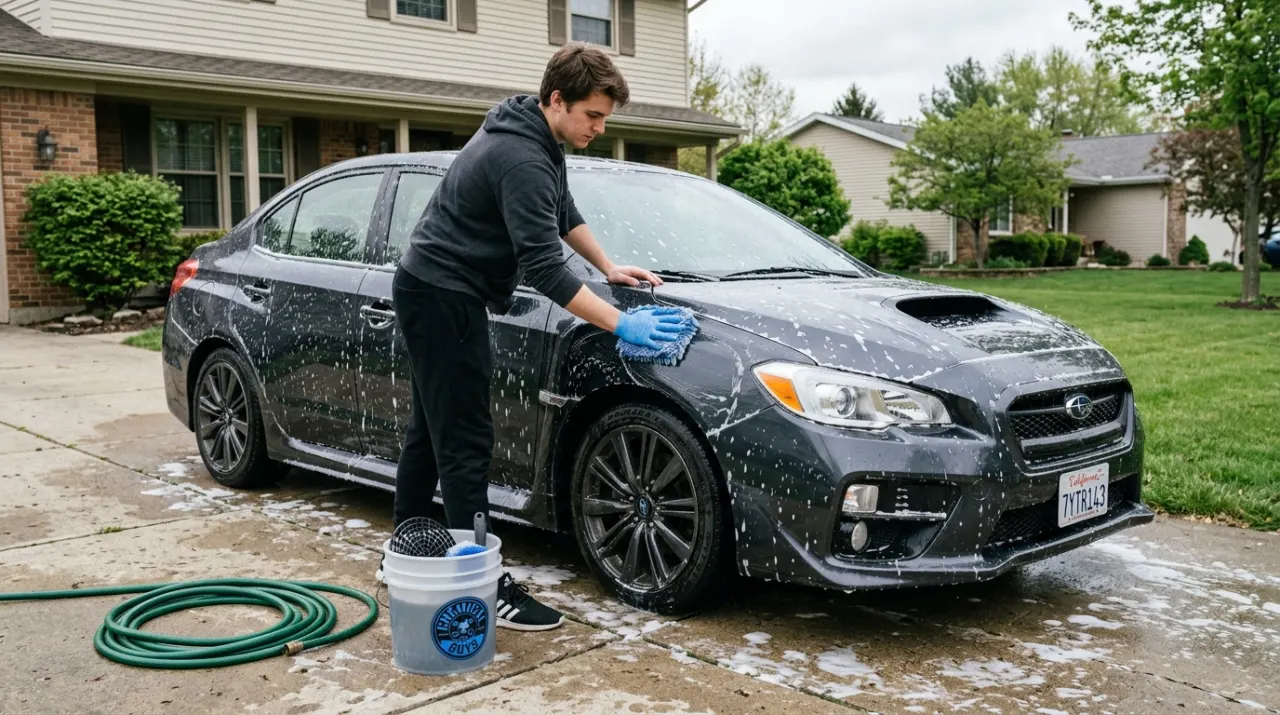
The single biggest myth is that claying itself scratches paint. It doesn't — poor technique does, and the same rules apply to both tools. The most common mistakes owners report are all avoidable:
- Skimping on lubricant. This is the number-one cause of marring. The panel must be genuinely slick so the tool hydroplanes over the surface. Use a dedicated clay lubricant or a generous diluted quick-detailer — never let the tool drag on a dry or half-lubricated panel.
- Pressing hard. The tool does the work; your job is to guide it. Let it float with light, straight, back-and-forth passes rather than tight circles, which reduces any chance of instilling swirl-shaped marring.
- Not renewing the clean face. With a bar, fold and knead the moment it looks loaded. With a mitt, rinse it under running water frequently — because you can't knead it clean, rinsing is the only way to shed trapped grit before it rides across the paint.
- Working in the sun or on a hot panel. Lubricant flashes off fast in the heat, leaving you dragging on a dry surface. Clay in the shade on cool paint.
- Skipping a follow-up. Claying can leave very fine marring on soft clear coats regardless of the tool, which is why the consensus is to follow decontamination with a light polish or at least a fresh coat of wax or sealant to restore full gloss and protection.
Cold weather deserves a note of its own: a clay bar goes hard and crumbly below room temperature and has to be warmed in your hands before it's safe to use, while a mitt is largely unaffected — another small point in the mitt's favor for anyone working in a cold garage.
Real cost and value over the life of the tool
On the sticker the two are surprisingly close — a bar runs about $8–$25 and a mitt about $12–$30 — so upfront price rarely decides it. The honest comparison is cost per use over time, and that's where the mitt's durability tells.
A clay bar is consumable by nature. Every drop retires one, heavy contamination loads it up, and eventually the whole bar is too soiled to knead clean. A regular DIYer can go through several bars a year. A quality mitt, rinsed properly and stored clean, keeps working across many sessions until the coating finally wears through, at which point the whole mitt is retired at once. For someone who clays once or twice a year, a single bar-and-lubricant kit is perfectly economical and arguably the cheapest way in. For someone maintaining several vehicles or claying every few months, the reusable mitt is the lower long-run cost despite the slightly higher entry price.
One value tip regardless of which you choose: the lubricant is not optional and not the place to save money. Running a tool dry to stretch a bottle of detailer is how people put marring into their paint and turn a cheap job into a polishing job. Budget for plenty of lube — it's the cheapest insurance in the whole process.
Which should you buy — and how to decide
For most people, buy the clay mitt. If you're decontaminating a normal daily driver once or twice a year, want the job done quickly, and don't want a single fumble to cost you the tool, the mitt is the easier, faster, more forgiving choice — and its lower marring risk in unskilled hands is a real bonus for first-timers.
Buy the clay bar if you're tackling genuinely neglected paint — heavy tar, overspray or thick industrial fallout — or you want the finest control in badge and body-line recesses. The bar's endlessly renewable fresh face and graded aggressiveness still make it the more thorough decontamination tool when the paint is truly bad, and it's the cheapest way to try claying at all.
Honestly, many detailers own both and it's an inexpensive combination: a mitt for the big flat acreage and a small piece of bar for the corners and the worst spots. Whichever you land on, the rules that actually protect your paint are the same — flood the panel with lubricant, use light straight passes, renew or rinse the clean face often, and finish with a polish or a fresh coat of protection. Get the technique right and both tools leave glass-smooth paint; get lazy with the lubricant and either one can mar it.
Recommended Products
Our top picks in this category, ranked on aggregated owner reviews.
Best for Beginners who want one box that does everything well
- 14 matched pieces covering wash, protect and interior
- Includes shampoo, spray sealant and interior cleaner
- Comes with microfiber towels and applicators
- Products are designed to work together as a system
Why buy it: It is the closest thing to a complete detail in a single box, which is exactly what a first-timer needs — no guesswork about whether the pieces play nicely together.
Best for Enthusiasts who want top-shelf formulas from the start
- Premium formulas with a genuinely slick finish
- Excellent spray sealant and glass cleaner
- High-quality plush microfiber included
- Strong resale-grade presentation and packaging
Why buy it: You pay more, but the products themselves are a noticeable step up in slickness and gloss — the kit you buy when you know you are hooked.
Best for Getting proven, forgiving products for a fair price
- Trusted formulas that are hard to get wrong
- Covers wash, wax and interior basics
- Widely reviewed and consistently reliable
- Great balance of price and performance
Why buy it: Meguiar's has been dialing in beginner-friendly products for decades, and this kit is the safe, sensible middle — nothing flashy, nothing you will regret.

Best for The cheapest way to cover the basics in one buy
- Lowest entry price of the group
- Covers wash, wheels, glass and interior
- Available almost everywhere
- Simple products that are easy to use
Why buy it: If you just want to stop washing your car with dish soap and a bath towel, this gets you a real detailing setup for pocket change.

Best for People who want maximum product and a storage bucket
- Large bundle with a bucket and grit guard included
- Full-size bottles of core products
- Foam and wash gear bundled in
- Everything stores neatly in the bucket
Why buy it: The bucket doubles as storage and a two-bucket wash setup, and the full-size bottles mean you are not restocking after two washes.

Best for Buying local at any auto parts store today
- Stocked at nearly every parts store
- Reliable wax and cleaner formulas
- Easy to top up individual bottles later
- Long-standing reputation with hobbyists
Why buy it: When you want to start today and not wait on shipping, Mothers is on a shelf near you — and the products genuinely hold up.
Prices are pulled from Amazon and were accurate as of Aug 22, 2026, 6:54 PM EDT. Product prices and availability are subject to change — the live price is shown on Amazon.