
Affiliate Disclosure
Some links on this page are affiliate links. As an Amazon Associate, we earn from qualifying purchases — at no extra cost to you. We do not buy, test, or physically handle the products we cover; our rankings come from aggregated owner reviews, ratings and expert consensus. Commissions never change our verdicts. How we rank & full disclosure.
Component Speakers
A separated speaker system that splits the woofer, tweeter and an external crossover into individual pieces you mount separately. The tweeter goes up high near the A-pillar while the woofer stays down in the door, building a wider, more accurate soundstage.
Best for: Listeners who care about staging and detail and are willing to fabricate tweeter locations and run more wiring
Typically $120–$500+ per pair for the set; add $100–$300 in labor if a shop installs and aims the tweeters
- Separate tweeter can be mounted high, lifting the soundstage up onto the dash instead of down at your knees
- External crossover splits frequencies more precisely, so each driver only plays what it does best
- Larger dedicated woofer moves more air for cleaner, more controlled midbass
- Aimed tweeters improve imaging — instruments sit in believable places across the windshield
- The natural pairing for an amp and a serious front-stage build
- More expensive than a coaxial of comparable driver quality
- Much harder to install — you often have to cut or fabricate a tweeter location and hide the crossover
- More wiring runs and mounting points mean more that can rattle or fail
- Overkill if you mostly listen at low volume off the factory head unit
Coaxial Speakers
An all-in-one "full-range" speaker with the tweeter mounted on a post through the center of the woofer, so everything fires from a single frame. It drops straight into the factory speaker hole and plays the whole frequency range from one location.
Best for: A clean, affordable factory-speaker upgrade with minimal cutting and no fabrication
Typically $40–$200 per pair; often a bolt-in job with little or no labor cost
- Cheap — a solid coaxial pair costs a fraction of comparable components
- True drop-in on most cars; frequently no cutting, splicing or fabrication needed
- Passive crossover is built in, so there is nothing extra to mount or wire
- Sensitive enough to sound noticeably better than factory even off the head unit
- The easiest, lowest-risk speaker upgrade you can do in a driveway
- Tweeter sits down in the door with the woofer, so the soundstage stays low
- Built-in crossover is simpler and less adjustable than an external one
- Imaging and separation are more modest than a well-aimed component set
- Less headroom and refinement once you add an amp and push volume
How they score, side by side
Scores reflect aggregated owner reviews and expert consensus — not our own bench testing.
- Soundstage / imaging96
- Sound clarity and detail86
- Value for money69
- Install simplicity39
- DIY friendliness49
- Upgrade ceiling with an amp96
Spec-by-spec comparison chart
| Factor | Component Speakers | Coaxial Speakers |
|---|---|---|
| Configuration | Separate woofer, tweeter & crossover | Tweeter mounted through the woofer (one unit) |
| Crossover | External, more precise & often tunable | Passive, built in, fixed |
| Tweeter location | Mounted high (A-pillar / sail / dash) | Down in the door with the woofer |
| Soundstage height | High — up on the dash | Low — around knee level |
| Imaging and separation | Superior when aimed correctly | Good, but more modest |
| Install difficulty | Hard — often requires cutting / fabrication | Easy — usually true drop-in |
| Wiring & mounting points | More runs, more places to mount | Single location per side |
| Price per pair | $120–$500+ | $40–$200 |
| Best paired with | An external amp for full potential | Head unit or a modest amp |
| Power handling headroom | Higher — built for amped systems | Adequate for most factory / mild setups |
Our Top 3 Picks
The three highest-rated options in this category, if you'd rather skip straight to a proven pick.

Best for the cleanest all-round upgrade over factory paper
- 6.5" two-way with a lightweight IMPP cone
- Bright, non-harsh PEI dome tweeter
- 40W RMS / 240W peak per speaker
- Shallow mount fits most factory doors
Why buy it: the pair owners keep telling newcomers to buy first — rated 4.6 across more than 20,000 reviews for a crisp, balanced sound that embarrasses stock speakers without touching the wallet.

Best for the most detailed top end on a budget
- 6.5" three-way A-Series coaxial
- 70W RMS / 320W peak per speaker
- Multilayer mica matrix cone
- Separate tweeter and midrange for clarity
Why buy it: owners consistently report the extra tweeter and midrange give it the most open, detailed sound in this price bracket — the pick if vocals and cymbals matter more than raw thump.

Best for the toughest build that survives real doors
- 6.5" three-way full-range coaxial
- 45W RMS / 90W peak per speaker
- Integrated concave tweeter + midrange
- Sealed motor tolerates door moisture
Why buy it: rated 4.7 across thousands of owner reviews, the R165X3 is the durability favorite — buyers routinely praise how it holds up in wet doors where cheaper cones give out.
Prices are pulled from Amazon and were accurate as of Aug 22, 2026, 6:54 PM EDT. Product prices and availability are subject to change — the live price is shown on Amazon.
What actually separates components from coaxials
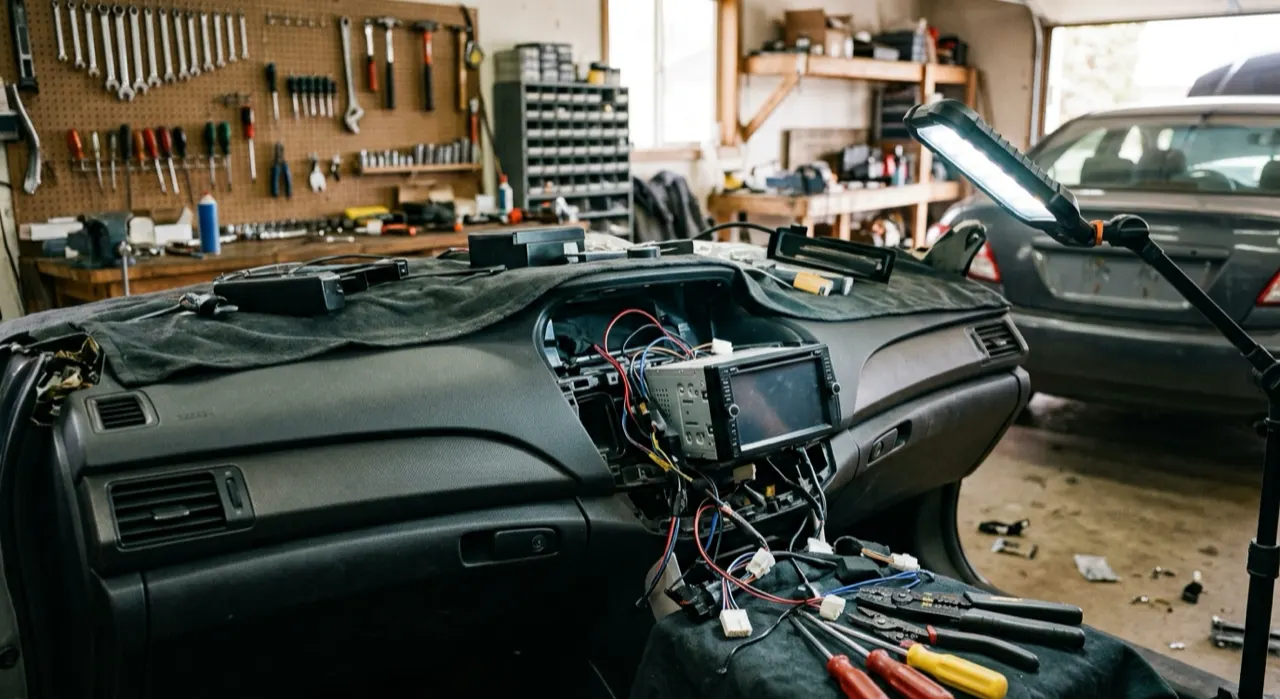
On a spec sheet both are just "6.5-inch speakers," and both cover roughly the same frequency range, so a lot of buyers assume the difference is small. It isn't. The split comes down to where the sound is produced and how the frequencies are divided, and that single design choice shapes almost everything you hear.
A coaxial — sometimes called a "full-range" speaker — stacks the tweeter on a small post through the center of the woofer, so the whole assembly fires from one frame in one hole. A simple passive crossover network is built onto the basket, splitting the highs to the tweeter and the lows to the woofer automatically. You unbolt the factory speaker, bolt the coaxial in its place, and you are done. Everything you hear comes from that one spot, usually low in the door panel.
A component set breaks those same parts into separate pieces: a dedicated woofer, a separate tweeter, and an external crossover box that lives between them. Because the tweeter is its own unit on its own wire, you can mount it high — on the A-pillar, in the sail panel, or up on the dash — while the woofer stays down in the door. The external crossover does the frequency splitting with better components and steeper, cleaner slopes than the tiny network on a coaxial can manage.
The consensus among installers is the simplest way to hold it in your head: a coaxial is a component set that has been folded back into one location for convenience. You trade away the ability to place the tweeter — and some crossover quality — in exchange for a part that drops straight in. Everything below flows from that trade.
Soundstage and imaging: the real reason to go component
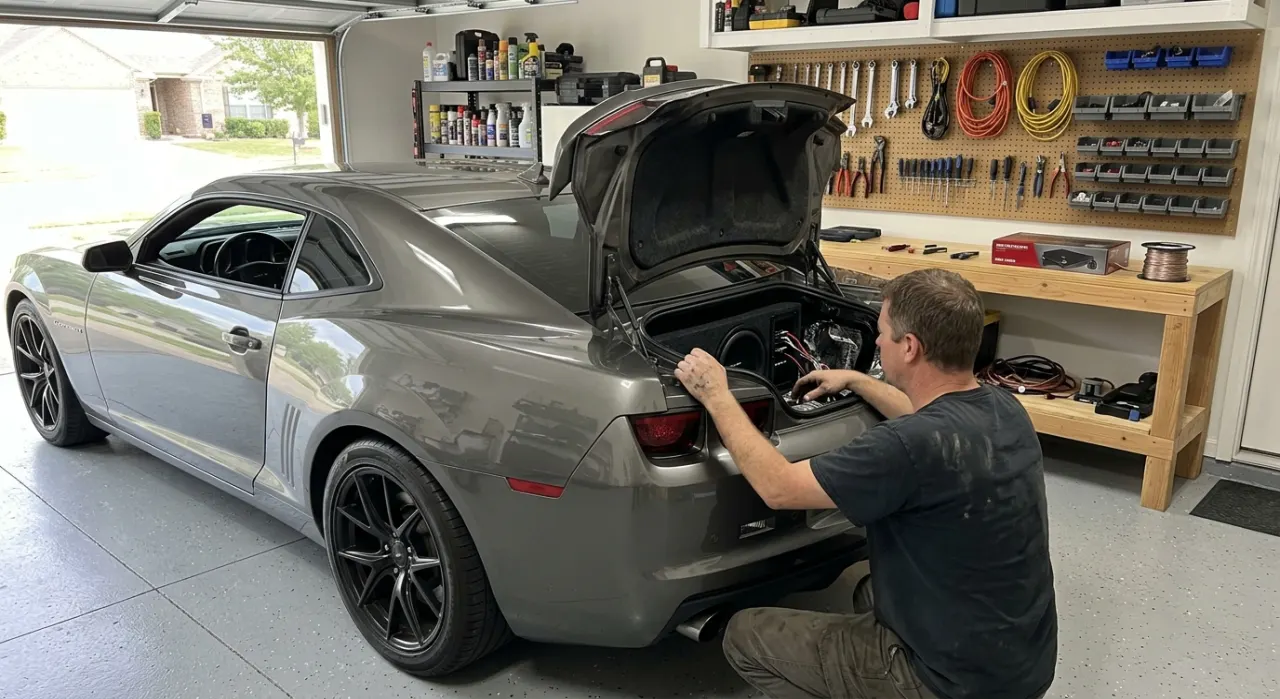
If there is one thing that separates a component build from a coaxial, it is soundstage height — where the music appears to come from. This is the single factor owners point to most often when they describe why the upgrade felt "worth it," and it is worth understanding before you spend anything.
With a coaxial, every frequency originates in the door, down near your knees and ankles. Your ear localizes high frequencies very precisely, so a door-mounted tweeter pins the whole presentation low and off to the side. Music sounds like it is playing at your feet. It can still be clear and punchy — a good coaxial is a real improvement over a tired factory speaker — but the stage never lifts.
A component set moves the tweeter up to roughly ear or dash level and, ideally, aims it across the cabin. Because the high frequencies now arrive from up high, your brain places the whole soundstage up on the dash and stretches it across the windshield. Vocals sit in front of you, instruments spread left to right in believable positions, and the car starts to sound less like speakers and more like a stage. That effect — imaging and staging — is what people are really buying when they choose components.
The catch is that this payoff depends entirely on tweeter placement and aiming. A component set with the tweeters dumped low in the door, firing straight up, throws away most of its advantage and can end up sounding barely different from a good coaxial. The staging is earned by the install, not just the box.
Installation reality: drop-in vs fabrication
This is where the honest gap between the two shows up, and it is bigger than most first-time buyers expect. Based on aggregated owner reviews and installer consensus, the difficulty difference is the deciding factor for a lot of people.
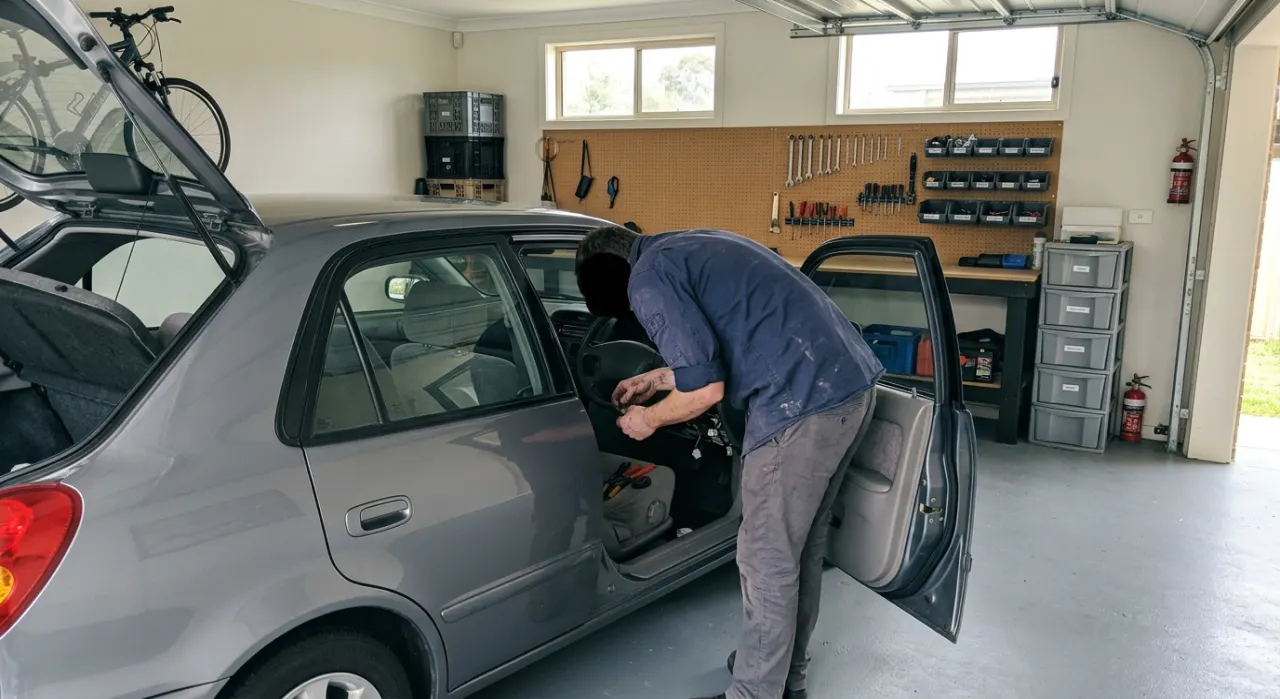
A coaxial is usually a true drop-in. On most cars the new speaker uses the same mounting holes and a factory-style harness adapter, so the job is: pull the door panel, unclip the old speaker, clip in a wiring harness, bolt the coaxial in, and reassemble. Many owners do it in an afternoon with a screwdriver and a trim tool, no cutting required. If the tweeter is built into the woofer, there is nothing else to place.
A component set asks for real work:
- Tweeter location. You have to find or create a spot up high — factory sail-panel or A-pillar locations if you're lucky, or drilling and fabricating a pod if you're not. Getting it flush and aimed is the difference between good and great.
- The crossover. The external box has to be mounted somewhere dry and secure inside the door or behind the panel, with wiring routed to both the woofer and the tweeter.
- More wire runs. Two drivers per side plus a crossover means more splices, more mounting points, and more chances for a rattle or a loose connection down the road.
None of this is beyond a patient DIYer, but it turns an afternoon job into a weekend one, and it is the main reason shops charge meaningfully more to install components. If you are not comfortable running wire and possibly cutting a panel — or paying someone who is — a coaxial removes all of that friction.
Do you need an amp, and how power changes the answer
How you plan to power the speakers shifts the whole decision, and it is the part buyers most often skip. Both types will run off a factory head unit, but they reward power very differently.
Coaxials are generally sensitive and easy to drive, which is why they sound good straight off a stock deck's modest wattage. They are the natural match for a system with no amp: swap the speakers, enjoy a clear step up from factory, done. They will take a small four-channel amp happily and tighten up, but they are not built to be pushed hard, and their simpler crossover and headroom mean they hit a ceiling sooner.
Component sets are built with an amplified front stage in mind. The external crossover and the dedicated drivers have more headroom, so they keep their composure at volume and reveal more detail as you feed them clean power. Running a good component set off nothing but a factory head unit works, but it leaves a lot of the set's potential on the table — you paid for headroom you never use.
The practical rule installers repeat: if an amp is not in your plan, coaxials are usually the smarter money. If a four-channel amp and a real front stage are on the roadmap — now or later — components are the foundation you build on, because they scale with the power you eventually give them.
Real cost and value over the life of the system
On the sticker, coaxials win easily: a respected coaxial pair runs roughly $40–$200, while a comparable component set starts around $120 and climbs past $500. But the honest comparison is the installed cost and what each dollar buys.
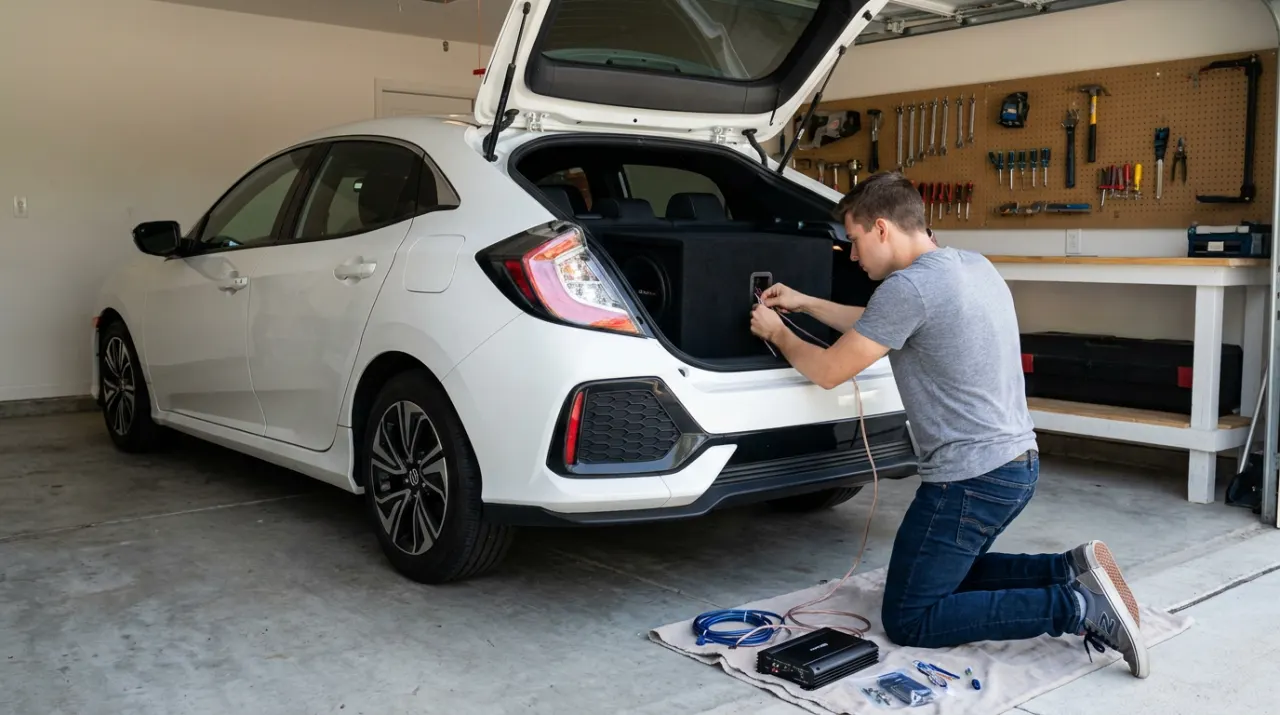
A coaxial job is often just the price of the speakers plus a cheap harness adapter, because many owners install them themselves in an afternoon. A component set frequently adds $100–$300 in labor if a shop mounts and aims the tweeters and hides the crossover, and if you are also adding an amp and wiring, the total climbs further. It is entirely normal for a serious component front stage to cost several times what a coaxial swap does once everything is installed and powered.
Where components earn that premium is ceiling. A coaxial upgrade is a fixed, one-time improvement — it sounds better than factory and stays there. A component set is the base layer of a system that keeps getting better as you add an amp, sound deadening and better source material. If you know you want to keep building, spending on components early avoids buying twice. If you just want your daily driver to stop sounding flat, a coaxial delivers most of the audible everyday improvement for a fraction of the outlay.

Common myths and mistakes
"Components always sound better than coaxials." Only when installed properly. A component set with its tweeters left low in the door and un-aimed can sound barely different from a good coaxial — you've paid for staging you never unlocked. The install is half the product.
"Bigger numbers on the box mean better sound." Peak-watt ratings are marketing. Sensitivity (how loud the speaker plays per watt) and how the speaker is installed and powered matter far more than a big "500W max" sticker, which almost never reflects real, clean output.
"I'll just run components straight off my factory radio." You can, but it wastes their advantage. Components are built to be amped; without power they may sound only marginally better than cheaper coaxials while costing much more. If there's no amp in the plan, coaxials are the honest choice.
"Any speaker will drop right in." Check the size and mounting depth first. Coaxials are usually drop-in, but a deep magnet can foul a window mechanism, and components almost always need a plan for the tweeter and crossover before you buy. Measure before you order.
Which should you buy — and how to decide
There is no universal winner here — the right pick is set by your goals, your budget and how much install work you'll accept. Both are real upgrades over tired factory speakers; they just aim at different targets.
Buy coaxials if you want the biggest, cheapest, lowest-risk improvement over factory, you're running off the head unit or a modest amp, and you'd rather bolt the speakers in over an afternoon than fabricate a tweeter pod. For most daily drivers, a quality coaxial pair is the smart-money upgrade and sounds clearly better than stock.
Buy components if soundstage and imaging matter to you, you're planning an amp and a proper front stage, and you're willing to mount and aim the tweeters and hide the crossover — or pay a shop to. The reward is music that sits up on the dash and images across the car, not down at your feet.
Whichever way you go, match the size and mounting depth to your doors, prefer sensitivity over headline wattage, and remember that placement and power decide how good either one actually sounds. Get those right and the "which one" question mostly answers itself.
Recommended Products
Our top picks in this category, ranked on aggregated owner reviews.
Best for the cleanest all-round upgrade over factory paper
- 6.5" two-way with a lightweight IMPP cone
- Bright, non-harsh PEI dome tweeter
- 40W RMS / 240W peak per speaker
- Shallow mount fits most factory doors
Why buy it: the pair owners keep telling newcomers to buy first — rated 4.6 across more than 20,000 reviews for a crisp, balanced sound that embarrasses stock speakers without touching the wallet.
Best for the most detailed top end on a budget
- 6.5" three-way A-Series coaxial
- 70W RMS / 320W peak per speaker
- Multilayer mica matrix cone
- Separate tweeter and midrange for clarity
Why buy it: owners consistently report the extra tweeter and midrange give it the most open, detailed sound in this price bracket — the pick if vocals and cymbals matter more than raw thump.
Best for the toughest build that survives real doors
- 6.5" three-way full-range coaxial
- 45W RMS / 90W peak per speaker
- Integrated concave tweeter + midrange
- Sealed motor tolerates door moisture
Why buy it: rated 4.7 across thousands of owner reviews, the R165X3 is the durability favorite — buyers routinely praise how it holds up in wet doors where cheaper cones give out.

Best for the warmest low end without adding a sub
- 6.5" two-way with a stiff polypropylene cone
- 100W RMS / 300W peak per speaker
- Heavy-duty motor for extra mid-bass
- Zero-protrusion tweeter, easy drop-in
Why buy it: based on thousands of owner reviews, the CSC65 is the one people reach for when they want punch — the beefier motor gives it noticeably fuller mid-bass than most speakers at the price.

Best for filling out the rear deck on the cheap
- 6x9" four-way A-Series coaxial
- 100W RMS / 450W peak per speaker
- Larger cone moves more air than a 6.5"
- Drop-in fit for most rear-deck cutouts
Why buy it: the rear-deck default — owners rate it 4.6 for the extra low-end body a 6x9 brings, an easy way to round out the sound before you ever think about a subwoofer.

Best for the absolute cheapest step up from blown factory speakers
- 6.5" two-way, sold as a pair
- 125W RMS / 250W peak per pair
- Poly-injection cone, rubber surround
- Shallow 2.1" mount depth
Why buy it: a wildly popular throwaway-price pair with 15,000+ reviews — nobody claims it is audiophile, but owners agree it is a real, dirt-cheap improvement over dead or crackling stock speakers.
Prices are pulled from Amazon and were accurate as of Aug 22, 2026, 6:54 PM EDT. Product prices and availability are subject to change — the live price is shown on Amazon.