
Affiliate Disclosure
Some links on this page are affiliate links. As an Amazon Associate, we earn from qualifying purchases — at no extra cost to you. We do not buy, test, or physically handle the products we cover; our rankings come from aggregated owner reviews, ratings and expert consensus. Commissions never change our verdicts. How we rank & full disclosure.
CarPro CQUARTZ
CarPro’s quartz (SiO2) coating family, spanning the DIY-friendly CQUARTZ Ceramic and CQUARTZ UK 3.0 through to the installer-only CQUARTZ FINEST RESERVE. It is the coating detailers most often recommend to first-time DIY applicators.
Best for: DIY owners who want pro-grade gloss and beading without an installer appointment
About $45 for 50 ml CQUARTZ Ceramic, $70–$85 for 30 ml UK 3.0; FINEST RESERVE installs run $800–$1,500+
- A genuine DIY path — the same brand chemistry is available in bottles you can buy and apply yourself
- Forgiving flash and leveling window, which owners consistently cite as the reason first coatings go well
- Standout gloss and slickness; aggregated reviews rate the wet, candy-like look above most rivals
- Strong hydrophobics from day one, with tight beading and good self-sheeting
- Deep support ecosystem — CarPro Eraser prep, Reload and Elixir toppers, SkinCoat for film and vinyl
- Thinner film build than Opti-Coat Pro, so less sacrificial material on the paint
- Consumer versions carry no warranty — you are buying a bottle, not a guarantee
- Realistic DIY durability is 1–2 years, not the five-year figures the pro tier advertises
- Needs a proper panel wipe before application or it will not bond evenly
Opti-Coat (Optimum Polymer Technologies)
A silicon carbide (SiC) resin coating rather than a quartz one, built around thick film deposition and long-term chemical resistance. Opti-Coat Pro and Pro+ are installer-only; Gloss-Coat is the consumer bottle.
Best for: Owners paying a professional for a thick, heavily warranted coating they intend to keep for years
About $60–$80 for a Gloss-Coat DIY kit; Opti-Coat Pro installs run $700–$1,200 and Pro+ $1,000–$2,000
- Thicker film build — roughly 2 microns for Pro, notably more sacrificial material than typical SiO2 coatings
- Silicon carbide resin gives excellent chemical resistance against bird droppings, sap and industrial fallout
- Opti-Coat Pro is sold with a lifetime warranty through the authorized installer network
- Cures to a hard, semi-permanent layer that must be machine polished off rather than simply wearing away
- Long track record — one of the earliest genuine consumer-market ceramic coatings
- The best products are installer-only; you cannot buy Pro or Pro+ over the counter
- Fast flash time and unforgiving leveling make it a poor first DIY coating
- Base Pro layer is historically weaker on beading and slickness, which is precisely why Pro+ exists
- Removal requires machine polishing, and the warranty depends on annual authorized inspections
How they score, side by side
Scores reflect aggregated owner reviews and expert consensus — not our own bench testing.
- Gloss & visual payoff97
- Hydrophobic performance97
- Film thickness & sacrificial layer79
- Chemical resistance89
- DIY accessibility95
- Ease of application95
- Warranty strength69
Spec-by-spec comparison chart
| Factor | CarPro CQUARTZ | Opti-Coat (Optimum Polymer Technologies) |
|---|---|---|
| Core chemistry | Quartz / silica (SiO2) based | Silicon carbide (SiC) resin |
| Typical cured thickness | ~1–1.5 microns (consumer tiers) | ~2 microns (Opti-Coat Pro) |
| DIY availability | Yes — CQUARTZ Ceramic, UK 3.0 sold direct | Gloss-Coat only; Pro and Pro+ are installer-only |
| Best-in-line product | CQUARTZ FINEST RESERVE (certified installers) | Opti-Coat Pro+ (authorized installers) |
| DIY price | $45 (50 ml Ceramic) to $85 (30 ml UK 3.0) | $60–$80 (Gloss-Coat kit) |
| Professional install price | $800–$1,500+ for FINEST RESERVE | $700–$1,200 Pro; $1,000–$2,000 Pro+ |
| Realistic DIY durability | 1–2 years with maintenance | 1–2 years for Gloss-Coat |
| Professional durability claim | 5+ years, warranty via certified installer | Lifetime warranty on Pro through the installer network |
| Gloss & slickness | Class-leading — the brand’s signature strength | Good; Pro+ top layer added specifically to improve it |
| Application forgiveness | Generous flash window — beginner friendly | Fast flash, unforgiving — a reason it is installer-only |
| Removal | Machine polish, but degrades gradually | Machine polish required — semi-permanent by design |
Our Top 3 Picks
The three highest-rated options in this category, if you'd rather skip straight to a proven pick.

Best for the best DIY durability and gloss
- Graphene-infused hardness
- 2–5 year durability
- Slick, high-gloss finish
- Beginner-friendly kit
Why buy it: the best all-round DIY kit — long life and an easy application.

Best for maximum longevity
- Pro-grade hardness
- 2+ year protection
- Deep, warm gloss
Why buy it: a detailer favorite that survives years with proper prep.

Best for fast spray-on protection
- Spray-on / wipe-off
- SiO2 hydrophobic layer
- Great for beginners
Why buy it: spray-on ceramic protection in minutes with no cure fuss.
Prices are pulled from Amazon and were accurate as of Aug 22, 2026, 6:54 PM EDT. Product prices and availability are subject to change — the live price is shown on Amazon.
SiO2 vs SiC: the chemistry that actually separates them
Most ceramic coating comparisons come down to marketing differences. This one does not — CQUARTZ and Opti-Coat are built on genuinely different resin systems, and that difference explains almost everything that follows.
CQUARTZ is a quartz-based coating. Its film-forming chemistry is centered on silica (SiO2), the same family used by the majority of coatings on the market. Cured SiO2 films are optically superb — they refract light in a way that produces the deep, wet look owners describe as candy gloss — and they are strongly hydrophobic, which is where the tight beading comes from.
Opti-Coat is a silicon carbide resin. Silicon carbide is a harder, more chemically inert ceramic than silica, and Optimum Polymer Technologies built the product around depositing a genuinely thick layer of it rather than chasing surface optics. Opti-Coat Pro cures at roughly 2 microns, against the roughly 1 to 1.5 microns typical of consumer SiO2 coatings. That is not a marketing rounding difference — it is meaningfully more material sitting between the world and your clearcoat.
The trade-off falls out naturally. A thicker, harder SiC film resists chemical attack extremely well and gives you more sacrificial thickness, but it is historically less slick and less beady than a well-formulated silica coating. That is exactly why Optimum developed Pro+ — a second, more hydrophobic layer applied over the base Pro coating to close the gloss and beading gap. Neither approach is wrong; they optimize for different things, and knowing which you care about resolves most of this comparison.
Understanding the product tiers on both sides
Both brands sell several products under one name, and buyers routinely compare the wrong pair. Here is the real map.
On the CarPro side:
- CQUARTZ Ceramic — the entry bottle, typically 50 ml around $45, quoted at roughly 1 year of durability. A sensible first coating.
- CQUARTZ UK 3.0 — the enthusiast DIY standard, 30 ml around $70–$85, formulated with a longer flash window for cooler, humid climates and quoted at up to 2 years.
- CQUARTZ FINEST RESERVE — the certified-installer product, applied as a base plus top layer, with a warranty and multi-year durability claims. Installs commonly land $800–$1,500 or more depending on vehicle size and correction.
- CQUARTZ SkinCoat — formulated for PPF, vinyl and plastics rather than paint.
On the Optimum side:
- Opti-Coat Gloss-Coat — the consumer kit, roughly $60–$80, the only Opti-Coat product you can apply yourself.
- Opti-Coat Pro — installer-only, the thick SiC base layer, sold with a lifetime warranty through the authorized network and typically $700–$1,200 installed.
- Opti-Coat Pro+ — Pro plus a hydrophobic top layer for gloss and beading, typically $1,000–$2,000 installed.
The fair head-to-head depends on your route. DIY buyers are really choosing between CQUARTZ UK 3.0 and Gloss-Coat. Professional buyers are choosing between CQUARTZ FINEST RESERVE and Opti-Coat Pro+. Comparing a $70 bottle to a $1,500 install tells you nothing. If you have not settled that question yet, our guide to DIY vs professional ceramic coating works through it properly.
Application: forgiveness versus film build
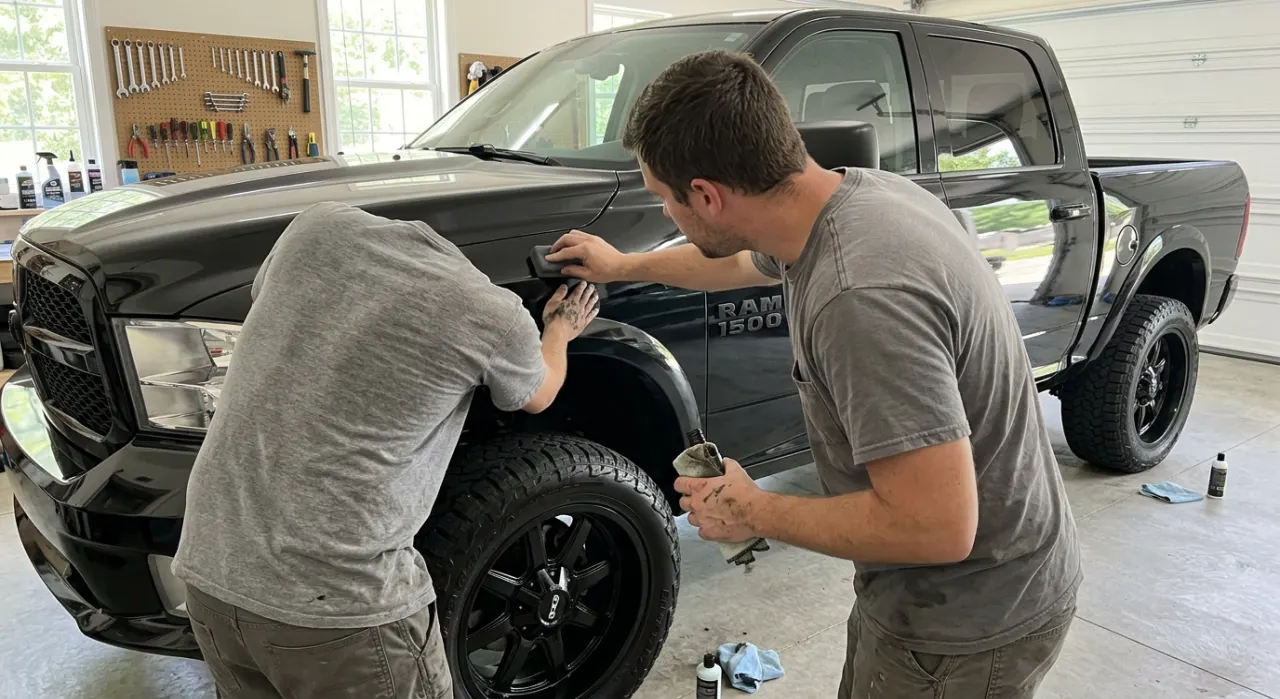
Ask working detailers which of these two they would hand to a first-timer and the answer is consistent: CQUARTZ, without hesitation.
The reason is the flash window. After you spread a coating, it needs a period to flash — to begin curing — before you level the high spots off with a plush towel. Level too early and you drag the coating off. Level too late and you are left with hazy streaks that need to be polished out. CQUARTZ UK 3.0 in particular was formulated with a generous window, and owners consistently report that it stays workable long enough to see and fix mistakes.
Opti-Coat Pro flashes quickly and levels unforgivingly. That is a large part of why Optimum restricts it to trained installers — the product rewards experienced hands and controlled shop conditions, and punishes a driveway application in direct sun. Gloss-Coat, the consumer version, is considerably tamer, but it is also not the thick Pro layer people are usually picturing when they say "Opti-Coat."
Prep is equally strict on both sides, and this is where most failed coatings are lost. Both demand a fully decontaminated, corrected and solvent-wiped surface — CarPro Eraser or equivalent — because any wax, polishing oil or sealant residue prevents bonding. Our paint prep and correction guide walks through the full sequence.
Durability, warranties and what they really cover
Here the two brands market very differently, and the difference is worth reading carefully.
CarPro publishes durability figures per product — roughly 1 year for Ceramic, up to 2 for UK 3.0, and multi-year claims for FINEST RESERVE. Consumer bottles carry no warranty at all. You are buying a chemistry, and its life depends entirely on your prep, your climate and your wash habits.
Opti-Coat leans hard on the warranty. Opti-Coat Pro is sold with a lifetime warranty through authorized installers, and Pro+ carries its own warranted term on the top layer. That sounds decisive, but read what it covers: warranties of this type protect against the coating failing, delaminating or losing its protective function — typically conditional on annual inspections at an authorized shop, and generally excluding neglect, automatic brush washes and damage from improper maintenance. They do not promise the beading you saw on delivery day will still be there in year six.
The realistic reading, based on aggregated owner reports, is that the base Opti-Coat Pro layer genuinely stays on the car for a very long time — it is semi-permanent and must be polished off — while its surface properties dull and want a topper long before the coating itself is gone. CQUARTZ behaves more conventionally: it beads beautifully, then progressively loses hydrophobicity over its stated life and gets re-applied.
Neither pattern is worse. One is a thick, long-lived protective substrate; the other is a shorter-cycle, higher-performing finish. Just do not compare a lifetime warranty against a 2-year durability claim as though they measure the same thing.
Real cost over five years
Run the DIY path first. CQUARTZ UK 3.0 at around $80 a bottle, re-applied every 18–24 months, plus prep chemicals and a maintenance topper, lands roughly $250–$400 across five years — assuming you do the correction yourself. Gloss-Coat sits in a similar band at $60–$80 per application.
The professional path is a different order of magnitude. Opti-Coat Pro+ at $1,000–$2,000 installed, or CQUARTZ FINEST RESERVE at $800–$1,500, is largely a one-time spend across those same five years, plus annual inspection and maintenance visits if you want the warranty to stay valid. Add correction, which on a used car frequently costs more than the coating itself.
Opti-Coat argues its value on longevity of the layer: if a Pro coating genuinely stays on the paint for the life of the car, the amortized cost over eight or ten years looks reasonable against repeated DIY cycles. CQUARTZ argues that you get most of the visible result for a fraction of the money, and can redo it whenever you like.
One cost catches people out. Opti-Coat’s permanence cuts both ways — if you want it off, you are paying for a machine polish across the whole car, where a degrading silica coating can often be corrected and re-coated more easily.
Common myths and mistakes
"Opti-Coat is permanent so I never have to do anything again." The layer is semi-permanent; the surface performance is not. Expect to top it to keep the beading and slickness owners rate so highly.
"CQUARTZ is the DIY one and Opti-Coat is the pro one." Half right. CarPro sells a certified-installer product (FINEST RESERVE) and Optimum sells a consumer bottle (Gloss-Coat). Compare like tiers.
"SiC is harder, so it resists scratches better." Silicon carbide is harder in bulk, but any coating measured in microns sits on top of 40–50 microns of far softer clearcoat and deflects with it. Neither product stops wash-induced swirls — technique does.
"A lifetime warranty means the coating lasts a lifetime." It means the manufacturer will address a defined failure mode, usually conditional on annual authorized inspections and proper maintenance. Read the terms before you weight it heavily.
"I can apply it over a freshly waxed car." Neither will bond. Both demand a stripped, decontaminated, solvent-wiped surface, and this is the single most common reason a coating stops performing within months.
Which should you buy — and how to decide
Buy CarPro CQUARTZ if you are applying the coating yourself, if the wet-gloss look and strong beading are what you are paying for, or if you like the idea of re-coating on your own schedule rather than being tied to an installer network. For the DIY majority this is the clear pick, and UK 3.0 is the version most enthusiasts land on.
Buy Opti-Coat Pro or Pro+ if you are hiring a professional anyway, want the thickest sacrificial layer available at that price, value a formal warranty, and plan to keep the car long enough for a semi-permanent coating to make sense. Take Pro+ over base Pro — the top layer is what delivers the finish owners expect from a four-figure job.
Either way, spend on prep first. A coating is optically clear and microns thick; it locks in the paint condition beneath it, defects included. A $70 bottle over properly corrected paint beats a $1,500 install over swirls every single time.
If you want to see where these two sit against the rest of the field, our ceramic coating brands compared guide covers the wider market, and Gyeon vs Gtechniq tackles the other head-to-head enthusiasts ask about most.
Recommended Products
Our top picks in this category, ranked on aggregated owner reviews.
Best for the best DIY durability and gloss
- Graphene-infused hardness
- 2–5 year durability
- Slick, high-gloss finish
- Beginner-friendly kit
Why buy it: the best all-round DIY kit — long life and an easy application.
Best for maximum longevity
- Pro-grade hardness
- 2+ year protection
- Deep, warm gloss
Why buy it: a detailer favorite that survives years with proper prep.
Best for fast spray-on protection
- Spray-on / wipe-off
- SiO2 hydrophobic layer
- Great for beginners
Why buy it: spray-on ceramic protection in minutes with no cure fuss.

Best for the closest thing to a pro coating
- Near-professional hardness
- 5+ year durability
- Superb chemical resistance
Why buy it: pro-tier protection you can still apply at home.
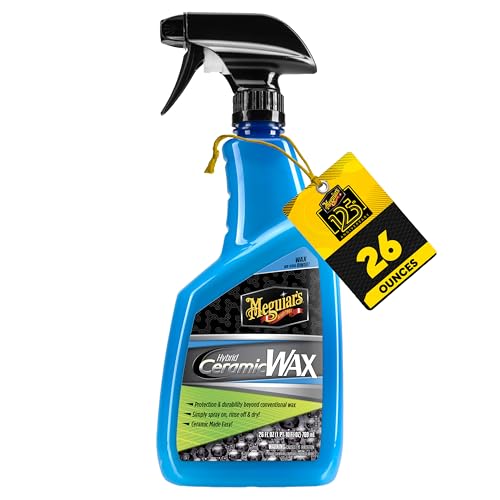
Best for cheap ceramic beading
- Spray on wet or dry
- Strong water beading
- Cheapest per use
Why buy it: the cheapest way to get ceramic-style beading fast.

Best for a complete beginner bundle
- Coating + applicators included
- Simple instructions
- Widely available
Why buy it: an all-in-one beginner bundle with everything you need.
Prices are pulled from Amazon and were accurate as of Aug 22, 2026, 6:54 PM EDT. Product prices and availability are subject to change — the live price is shown on Amazon.