
Affiliate Disclosure
Some links on this page are affiliate links. As an Amazon Associate, we earn from qualifying purchases — at no extra cost to you. We do not buy, test, or physically handle the products we cover; our rankings come from aggregated owner reviews, ratings and expert consensus. Commissions never change our verdicts. How we rank & full disclosure.
Directional Tires
A tread designed to roll in one direction only, with V-shaped grooves that sweep water outward as the tire spins. An arrow molded into the sidewall marks the required rotation direction.
Best for: Wet-weather and high-speed drivers who want maximum straight-line hydroplaning resistance
Typically $90–$250 per tire for common passenger and performance sizes
- V-shaped grooves channel water out the sides fast, resisting hydroplaning at speed
- Strong straight-line grip and a planted feel on the highway
- Popular on performance and summer tires where wet stability matters
- The aggressive arrow tread often looks sportier to buyers who care about that
- Excellent slush and light-snow clearing on winter-oriented directional designs
- Can only be rotated front-to-back on the same side, never side-to-side
- A right-side tire cannot move to the left without dismounting and reflipping it
- Fewer rotation options usually means faster, less even long-term wear
- Buying a single replacement can force matching the exact direction and size
Asymmetrical Tires
A tread with two different halves — a stiffer outer shoulder for cornering and a more open inner section for water and grip. It can mount facing either way, but the "outside" sidewall must face out.
Best for: All-season and performance drivers who want balanced dry cornering, wet grip, and flexible rotation
Typically $100–$280 per tire for common passenger and performance sizes
- Outer shoulder blocks add dry cornering grip and steering precision
- Inner tread section still handles water dispersion and wet traction
- Can be rotated in more patterns, including side-to-side, for more even wear
- The most common design on modern all-season and grand-touring tires
- A single tire can replace any corner as long as the outside faces out
- Raw straight-line hydroplaning resistance often trails a dedicated directional
- Mounting is easy to get wrong — installers must keep the "outside" label out
- The dual-purpose tread is a compromise rather than a specialist at any one thing
- Slightly more complex to spec correctly if you mix sizes front to rear
How they score, side by side
Scores reflect aggregated owner reviews and expert consensus — not our own bench testing.
- Hydroplaning resistance98
- Dry cornering grip89
- Rotation flexibility49
- Even tread wear68
- All-season versatility79
- Mounting simplicity76
Spec-by-spec comparison chart
| Factor | Directional Tires | Asymmetrical Tires |
|---|---|---|
| Tread pattern | One-way V or arrow shape | Two different halves (outer + inner) |
| Rotation on the tire | Direction-locked (arrow on sidewall) | Not direction-locked; "outside" faces out |
| Rotation patterns allowed | Front-to-back, same side only | Front-to-back and side-to-side |
| Primary strength | Hydroplaning resistance at speed | Balanced dry cornering + wet grip |
| Wet performance | Excellent straight-line water clearing | Very good, slightly less at high speed |
| Dry cornering grip | Good | Excellent (stiff outer shoulder) |
| Most common on | Summer & performance tires | All-season & grand-touring tires |
| Single-tire replacement | Must match side & direction | Any corner, outside label out |
| Even-wear friendliness | Lower (limited rotation) | Higher (flexible rotation) |
| Typical price each | $90–$250 | $100–$280 |
Our Top 3 Picks
The three highest-rated options in this category, if you'd rather skip straight to a proven pick.
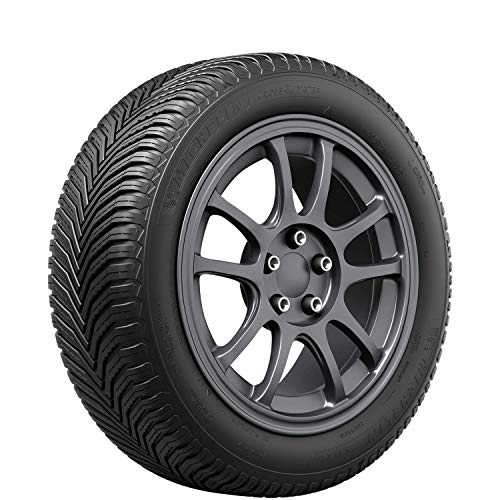
Best for the best all-round grip, wear and light-snow ability
- V-shaped tread with 3-peak-mountain-snowflake rating
- Class-leading wet and dry braking
- 60,000-mile treadwear warranty
- Real light-snow traction for an all-season
Why buy it: the tire owners and experts keep crowning as the best all-rounder — it brakes shorter in the wet than most rivals and genuinely handles snow, so it fits almost any driver in a four-season climate.

Best for the longest tread life on a sedan or minivan
- Up to 80,000-mile treadwear warranty
- Quiet, comfortable highway ride
- Strong wet grip and even wear
- Michelin’s longest-lasting all-season
Why buy it: the set-and-forget touring tire owners rate for outlasting everything else — fit it once and forget about tires for years.

Best for premium wet braking at a mid-range price
- Up to 80,000-mile treadwear warranty
- EcoPlus compound for shorter wet stops
- Fuel-efficient, low rolling resistance
- Wear indicators built into the tread
Why buy it: a hugely popular touring tire that delivers premium-brand wet performance and an 80k warranty for less than the flagships.
Prices are pulled from Amazon and were accurate as of Aug 22, 2026, 6:54 PM EDT. Product prices and availability are subject to change — the live price is shown on Amazon.
What actually separates the two tread types
People treat "directional vs asymmetrical" like a rivalry, but they describe two different things a tire designer can do with the tread — and a single tire can even be both at once. The distinction is about the shape of the tread pattern and which way the tire is allowed to face, not about which brand or which price tier you are buying.
A directional tire has a tread designed to roll in one direction only. Look at it head-on and you see a V or arrow shape, with grooves that sweep back and outward from the center. As the tire spins forward, those grooves act like channels that pump water out to the sides, which is why the design is built around one job above all others: clearing water so the contact patch stays on the road. Because the pattern only works spinning the correct way, there is an arrow and the word "rotation" molded into the sidewall, and the tire must always turn in that direction.
An asymmetrical tire splits the tread into two different halves. The outer shoulder — the part that bites hardest when you corner — uses larger, stiffer tread blocks for dry grip and steering precision. The inner half uses more open grooves and siping to handle water and provide wet traction. The two halves are doing different jobs, which is why the tire is not symmetrical from edge to edge. It is not locked to a rotation direction, but it does have a defined outboard face: the sidewall is stamped "outside" (and the other side "inside"), and it must be mounted with the outside facing out.
The cleanest way to hold the difference in your head: directional is about which way the tire spins; asymmetrical is about which way the tire faces. A directional tire cares about rotation direction; an asymmetrical tire cares about orientation. And yes — some high-performance tires are both directional and asymmetrical, which locks them to one specific corner of the car.
The rotation difference that decides wear
For most everyday owners this is the single most practical difference, and it drives the long-term cost more than any grip number on a spec sheet. Because a directional tire can only spin one way, it can only ever be rotated front-to-back on the same side of the car. A directional tire on the right side can never move to the left without a tire shop dismounting it from the wheel and remounting it flipped — an extra labor step almost nobody bothers with.
An asymmetrical (non-directional) tire has no such limit. As long as the "outside" label keeps facing out, it can be rotated in far more patterns — including the side-to-side and cross patterns (like the forward-cross or X-pattern) that tire makers recommend for the most even wear. More rotation options means the tread wears down more evenly across all four corners, which stretches the usable life of the set.
The knock-on effects matter:
- Even wear: asymmetrical tires generally wear more uniformly because they can be shuffled around the car. Directional tires, stuck to one side, tend to wear a little faster and less evenly over a set's life.
- Replacing one tire: puncture a directional and the replacement must match not just the size and model but the correct side. An asymmetrical tire can go on any corner as long as the outside faces out.
- Rotation discipline: both types still want a rotation roughly every 5,000–7,500 miles, but the directional simply has fewer legal moves to make.
None of this makes directional tires "bad" — it is a trade the design accepts in exchange for its water-clearing tread. But if low fuss and maximum even wear are your priorities, asymmetrical is the friendlier ownership experience.
Wet, dry and how each tread earns its grip
The performance gap between the two is real but narrower than the marketing arrows suggest, and it shows up in specific conditions rather than as a blanket "one is faster." Based on aggregated owner reviews and published tire-test data, here is where each tread earns its keep.
Wet and hydroplaning: this is the directional's home turf. The V-tread's outward-pumping channels are genuinely effective at evacuating standing water at speed, so directional designs tend to post the strongest straight-line hydroplaning resistance. Owners who drive fast on rain-soaked highways consistently praise that planted, water-shedding feel. Asymmetrical tires are no slouch in the wet — their inner tread half is built for exactly this — but at the very high end of speed and water depth, a dedicated directional usually has the edge.
Dry cornering: this is where the asymmetrical design answers back. The stiff, large-block outer shoulder resists deforming when you load it in a corner, which sharpens turn-in and holds a more precise line on dry pavement. That is exactly why so many performance and touring tires use an asymmetrical layout — it lets one tire carry both a cornering half and a wet half.
Everyday versatility: for the majority of drivers on all-season rubber, the asymmetrical tread's split personality is the better all-round match. It handles dry commuting, wet weather, and light seasonal variety competently without demanding you drive a specific way. The directional shines brightest when its one specialty — clearing water at speed — lines up with how you actually use the car.
Mounting mistakes and reading the sidewall
Both designs can be mounted wrong, and each fails differently, so it pays to know what to look for when a shop hands your car back. The consensus among installers is that these are the errors that slip through.
On a directional tire, the sidewall carries an arrow and the word "rotation." If the tire is mounted so it spins the wrong way — easy to do if all four aren't checked — the V-tread pumps water inward instead of out, gutting its whole reason for existing and hurting wet grip. A quick self-check: with the car parked, look at the tread from the front of the car; the V should point down and back toward the rear, meeting at the center as the tire rolls forward.
On an asymmetrical tire, the critical marking is "outside" (or "side facing outwards") on one sidewall and "inside" on the other. Mount it with the inside facing out and the tire is on backwards: you lose the outer shoulder's dry-cornering benefit and compromise wet behavior. The fix is simple but the mistake is common on busy install bays — always glance at each wheel and confirm the "outside" text is visible from outside the car.
If a tire is both directional and asymmetrical, it is locked to a single corner and often ships labeled per position. Those demand the most care at mounting and the least flexibility at rotation, so make sure the shop knows what it is fitting.
Cost and value over the life of a set
Sticker prices for the two overlap heavily — common sizes of either type land in roughly the same $90–$280 window depending on brand, size and speed rating — so the tread pattern itself rarely decides the purchase price. Where the money difference shows up is over the life of the set, and it flows straight from the rotation limits discussed above.
Because asymmetrical tires can be rotated in more patterns, they tend to wear more evenly and, all else equal, may deliver more usable tread miles before the set is done. Directional tires, restricted to same-side rotation, can wear a touch faster and less evenly, which can shorten replacement intervals slightly. Neither difference is dramatic on a well-maintained car, but over two or three sets it adds up.
There is also a hidden replacement cost with directionals. Ruin one on a pothole and you may need the shop to match side and direction exactly, and if the remaining tires are worn, replacing in matched pairs is the sensible move to keep handling balanced. Asymmetrical tires soften that headache — a single replacement can slot onto any corner. For value-focused owners who keep tires for the long haul, the asymmetrical design's flexibility usually translates into the lower cost per mile.
Common myths and mistakes
"Directional tires are faster or higher-performance." Not inherently. Direction and asymmetry are tread-shape choices, not performance tiers. Plenty of the grippiest tires on the market are asymmetrical; plenty of budget tires are directional. The pattern tells you how water is handled and how the tire mounts — not how fast it is.
"I can rotate my directional tires side-to-side to save them." Only if you have them dismounted and reflipped on the wheels, which nobody does routinely. Rotated normally, a directional stays on its own side. Trying to cross-rotate a directional without reflipping puts the tread spinning backwards.
"Asymmetrical means the tire is uneven or defective." No — the asymmetry is deliberate engineering. The two tread halves are purpose-built for different jobs (dry outer, wet inner). It is one of the most common and effective modern tread designs.
"It doesn't matter which way an asymmetrical tire faces." It matters a lot. Mount it inside-out and you forfeit the dry-cornering shoulder and hurt wet grip. Always confirm the "outside" label faces out.
"A tire is either directional or asymmetrical." Some are both. Those directional-asymmetrical tires are locked to a single corner and need the most attention at both mounting and rotation.
Which should you buy — and how to decide
There is no universal winner, because these are tread strategies, not rival products. The right call comes down to how you drive and how much rotation flexibility you want.
Lean directional if you regularly drive fast in heavy rain, want the strongest hydroplaning resistance, or you are buying a summer or performance-oriented tire where that water-clearing V-tread is the whole point. Just accept the rotation limits and the fact that a single replacement must match the correct side.
Lean asymmetrical if you want a balanced all-season or grand-touring tire, value flexible rotation and even wear, and would rather keep single-tire replacement simple. For the majority of everyday drivers, this is the more forgiving and cost-effective ownership experience — which is exactly why it dominates the all-season market.
Above all, buy for your climate and driving style, match all four tires as a set where you can, and hand the shop clear instructions on mounting direction or orientation. Once the tread type fits how you actually use the car, the "which one" question largely answers itself.
Recommended Products
Our top picks in this category, ranked on aggregated owner reviews.
Best for the best all-round grip, wear and light-snow ability
- V-shaped tread with 3-peak-mountain-snowflake rating
- Class-leading wet and dry braking
- 60,000-mile treadwear warranty
- Real light-snow traction for an all-season
Why buy it: the tire owners and experts keep crowning as the best all-rounder — it brakes shorter in the wet than most rivals and genuinely handles snow, so it fits almost any driver in a four-season climate.
Best for the longest tread life on a sedan or minivan
- Up to 80,000-mile treadwear warranty
- Quiet, comfortable highway ride
- Strong wet grip and even wear
- Michelin’s longest-lasting all-season
Why buy it: the set-and-forget touring tire owners rate for outlasting everything else — fit it once and forget about tires for years.
Best for premium wet braking at a mid-range price
- Up to 80,000-mile treadwear warranty
- EcoPlus compound for shorter wet stops
- Fuel-efficient, low rolling resistance
- Wear indicators built into the tread
Why buy it: a hugely popular touring tire that delivers premium-brand wet performance and an 80k warranty for less than the flagships.

Best for the most tire for the money
- Up to 75,000-mile treadwear warranty
- "Replace Tire" wear indicator in the tread
- Reliable wet braking and light-snow grip
- Backed by Continental’s parent company
Why buy it: the value pick owners rate again and again — a genuinely good touring tire with a 75k warranty at a bargain price.

Best for confidence in rain and winter slush
- 3-peak-mountain-snowflake certified
- Evolving Traction Grooves for wet grip
- 60,000-mile treadwear warranty
- Strong all-weather safety focus
Why buy it: the pick for drivers who see a lot of rain and the occasional storm — a true all-weather tire that carries the winter certification most all-seasons lack.

Best for sporty cars that still need year-round use
- Ultra-high-performance all-season design
- Excellent dry, wet and light-snow grip
- Tread wear indicators (DWS letters)
- A perennial enthusiast favorite
Why buy it: the enthusiast’s all-season — near-summer-tire dry grip with real wet and light-snow ability, so a sports sedan can run one set all year.
Prices are pulled from Amazon and were accurate as of Aug 22, 2026, 6:54 PM EDT. Product prices and availability are subject to change — the live price is shown on Amazon.