
Affiliate Disclosure
Some links on this page are affiliate links. As an Amazon Associate, we earn from qualifying purchases — at no extra cost to you. We do not buy, test, or physically handle the products we cover; our rankings come from aggregated owner reviews, ratings and expert consensus. Commissions never change our verdicts. How we rank & full disclosure.
Drilled Rotors
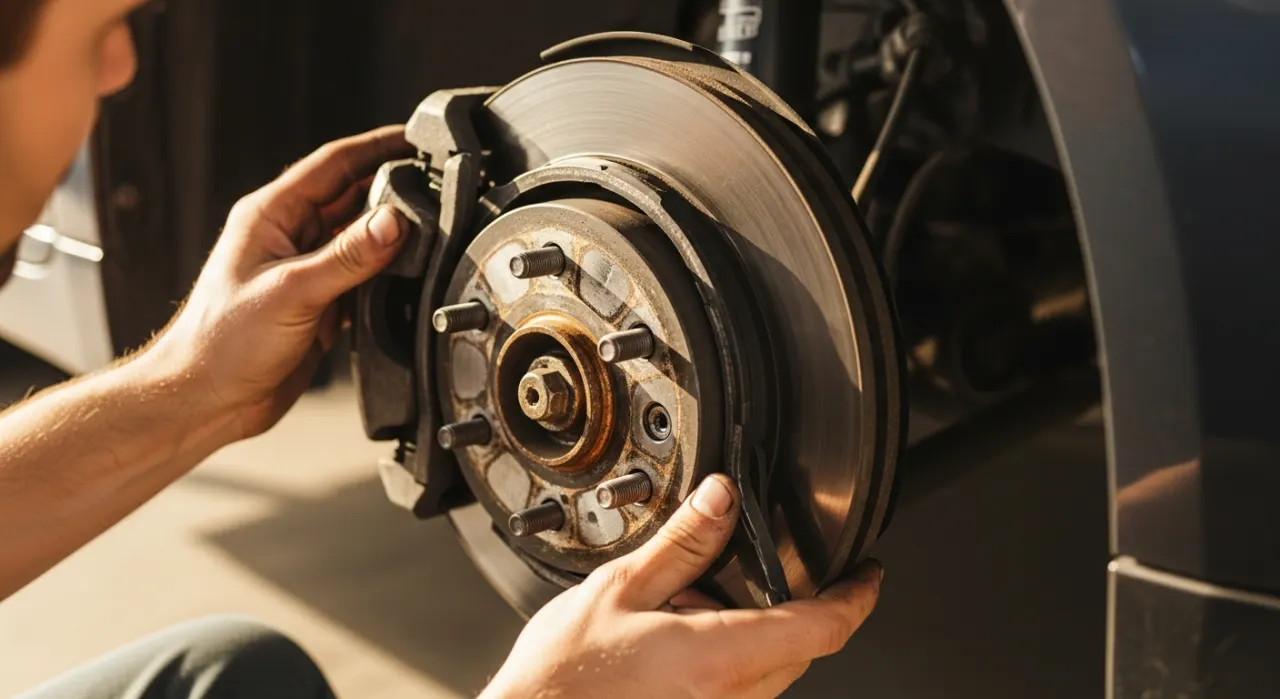
Brake rotors with holes cross-drilled through the friction face. The holes vent gas and water and shed heat quickly, but they also concentrate stress around each bore, which is why they belong on lighter, road-driven cars.
Best for: Street cars, daily drivers, and wet-climate vehicles that want cooler bite and cleaner looks without track abuse
Typically $60–$180 per rotor for quality pieces; premium two-piece drilled units run $200–$400+
- Vents brake gas and water fast, so wet-weather bite is more immediate
- Larger surface area sheds heat quickly during normal street stops
- Lighter than a solid rotor of the same size, trimming a little unsprung weight
- The look most buyers want — the classic "performance brake" appearance
- Slightly more initial bite feel that many drivers notice on the road
- The holes are stress risers — under sustained heat they can crack rotor to rotor
- Less friction surface, so ultimate fade resistance trails a slotted rotor
- Cheap drilled (rather than cast-in) rotors crack fastest of all
- Pads can wear faster as edges of the holes nibble the friction material
Slotted Rotors
Brake rotors with shallow grooves machined across the friction face. The slots scrape gas and pad glaze off the surface and keep the pad biting hard when things get hot, which is why track and tow drivers favor them.
Best for: Track days, towing, heavy vehicles, and anyone braking hard enough to worry about fade or pad glaze
Typically $70–$200 per rotor; premium slotted and two-piece units run $250–$450+
- No drilled holes, so the disc keeps far more of its structural strength
- Slots continuously de-glaze the pad, holding bite deep into hard use
- Far better resistance to heat cracking under sustained, repeated braking
- Keeps more friction surface than a drilled rotor of the same diameter
- The slots are mildly abrasive and can shorten pad life
- Can produce a faint hum or groove noise some drivers dislike
- A touch heavier than an equivalent drilled rotor
- Overkill for a gentle commuter that never sees real heat
How they score, side by side
Scores reflect aggregated owner reviews and expert consensus — not our own bench testing.
- Street / daily bite98
- Track / hard-use durability59
- Heat-crack resistance59
- Wet-weather clearing98
- Pad friendliness76
- Value for a daily driver87
Spec-by-spec comparison chart
| Factor | Drilled Rotors | Slotted Rotors |
|---|---|---|
| Primary benefit | Fast heat & gas venting; cooler initial bite | De-glazes pad; keeps bite when hot |
| Structural strength | Reduced — holes are stress risers | Nearly full — surface only grooved |
| Heat-crack resistance | Lower under sustained heat | High — best of the two |
| Wet-weather performance | Excellent — holes clear water fast | Good — slots channel water |
| Friction surface area | Less (material removed as holes) | More (only shallow grooves removed) |
| Pad wear | Moderate — hole edges nibble pads | Slightly higher — slots are abrasive |
| Noise | Quiet | Faint hum / groove noise possible |
| Best environment | Street, daily, wet climates | Track, towing, heavy or hard use |
| Weight | Lighter of the two | Slightly heavier |
| Part cost each | $60–$180 (premium $200–$400+) | $70–$200 (premium $250–$450+) |
| Typical service life | 30,000–70,000 miles (use-dependent) | 30,000–70,000 miles (use-dependent) |
Our Top 3 Picks
The three highest-rated options in this category, if you'd rather skip straight to a proven pick.

Best for quiet, clean, low-dust daily driving
- Very low dust
- Near-silent braking
- Long pad life
- OE-quality feel
Why buy it: the quietest, cleanest daily-driver pad — a genuine upgrade.

Best for stronger bite for spirited driving
- Carbon-fiber ceramic
- Strong cold bite
- Low dust for the grip
Why buy it: more stopping power without the noise or dust of race pads.

Best for OE-quality on a budget
- Quiet ceramic/semi-met
- Includes hardware & shims
- Great price
Why buy it: OE-grade quiet braking with the hardware included.
Prices are pulled from Amazon and were accurate as of Aug 22, 2026, 6:54 PM EDT. Product prices and availability are subject to change — the live price is shown on Amazon.
What actually separates drilled from slotted
Both designs exist to solve the same enemy: heat, and the gas and glaze that heat creates at the pad-to-rotor interface. When a brake pad gets hot it outgasses, and a thin layer of that gas plus glazed pad material can sit between the pad and the disc, pushing the pad slightly away and softening the bite. That is the classic feeling of brake fade. Drilled and slotted rotors both attack that problem — they just do it with opposite compromises.
A drilled rotor has holes bored straight through the friction face. Those holes give the trapped gas and water somewhere to escape and add surface area that sheds heat faster, so on the street you often get a slightly cooler, more immediate bite. The catch is structural: every hole is a stress riser, a spot where heat and load concentrate. Under repeated hard braking the metal between and around the holes expands, contracts, and eventually can crack — often running from hole to hole across the face.
A slotted rotor keeps the disc solid and instead cuts shallow grooves across the face. As the rotor spins, each slot passes under the pad and physically scrapes away gas and the glazed top layer of pad material, exposing fresh friction surface stroke after stroke. Because only a shallow groove is removed rather than a full hole, the disc keeps almost all of its structural strength and its resistance to heat cracking. The trade is that those slots are mildly abrasive and eat pads a little faster, and they can hum.
The consensus among brake shops and track drivers is blunt: drilled rotors trade durability for street feel and looks; slotted rotors trade a little pad life and noise for real, repeatable durability under heat. Neither is "better" in the abstract — the right one is decided entirely by how hard, how often, and how heavy you brake.
The heat-cracking trade-off that decides most builds
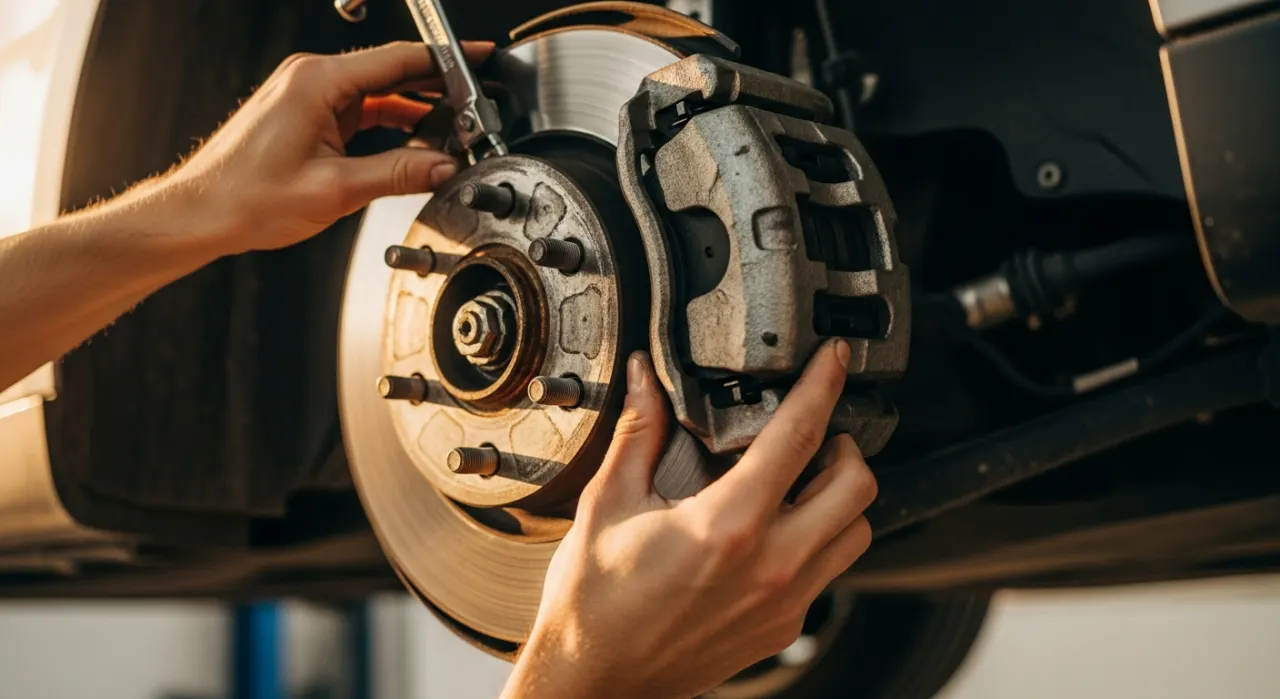
If there is one factor that settles the drilled-versus-slotted argument for serious use, it is heat cracking, and it flows directly from the structural difference above. A rotor under hard braking can swing through hundreds of degrees in seconds. Metal that hot wants to expand, and anywhere the material is interrupted — a drilled hole — that thermal stress concentrates. Over enough hard cycles, hairline cracks appear at the hole edges and can spread across the face.
This is exactly why you will see aftermarket drilled rotors on plenty of street cars but far fewer on cars that see repeated track laps or heavy towing. Track and tow drivers report cracked drilled rotors often enough that the pattern is well established, and it is the single biggest reason the mechanic and enthusiast consensus steers heavy-duty use toward slotted discs.
There is an important nuance, though. Not all drilled rotors are equal. The best ones are cast with the holes formed in the mold, which lets the casting flow around each bore and leaves a smoother, stronger structure. The worst — and unfortunately many budget rotors — are drilled after casting, which leaves sharp internal edges that crack far sooner. A quality cast-in drilled rotor on a light street car may never crack in its service life; a cheap drilled-after-casting disc on a heavy car driven hard can crack within a season. If you buy drilled, that manufacturing distinction matters more than the pattern itself.
Street driver vs track and tow driver
Because the strength of each design only reveals itself under load, the cleanest way to choose is to be honest about how you actually drive.
- Everyday street driver, lighter car: You rarely put enough sustained heat into the brakes to crack a rotor. Drilled rotors give you slightly cooler, snappier bite, excellent wet-weather clearing, and the look most people are buying them for. A quality cast-in drilled rotor is a perfectly sensible street choice. Plain solid or slotted rotors also work fine — this is the one scenario where drilled's weaknesses rarely surface.
- Wet-climate commuter: Drilled rotors have a genuine edge here. The holes clear standing water off the face fast, so the first stop after driving through rain feels more immediate. Slotted rotors channel water too, just slightly less aggressively.
- Track days and spirited canyon driving: This is slotted territory. Repeated hard stops build the exact sustained heat that cracks drilled rotors, and the slots' constant de-glazing keeps the pad biting hard lap after lap. The consensus among track drivers is nearly unanimous here.
- Towing, hauling, heavy trucks and SUVs: Weight is heat. A loaded vehicle dumps far more energy into the brakes on every stop, and that favors the structural integrity of a slotted rotor. Drilled rotors on a heavy tow rig are the classic recipe for cracks.
The practical filter is simple: if your driving regularly generates real, sustained brake heat, weigh toward slotted. If it does not, drilled is a legitimate and often more pleasant street option.
What about drilled-and-slotted rotors?
A third option muddies the debate: rotors that are both drilled and slotted. These are extremely popular in the aftermarket, and it is worth being clear-eyed about what they actually deliver. Combining both patterns gives you the venting and looks of drilling plus the de-glazing of slots — but it also inherits drilling's core weakness. The holes are still stress risers, so a drilled-and-slotted rotor is generally not as crack-resistant as a slotted-only rotor under the hardest, most sustained heat.
For most street and light-performance drivers, drilled-and-slotted is a reasonable middle ground that looks aggressive and performs well in normal use. For dedicated track or heavy-tow duty, the consensus still favors slotted-only, because removing the holes removes the failure point. In other words, adding slots to a drilled rotor does not undo the structural cost of the holes — it just adds the pad-scrubbing benefit on top.
One honest caveat that applies to all of these vented patterns: for a huge share of ordinary drivers, a good blank (solid-face) rotor with the right pad delivers excellent, quiet, long-lasting braking. Drilled and slotted patterns earn their keep as heat and use climb; on a gentle commuter they are as much about appearance and marketing as measurable stopping gains.
Cost, pad wear, and life over the miles
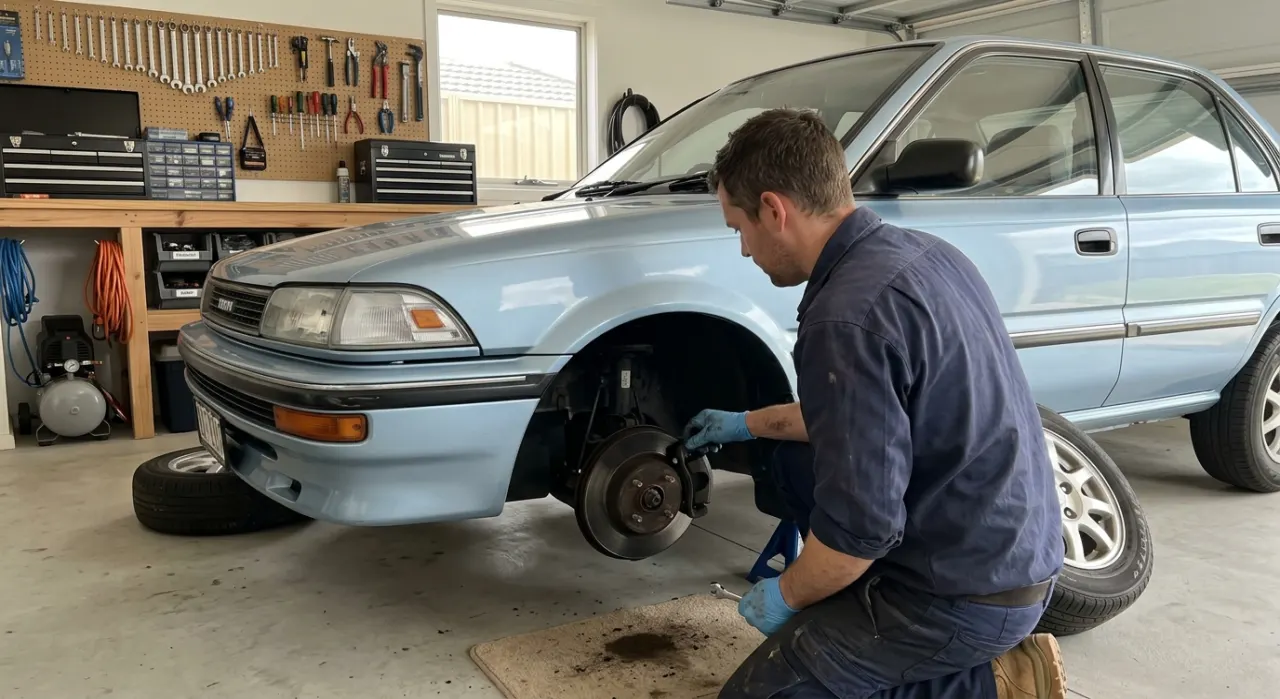
Priced piece for piece, drilled and slotted rotors sit in similar territory — quality units generally run $60–$200 each depending on the vehicle, with premium two-piece and high-carbon discs climbing to $250–$450+. Pattern alone is not what makes a rotor expensive; metallurgy, casting quality, and construction are. This is exactly why spending up for a well-made cast-in drilled rotor beats saving money on a cheap drilled-after-casting one that may crack early.
The running cost that separates them is pad wear. Both patterns are a little harder on pads than a smooth blank rotor, and slotted rotors are typically the most abrasive of the common choices — those slot edges continuously shave the pad surface, which is the whole point but also means pads may wear somewhat faster. Drilled rotors are gentler on pads than slotted but the sharp edges of the holes still nibble more than a blank face would. Over the life of the car neither difference is dramatic, but heavy slotted users should budget for slightly more frequent pad changes.
Rotor life itself depends far more on how you drive and whether you replace pads on time than on the pattern. Both typically serve somewhere in the 30,000–70,000 mile range in mixed use. The failure that ends a drilled rotor early is cracking under heat; the failure that ends any rotor is running pads to metal and scoring the face. Buy in axle pairs, match the pad compound to your use, and the pattern becomes a smaller part of the cost picture than most buyers assume.
Common myths and mistakes
"Drilled rotors always stop shorter." Not really. On a single hard stop from cold, a good blank rotor and a drilled rotor stop about the same. Drilled's advantage is cooler running and wet clearing, not raw one-stop distance — and under repeated hard stops a slotted rotor often holds up better as heat builds.
"Slots and holes are just for looks." Partly true on the street, genuinely false under heat. On a gentle commuter the patterns are largely cosmetic. On a track or tow vehicle the de-glazing and venting are doing real, measurable work keeping the pad biting.
"More holes and slots must be better." No. Every hole removes friction surface and adds a stress point. Aggressive drilling patterns can look fast and crack faster. The best-performing hard-use rotors are often the simplest slotted designs.
"Any drilled rotor is fine for my truck." This is the classic mistake. Heavy vehicles generate the sustained heat that cracks drilled rotors, and cheap drilled-after-casting discs are the worst offenders. For trucks, tow rigs, and track cars, slotted is the safer default.
"Rotors and pads are independent — buy whatever." The pad compound matters as much as the rotor. A track pad on a street-driven drilled rotor, or a dusty aggressive pad on a slotted disc, changes noise, wear, and bite. Match the pad to the rotor and to how you drive.
Which should you buy — and how to decide
There is no universal winner, because the right rotor is set by your use, not by the pattern. Start with an honest look at how much heat you put into your brakes, then match the rotor to it.
Buy drilled if you daily-drive a lighter car, live somewhere wet, and want cooler initial bite plus the classic performance look. The one rule that matters: choose quality cast-in drilled rotors from a reputable brand, not bargain drilled-after-casting discs. On a street car driven normally, drilled's crack risk rarely shows up, and its wet-weather and heat-shedding strengths are real.
Buy slotted if you run track days, tow, drive a heavy truck or SUV, or simply brake hard and often. Slotted rotors keep their structural strength, resist heat cracking, and scrub the pad clean stroke after stroke, which is exactly what repeated hard braking demands. Accept slightly faster pad wear and a possible faint hum as the price of durability.
Consider drilled-and-slotted for a street-and-occasional-spirited compromise, and honestly consider a plain blank rotor if you just want quiet, cheap, reliable braking for a commuter — a good blank with the right pad is all many cars ever need. Whatever you choose, buy in axle pairs, pick a reputable brand, and match the pad compound to how you actually drive. Identify your real use first, and the drilled-versus-slotted question mostly answers itself.
Recommended Products
Our top picks in this category, ranked on aggregated owner reviews.
Best for quiet, clean, low-dust daily driving
- Very low dust
- Near-silent braking
- Long pad life
- OE-quality feel
Why buy it: the quietest, cleanest daily-driver pad — a genuine upgrade.
Best for stronger bite for spirited driving
- Carbon-fiber ceramic
- Strong cold bite
- Low dust for the grip
Why buy it: more stopping power without the noise or dust of race pads.
Best for OE-quality on a budget
- Quiet ceramic/semi-met
- Includes hardware & shims
- Great price
Why buy it: OE-grade quiet braking with the hardware included.

Best for reliable everyday value
- One-piece design
- Quiet operation
- Widely available
Why buy it: a dependable, quiet everyday pad at a low price.

Best for fast street and light track
- High-friction ceramic
- Great fade resistance
- Fast street bite
Why buy it: strong, fade-resistant bite for fast road driving.

Best for performance cars driven hard
- High-performance street compound
- Strong, consistent bite
- Track-day capable
Why buy it: a track-capable street pad for enthusiasts who push it.
Prices are pulled from Amazon and were accurate as of Aug 22, 2026, 6:54 PM EDT. Product prices and availability are subject to change — the live price is shown on Amazon.