
Affiliate Disclosure
Some links on this page are affiliate links. As an Amazon Associate, we earn from qualifying purchases — at no extra cost to you. We do not buy, test, or physically handle the products we cover; our rankings come from aggregated owner reviews, ratings and expert consensus. Commissions never change our verdicts. How we rank & full disclosure.
EV Tires
Tires engineered specifically for electric vehicles — reinforced to carry heavy battery weight, tuned for low rolling resistance, and often built with foam liners to quiet the cabin an engine no longer masks.
Best for: EV and heavy hybrid owners who want to protect range, load rating and cabin quiet
Typically $180–$400 per tire for common EV sizes, often $50–$120 more than a comparable regular tire
- Higher load index and reinforced sidewalls sized for battery-pack weight
- Low-rolling-resistance compounds that protect real-world driving range
- Foam-lined designs (Michelin Acoustic, Continental ContiSilent) cut cabin road noise
- Tread and compound engineered for instant, high electric torque
- Some carry EV-specific marks (Michelin "EV Ready", Pirelli "Elect") that confirm the fit
- Noticeably more expensive per tire than a comparable non-EV tire
- Smaller selection and fewer sizes, so availability can be tight
- Low-rolling-resistance tuning can trade away a little ultimate grip
- Faster wear on some soft, quiet compounds under heavy EV torque
Regular Tires
Standard passenger tires designed around the weight, torque and priorities of gas and diesel cars. A huge, competitive market with a size and price for nearly every application.
Best for: Gas and light-hybrid cars, budget-focused buyers, and drivers who prioritize choice and price
Typically $100–$250 per tire in the same sizes, with far more budget options
- Cheaper per tire and hugely competitive on price
- Enormous selection across brands, sizes and performance categories
- Available everywhere, so shopping and replacement are easy
- Longer-wearing options are plentiful for gas-car weight and torque
- Proven, mature designs with abundant owner and pro reviews
- Load rating may fall short under a heavy EV or plug-in hybrid
- Higher rolling resistance can measurably cut an EV's range
- No foam liner, so road noise is louder in a quiet EV cabin
- Standard compounds can wear quickly under instant EV torque
How they score, side by side
Scores reflect aggregated owner reviews and expert consensus — not our own bench testing.
- Range protection95
- Load capacity for EVs95
- Cabin quiet96
- Price affordability49
- Selection & availability510
- Value on a gas car59
Spec-by-spec comparison chart
| Factor | EV Tires | Regular Tires |
|---|---|---|
| Designed for | Heavy, torquey, range-sensitive EVs | Gas & light-hybrid vehicles |
| Load rating | Higher (reinforced, XL) for battery weight | Standard, sized for lighter cars |
| Rolling resistance | Low — tuned to protect range | Standard — higher on average |
| Cabin noise | Often foam-lined for quiet | No foam liner; louder in an EV |
| Torque handling | Compound built for instant EV torque | Tuned for gradual engine torque |
| Price each | $180–$400 (premium for the tech) | $100–$250 (many budget options) |
| Selection | Growing but limited sizes | Vast — nearly every size & price |
| Tread life | Varies; some quiet compounds wear faster | Long-wear options widely available |
| EV-specific mark | Michelin "EV Ready", Pirelli "Elect" | None |
| Best value on | An electric or heavy hybrid car | A gas or light-hybrid car |
Our Top 3 Picks
The three highest-rated options in this category, if you'd rather skip straight to a proven pick.
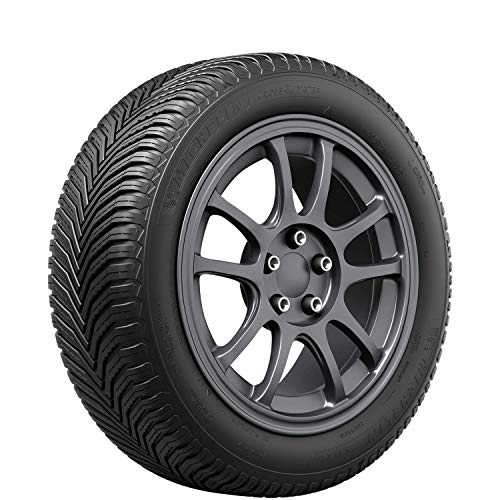
Best for the best all-round grip, wear and light-snow ability
- V-shaped tread with 3-peak-mountain-snowflake rating
- Class-leading wet and dry braking
- 60,000-mile treadwear warranty
- Real light-snow traction for an all-season
Why buy it: the tire owners and experts keep crowning as the best all-rounder — it brakes shorter in the wet than most rivals and genuinely handles snow, so it fits almost any driver in a four-season climate.

Best for the longest tread life on a sedan or minivan
- Up to 80,000-mile treadwear warranty
- Quiet, comfortable highway ride
- Strong wet grip and even wear
- Michelin’s longest-lasting all-season
Why buy it: the set-and-forget touring tire owners rate for outlasting everything else — fit it once and forget about tires for years.

Best for premium wet braking at a mid-range price
- Up to 80,000-mile treadwear warranty
- EcoPlus compound for shorter wet stops
- Fuel-efficient, low rolling resistance
- Wear indicators built into the tread
Why buy it: a hugely popular touring tire that delivers premium-brand wet performance and an 80k warranty for less than the flagships.
Prices are pulled from Amazon and were accurate as of Aug 22, 2026, 6:54 PM EDT. Product prices and availability are subject to change — the live price is shown on Amazon.
What actually makes a tire an "EV tire"
Walk into a tire shop and "EV tire" can sound like a sticker slapped on to justify a higher price. It isn't. An electric vehicle asks four specific things of its tires that a gas car does not, and a genuine EV tire is engineered around all four. Understanding those four differences is the whole comparison — everything else is detail.
The first is weight. A battery pack is heavy, so a comparable EV can weigh 20–30% more than its gas equivalent — a Tesla Model 3 outweighs a similar-size sedan by hundreds of pounds, and full-size electric trucks can top 9,000 lb. That mass has to ride on the same four contact patches, so EV tires carry a higher load index, often with reinforced or XL (extra load) sidewall construction to handle the extra static and cornering load without overheating.
The second is torque. An electric motor delivers maximum torque from zero rpm, so an EV can put down aggressive twist the instant you touch the pedal. That instant torque scrubs tread quickly, so EV compounds are formulated to resist the accelerated wear that torque and weight together cause.
The third is rolling resistance. Because range is precious and there's no easy "just add fuel," EV tires use low-rolling-resistance compounds and tread designs to squeeze out every mile. The fourth is noise: with no engine drone to mask it, tire roar becomes the loudest thing in the cabin, so many EV tires add a foam liner bonded inside the tire — Michelin's Acoustic Technology and Continental's ContiSilent are the best-known — to absorb that resonance. A regular tire addresses none of these on purpose; it was designed for a lighter, quieter-at-speed, gradually-torqued gas car.
Weight, torque and why EVs eat tires
The single most reported real-world surprise among new EV owners is tire wear. Aggregated owner reviews and fleet data consistently show EVs going through tires faster than comparable gas cars — sometimes noticeably faster — and the cause is exactly the weight-plus-torque combination above. A heavier car loads the tread harder in every corner, and instant torque adds slip and heat every time the driver accelerates briskly, which most EV drivers do because the performance is right there.
This is why the load index is the number that matters most, and where regular tires can genuinely fall short. If you replace an EV's tires with a regular set that carries a lower load rating, you risk overloading the sidewall — which runs hotter, wears faster and, in the worst case, is a safety issue. The consensus among tire pros is blunt: never drop below the load index the vehicle's placard specifies. Many EVs also come from the factory on XL-rated tires, and matching that rating is non-negotiable regardless of whether the replacement wears the "EV" label.
EV-specific tires answer the wear problem with tougher, torque-tolerant compounds and reinforced casings, but there is an honest trade-off: some of the quietest, most range-friendly EV compounds are relatively soft, and softer rubber can wear faster even as it grips and hushes better. That is why owner-reported tread life on EV tires varies so much — a quiet touring EV tire and a long-wear EV tire are different products, and you should pick for the priority that matters to you.
Range and cabin noise — the two hidden factors
Two things separate a good EV tire from a merely adequate one, and neither shows up on a quick price comparison. The first is rolling resistance and its effect on range. Rolling resistance is the energy a tire wastes as it flexes and grips the road, and on an EV that wasted energy comes straight out of your battery. Published testing and manufacturer data put the swing at roughly 3–7% of range between a high-rolling-resistance tire and a low one on the same car — enough to turn a 300-mile car into a 280-mile car, or worse in cold weather. A regular tire not tuned for low rolling resistance can quietly cost you that range every single day.
The second is noise. In a gas car, engine and exhaust sound covers a lot of tire roar. Remove the engine and the tire becomes the dominant cabin sound, especially on coarse highway surfaces. This is why so many EV-oriented tires include a foam liner: the foam damps the air-cavity resonance inside the tire that produces that low drone. Owners moving from a foam-lined OEM EV tire to a cheaper regular tire consistently report the cabin got noticeably louder — one of the most common complaints in EV tire threads. If cabin quiet is a big part of why you bought an electric car, the foam liner is a feature worth paying for.
Do you actually need EV-specific tires?
Here is the honest answer the marketing won't give you plainly: you do not strictly need a tire wearing the "EV" badge — you need a tire that meets the EV's requirements. Those are two different things. A regular tire that happens to carry a high enough load index, offers low rolling resistance, and is available in your size can serve an EV perfectly well. Many excellent grand-touring and eco tires fit this description without any EV branding.
What you should not do is fit a random, cheaper regular tire without checking the numbers. The pitfalls are specific and avoidable:
- Load index too low — the most dangerous mistake. Match or exceed the door-placard spec every time.
- High rolling resistance — legal and safe, but it quietly taxes your range on every drive.
- No noise control — fine for tolerance, but a step down in refinement from a foam-lined tire.
- Wrong speed rating or size — always match the placard and OEM fitment.
Meanwhile, if you drive a gas car, the question flips entirely: an EV tire buys you nothing. You'd pay a premium for a higher load rating you don't need and a low-rolling-resistance tuning that matters far less on a lighter car, sometimes trading away grip or tread life in the bargain. For a gas car, a regular tire chosen for your priorities is simply the correct choice.
Real cost and value over the life of the tire
On price alone the gap is real. A common EV size in a genuine EV tire frequently runs $180–$400 each, while a comparable regular tire in the same size might be $100–$250, with far more budget options at the bottom end. Across a full set that's a meaningful difference — often $200–$500 more for the EV-specific set. But the honest value comparison isn't the sticker; it's cost per mile plus what the tire protects.
Three things push the value toward a proper EV tire on an electric car. First, range is money — a low-rolling-resistance tire that preserves 5% of range reduces charging cost and extends usable range on every trip. Second, the right load rating protects safety and even wear, which a too-soft regular tire can't guarantee under EV mass. Third, refinement — the foam liner delivers the quiet cabin you paid for. On a gas car none of those three apply, so the same premium buys you nothing and the regular tire wins on value outright.
One more real-world note: because EVs can wear tires faster, buy from a line with a solid treadwear warranty and rotate on schedule — every 5,000–7,500 miles is the common recommendation. Consistent rotation matters more on an EV precisely because the weight and torque wear tread quickly, and it's the cheapest way to protect your investment on either type of tire.
Common myths and mistakes
"EV tires are just a marketing upsell." Partly fair, partly wrong. The badge can be marketing, but the underlying engineering — higher load index, low rolling resistance, torque-tolerant compound, foam liner — is real and measurable. The mistake is assuming the label alone matters; the specs behind it are what count.
"Any tire in the right size is fine for my EV." No — size is not the same as load index. A correctly sized tire with too low a load rating is the single most common and most dangerous EV tire error. Always check the door placard's load and speed rating, not just the section width and diameter.
"I should put EV tires on my gas car for a better ride." There's no benefit. You'd pay extra for capabilities a gas car doesn't use and may sacrifice grip or tread life. Buy a regular tire matched to your priorities instead.
"EV tires last just as long as regular tires." Not necessarily. Some quiet, grippy EV compounds are soft and wear faster, and EVs stress tires harder to begin with. Owner-reported life varies widely, so choose an EV tire tuned for longevity if tread life is your priority, and rotate religiously.
Which should you buy — and how to decide
The winner depends entirely on what you drive, which is why there isn't a universal answer. This is a match-the-tire-to-the-vehicle decision, not a better-versus-worse one. Start with your car, not the sidewall label.
You're buying EV tires (or an EV-qualified regular tire) if you drive an electric car or a heavy plug-in hybrid. Match or exceed the door-placard load and speed rating, prioritize low rolling resistance to protect range, and choose a foam-lined option if cabin quiet matters to you. Look for genuine EV marks — Michelin's "EV Ready," Pirelli's "Elect," Continental's EV lines — as a shortcut, but always verify the load index yourself.
You're buying regular tires if you drive a gas or light-hybrid car. An EV tire offers you no advantage and costs more, so pick a regular tire tuned to your real priorities — long tread life, all-season grip, or performance — and enjoy the far larger selection and lower price.
Whatever you drive, buy in matched sets, never undercut the placard load rating, rotate every 5,000–7,500 miles, and choose the compound for how you actually use the car. Identify your vehicle's real requirements first, and the "EV or regular" question answers itself.
Recommended Products
Our top picks in this category, ranked on aggregated owner reviews.
Best for the best all-round grip, wear and light-snow ability
- V-shaped tread with 3-peak-mountain-snowflake rating
- Class-leading wet and dry braking
- 60,000-mile treadwear warranty
- Real light-snow traction for an all-season
Why buy it: the tire owners and experts keep crowning as the best all-rounder — it brakes shorter in the wet than most rivals and genuinely handles snow, so it fits almost any driver in a four-season climate.
Best for the longest tread life on a sedan or minivan
- Up to 80,000-mile treadwear warranty
- Quiet, comfortable highway ride
- Strong wet grip and even wear
- Michelin’s longest-lasting all-season
Why buy it: the set-and-forget touring tire owners rate for outlasting everything else — fit it once and forget about tires for years.
Best for premium wet braking at a mid-range price
- Up to 80,000-mile treadwear warranty
- EcoPlus compound for shorter wet stops
- Fuel-efficient, low rolling resistance
- Wear indicators built into the tread
Why buy it: a hugely popular touring tire that delivers premium-brand wet performance and an 80k warranty for less than the flagships.

Best for the most tire for the money
- Up to 75,000-mile treadwear warranty
- "Replace Tire" wear indicator in the tread
- Reliable wet braking and light-snow grip
- Backed by Continental’s parent company
Why buy it: the value pick owners rate again and again — a genuinely good touring tire with a 75k warranty at a bargain price.

Best for confidence in rain and winter slush
- 3-peak-mountain-snowflake certified
- Evolving Traction Grooves for wet grip
- 60,000-mile treadwear warranty
- Strong all-weather safety focus
Why buy it: the pick for drivers who see a lot of rain and the occasional storm — a true all-weather tire that carries the winter certification most all-seasons lack.

Best for sporty cars that still need year-round use
- Ultra-high-performance all-season design
- Excellent dry, wet and light-snow grip
- Tread wear indicators (DWS letters)
- A perennial enthusiast favorite
Why buy it: the enthusiast’s all-season — near-summer-tire dry grip with real wet and light-snow ability, so a sports sedan can run one set all year.
Prices are pulled from Amazon and were accurate as of Aug 22, 2026, 6:54 PM EDT. Product prices and availability are subject to change — the live price is shown on Amazon.