
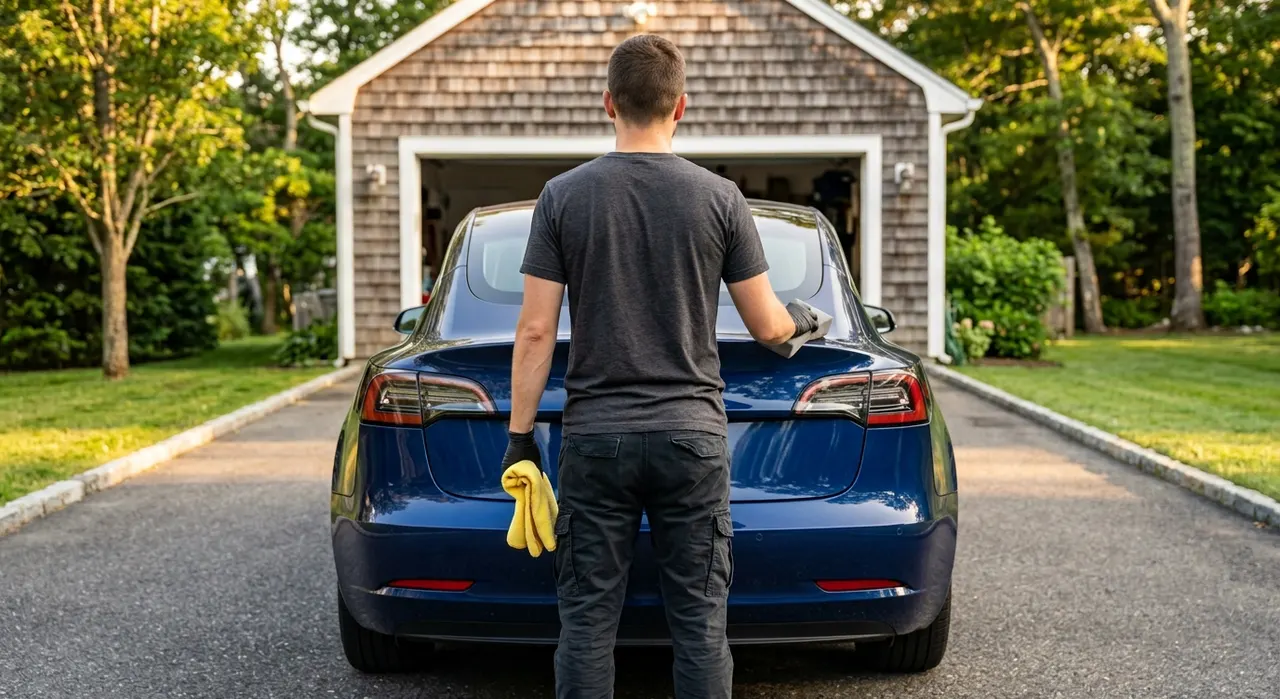
Affiliate Disclosure
Some links on this page are affiliate links. As an Amazon Associate, we earn from qualifying purchases — at no extra cost to you. We do not buy, test, or physically handle the products we cover; our rankings come from aggregated owner reviews, ratings and expert consensus. Commissions never change our verdicts. How we rank & full disclosure.
Graphene Coating
A SiO2-based paint coating with graphene oxide (reduced graphene oxide, rGO) blended into the formula. Marketed as the next step up from ceramic, with slicker feel, less water spotting and longer claimed durability.
Best for: Owners who want the longest-lasting, lowest-maintenance finish and don't mind paying a premium — especially in hot, hard-water regions
DIY bottles $30–$100; professional installs typically $700–$2,500+ depending on paint correction
- Owners consistently report noticeably fewer water spots thanks to the coating's anti-static, heat-dissipating behavior
- Slightly longer real-world durability than most consumer ceramics — pro products often carry 5–7 year warranties
- Very slick, low-friction surface that sheds dirt and makes washing easier
- Better heat dissipation, which reduces the baked-on mineral spots that plague dark cars in summer
- Applied and topped up exactly like ceramic, so there's no new technique to learn
- Costs more than an equivalent ceramic for what detailers agree is an incremental gain
- Heavy marketing hype — "graphene" content and quality varies wildly between brands
- Still needs the same paint correction and prep, so the total job isn't cheaper
- Fewer years of independent long-term data than ceramic has accumulated
Ceramic Coating
A silica (SiO2) coating that cures into a hard, glass-like semi-permanent layer bonded to the clear coat. The established standard for hydrophobic paint protection, sold in everything from $20 DIY bottles to $2,000 pro packages.
Best for: Most owners wanting durable, proven gloss and hydrophobics at the best value — the sensible default
DIY bottles $20–$80; professional installs typically $500–$2,000+ depending on paint correction
- Proven, mature technology with years of real-world owner data behind it
- Cheaper than graphene at every tier, from DIY bottles to pro packages
- Excellent gloss and strong hydrophobic beading that sheds water and grime
- Huge product range and installer availability, so it's easy to shop and price-match
- More prone to hard-water spotting than graphene, especially on hot dark panels
- Consumer-grade formulas often need topping up sooner than the label implies
- The marketed "9H hardness" doesn't mean scratch-proof — it still swirls
- Requires the same meticulous prep, so a bad install fails no matter the chemistry
How they score, side by side
Scores reflect aggregated owner reviews and expert consensus — not our own bench testing.
- Water-spot resistance97
- Durability / longevity87
- Gloss & slickness88
- Value for money69
- Proven track record69
- Ease of buying/installing78
Spec-by-spec comparison chart
| Factor | Graphene Coating | Ceramic Coating |
|---|---|---|
| Base chemistry | SiO2 + graphene oxide (rGO) | SiO2 (silica) only |
| What it is | An enhanced ceramic | The established ceramic standard |
| Water-spot resistance | Better — anti-static, sheds minerals | Good, but spots more on hot panels |
| Hydrophobic feel | Very slick; strong sheeting | Slick; strong beading |
| Claimed durability | ~2–5 yrs DIY; 5–7 yrs pro | ~1–3 yrs DIY; 2–5 yrs pro |
| Heat behavior | Dissipates heat (fewer baked spots) | Retains more surface heat |
| DIY bottle price | $30–$100 | $20–$80 |
| Professional install | $700–$2,500+ | $500–$2,000+ |
| Prep required | Wash, decon, paint correction | Wash, decon, paint correction |
| Scratch protection | Marketing "hardness"; still swirls | Marketing "9H"; still swirls |
| Track record / data | Newer; less long-term data | Mature; years of owner data |
Our Top 3 Picks
The three highest-rated options in this category, if you'd rather skip straight to a proven pick.

Best for the best DIY durability and gloss
- Graphene-infused hardness
- 2–5 year durability
- Slick, high-gloss finish
- Beginner-friendly kit
Why buy it: the best all-round DIY kit — long life and an easy application.

Best for maximum longevity
- Pro-grade hardness
- 2+ year protection
- Deep, warm gloss
Why buy it: a detailer favorite that survives years with proper prep.

Best for fast spray-on protection
- Spray-on / wipe-off
- SiO2 hydrophobic layer
- Great for beginners
Why buy it: spray-on ceramic protection in minutes with no cure fuss.
Prices are pulled from Amazon and were accurate as of Aug 22, 2026, 6:54 PM EDT. Product prices and availability are subject to change — the live price is shown on Amazon.
What actually separates graphene from ceramic
The single most important thing to understand before you spend a dollar: graphene coatings are ceramic coatings. Both are built on the same silicon-dioxide (SiO2) backbone that bonds to your clear coat and cures into a hard, hydrophobic, semi-permanent layer. What the "graphene" name refers to is a dose of graphene oxide — usually reduced graphene oxide, or rGO — blended into that SiO2 formula. So this isn't ceramic versus something fundamentally different; it's plain ceramic versus ceramic-with-an-additive.
That additive does change a few measurable behaviors. Graphene oxide is extremely thin, conductive and good at moving heat, and the consensus among detailers is that this shows up in two places: the coating carries less of a static charge (so it attracts less airborne dust) and it dissipates surface heat faster (so a hot panel doesn't bake mineral deposits into a spot as readily). Owners of dark cars in sunny states report this as the clearest difference they actually notice day to day.
What it does not do is turn your paint into armor. Both coatings are thin sacrificial layers measured in single-digit microns, and neither one stops rock chips or resists a careless wash mitt. The clean way to hold it in your head is that graphene is a refined, higher-priced version of ceramic tuned to fight water spots and stretch durability — a meaningful tweak for some owners, marketing noise for others.

How long each really lasts
Durability claims are where the marketing gets loudest, so it pays to separate label promises from what owners actually see. A few honest ranges, drawn from aggregated owner reviews and installer feedback rather than any bench test we ran:
- Consumer DIY ceramic is commonly labeled "2–5 years" but in real driveway conditions many owners see strong hydrophobics for closer to 1–2 years before beading fades and a top-up is due.
- Consumer DIY graphene tends to hold its performance modestly longer — often into the 2–3 year range in practice — which is the durability edge people are paying for.
- Professional ceramic with proper multi-layer application and cure realistically lands in the 2–5 year window, and reputable shops warranty accordingly.
- Professional graphene packages frequently carry 5–7 year warranties, and the consensus is they do age a little more gracefully, though there's simply less decade-long data than ceramic has accumulated.
The uncomfortable truth is that installation quality swings durability far more than the graphene-versus-ceramic choice does. A meticulously prepped, properly cured ceramic will outlast a rushed graphene job every time. The chemistry difference is real but second-order; the prep is first-order. Treat any "10-year coating" claim on a DIY bottle with heavy skepticism — that's a lab-condition number, not a real-world one.
The water-spotting question — graphene's real edge
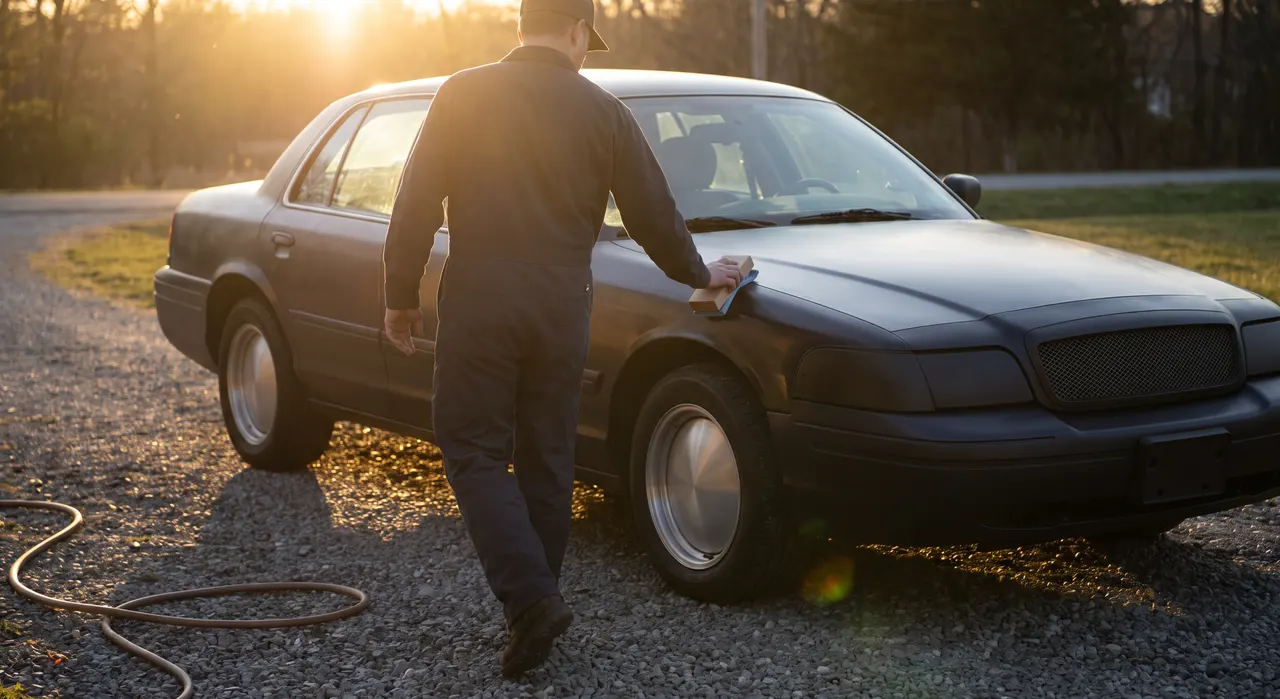
If graphene has one genuinely defensible advantage, this is it. Water spots form when droplets sit on paint, evaporate, and leave dissolved minerals behind as a crusty ring. On a strongly hydrophobic ceramic, water beads up tight — which looks great, but those beads act like little lenses that concentrate heat and can etch a spot faster on a sun-baked panel. It's a known trade-off of aggressive beading.
Graphene coatings behave differently. They tend to sheet water off in a wider flat film rather than tight beads, leave less standing water behind, and — because graphene dissipates heat — keep the surface cooler so any residual minerals are less likely to bake on. Owners in hard-water regions and hot climates consistently report this as the difference they can see: fewer spots after rain, and easier removal of the ones that do form. If you live somewhere with mineral-heavy water and street parking under the sun, that edge alone can justify the graphene premium.
For owners in mild climates with a garage and soft water, the water-spot advantage is much less relevant, and a good ceramic gives you the gloss and protection without the upcharge. This is exactly why the honest answer to "which is better" is it depends on where and how you park.
Prep and application — where coatings actually fail
Here's the part the product marketing glosses over: graphene and ceramic are applied in almost exactly the same way, and both live or die on the prep. Whichever you choose, the surface has to be flawless before a drop of coating goes on, because the coating locks in whatever is underneath it — including swirls, embedded contamination and old wax.
The standard sequence is identical for both:
- Thorough wash and iron/tar decontamination to strip bonded fallout the soap won't lift.
- Clay bar to pull embedded grit out of the clear coat so it's glass-smooth.
- Paint correction — machine polishing to remove swirls and scratches, because the coating amplifies flaws, it doesn't hide them.
- Panel wipe with a dedicated prep solution to remove all polishing oils so the coating can bond.
- Application — wipe on a thin cross-hatch, let it flash, then level with a clean microfiber, one panel at a time.
- Cure — keep the car dry and out of rain for the manufacturer's window, often 24–48 hours.
Because the process is the same, there's no learning curve switching from one to the other, and no reason to fear graphene as "advanced." The far more common failure isn't the chemistry — it's coating over unpolished paint, applying too thick so it high-spots and streaks, or letting it rain before it cures. Get the prep right and either coating performs; get it wrong and the best graphene on the market fails just as fast as a cheap ceramic.
Real cost, DIY vs professional
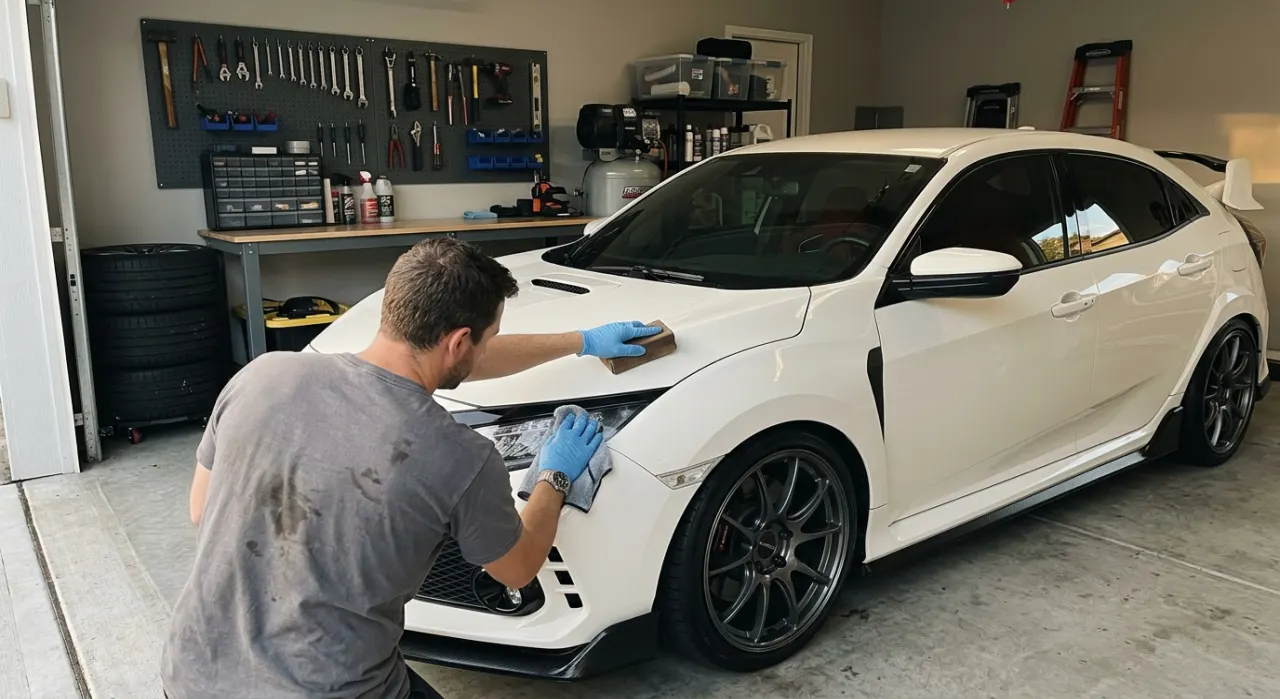
Cost splits cleanly into two very different paths. As a DIY job, a bottle of ceramic runs roughly $20–$80 and a comparable graphene bottle $30–$100 — a small dollar gap, though the graphene premium is real for what detailers call an incremental gain. The bigger DIY cost is your time and the correction supplies (polish, pads, clay, panel wipe, microfibers), which are identical either way.
Professionally, the spread is much wider because you're paying mostly for paint correction, not the coating itself. A single-stage correction with a ceramic on a clean daily might be $500–$800; a multi-stage correction on neglected paint with a premium graphene and a long warranty can run $1,500–$2,500 or more. The coating chemistry is a minor line item next to the labor hours of polishing — which is another reason chasing "graphene" without budgeting for proper correction is backwards.
Value-wise, ceramic wins on paper: you get the large majority of the gloss, slickness and protection for less money. Graphene earns its premium when the water-spot resistance and extra longevity genuinely matter to your situation — hot climate, hard water, dark paint, a car you plan to keep. If none of those apply, the honest recommendation is to put the money you'd spend upgrading to graphene into better prep or an extra correction stage instead.
Common myths and marketing traps
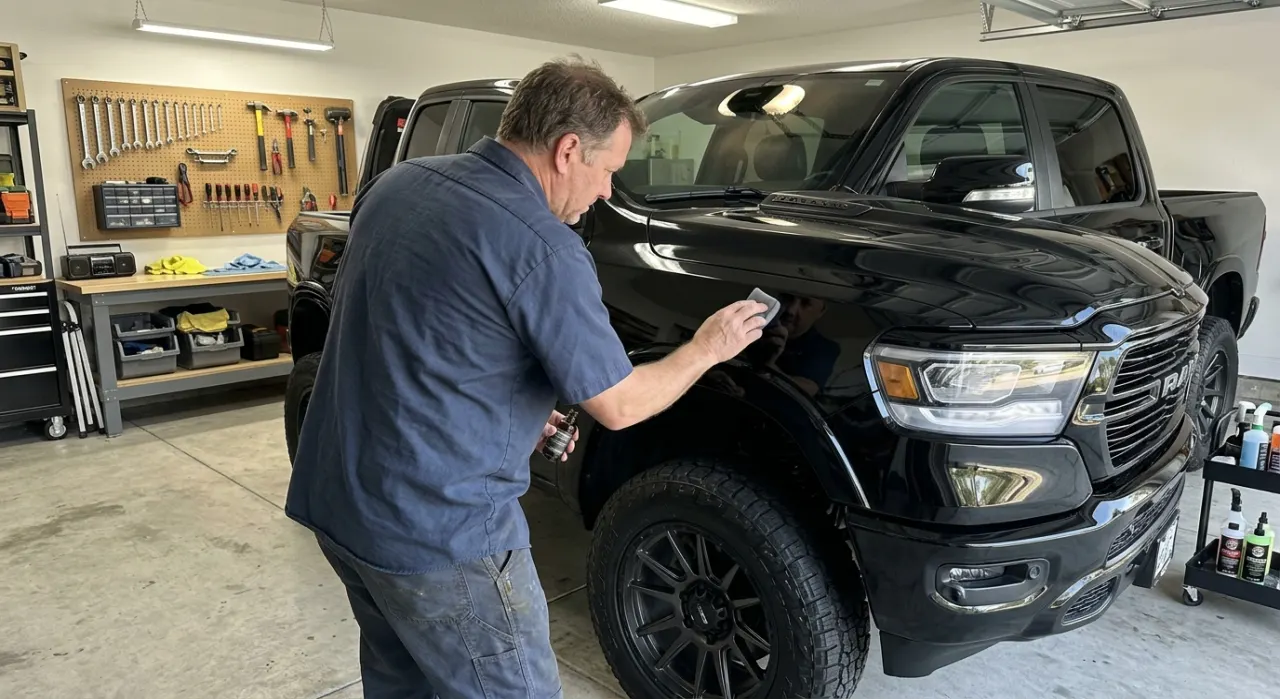
"Graphene is way harder and won't scratch." No coating in this class is scratch-proof. The "9H" and "graphene hardness" figures are marketing shorthand from a pencil-hardness test, not a guarantee against swirls. Both coatings still mar from bad wash technique — a proper two-bucket wash protects your paint far more than the chemistry choice does.
"Graphene lasts 10 years." Treat any decade-long claim on a consumer bottle as a lab-condition ceiling, not a real-world number. Reputable professional graphene warranties top out around 5–7 years, and those depend on documented maintenance. Real-world DIY results are shorter for both.
"A coating means I never wax or maintain again." Coatings reduce maintenance, they don't end it. Both benefit from a periodic ceramic-safe wash and an occasional SiO2 top-up spray to refresh hydrophobics. Skipping maintenance shortens the life of either coating.
"More graphene content is always better." There's no standard for how much rGO a product contains or how it's processed, so "graphene" on a label tells you little on its own. A well-formulated ceramic from a trusted brand will outperform a gimmicky graphene from an unknown one. Buy the brand's reputation and reviews, not the buzzword.
Which should you buy — and how to decide
There's no universal winner here, which is why we're not naming one. Graphene and ceramic aren't rivals so much as two points on the same spectrum, and the right pick is set by your climate, your paint and your budget — not by which word sounds more advanced.
Choose ceramic if you want the best value, you park in a garage or a mild climate, or it's your first coating and you want proven, well-documented performance. A quality ceramic delivers the gloss, slickness and hydrophobics the vast majority of owners are actually after, for less money.
Choose graphene if you battle hard water and summer heat, you drive a dark car that shows spots, or you're keeping the vehicle long enough that a couple of extra years of durability and easier spot-free washing pay you back. That's where the premium stops being hype and starts being a feature.
Whichever you pick, spend on the prep first. Budget for real paint correction, follow the cure window, and maintain with coating-safe products. Get those right and both coatings will make you happy; get them wrong and neither one will. The chemistry is the last 10% — the preparation is the other 90%.
Recommended Products
Our top picks in this category, ranked on aggregated owner reviews.
Best for the best DIY durability and gloss
- Graphene-infused hardness
- 2–5 year durability
- Slick, high-gloss finish
- Beginner-friendly kit
Why buy it: the best all-round DIY kit — long life and an easy application.
Best for maximum longevity
- Pro-grade hardness
- 2+ year protection
- Deep, warm gloss
Why buy it: a detailer favorite that survives years with proper prep.
Best for fast spray-on protection
- Spray-on / wipe-off
- SiO2 hydrophobic layer
- Great for beginners
Why buy it: spray-on ceramic protection in minutes with no cure fuss.

Best for the closest thing to a pro coating
- Near-professional hardness
- 5+ year durability
- Superb chemical resistance
Why buy it: pro-tier protection you can still apply at home.
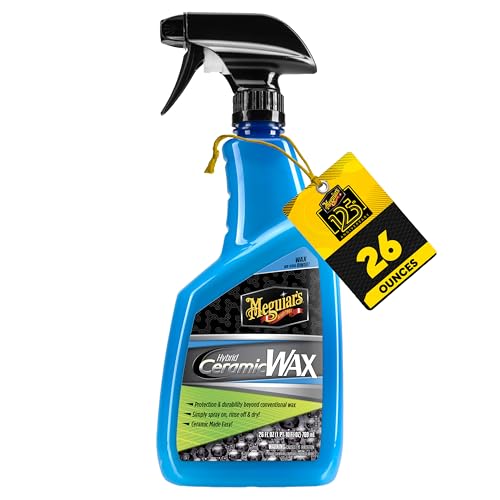
Best for cheap ceramic beading
- Spray on wet or dry
- Strong water beading
- Cheapest per use
Why buy it: the cheapest way to get ceramic-style beading fast.

Best for a complete beginner bundle
- Coating + applicators included
- Simple instructions
- Widely available
Why buy it: an all-in-one beginner bundle with everything you need.
Prices are pulled from Amazon and were accurate as of Aug 22, 2026, 6:54 PM EDT. Product prices and availability are subject to change — the live price is shown on Amazon.