
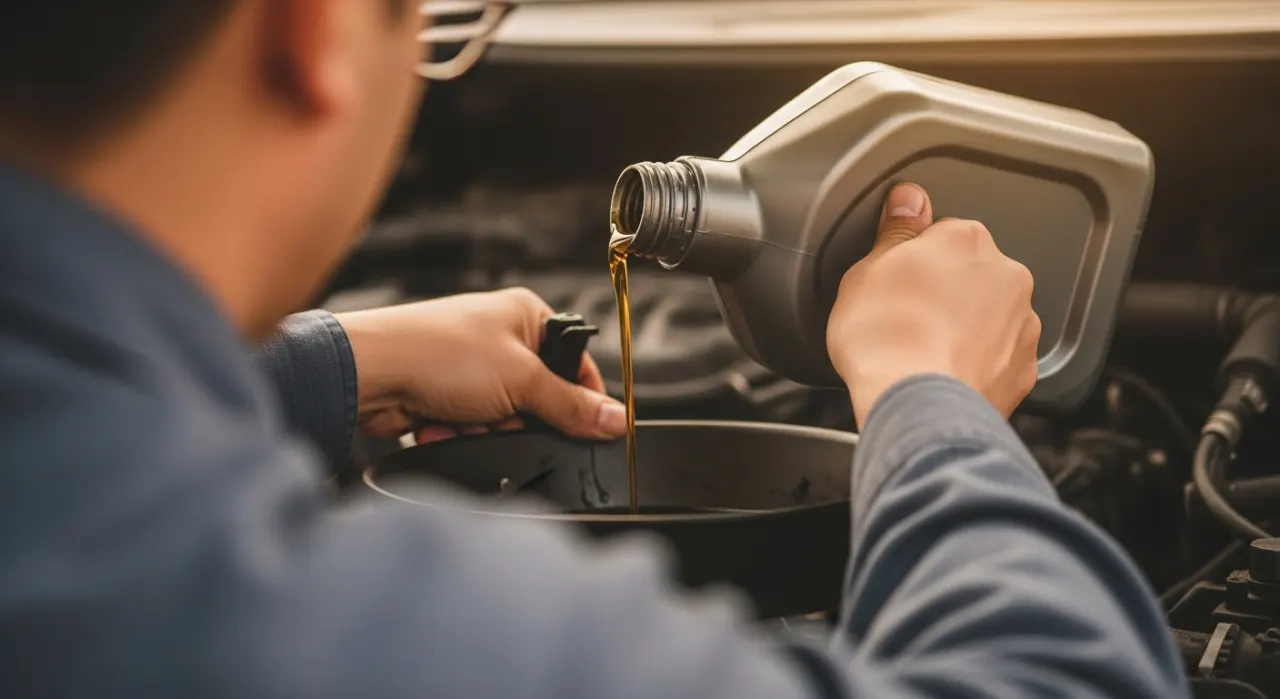
Affiliate Disclosure
Some links on this page are affiliate links. As an Amazon Associate, we earn from qualifying purchases — at no extra cost to you. We do not buy, test, or physically handle the products we cover; our rankings come from aggregated owner reviews, ratings and expert consensus. Commissions never change our verdicts. How we rank & full disclosure.
High-Mileage Oil
A motor oil — usually a synthetic blend or full synthetic — dosed with extra seal conditioners and anti-wear additives, formulated for engines past roughly 75,000 miles. It targets the leaks and burn-off that show up as an engine ages.
Best for: Older, higher-mileage engines that have started weeping oil, burning a little between changes, or ticking on cold start
Typically $28–$45 for a 5-quart jug (blend); $40–$60 for full-synthetic high-mileage
- Seal conditioners swell and soften hardened rubber, which often slows or stops minor leaks
- Extra anti-wear additives (higher ZDDP, detergents) suit worn tolerances and older cam/lifter designs
- Frequently reduces oil consumption on engines that burn a quart every 1,000–2,000 miles
- Available in the same viscosity grades (5W-20, 5W-30, etc.) so it drops in without changing spec
- Cheaper insurance than chasing a valve-cover or rear-main leak with a wrench
- The seal-swell chemistry does nothing useful on a newer, tight engine
- Blends often carry shorter drain intervals than a top-tier full synthetic
- Marketing outruns the science — it treats symptoms, it does not rebuild worn parts
- A true leak from a failed gasket still needs a mechanic, not an additive
Full Synthetic Oil
A lab-engineered base oil (Group III, IV/PAO or V) with uniform molecules and a robust additive package. It flows better cold, resists breakdown hot, and is what most engines built after roughly 2010 are designed to run.
Best for: Newer engines, turbocharged or direct-injection motors, extended drain intervals, and extreme hot/cold climates
Typically $30–$55 for a 5-quart jug; specialty European grades run $55–$75
- Superior cold-flow and high-temperature stability — the base fluid simply holds up longer
- Supports extended drain intervals of 7,500–15,000 miles when the manual allows
- Resists sludge, varnish and thermal breakdown far better than conventional or blend oil
- Often required on turbo, DI and modern European engines — using less can void warranty
- Standard formulas lack the extra seal conditioners an old, leaky engine benefits from
- Costs more per jug than conventional and, sometimes, than a high-mileage blend
- Switching a very old, sludged engine to synthetic can reveal (not cause) existing leaks
- Overkill for a well-maintained low-mileage engine on short drain intervals
How they score, side by side
Scores reflect aggregated owner reviews and expert consensus — not our own bench testing.
- Protection on worn engines96
- Base-oil quality / longevity710
- Slows leaks & oil burn94
- Cold-start & high-heat performance710
- Value for an older car96
- Fit for modern / turbo engines510
Spec-by-spec comparison chart
| Factor | High-Mileage Oil | Full Synthetic Oil |
|---|---|---|
| What it actually is | Synthetic blend or full synthetic + seal/age additives | Fully lab-engineered base oil + robust additives |
| Best engine age | Older, typically 75,000+ miles | Any age; ideal for new & modern engines |
| Seal conditioners | Yes — swell & soften hardened seals | No (standard formulas) |
| Reduces oil burn / leaks | Often, on worn engines | No specific benefit for that |
| Cold-flow & heat stability | Good (better if full-synthetic base) | Excellent — the strongest here |
| Typical drain interval | 3,000–7,500 mi (blend) up to 10,000 (full syn HM) | 7,500–15,000 mi per manual |
| Turbo / direct-injection duty | OK, but check the spec | Preferred / often required |
| Price per 5-qt jug | $28–$45 blend; $40–$60 full-syn HM | $30–$55; $55–$75 European |
| Viscosity grades offered | Same grades (5W-20, 5W-30, etc.) | Same grades (5W-20, 5W-30, etc.) |
| When it is the wrong pick | On a tight, newer engine — no benefit | On a leaky, sludged old engine with no HM additives |
Our Top 3 Picks
The three highest-rated options in this category, if you'd rather skip straight to a proven pick.

Best for the widest OEM approval list and long drain intervals
- API SP / ILSAC GF-6 rated
- Meets GM dexos1 Gen 3, many OEM approvals
- Rated for extended (up to 20k-mile) intervals
- Strong LSPI and timing-chain-wear protection
Why buy it: the synthetic owners reach for most because it carries a huge approval list — the right pick for the majority of modern engines, provided the grade matches your manual.

Best for a fully-approved synthetic for the lowest price per quart
- API SN Plus / dexos1 Gen 2 licensed
- Genuine full synthetic base
- Lowest cost-per-quart of the group
- Same spec compliance as name brands
Why buy it: proof that spec beats badge: a licensed, fully-approved synthetic that meets the same standards as the premium jugs for noticeably less money.

Best for engine cleanliness from a gas-to-liquid base oil
- PurePlus gas-to-liquid base oil
- API SP / ILSAC GF-6, dexos1 Gen 3
- Excellent for keeping pistons clean
- Backed by a mileage protection program
Why buy it: owners who care about keeping deposits off pistons like the ultra-clean GTL base — a genuinely premium synthetic that still meets mainstream specs.
Prices are pulled from Amazon and were accurate as of Aug 22, 2026, 6:54 PM EDT. Product prices and availability are subject to change — the live price is shown on Amazon.
What high-mileage oil actually is
The first thing to clear up is a misconception that trips up almost everyone shopping the oil aisle: high-mileage oil and synthetic oil are not opposites. Nearly every high-mileage product on the shelf today is already a synthetic blend or a full synthetic — the label just tells you what has been added on top of that base, not what the base is made of.
Full synthetic oil refers to the base fluid. Instead of refining crude into a soup of unevenly sized molecules the way conventional oil is made, synthetic base stock is engineered — either heavily hydrocracked Group III, or lab-built polyalphaolefin (Group IV/PAO) and ester (Group V) fluids. The molecules are uniform in size, so the oil flows predictably when it is freezing, resists thinning when it is blistering hot, and shrugs off the thermal breakdown that turns lesser oils into sludge and varnish. That base quality is why manufacturers spec synthetic on modern turbo and direct-injection engines and why it can safely run 7,500 to 15,000 miles between changes.
High-mileage oil is a formulation aimed at engines that have been around the block — the industry marks the line around 75,000 miles, though it is condition, not the odometer, that really matters. On top of a synthetic-blend or full-synthetic base, it adds a different additive package: seal conditioners that swell and soften aged rubber, extra anti-wear compounds, and often more detergents. The consensus among mechanics is simple: high-mileage oil is a synthetic (or blend) that has been re-tuned to fight the specific problems old engines develop — leaks, oil burn, and the slop that opens up in worn clearances.
So the honest framing is not "which oil is better." It is "does my engine have the age-related problems that the high-mileage additive package is designed to treat?" On a young, tight engine the answer is no, and a standard full synthetic is the smarter buy. On a weeping, oil-sipping high-mileage motor the answer is often yes, and the extra additives earn their keep.
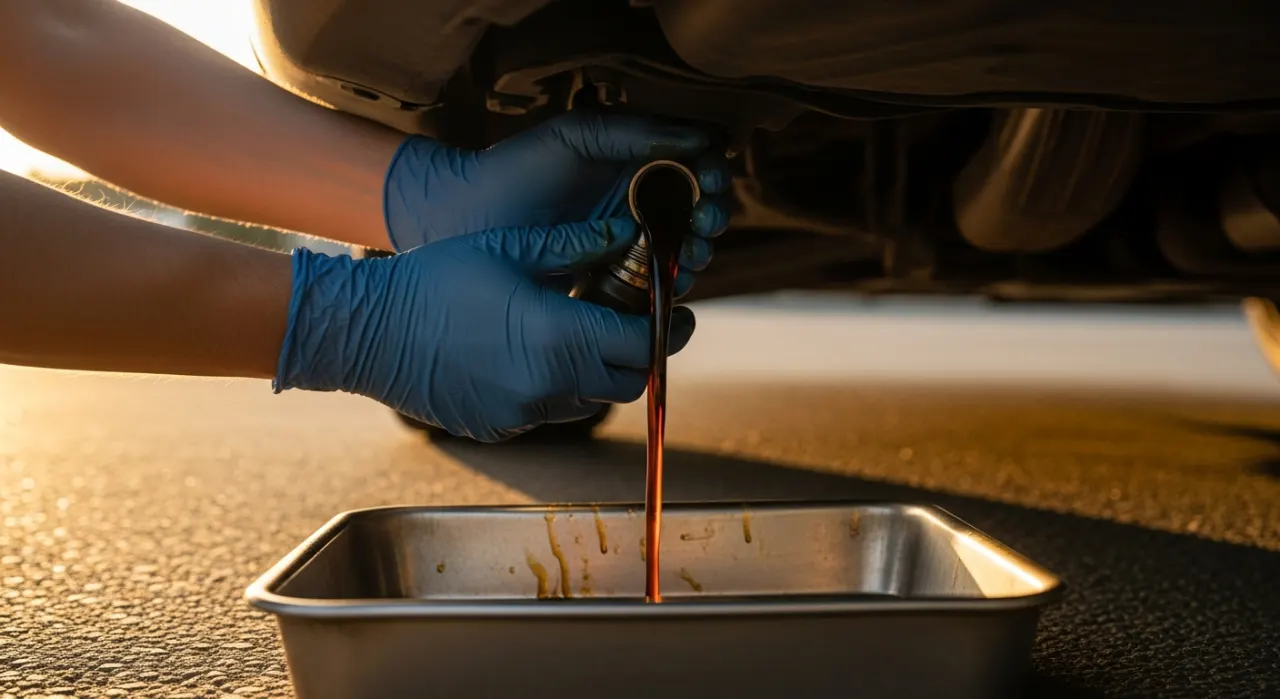
When to switch to high-mileage oil
Because the two oils overlap so much, the decision is really about symptoms, not a magic mileage number. Aggregated owner reports and shop diagnoses point to a clear set of triggers worth acting on:
- You've started topping off between changes. If the engine burns a quart every 1,000–3,000 miles, worn valve guides and hardened valve seals are the usual culprits — exactly what the seal conditioners target. Many owners report consumption dropping noticeably within a change or two.
- Fresh oil spots on the driveway. Minor weeping from the valve cover, oil pan, or a slightly hardened rear main seal is the classic high-mileage-oil use case. It won't fix a failed gasket, but it frequently slows a slow seep.
- A ticking or clatter on cold start that fades. Worn tolerances and tired seals let pressure bleed down overnight; the fortified additive package and, in full-synthetic high-mileage, the better cold-flow can quiet that morning tick.
- The engine is simply old and you want cheap insurance. Even without obvious symptoms, once a motor is past 100,000 miles the extra anti-wear chemistry is a low-cost hedge against the wear that is already underway.
Just as important is when not to switch. If your engine is under 75,000 miles, isn't leaking, and isn't burning oil, high-mileage formula offers nothing — the seal-swell chemistry has no aged seals to work on. Run the full synthetic your manual specifies and save the difference. High-mileage oil is a targeted tool, not a universal upgrade.
How the seal conditioners really work
The headline feature of high-mileage oil is its seal conditioners, and it helps to understand what they actually do — because the marketing oversells it and the skeptics undersell it. Engine seals and gaskets are largely elastomer (rubber) compounds. Over years and tens of thousands of heat cycles they lose plasticizers, harden, and shrink slightly. A shrunken, brittle seal no longer presses tightly against its shaft or mating surface, so oil weeps past it and, at the valve guides, gets drawn into the combustion chamber and burned.
Seal-conditioning additives are chemistry designed to reverse a little of that. They migrate into the rubber and cause it to swell back toward its original dimension and soften slightly, restoring the squeeze that stops the leak. On a seal that is merely tired and shrunken, this genuinely works, and owner reviews are full of "the leak slowed way down" and "it stopped burning a quart a month" reports. That is the legitimate, physics-backed benefit.
What it cannot do is equally important. A seal that is cracked, torn, or a gasket that has physically failed is a mechanical problem — no additive re-forms broken rubber. Likewise, oil burn from worn piston rings or scored cylinder walls is a machining problem, not a seal problem, and high-mileage oil won't touch it. The honest rule of thumb from mechanic consensus: high-mileage oil is worth a try for a minor, gradual seep or a modest uptick in consumption; a steady drip or a sudden loss of oil is a repair, not an oil change.
Why viscosity matters more than the label
Here is the single most common mistake people make when they start thinking about oil: they get so focused on the "high-mileage vs synthetic" choice that they forget the number that matters most. The viscosity grade — the 5W-30 or 0W-20 printed in your owner's manual and often on the oil cap — is engineered around your engine's bearing clearances, oil-pump design, and emissions hardware. That grade does not change because the car got old.
A persistent bit of shop-counter folklore says you should step up to a thicker oil on a high-mileage engine — run 10W-40 where the car called for 5W-30, on the theory that thicker oil seals worn clearances and quiets the engine. There is a grain of truth for a genuinely worn-out motor with low oil pressure, but as blanket advice it is risky: a heavier grade flows more slowly on cold start (when most wear happens), can starve tight oil galleries and variable-valve-timing actuators, and on modern engines can trip pressure or timing faults. The strong consensus is to stick with the manufacturer's specified grade unless a trusted mechanic diagnoses a specific reason to deviate.
The reassuring part is that this choice is independent of the high-mileage-versus-synthetic decision. Both categories are sold in the same full range of grades — 0W-20, 5W-20, 5W-30, 5W-40 and so on. So you never trade away the correct viscosity to get high-mileage additives or full-synthetic base quality. Match the grade first; choose the formula second.
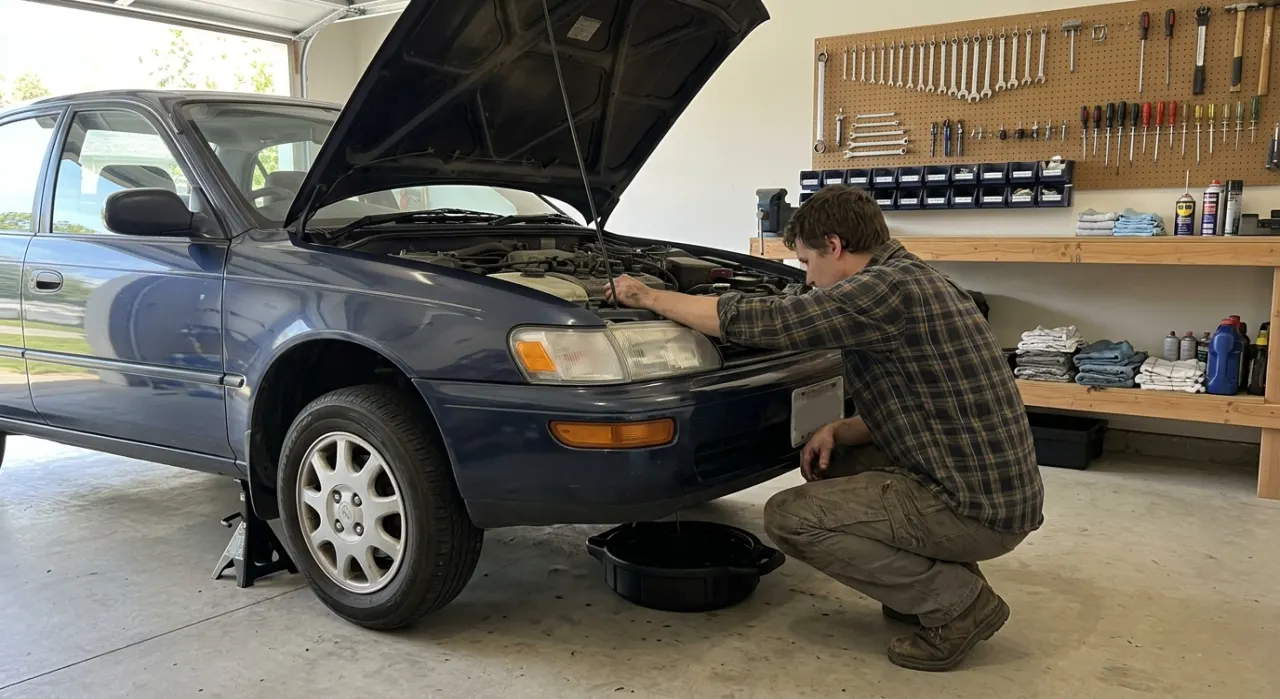
Real cost and value over the life of the car
On the shelf the prices sit closer together than people expect. A 5-quart jug of synthetic-blend high-mileage oil runs roughly $28–$45, full-synthetic high-mileage $40–$60, and standard full synthetic $30–$55 — with specialty European grades pushing $55–$75. In other words, a full-synthetic high-mileage oil can actually cost more than a plain full synthetic, because you are paying for both the good base and the extra additives.
The bigger cost lever is the drain interval, and this is where full synthetic pulls ahead on paper. A quality full synthetic can safely go 7,500–15,000 miles between changes when the manual permits, while many high-mileage blends are happier at 3,000–7,500 miles. Over a year that can mean one oil change instead of two. But that math only applies to an engine healthy enough to earn the long interval — an older motor burning oil needs closer monitoring and more frequent top-offs regardless of what the base fluid can tolerate, which narrows the real-world gap.
The honest value case: if a $35 jug of high-mileage oil slows a leak or cuts a quart-a-month oil habit, it is dramatically cheaper than the $400–$1,200 a shop would charge to pull a valve cover or drop a rear main seal — and it buys time to decide whether that repair is even worth it on an aging car. On a newer engine, standard full synthetic on a long drain interval is simply the lower total cost of ownership. Both can be the "cheaper" choice; it depends entirely on which engine you're feeding.
Common myths and mistakes
"High-mileage oil isn't synthetic — it's a step down." Wrong. Most high-mileage oils are synthetic blends or full synthetics with extra additives. You are not choosing between synthetic and non-synthetic; you're choosing which additive package your engine's age calls for.
"Switching my old engine to synthetic will cause leaks." Synthetic doesn't create leaks. What can happen is that a full synthetic's stronger detergents clean out sludge that was plugging a gap in an already-failing seal, revealing a leak that was there all along. That is an argument for a high-mileage formula (whose conditioners swell the seal) on a sludged old engine — not a reason to fear synthetic itself.
"Thicker oil is always better for a worn engine." Only in narrow cases. A heavier grade slows cold-start flow when wear risk is highest and can upset modern oil-pressure and variable-valve-timing systems. Stay with the manufacturer's grade unless a mechanic specifically tells you otherwise.
"High-mileage oil will fix my oil burning." Sometimes, if the burn is from hardened valve seals — the conditioners can help there. But burning from worn piston rings or cylinders is mechanical wear no additive repairs. Try the oil for a modest habit; diagnose a heavy one.
"75,000 miles means I must switch." The number is a marketing marker, not a rule. A well-maintained engine with no leaks or burn at 90,000 miles is perfectly happy on its specified full synthetic. Switch when symptoms appear, not when an odometer digit rolls over.
Which should you buy — and how to decide
There is no universal winner here, because they're built for different engines at different stages of life. The decision comes down to condition, not brand loyalty or price alone. Diagnose your engine honestly first, then pick the formula that matches it.
Buy standard full synthetic if your engine is under about 75,000 miles, isn't leaking or burning oil, or is a modern turbo, direct-injection, or European motor that specifies it. You get the best base-oil quality, the longest safe drain intervals, and top cold and hot performance — and the high-mileage additives would do nothing for you.
Buy high-mileage oil if your engine has aged into the classic symptoms: minor leaks, a rising thirst for oil between changes, or a cold-start tick. Prefer a full-synthetic high-mileage grade if it exists for your viscosity, so you keep the superior base fluid and add the seal conditioners on top. It is the cheapest sensible first move before you commit to a seal or gasket repair.
Whichever you choose, the non-negotiable is the same: match the exact viscosity grade in your owner's manual, pick a reputable brand that carries the right API/ILSAC (or manufacturer) approval for your engine, and change it on the interval your engine's health — not just the jug's rating — can actually support. Get the engine's condition read correctly, and the "which oil" question mostly answers itself.
Recommended Products
Our top picks in this category, ranked on aggregated owner reviews.
Best for the widest OEM approval list and long drain intervals
- API SP / ILSAC GF-6 rated
- Meets GM dexos1 Gen 3, many OEM approvals
- Rated for extended (up to 20k-mile) intervals
- Strong LSPI and timing-chain-wear protection
Why buy it: the synthetic owners reach for most because it carries a huge approval list — the right pick for the majority of modern engines, provided the grade matches your manual.
Best for a fully-approved synthetic for the lowest price per quart
- API SN Plus / dexos1 Gen 2 licensed
- Genuine full synthetic base
- Lowest cost-per-quart of the group
- Same spec compliance as name brands
Why buy it: proof that spec beats badge: a licensed, fully-approved synthetic that meets the same standards as the premium jugs for noticeably less money.
Best for engine cleanliness from a gas-to-liquid base oil
- PurePlus gas-to-liquid base oil
- API SP / ILSAC GF-6, dexos1 Gen 3
- Excellent for keeping pistons clean
- Backed by a mileage protection program
Why buy it: owners who care about keeping deposits off pistons like the ultra-clean GTL base — a genuinely premium synthetic that still meets mainstream specs.

Best for turbocharged and hard-driven engines
- Fluid Titanium film strength additives
- API SP / dexos1 Gen 3
- Holds up under high heat and load
- Strong wear protection at the film
Why buy it: the pick owners of turbo and performance engines lean on for film strength under heat — as always, only if 5W-30 is the grade your engine calls for.

Best for engines past 75,000 miles that seep or burn a little
- Added seal conditioners
- API SP / ILSAC GF-6
- Targets minor leaks and oil burn
- Full-synthetic protection for older engines
Why buy it: the high-mileage formula owners of older engines credit with quieting minor seepage — the seal conditioners are the reason to choose it over standard synthetic.

Best for a dependable, widely-stocked daily-driver synthetic
- API SP / ILSAC GF-6, dexos1 approved
- Strong wear and deposit protection
- Easy to find and refill
- Trusted mainstream formula
Why buy it: the no-drama daily-driver synthetic owners buy on repeat — fully approved, easy to source, and priced right for regular changes.
Prices are pulled from Amazon and were accurate as of Aug 22, 2026, 6:54 PM EDT. Product prices and availability are subject to change — the live price is shown on Amazon.