
Affiliate Disclosure
Some links on this page are affiliate links. As an Amazon Associate, we earn from qualifying purchases — at no extra cost to you. We do not buy, test, or physically handle the products we cover; our rankings come from aggregated owner reviews, ratings and expert consensus. Commissions never change our verdicts. How we rank & full disclosure.
Impact Wrench
A high-torque power tool with a square anvil drive (usually 3/8" or 1/2") built to break loose and run large fasteners like lug nuts, suspension bolts and axle nuts. It hammers rotationally to deliver far more torque than a drill.
Best for: Automotive work — lug nuts, brake calipers, suspension, and any stubborn, rusted, or high-torque bolt
Cordless mid-range $150–$300 bare tool; $250–$450 as a kit with battery and charger
- Massive breakaway torque — mid-range 1/2" cordless units hit 300–1,000+ ft-lbs of nut-busting force
- The square anvil takes standard impact sockets, exactly what you need for lug nuts and axle work
- Rotational hammer mechanism frees seized and rusted fasteners a drill or driver simply can't move
- A single tool covers wheels-off jobs, brakes, and most under-car suspension work
- Cordless 1/2" models have made the corded-and-air-only era of tire changes obsolete for most DIYers
- Overkill and awkward for small screws — heavy, bulky, and hard to control on delicate fasteners
- Real torque means it will happily snap a rusted bolt or strip threads if you don't respect it
- Higher cost and weight than an impact driver; the 1/2" units are genuinely two-handed for many people
- Needs a separate torque wrench for final tightening — you never trust an impact for spec torque
Impact Driver
A compact power tool with a 1/4" hex quick-release chuck built to drive screws and small bolts. It adds a rotational hammer to a drill-like body, giving it more grunt than a drill without the bulk of an impact wrench.
Best for: Driving screws, self-tappers, and small fasteners — interior trim, brackets, decking, and general assembly
Cordless $80–$180 bare tool; $130–$250 as a kit, often bundled with a drill
- Light, compact and one-handed — comfortable for long screwdriving sessions where a drill's wrist-twist tires you out
- The 1/4" hex chuck snaps bits in and out instantly and holds them without a keyed chuck
- Far more torque than a standard drill/driver, so it sinks long screws and lags without stalling or cam-out
- Cheaper and more versatile for household and light-fabrication tasks than an impact wrench
- Nowhere near the torque needed to reliably break loose factory-torqued lug nuts or rusted suspension bolts
- The 1/4" hex chuck won't take standard sockets without a hex-to-square adapter, which is a weak point under load
- Poor at precision and drilling — no clutch, and it can strip small screws or snap bit tips if pushed
- Not a substitute for a wrench on any high-torque automotive fastener
How they score, side by side
Scores reflect aggregated owner reviews and expert consensus — not our own bench testing.
- Automotive / lug-nut torque103
- Screwdriving comfort39
- Compactness & one-hand use49
- Versatility around the house48
- Breaking rusted fasteners103
- Value for a first tool68
Spec-by-spec comparison chart
| Factor | Impact Wrench | Impact Driver |
|---|---|---|
| Primary job | Breaking loose & running large bolts/nuts | Driving screws & small fasteners |
| Chuck / drive type | Square anvil (3/8" or 1/2") | 1/4" hex quick-release |
| Takes standard sockets | Yes — directly (impact sockets) | Only via a hex-to-square adapter |
| Typical torque | 300–1,000+ ft-lbs (1/2" cordless) | ~100–200 ft-lbs (1,400–1,800 in-lbs) |
| Best automotive use | Lug nuts, calipers, suspension, axle nuts | Interior trim, brackets, small screws |
| Size & weight | Larger, heavier, often two-handed | Compact, light, one-handed |
| Can it drill? | No | Poorly — no clutch, hex bits only |
| Price (cordless bare) | $150–$300 | $80–$180 |
| Precision / control | Low — brute force | Moderate — better feel on screws |
| Right tool for lug nuts | Yes | No — usually not enough torque |
Our Top 3 Picks
The three highest-rated options in this category, if you'd rather skip straight to a proven pick.

Best for the best mix of brand pedigree, warranty and price
- 72-tooth ratchets for a 5° swing arc
- Polished chrome-vanadium, anti-slip sockets
- DEWALT full lifetime warranty
- Compact SAE + metric set in a blow-mould case
Why buy it: a name-brand kit that owners rate at the very top of the budget class — the lifetime warranty and fine-tooth ratchets punch well above the price, which is why it keeps getting recommended to first-time wrenchers.
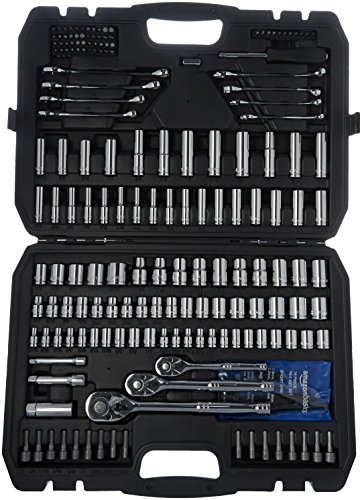
Best for the most sockets and bits per dollar
- 201 pieces across 1/4", 3/8" and 1/2" drives
- Chrome-vanadium forged, polished-chrome finish
- Full SAE + metric coverage
- Molded case keeps every socket in its slot
Why buy it: a socket-heavy kit that owners repeatedly call the best money-for-metal buy on Amazon — if your jobs are mostly nuts and bolts, nothing here gives you more drive tools for the outlay.

Best for trusted-brand tools with a lifetime guarantee
- 72-tooth reversible ratchets
- Alloy-steel sockets, off-corner loading grip
- Crescent lifetime warranty
- Closed, latching blow-mould case
Why buy it: an Apex Tool Group set that owners rate for genuine fit and finish — the off-corner grip protects rounded fasteners, and the lifetime backing means a cracked socket is a free swap.
Prices are pulled from Amazon and were accurate as of Aug 22, 2026, 6:54 PM EDT. Product prices and availability are subject to change — the live price is shown on Amazon.
What actually separates the two tools
The names sound almost identical, and both use an "impact" mechanism, so they get confused constantly at the hardware store. But they are engineered for opposite ends of the fastener world, and the giveaway is the business end of each tool — the chuck.
An impact driver has a 1/4-inch hex quick-release chuck. You snap in hex-shank bits — screwdriver bits, small hex-drive sockets, self-tapper bits — and it drives them fast. Inside, a spring-loaded hammer and anvil deliver rapid rotational blows that let a compact, lightweight body punch far above a normal drill. The consensus among builders is that it's the single best tool ever made for sinking screws: it doesn't cam out, it doesn't twist your wrist, and it fits one-handed into tight spaces.
An impact wrench has a square anvil drive — typically 3/8-inch or 1/2-inch — the same square drive as a socket wrench. That means it takes standard impact sockets directly, which is exactly what you need for lug nuts, axle nuts, and suspension bolts. It uses the same hammer-and-anvil concept, but scaled up dramatically. A mid-range 1/2-inch cordless wrench delivers hundreds of ft-lbs of torque, and the strongest units clear 1,000 ft-lbs. That's a completely different class of force from a driver.
The cleanest way to remember it: an impact driver drives bits, an impact wrench turns sockets. One is for screws, the other is for bolts and nuts. They share a working principle and nothing else about the job they're meant to do.
Torque and drive type — the real dividing line
The numbers make the split obvious. Spec sheets put a typical cordless impact driver around 1,400–1,800 in-lbs — that works out to roughly 115–150 ft-lbs. A cordless impact wrench in the 1/2-inch class starts around 300 ft-lbs of fastening torque and climbs past 1,000 ft-lbs of nut-busting torque on high-output models. Even the smallest 3/8-inch wrench usually out-muscles the strongest driver.
Why does that matter? Because the fasteners live in different worlds. A drywall or deck screw needs a few dozen in-lbs. A wheel lug nut is torqued to spec at 80–100 ft-lbs from the factory, and after a season of heat cycling and corrosion it can take far more than that to crack loose. A rusted suspension bolt can be worse still. The driver simply runs out of grunt and hammers uselessly; the wrench breaks it free.
The drive type reinforces the divide. The driver's 1/4-inch hex is fast and secure for bits, but it was never meant to transmit socket-level torque — an adapter turns that hex into a stress point that can round off or shear. The wrench's square anvil is the industry-standard socket drive, engineered to take the abuse. Trying to force one tool into the other's territory fights both the torque spec and the mechanical design.
Can an impact driver do lug nuts?
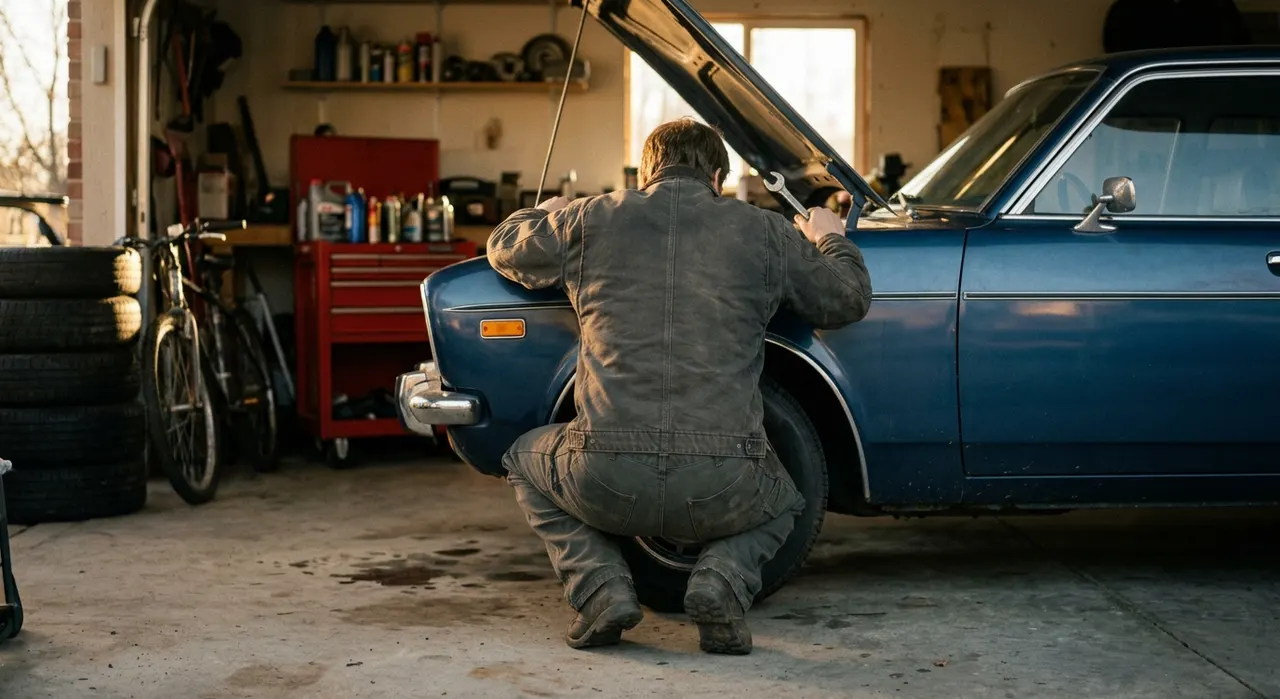
This is the question that sends people to a comparison page in the first place, and the honest answer is: sometimes, barely, and you shouldn't count on it. Aggregated owner reports are consistent here. A strong 1/4-inch impact driver, fitted with a hex-to-1/2-inch-square adapter and an impact socket, can occasionally remove lug nuts that were torqued to spec and haven't seized. On a car with a light 80 ft-lb wheel spec and no corrosion, it might work.
But the moment you hit a nut that a shop over-tightened with an air gun, or one that's rusted onto the stud, the driver stalls. Worse, the adapter is now the weakest link in the chain, and owners regularly report snapping cheap adapters or rounding the hex under that load. You've turned a screwdriving tool into a marginal, failure-prone wrench.
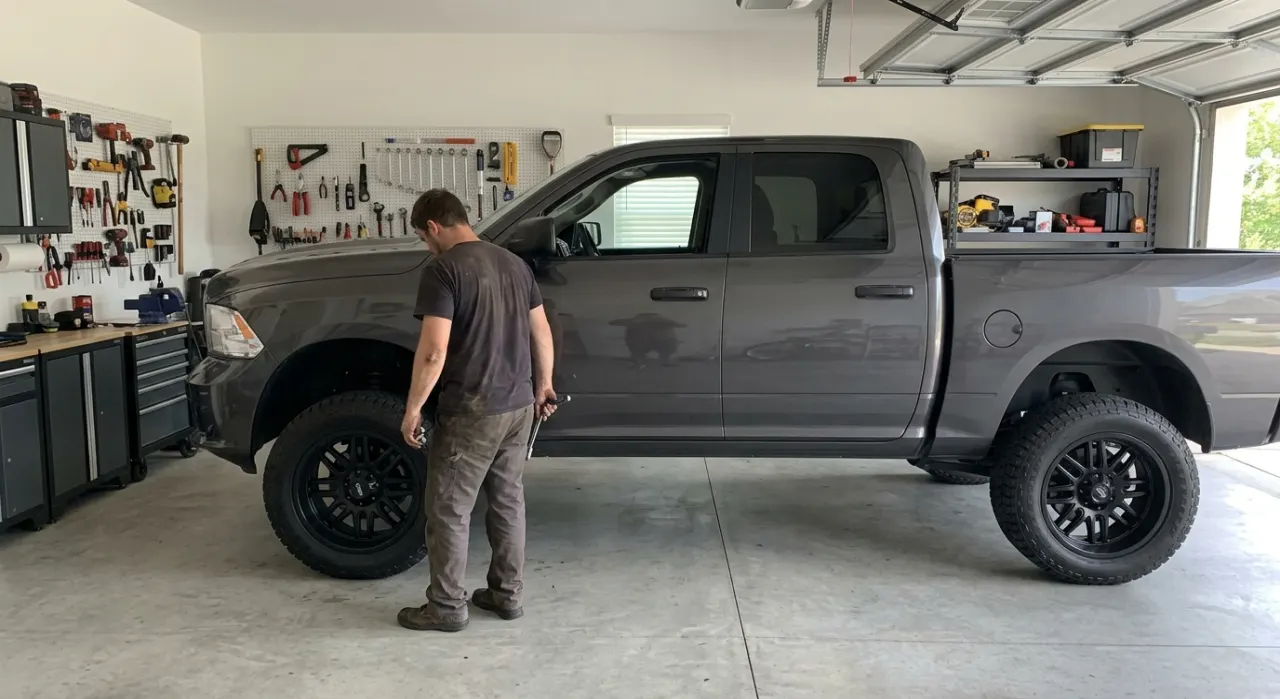
The practical takeaway from mechanic consensus: if you plan to rotate your own tires or do any brake and suspension work, buy the impact wrench. A 1/2-inch cordless wrench removes any lug nut without drama, takes your sockets directly, and won't leave you stranded on a driveway with a wheel you can't get off. An impact driver is a poor insurance policy for that job.
Real cost and what a kit gets you
On price the driver wins, which is part of why it's so often someone's first power tool. A bare cordless impact driver runs roughly $80–$180, and it's frequently bundled with a drill in a two-tool combo kit — the classic "drill and driver" set that covers most household work for well under $250 with batteries.
An impact wrench costs more: figure $150–$300 for a bare 1/2-inch cordless tool, and $250–$450 for a kit with a high-output battery and charger, since the big units demand serious current. The battery matters more here — a wrench draws heavy amps to make that torque, so a small 2.0Ah pack will sag and cut short. Owners consistently recommend at least a 4.0Ah or 5.0Ah battery for a 1/2-inch wrench.
There's a hidden cost worth naming: you should never use either impact tool to set final torque. An impact wrench is for removal and initial run-down; you finish lug nuts and critical fasteners with a click-type torque wrench to the manufacturer's spec, which is a $30–$80 tool most garages already need. Budget for it alongside the wrench, not instead of it.
Common myths and mistakes
"An impact driver and impact wrench are basically the same tool." No. They share a hammer mechanism and nothing about their purpose. Different chuck, different torque class, different fasteners. Buying one expecting it to do the other's job is the most common mistake people make.
"I'll just use an adapter so my driver does lug nuts." You can try, but the 1/4-inch hex isn't built for socket-level torque, and the adapter becomes a shear point. It's fine in a pinch on light, un-seized nuts, but it's not a real substitute for a wrench and it can fail under load.
"More torque is always better." Not on small fasteners. A 1/2-inch wrench on a trim screw will strip the head or snap the fastener instantly. Match the tool to the fastener — brute force in the wrong place does damage, not work.
"I can tighten lug nuts with the impact and skip the torque wrench." This is the dangerous one. Impacts don't deliver a repeatable, known torque, and over-tightening warps brake rotors and can stretch or snap studs. Always finish to spec with a torque wrench.
Which should you buy first
There's no universal winner, because these aren't competing alternatives — they're different tools for different fasteners. The right first purchase depends entirely on what you're trying to do.
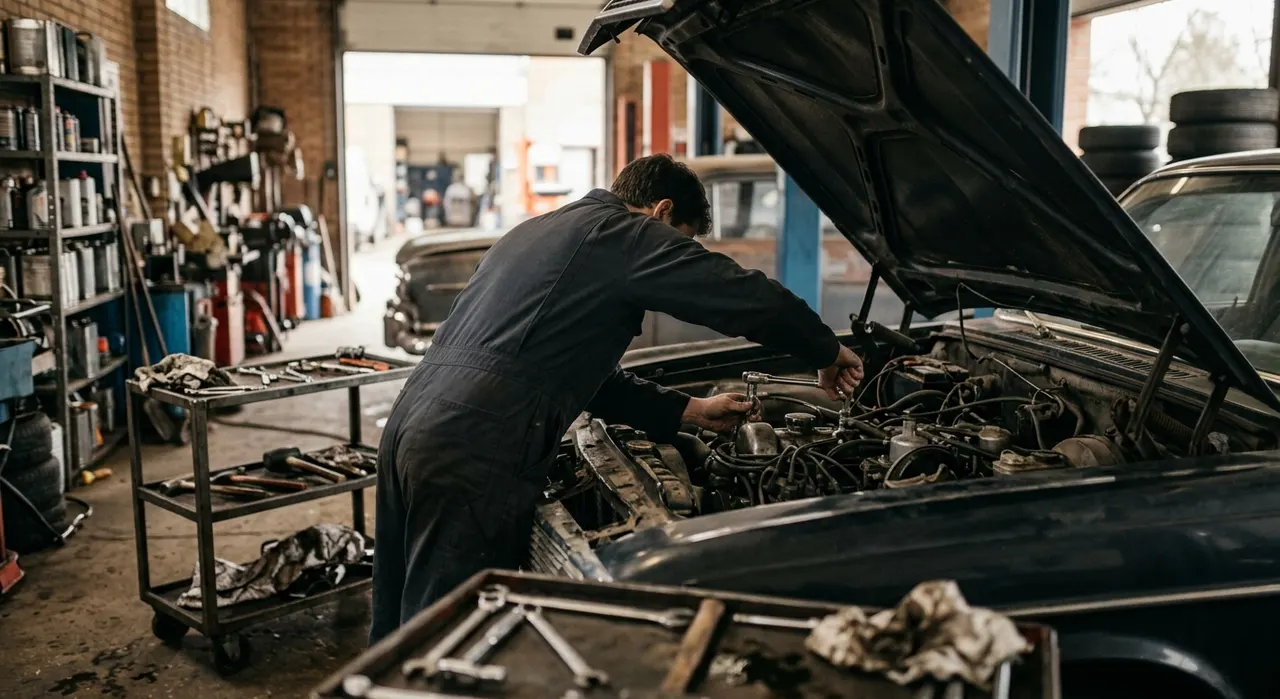
Buy the impact wrench first if your goal is automotive: rotating your own tires, doing brakes, or wrenching on suspension. A 1/2-inch cordless wrench is the tool that makes those jobs possible in a home garage, it takes your existing impact sockets, and nothing else in the toolbox will break a rusted bolt loose the same way. Pair it with a good torque wrench for final tightening.
Buy the impact driver first if your work is assembly, screwdriving, brackets, decking, or general around-the-house tasks. It's cheaper, lighter, endlessly useful, and usually comes bundled with a drill — the most practical first power-tool purchase for most people.
If you're serious about doing your own car work, you'll end up owning both, because each one is genuinely bad at the other's job. Start with the tool that matches the fastener in front of you, buy quality impact sockets rather than chrome ones for the wrench, and never trust either tool to set a final torque spec.
Recommended Products
Our top picks in this category, ranked on aggregated owner reviews.
Best for the best mix of brand pedigree, warranty and price
- 72-tooth ratchets for a 5° swing arc
- Polished chrome-vanadium, anti-slip sockets
- DEWALT full lifetime warranty
- Compact SAE + metric set in a blow-mould case
Why buy it: a name-brand kit that owners rate at the very top of the budget class — the lifetime warranty and fine-tooth ratchets punch well above the price, which is why it keeps getting recommended to first-time wrenchers.
Best for the most sockets and bits per dollar
- 201 pieces across 1/4", 3/8" and 1/2" drives
- Chrome-vanadium forged, polished-chrome finish
- Full SAE + metric coverage
- Molded case keeps every socket in its slot
Why buy it: a socket-heavy kit that owners repeatedly call the best money-for-metal buy on Amazon — if your jobs are mostly nuts and bolts, nothing here gives you more drive tools for the outlay.
Best for trusted-brand tools with a lifetime guarantee
- 72-tooth reversible ratchets
- Alloy-steel sockets, off-corner loading grip
- Crescent lifetime warranty
- Closed, latching blow-mould case
Why buy it: an Apex Tool Group set that owners rate for genuine fit and finish — the off-corner grip protects rounded fasteners, and the lifetime backing means a cracked socket is a free swap.

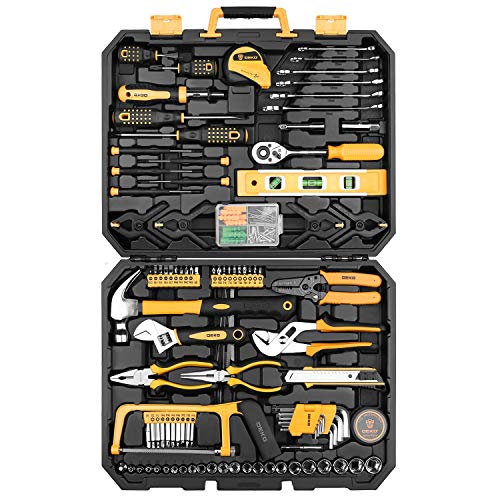
Best for a first-ever kit that covers the whole garage and house
- Sockets, wrenches, screwdrivers, hammer, pliers
- Heat-treated carbon steel, rust-resistant
- Compact blow-mould carry case
- One of Amazon’s best-selling tool kits
Why buy it: the entry point owners recommend for a first toolbox — rated across tens of thousands of reviews, it handles light auto work and household jobs without asking much of your wallet.
Best for a purpose-built car-repair combination
- 168-piece socket + wrench combination
- Ratchet handle, extension bars, spark-plug socket
- Chrome-vanadium and carbon-steel mix
- Deep plastic storage case
Why buy it: a combination set owners lean on for actual under-hood jobs — the spark-plug socket, extensions and combination wrenches mean fewer trips to buy the one tool you’re missing.

Best for the most complete kit before you leave the budget tier
- 201-piece mechanics set, SAE + metric
- 72-tooth quick-release ratchets
- Black-chrome sockets with laser-etched sizes
- Sturdy structural-foam case
Why buy it: the ceiling of the budget class — owners rate its ratchets and easy-read sockets highly, and the Stanley name carries a reputation that a no-name kit can’t match at the same money.
Prices are pulled from Amazon and were accurate as of Aug 22, 2026, 6:54 PM EDT. Product prices and availability are subject to change — the live price is shown on Amazon.