
Affiliate Disclosure
Some links on this page are affiliate links. As an Amazon Associate, we earn from qualifying purchases — at no extra cost to you. We do not buy, test, or physically handle the products we cover; our rankings come from aggregated owner reviews, ratings and expert consensus. Commissions never change our verdicts. How we rank & full disclosure.
Portable Jump Starter
A self-contained lithium (or lead-acid) battery pack that clamps to your dead battery and cranks the engine on its own — no second car required. Most modern units double as a USB power bank and flashlight.
Best for: Drivers who may get stranded alone, in a garage, or somewhere no donor vehicle is handy
Typically $50–$150 for a lithium jump pack; $150–$300+ for large diesel-rated units
- Completely self-sufficient — no second vehicle or willing stranger needed
- Good units have reverse-polarity and spark protection, so a backwards clamp won't fry anything
- Doubles as a USB power bank and LED flashlight, earning its space in the trunk
- Compact — a 4-cylinder pack is about the size of a paperback
- Idiot-proof clamp order on protected units removes the guesswork of a jump
- The lithium cell self-discharges and degrades — dead in the trunk when you finally need it if unmaintained
- Must be sized to your engine; a small pack won't turn over a big V8 or diesel
- Cold weather saps lithium capacity, exactly when you need cranking amps most
- A $50 no-name unit may overstate its peak-amp rating and struggle on a truly flat battery
Jumper Cables
A pair of heavy copper (or copper-clad aluminum) cables with clamps that borrow cranking power from a running donor vehicle. Dead simple, nothing to charge, and they never go flat sitting in the trunk.
Best for: Anyone who wants a cheap, maintenance-free backup and is usually around other vehicles
Typically $15–$50; quality 4-gauge, 20-foot copper sets run $40–$70
- Cheap — a usable set costs less than lunch
- Zero maintenance; nothing to recharge, ever, and they outlive most cars
- No capacity to run out — the donor car supplies the amps
- Compact, and a good copper set will crank almost any engine with a strong enough donor
- Useless without a second running vehicle and someone willing to help
- Reverse the clamps and you can damage electronics or cause a spark near battery gas
- Thin, cheap cables (8-gauge, copper-clad aluminum) sag under load and barely crank a cold engine
- You have to position two cars nose-to-nose, which isn't always possible on a shoulder or in a tight lot
How they score, side by side
Scores reflect aggregated owner reviews and expert consensus — not our own bench testing.
- Self-sufficiency (works alone)102
- Upfront affordability59
- Always-ready reliability69
- Ease & safety of use86
- Cranking a big/cold engine78
- Extra versatility91
- Longevity69
Spec-by-spec comparison chart
| Factor | Portable Jump Starter | Jumper Cables |
|---|---|---|
| Needs a second vehicle | No — fully self-contained | Yes — requires a running donor car |
| Works when stranded alone | Yes | No |
| Typical price | $50–$150 (lithium) | $15–$50 |
| Cranking source | Internal battery, 1,000–2,000+ peak amps | Donor battery via the cable |
| Reverse-polarity protection | Yes on quality units | None — user must connect correctly |
| Maintenance required | Recharge every 3–6 months | None, ever |
| Cold-weather behavior | Lithium loses capacity in the cold | Unaffected, but still needs a donor |
| Extra features | USB power bank, LED flashlight | None |
| Realistic lifespan | 3–5 years (cell degrades) | 10+ years |
| Engine-size limit | Must be sized to the engine | Limited by donor battery & cable gauge |
Our Top 3 Picks
The three highest-rated options in this category, if you'd rather skip straight to a proven pick.

Best for recovering a flat car or truck battery in an afternoon
- 10A on 6V and 12V, 12V repair mode
- Selectable AGM and lithium profiles
- Thermal sensor adjusts for ambient temp
- Force mode charges from 0 volts
Why buy it: the 10-amp smart charger owners rate highest — fast enough to refill a dead group-35 battery in a few hours, then safe to leave on float indefinitely.

Best for one car, one charger, no complications
- 5A four-stage switch-mode charging
- Lead-acid, AGM, gel and lithium settings
- Automatic float when charging completes
- Clamps plus quick-connect ring harness
Why buy it: the sensible middle of the range — 5 amps suits a normal car battery, and owners like that it drops to float and can simply stay connected.
Best for app monitoring and adjustable charge profiles
- 15A adaptive multi-stage charging
- Bluetooth app with live and historic data
- IP65 water and dust resistant housing
- Lead-acid and LiFePO4 algorithms
Why buy it: the charger enthusiasts and van owners buy once — you can watch every stage on your phone and tune the profile to the exact battery.
Prices are pulled from Amazon and were accurate as of Aug 22, 2026, 6:54 PM EDT. Product prices and availability are subject to change — the live price is shown on Amazon.
How each one actually gets you started
Both tools solve the same emergency — a battery too flat to crank the engine — but they solve it in opposite ways, and that difference dictates when each one is useless.
Jumper cables don't store any energy. They're just a low-resistance bridge. You park a running donor vehicle close, clamp its healthy battery to your dead one, and the donor's alternator and battery pour current across the cables to spin your starter. The whole job is borrowing amps from someone else. Take away the second car and a pair of cables is a length of copper doing nothing.
A portable jump starter carries its own charge. Modern units use a lithium-ion (usually LiFePO4 or lithium-polymer) pack that stores enough energy to deliver a big, brief burst of cranking current on demand. You clamp it straight to your battery, hit the button, and crank — no donor, no bystander, no second car nosed up to yours. The trade is that the pack has to be charged before the emergency, and its cell ages whether you use it or not.
The consensus among roadside techs is the clean way to frame it: cables move power from another car; a jump pack is the other car, shrunk to fit in your glovebox. Everything else — cost, safety, maintenance — flows from that single distinction.
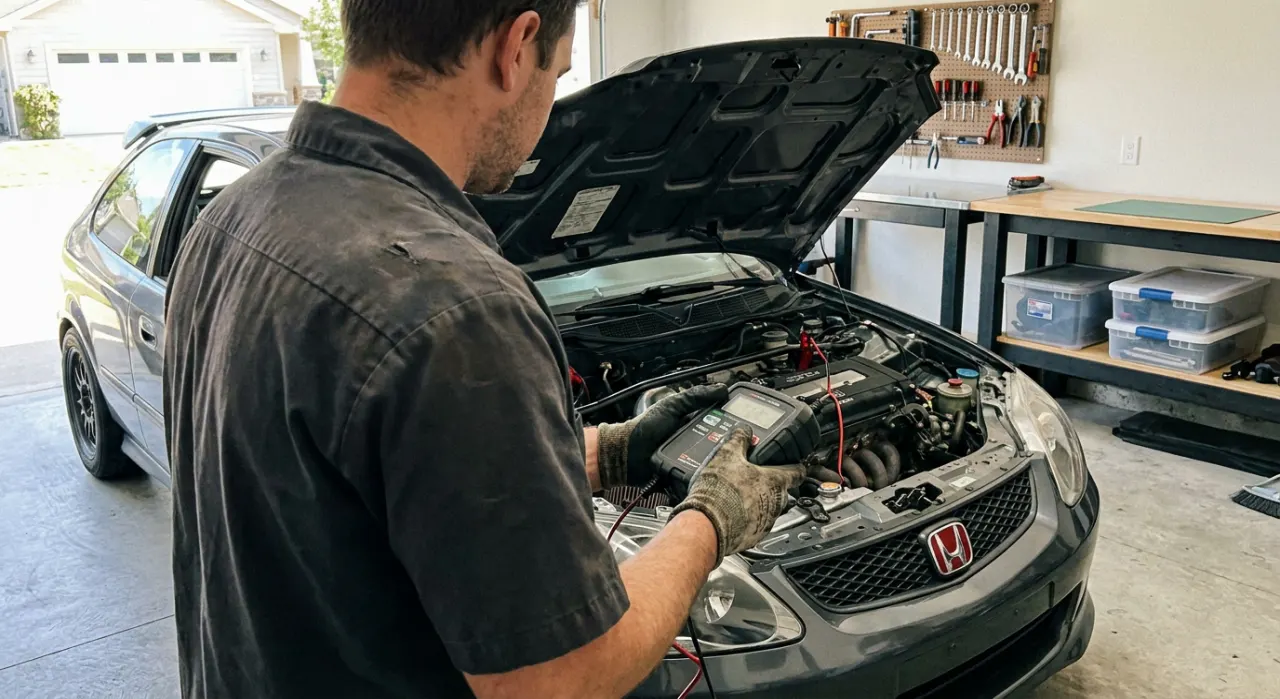
The one difference that decides it: do you have help?
Ignore the spec sheets for a second, because the real decision is a situational one. A dead battery on a busy suburban street with friendly neighbors is a very different problem from a dead battery in a deserted parking garage at 11 p.m., on a highway shoulder where nobody should be leaving their car, or in a driveway where the only other vehicle is also dead.
Jumper cables assume the best case: another running vehicle within cable reach, and a driver willing to pop their hood for a stranger. Aggregated owner accounts are full of the moment that assumption breaks — a modern lot where nobody stops, a garage too tight to bring two cars nose-to-nose, a partner stranded alone who has no way to flag down help safely. In every one of those, cables are dead weight and a jump pack is the whole rescue.
The flip side is honest too. If you're almost always around other vehicles, mechanically comfortable, and just want a break-glass backup, cables cover the common case for a fraction of the price and never let you down by sitting flat. But for the specific scenarios that make a dead battery genuinely stressful — alone, at night, or somewhere a donor car can't reach — the portable jump starter is the tool that actually works, and that's why it wins for most people despite costing more.
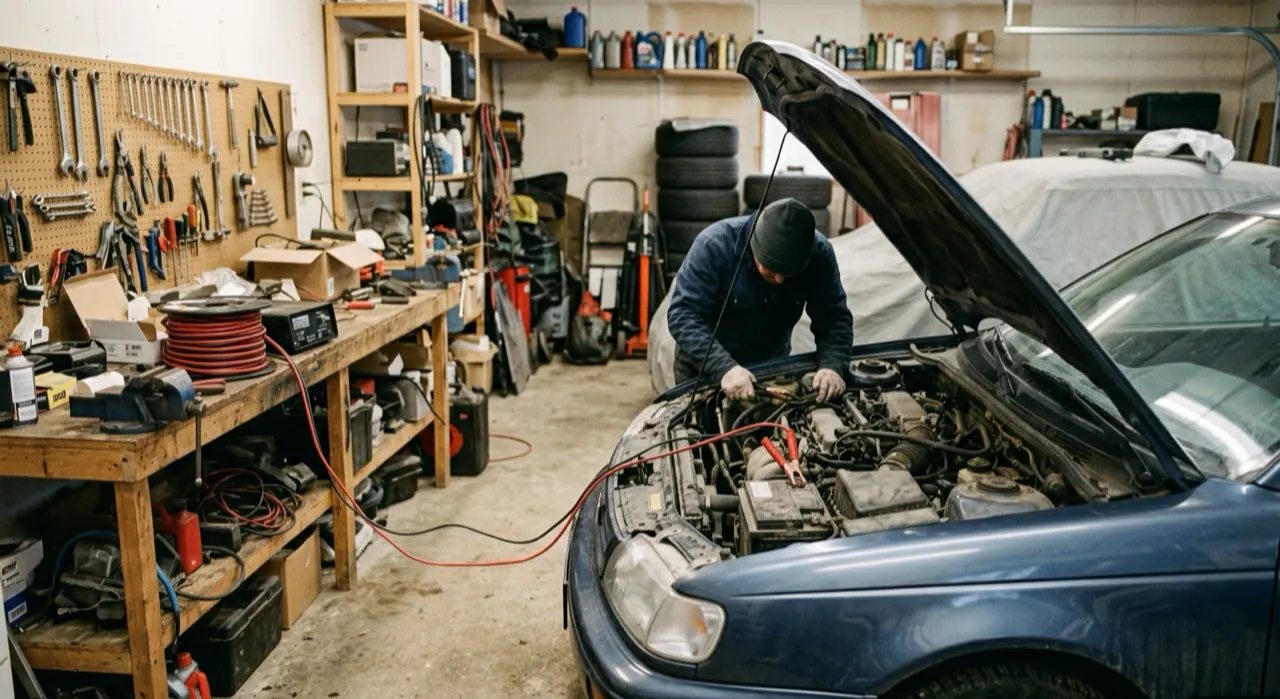
Cranking power, amps and getting the size right
This is where cheap buys on either side go wrong. With cables, gauge is everything. Thinner wire has more resistance, so it drops voltage under the huge current a starter pulls. A budget 8-gauge, copper-clad-aluminum set will technically connect two batteries but sag so badly that a cold or deeply dead engine barely turns over. A quality 4-gauge (or heavier) pure-copper set, ideally 20 feet so it reaches around awkward parking, delivers the current that actually cranks. Length and gauge, not the price on the package, decide whether cables work when it's cold.
With a jump starter, the number that matters is real cranking capability matched to your engine — not the eye-catching "peak amps" splashed on the box, which is a momentary, mostly marketing figure. A small pack rated for 4- and 6-cylinder gas engines is plenty for a commuter car. Turning over a big V8, or especially a diesel with its high compression, needs a substantially larger, higher-output unit — often one explicitly rated for diesel. Owner reviews repeatedly show the failure mode: someone buys a pocket-sized pack, tries to crank a truck, and it can't sustain the load. Buy the pack sized for your biggest vehicle, not your smallest.
One cold-weather caveat unique to the pack: lithium chemistry loses available capacity as temperatures drop, which is exactly when your dead battery also needs the most cranking amps. A pack kept in a frozen trunk overnight will underperform its rating. Cables don't have that self-discharge problem — but they still need a donor car whose own battery is up to the cold.
Which is safer to actually use
Both involve a battery, which means both involve hydrogen gas and the possibility of a spark, but the risk profiles differ. With bare jumper cables the danger is human error: cross the polarity, clamp positive to negative, and you can blow a fuse, damage sensitive electronics, or throw a spark right at the battery where gas can collect. The long-taught sequence — positive to the dead battery, positive to the donor, negative to the donor, and the final negative to a clean unpainted ground point away from the battery, never the dead negative terminal — exists specifically to keep that last spark away from the gas. Cables give you zero help getting it right.
A quality jump starter flips that. Reputable units include reverse-polarity protection and spark-proof clamps: connect them backwards and the pack simply refuses to deliver power instead of frying anything, often with a warning light or beep. That safety net is a real reason the consensus leans toward jump packs for less-experienced drivers — the tool actively prevents the most common and most expensive jump-start mistake. The caveat is that this protection lives on decent units; a bargain-bin pack may skip it, so it's worth confirming before you buy.
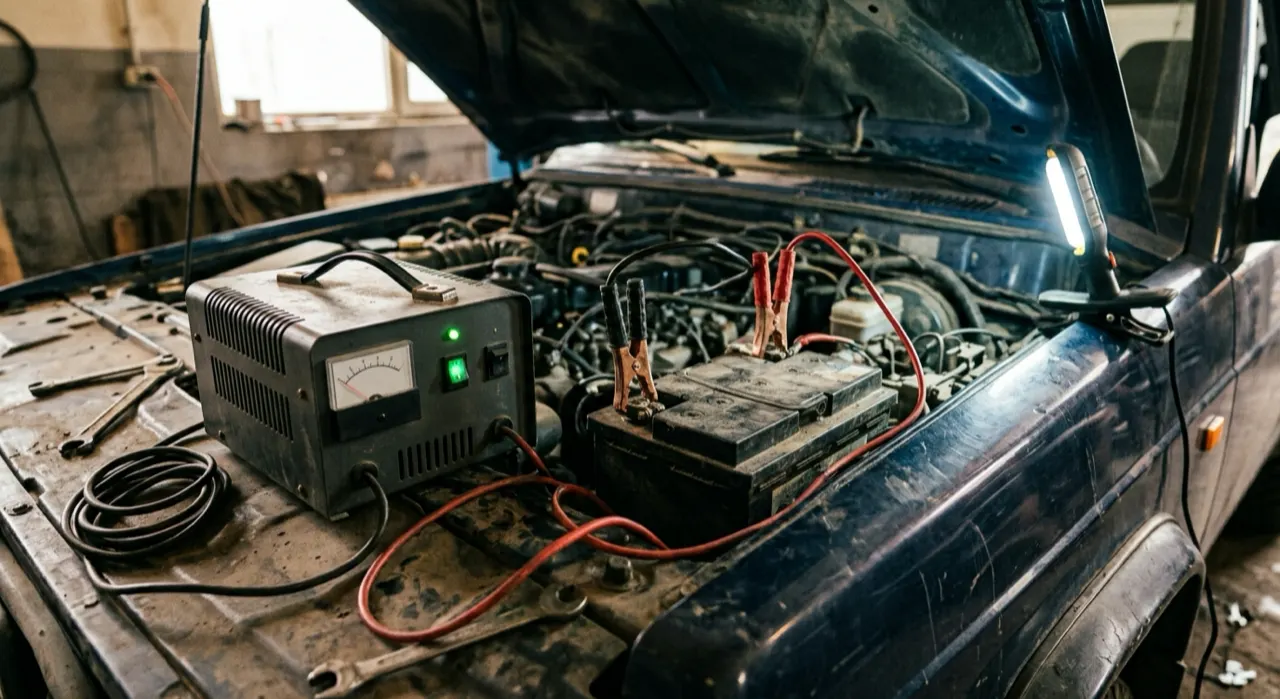
Real cost and value over the life of the car
On the sticker, cables win easily: a usable set is $15–$50, a genuinely good 4-gauge copper set $40–$70, and it will outlast the car with zero upkeep. A lithium jump starter runs $50–$150 for car-sized units and $150–$300+ for big diesel-rated packs — and unlike cables, it has a finite life. The lithium cell degrades over roughly three to five years and self-discharges on the shelf, so a neglected pack is often flat exactly when you finally need it. Factor in eventually replacing it.
But value isn't just the purchase price — it's what the tool is worth in the moment you need it. Cables are worthless if you're stranded alone; a jump pack is worth the entire tow you didn't have to call. A single avoided tow (commonly $75–$150) more than pays for the pack. Most units also earn their keep between emergencies as a USB power bank and flashlight, which cables never do.
The honest math for most people isn't either/or. A jump pack as the primary rescue plus a cheap set of cables as the always-ready, never-flat backup is well under $200 combined and covers essentially every dead-battery scenario — the pack when you're alone, the cables if the pack is flat and a donor happens to be handy. That redundancy is why plenty of prepared owners simply keep both in the trunk.
Common myths and mistakes
"Any jump pack can start any car." No. Sizing matters. A pack rated for small gas engines will struggle or fail on a big V8 or a diesel. Match the pack to your largest engine, and treat the giant "peak amps" number as marketing, not a spec.
"Cheap cables are fine — copper is copper." Not when it's thin copper-clad aluminum. A skinny 8-gauge set sags under a starter's load and may not crank a cold engine at all. Gauge and length are the whole game; buy 4-gauge pure copper, ideally 20 feet.
"I'll charge the jump pack when I need it." You won't have the chance. Lithium packs self-discharge in storage, so a pack ignored for a year is often dead when the emergency arrives. Top it off every three to six months, or after any use.
"Clamp order doesn't matter with cables." It does. Reverse polarity can damage electronics and the final ground clamp belongs on clean bare metal away from the battery, not the dead negative terminal, to keep the spark away from battery gas. A protected jump starter removes this risk; bare cables do not.
"A jump pack means I never need to fix the battery." It's a rescue, not a cure. If a battery keeps dying, the battery or charging system needs attention — repeatedly jump-starting a failing battery just delays the inevitable.
Which should you buy — and how to decide
Buy a portable jump starter if you ever drive alone, park in garages or remote lots, worry about being stranded somewhere a donor car can't reach, or simply want a rescue that doesn't depend on a stranger's goodwill. Size it to your biggest engine, choose a unit with reverse-polarity protection, and set a reminder to recharge it a few times a year. For most modern drivers, this is the tool that actually solves the problem — which is why it's our pick.
Buy jumper cables if you want the cheapest possible backup, you're comfortable connecting them correctly, and you're usually around other vehicles. Spend up for a heavy 4-gauge copper set at least 20 feet long; a thin bargain set is a false economy that may not crank when it's cold.
Buy both — and most prepared owners do — because they cover each other's weaknesses. The pack rescues you when you're alone; the cables are the zero-maintenance fallback that never sits flat. For well under $200 total you've closed off nearly every dead-battery scenario. Match the pack to your engine, keep it charged, throw the cables in beside it, and a dead battery stops being a crisis and becomes a five-minute inconvenience.
Recommended Products
Our top picks in this category, ranked on aggregated owner reviews.
Best for recovering a flat car or truck battery in an afternoon
- 10A on 6V and 12V, 12V repair mode
- Selectable AGM and lithium profiles
- Thermal sensor adjusts for ambient temp
- Force mode charges from 0 volts
Why buy it: the 10-amp smart charger owners rate highest — fast enough to refill a dead group-35 battery in a few hours, then safe to leave on float indefinitely.
Best for one car, one charger, no complications
- 5A four-stage switch-mode charging
- Lead-acid, AGM, gel and lithium settings
- Automatic float when charging completes
- Clamps plus quick-connect ring harness
Why buy it: the sensible middle of the range — 5 amps suits a normal car battery, and owners like that it drops to float and can simply stay connected.
Best for app monitoring and adjustable charge profiles
- 15A adaptive multi-stage charging
- Bluetooth app with live and historic data
- IP65 water and dust resistant housing
- Lead-acid and LiFePO4 algorithms
Why buy it: the charger enthusiasts and van owners buy once — you can watch every stage on your phone and tune the profile to the exact battery.

Best for a charger that can also crank the engine right now
- 6A charge, 30A boost, 100A engine start
- 6V and 12V, automatic voltage detection
- Built-in battery and alternator tester
- Float mode for long-term maintenance
Why buy it: the do-everything wall charger — owners keep it for the engine-start mode that gets a dead vehicle moving without a second device.

Best for a small charger that still charges properly
- 5A on 6V and 12V, palm-sized housing
- AGM, lithium and repair modes
- Charges batteries down to 1 volt
- Mounting bracket and eyelets included
Why buy it: the charger that fits in a glovebox but behaves like a full smart charger — the best pick if garage wall space is the constraint.

Best for trucks, fleets and deeply discharged big batteries
- 30A bench charge, 80A engine start
- 2A maintainer mode built in
- 120V AC power outlet on the unit
- Digital display with alternator check
Why buy it: the shop-grade unit owners with diesel trucks and multiple vehicles buy — 30 amps refills a big battery fast when time actually matters.
Prices are pulled from Amazon and were accurate as of Aug 22, 2026, 6:54 PM EDT. Product prices and availability are subject to change — the live price is shown on Amazon.