
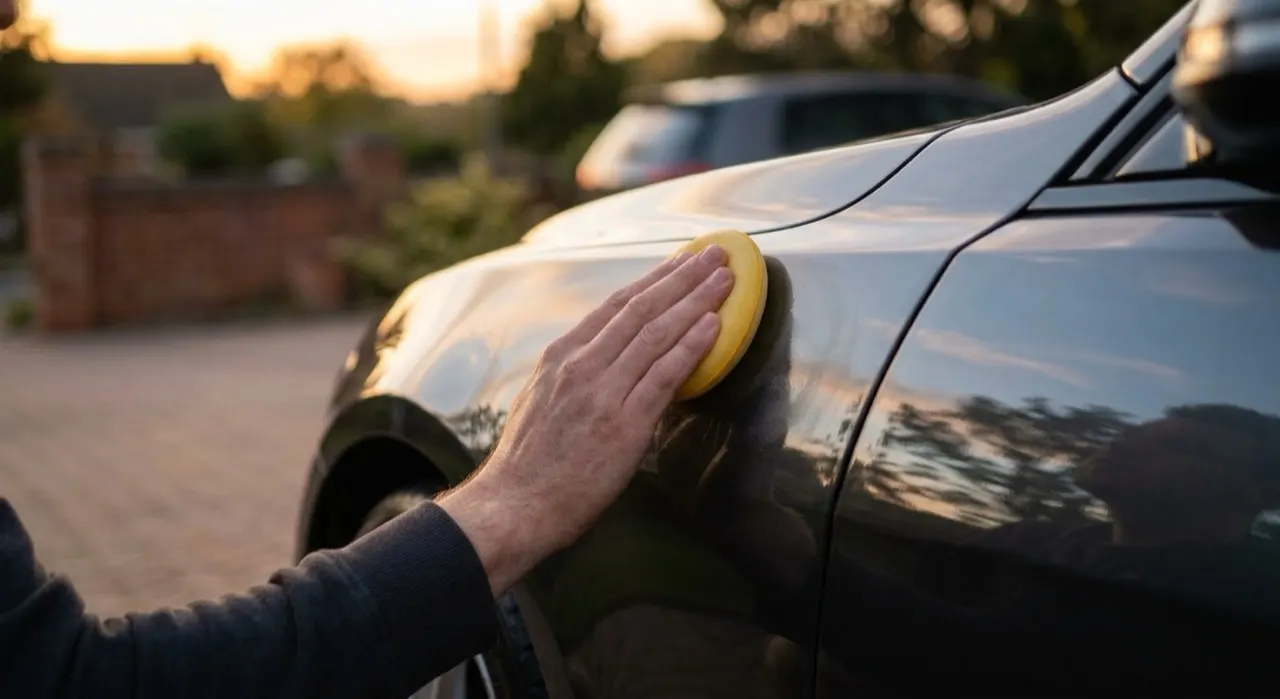
Affiliate Disclosure
Some links on this page are affiliate links. As an Amazon Associate, we earn from qualifying purchases — at no extra cost to you. We do not buy, test, or physically handle the products we cover; our rankings come from aggregated owner reviews, ratings and expert consensus. Commissions never change our verdicts. How we rank & full disclosure.
Liquid Wax
A pourable carnauba or synthetic blend that spreads thin and fast. It trades a little outright durability for speed, easy application, and forgiving removal — the format most people reach for on a full-size vehicle.
Best for: Larger vehicles, beginners, and anyone waxing more than once or twice a year who wants speed over maximum longevity
Typically $10–$25 for a 16 oz bottle (roughly 20–40 applications on a sedan)
- Spreads quickly and thin, so a full car goes faster than with paste
- Easier to buff off before it hazes hard, which is friendlier for beginners
- Often carries more polymers/synthetics for slick water behavior out of the bottle
- A bottle covers far more square footage per dollar than a small paste tin
- Simple to apply by dual-action polisher for large panels
- Generally shorter durability — many formulas fade in 4–8 weeks
- Thin films can flash and streak in direct sun or on hot panels
- Some formulas hide correction with fillers rather than adding real protection
- Easy to over-apply, which just wastes product and adds buffing work
Paste Wax
A firm carnauba wax packed into a tin, worked with an applicator pad. It lays down a thicker, denser film that owners consistently report lasts longer and throws a deeper, warmer shine on dark paint.
Best for: Enthusiasts chasing maximum depth and durability on smaller or garage-kept cars, and show-day detailing
Typically $15–$40 for a 7–14 oz tin (a tin can last a hobbyist a year or more)
- Thicker, denser film — owners consistently report longer protection, often 8–12+ weeks
- High-carnauba pastes are prized for warm depth and glow on dark colors
- A little goes a long way; a tin lasts a long time on one or two cars
- Less prone to running or dripping into trim gaps than a liquid
- Slower, more physical to apply and buff across a large vehicle
- Firm paste can drag on cold days until it warms in your hand
- Harder to spread evenly thin, so first-timers often over-apply
- Small tin covers less total area, so cost-per-panel can be higher
How they score, side by side
Scores reflect aggregated owner reviews and expert consensus — not our own bench testing.
- Ease of application96
- Durability68
- Shine / depth on dark paint79
- Speed on a full car96
- Value / coverage per dollar87
- Beginner-friendliness96
Spec-by-spec comparison chart
| Factor | Liquid Wax | Paste Wax |
|---|---|---|
| Format | Pourable liquid | Firm paste in a tin |
| Ease of application | Easy — spreads fast and thin | Moderate — firmer, more effort |
| Typical durability | 4–8 weeks (many synthetics longer) | 8–12+ weeks on high-carnauba tins |
| Depth / warmth of shine | Good; slick, bright finish | Excellent on dark paint — warm glow |
| Speed on a full-size vehicle | Faster overall | Slower, more physical |
| Beginner-friendliness | High — forgiving removal | Moderate — easy to over-apply |
| Coverage per container | 20–40 apps per 16 oz bottle | Fewer sq ft but a tin lasts a long time |
| Price | $10–$25 (16 oz bottle) | $15–$40 (7–14 oz tin) |
| Machine application | Very well suited (DA polisher) | Usually applied by hand |
| Best use case | Big cars, frequent waxing, beginners | Show finish, garage-kept, dark colors |
Our Top 3 Picks
The three highest-rated options in this category, if you'd rather skip straight to a proven pick.

Best for anyone who wants one do-it-all wax
- Synthetic hydrophobic polymer
- Deep, wet-look gloss
- 3–5 months of durability
- Kit includes pad + microfiber towel
Why buy it: the best balance of shine, months-long durability and beginner-easy application.

Best for maximum durability between coats
- 5–7 months of protection
- A little goes a long way
- Cheapest per use
Why buy it: nothing here survives weather longer — the durability champion.

Best for fast, cheap protection in minutes
- SiO₂ spray-on / wipe-off
- Fastest application here
- Strong water beading
Why buy it: the cheapest, fastest protection — spray on wet or dry and go.
Prices are pulled from Amazon and were accurate as of Aug 22, 2026, 6:54 PM EDT. Product prices and availability are subject to change — the live price is shown on Amazon.
What actually separates liquid from paste wax
Here is the part the marketing tends to blur: liquid wax and paste wax are not two different chemistries fighting for supremacy. They are two delivery formats for the same core protective ingredients — carnauba, synthetic polymers, or a blend of both. The wax that ends up bonded to your clear coat can be nearly identical; what changes is how it is carried onto the panel and how thick a film it leaves behind.
Paste wax is the concentrated, solvent-light format. The protective solids are packed firmly into a tin, so when you load an applicator pad and work it onto the paint you are laying down a relatively thick, dense film. Less carrier evaporates away, which is the physical reason a paste tends to leave more actual wax on the surface per pass — and why owners consistently report it lasting longer.
Liquid wax takes those same solids and thins them with more carriers and often more synthetic polymers so the product pours and spreads. That thin, even film flashes fast and buffs off easily, which is exactly what you want when you are covering the roof, hood and both flanks of a full-size SUV. The trade-off is that a thinner film generally has less material to sacrifice to weather, so it can wear off sooner.
The consensus among detailers is worth memorizing before you shop: the format influences durability and ease far more than the words "carnauba" or "synthetic" on the label. A premium liquid can out-protect a cheap paste, and a rich carnauba paste can out-shine a bargain liquid. Judge the specific product and its intended use — not the packaging category alone.
Durability and shine: what really differs
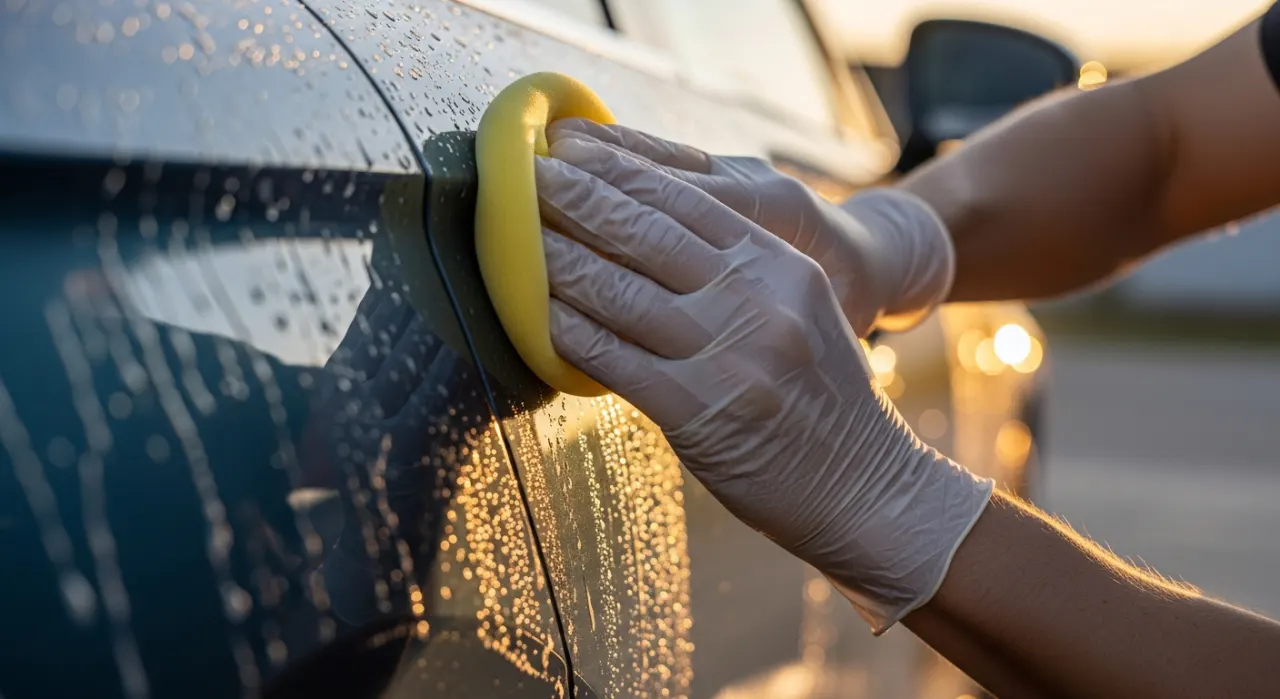
These are the two claims people argue about most, so it is worth separating what is real from what is folklore. On durability, the physical edge does lean toward paste, but the gap is smaller than reputation suggests. A thicker film simply has more sacrificial material to give up to rain, UV and wash cycles, so a good high-carnauba paste commonly holds beading and slickness in the 8–12+ week range, while many traditional liquid carnaubas fade closer to 4–8 weeks.
The important caveat: modern synthetic and hybrid liquids have largely erased that gap. Polymer-heavy liquid waxes and "spray-and-liquid" sealants can match or beat a natural paste on raw longevity, because their bond to the clear coat is chemical rather than just a thick physical layer. If durability is your single priority, the liquid-vs-paste question matters less than carnauba-vs-synthetic.
On shine, this is where paste earns its devoted following. Aggregated owner reviews are remarkably consistent that a rich carnauba paste throws a warmer, deeper, almost wet-looking glow on dark colors — black, deep blue, dark gray — that many liquids don't quite replicate. Liquids tend to read as bright, slick and clean; pastes as deep and warm. On silver, white and lighter metallics the difference is much harder to see, which is why format matters more to owners of dark cars.
- Want maximum weeks between waxes? A high-carnauba paste or, better still, a synthetic liquid sealant.
- Want the deepest glow on a black car? A quality carnauba paste is the enthusiast favorite.
- Want bright, slick, fuss-free protection on any color? A good liquid does the job with far less effort.
Application, speed and the beginner factor
This is the category that actually decides most purchases, because it is the difference you feel every single time you wax. Liquid wax is the faster, more forgiving format, full stop. It spreads thin and even with almost no pressure, hazes predictably, and buffs off before it can grab. On a large vehicle that speed compounds — you can wax a full-size truck with a liquid in the time a paste would take on a sedan.
Paste is more physical and less forgiving. You have to work the firmer product out of the tin, and on a cold day it drags until the pad warms it. The single most common mistake with paste is over-application: because it is hard to spread paper-thin, first-timers lay it on too heavy, then fight to buff off a chalky haze. The fix is the same one every detailer repeats — a thin coat of any wax is all the paint can hold; extra product just becomes extra buffing.
Two practical points settle most of the debate:
- Machine application. Liquid is much better suited to a dual-action polisher, which is how enthusiasts wax large panels quickly and evenly. Paste is almost always a hands-on, by-pad job.
- Working in sections. Both formats want a cool panel out of direct sun. Liquids especially can streak if applied to a hot hood, so wax in the shade and do one section at a time.
For a beginner, a liquid removes most of the ways the job can go wrong. For someone who enjoys the process and is working on a smaller, garage-kept car, the extra minutes with a paste are part of the appeal, not a penalty.
Real cost and coverage over a year
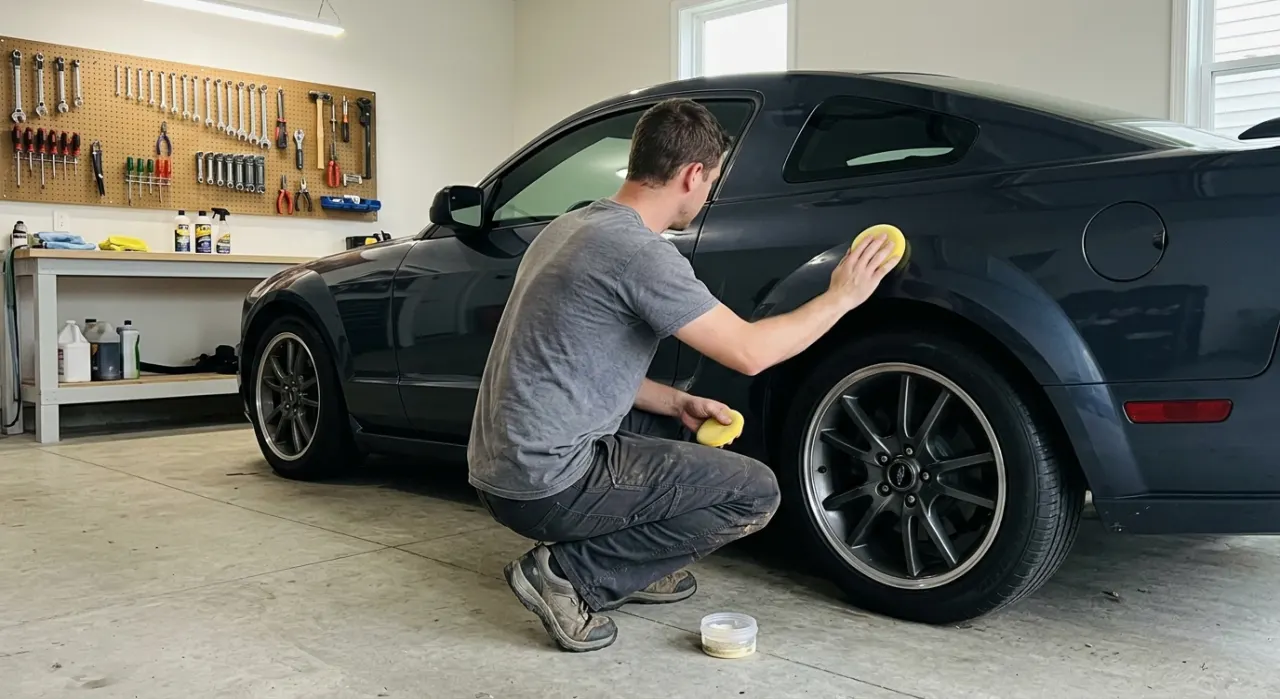
The sticker price is misleading in both directions, so compare cost the honest way — per application over a year, not per container. A 16 oz bottle of liquid wax at $10–$25 delivers roughly 20–40 applications on a sedan because you use so little per coat; that is genuinely cheap per wax. A 7–14 oz paste tin at $15–$40 covers less total surface area per ounce, but you also use very little, so a hobbyist tin can easily last a year or more on one or two cars.
Where the math actually turns is how often you wax, and that loops back to durability. If a liquid lasts you six weeks and a paste lasts you ten, the paste needs fewer reapplications per year, which can offset its higher shelf price and its slower application time. For a daily-driven car parked outside, that durability difference is real money and real weekends saved. For a garage-kept weekend car that gets waxed on a whim anyway, it barely matters.
The bigger cost lever than format is quality tier. A cheap wax of either type that sheds in a month will cost you more in time and reapplication than a mid-tier product that holds for two. Buy a reputable name in whichever format fits your workflow, and the per-year cost of both liquid and paste lands in the same modest ballpark — this is not an expensive hobby either way.
Common myths and mistakes
"Paste wax always lasts longer than liquid." Only against traditional carnauba liquids. A modern synthetic or hybrid liquid sealant frequently out-lasts a natural paste. Durability tracks the chemistry and the film, not the tin-versus-bottle packaging.
"Liquid wax is just watered-down paste." Not really. It is the same class of protective solids carried differently, and many liquids pack more synthetic polymers than a pure carnauba paste. Thinner film, yes — inferior product, not necessarily.
"More wax means more protection." The opposite. Paint can only bond a micro-thin layer; anything extra just hazes and has to be buffed away. This mistake is far easier to make with paste, which is a big reason beginners find paste fiddly.
"Wax will fix my swirls and scratches." No. Wax is protection and gloss, not correction. Some liquids contain mild fillers that temporarily hide swirls, but they wash out — real defect removal is a polishing step that happens before you wax, regardless of format.
"You can wax any car in the sun to save time." Don't. Heat makes both formats flash and streak, and liquids especially will smear on a hot panel. Work in the shade, on a cool surface, one section at a time.
Which should you buy — and how to decide
For most people and most cars, start with a quality liquid wax. It is faster, more forgiving, machine-friendly, cheaper per application, and it removes nearly every way a beginner can botch the job. On a large vehicle or a daily driver that you want to protect without losing an afternoon, liquid is simply the practical default.
Reach for a paste wax if you own a smaller or garage-kept car — especially in a dark color — you enjoy the hands-on ritual, and you want that deep, warm carnauba glow that liquids don't fully match. The extra minutes and the firmer application are a fair price for the finish paste delivers on the right car.
If maximum durability is your only goal, stop thinking about format and buy a synthetic sealant — it will out-last both a traditional liquid and a natural paste, whichever bottle or tin it comes in. Many enthusiasts layer a synthetic sealant for protection and top it with a carnauba paste before a show for looks.
Whatever you choose, the rules are the same: apply thin, work a cool panel in the shade, do one section at a time, and correct any swirls with a polish first. Match the format to your car and your patience, and both liquid and paste will do exactly what wax is supposed to do.
Recommended Products
Our top picks in this category, ranked on aggregated owner reviews.
Best for anyone who wants one do-it-all wax
- Synthetic hydrophobic polymer
- Deep, wet-look gloss
- 3–5 months of durability
- Kit includes pad + microfiber towel
Why buy it: the best balance of shine, months-long durability and beginner-easy application.
Best for maximum durability between coats
- 5–7 months of protection
- A little goes a long way
- Cheapest per use
Why buy it: nothing here survives weather longer — the durability champion.
Best for fast, cheap protection in minutes
- SiO₂ spray-on / wipe-off
- Fastest application here
- Strong water beading
Why buy it: the cheapest, fastest protection — spray on wet or dry and go.

Best for first-timers who want a foolproof shine
- Foolproof carnauba liquid
- Warm, wet look
- Wipes off clean even if it dries
Why buy it: almost impossible to mess up — the perfect first wax.

Best for show cars and dark paint
- Premium carnauba paste
- Concours-grade warm gloss
- Easy to apply for a paste
Why buy it: stunning depth on dark paint — a show finish you use for the ritual.

Best for detailing hobbyists chasing gloss
- Soft carnauba paste
- Excellent gloss
- Buffs off easily
Why buy it: a detailing-hobbyist favorite that finishes beautifully.
Prices are pulled from Amazon and were accurate as of Aug 22, 2026, 6:54 PM EDT. Product prices and availability are subject to change — the live price is shown on Amazon.