
Affiliate Disclosure
Some links on this page are affiliate links. As an Amazon Associate, we earn from qualifying purchases — at no extra cost to you. We do not buy, test, or physically handle the products we cover; our rankings come from aggregated owner reviews, ratings and expert consensus. Commissions never change our verdicts. How we rank & full disclosure.
Michelin
The French premium benchmark most shops measure every other tire against. Michelin builds long-wearing, refined tires that tend to hold their grip and quiet ride deep into their tread life.
Best for: Drivers who keep a car for years and want the longest, most consistent all-around tire
Roughly $150–$250 per touring tire; $250–$450+ for Pilot Sport UHP fitments
- Consistently the longest real-world treadlife in the premium tier, per aggregated owner mileage reports
- Top-tier dry grip and steering feel, especially the Pilot Sport line
- Very low noise and a compliant ride that stays refined as the tire wears
- CrossClimate 2 is widely rated the best true all-weather tire you can buy
- Strong resale demand and near-universal availability at US installers
- The most expensive mainstream premium brand, often $30–$60 more per tire than Continental
- Wet braking, while excellent, is sometimes edged out by Continental in independent stops
- Some touring models trade a little ultimate grip for that long tread life
Continental
The German premium maker that repeatedly posts the shortest wet stopping distances in independent testing. Continental delivers near-Michelin refinement for noticeably less money.
Best for: Wet-climate drivers and value-minded buyers who want premium performance without the Michelin premium
Roughly $120–$210 per touring tire; $180–$340 for ExtremeContact UHP fitments
- Class-leading wet braking — routinely the shortest wet stops in third-party group tests
- Usually $30–$60 cheaper per tire than the equivalent Michelin
- ExtremeContact DWS06 Plus is a perennial favorite for grip-per-dollar UHP
- Quiet, comfortable ride that rivals Michelin on most touring fitments
- Strong dry handling and predictable, progressive breakaway
- Treadlife is very good but typically trails Michelin by a few thousand miles
- Fewer sizes in some niche or truck fitments than Michelin carries
- Model lineup changes more often, so the exact best pick shifts year to year
How they score, side by side
Scores reflect aggregated owner reviews and expert consensus — not our own bench testing.
- Wet performance910
- Dry grip & handling99
- Treadlife / longevity108
- Ride comfort & noise98
- Value for money69
- Fitment range & availability98
Spec-by-spec comparison chart
| Factor | Michelin | Continental |
|---|---|---|
| Country of origin | France (Clermont-Ferrand) | Germany (Hanover) |
| Flagship touring / all-season | CrossClimate 2, Defender T+H, Premier A/S | TrueContact Tour, PureContact LS |
| Flagship performance (UHP) | Pilot Sport 4S, Pilot Sport All Season 4 | ExtremeContact DWS06 Plus, Sport 02 |
| Wet braking | Excellent | Class-leading (usually shortest) |
| Dry grip & handling | Excellent | Excellent |
| Real-world treadlife | Longest in class | Very good (slightly behind Michelin) |
| Ride comfort & noise | Very quiet, very refined | Very quiet, refined |
| Typical touring tread warranty | 60,000–80,000 miles | 60,000–80,000 miles |
| Price per touring tire | $150–$250 | $120–$210 |
| US availability & fitment range | Widest — nearly universal | Broad, a few gaps in niche sizes |
| EV-specific options | Yes (e-.Primacy, Pilot Sport EV) | Yes (EcoContact, ProContact EV) |
Our Top 3 Picks
The three highest-rated options in this category, if you'd rather skip straight to a proven pick.
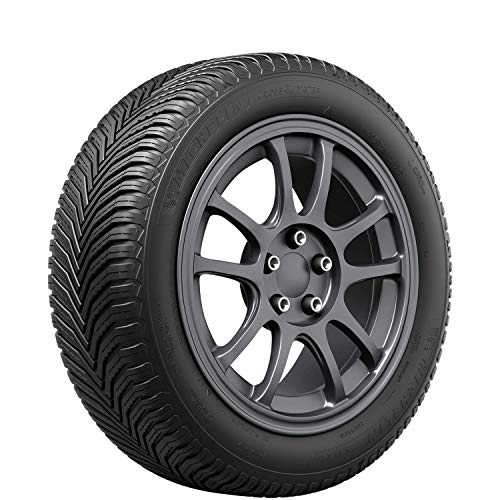
Best for genuine all-weather grip with long Michelin treadlife
- Widely rated the best true all-weather tire
- Excellent wet and light-snow grip
- Long, consistent treadlife
- Confirm your exact tire size before ordering
Why buy it: Michelin's category-defining all-weather tire — buy the fitment that matches your car; select your exact tire size at checkout.

Best for UHP grip-per-dollar with class-leading wet braking
- Perennial enthusiast UHP all-season favorite
- Among the shortest wet stops in its class
- Strong dry handling for the money
- Confirm your exact tire size before ordering
Why buy it: Continental's grip-per-dollar champion — check the DWS06 Plus is offered in your size before buying.

Best for the sharpest dry grip and steering feel on nice paint
- The enthusiast benchmark for UHP dry grip
- Precise, responsive steering
- Track-capable summer performance
- Confirm your exact tire size before ordering
Why buy it: Michelin's flagship performance tire — verify your wheel and tire size, then order the matching fitment.
Prices are pulled from Amazon and were accurate as of Aug 22, 2026, 6:54 PM EDT. Product prices and availability are subject to change — the live price is shown on Amazon.
What actually separates Michelin from Continental
These are two of the four brands that essentially define the premium tire tier — Michelin, Continental, Bridgestone and Pirelli — so the honest starting point is that both are excellent and neither makes a bad tire. The differences are real but narrow, and they come down to how each company prioritizes the same handful of trade-offs every tire engineer juggles: grip, wear, comfort, and price.
Michelin is the brand the rest of the industry benchmarks against, and its reputation rests on one thing above all: treadlife with no meaningful drop-off in performance as the tire wears. Michelin's marketing calls this "long lasting performance," and aggregated owner mileage reports back it up — Michelins routinely deliver the miles on the box and grip late in their life better than most rivals. That refinement extends to noise and ride, which is why Michelin is the default fit on so many luxury vehicles.
Continental takes a slightly different angle. Its engineering signature is wet braking — in independent group tests from outlets and European testing bodies, Continentals repeatedly post the shortest wet stopping distances in their class. Continental pairs that safety edge with pricing that usually undercuts the equivalent Michelin by $30–$60 a tire, which is why it has become the value-minded enthusiast's premium brand. You give up a little ultimate treadlife, but you rarely give up much else.
The consensus among tire retailers is the cleanest way to frame it: Michelin is the "buy once, forget about it" long-haul choice; Continental is the "premium performance for less" choice. Both sit at the top of the market — this is a comparison of two excellent tires, not a good one against a bad one.
Wet and dry performance: where each wins
On dry roads, the two are effectively a wash for the vast majority of drivers. Michelin's Pilot Sport line is the gold standard for ultimate dry grip and steering precision, and if you track a car or want the sharpest response, the Pilot Sport 4S is the tire enthusiasts reach for. Continental's ExtremeContact DWS06 Plus and Sport 02 answer with dry grip that is genuinely close, plus a progressive, predictable breakaway that many drivers actually prefer at the limit. Unless you are chasing lap times, you will not feel a meaningful dry-grip gap on the street.
In the wet, the needle leans toward Continental. Third-party comparison tests — the kind that measure actual stopping distances on a wet pad — frequently place Continental at or near the top for shortest wet stop, sometimes by a car length over the field. Michelin is never far behind and its wet grip is excellent, but if your single biggest priority is rain safety, the aggregated evidence gives Continental the edge. This is the one area where the brand differences translate into something you can measure in feet.
A caveat worth stating: performance is model-specific, not brand-wide. A worn Michelin Pilot Sport will out-brake a fresh Continental touring tire in the dry, and vice versa in the wet. The brand tendencies above hold when you compare like-for-like tires in the same category, which is the only fair way to shop.
Treadlife, warranty and how long each really lasts
This is Michelin's home turf. Both brands publish similar mileage warranties on their touring lines — commonly 60,000 to 80,000 miles — but warranty numbers and real-world wear are two different things. Aggregated owner mileage logs consistently show Michelin touring tires hitting or slightly exceeding their rated mileage, while grip and quietness hold up better into the back half of the tread than most competitors manage.
Continental's touring tires are no slouch — 60,000–70,000 real-world miles is common and completely respectable — but the consensus is that they typically land a few thousand miles behind an equivalent Michelin over a full set's life. On performance and UHP tires the gap narrows or disappears, because those tires are softer-compound and wear faster regardless of brand; nobody buys a Pilot Sport 4S or an ExtremeContact for 80,000 miles.
The practical takeaway: if you drive a lot of highway miles and want to replace tires as rarely as possible, Michelin's longevity advantage is real and can offset part of its higher sticker price. If you rotate tires on schedule and drive average annual mileage, both brands will likely outlast your interest in the car.
Ride comfort, noise and everyday manners
Both brands are near the top of the class for refinement, and this is where the "premium" label earns its money against budget tires. Michelin has a slight reputation edge for the quietest, most isolated ride — it is the reason so many luxury sedans and EVs leave the factory on Michelins, where cabin silence is part of the product. Owner reviews frequently praise how a set of Michelins "makes the car feel new" in terms of NVH (noise, vibration, harshness).
Continental is right there with it. On touring fitments like the TrueContact Tour and PureContact LS, owners routinely describe the ride as quiet and comfortable in the same breath they use for Michelin. If there is a difference, it is small enough that most drivers would not identify it in a blind back-to-back. For EV owners, both make low-rolling-resistance, noise-optimized lines specifically tuned for the instant torque and quiet cabins electric cars demand.
The honest summary: Michelin holds a narrow refinement edge that matters most in already-quiet luxury cars, while Continental delivers 90–95% of that comfort for less money in a normal daily driver.
Price and real cost over the life of a set
Sticker price is Continental's clearest advantage. Across comparable touring and UHP fitments, Continental typically runs $30–$60 less per tire than the matching Michelin — call it $120–$480 saved on a set of four. For a lot of buyers, that gap alone decides the purchase, and it is a defensible decision because you are still buying a premium tire, not dropping to a budget brand.
The counter-argument is cost per mile. Because Michelin's treadlife runs a bit longer, its higher purchase price is partly amortized over more miles. On a high-mileage highway commuter, a set of Michelins that lasts 78,000 miles can end up costing close to the same per mile as a cheaper Continental set that taps out at 68,000 — the math tightens the more miles you drive. On lower-mileage cars, or on fast-wearing performance tires where longevity isn't the point, Continental's lower upfront price simply wins.
Neither is a bad value. Michelin asks a premium for the longest, most consistent tire; Continental asks less for a tire that is nearly as good and, in the wet, arguably better. Match the choice to your mileage and how long you plan to keep the car.
Common myths and buying mistakes
"Michelin is always the better tire." Not in every category. Michelin's overall reputation is earned, but Continental frequently beats it on wet braking and always beats it on price. "Better" depends on which trade-off you value most.
"They're both premium, so any model is fine." Brand tier does not guarantee the right tire. A Continental touring tire and a Continental UHP tire behave nothing alike. Always compare the specific model in the specific category you need — a bad category match hurts more than a brand choice.
"The mileage warranty is what the tire will last." Warranties are prorated marketing figures with conditions (rotations, alignment, tread-depth proof). Treat them as a floor and a claims mechanism, not a promise. Aggregated real-world owner mileage is a far better guide, and it favors Michelin slightly on touring lines.
"Cheaper Continental means cheaper build." The price gap reflects brand positioning and Michelin's longevity premium, not a quality drop. Continental is a top-four global premium maker and an OE supplier to German luxury brands. The savings are real, not a warning sign.
Which should you buy — and how to decide
Buy Michelin if you keep your cars for many years and lots of highway miles, you want the single longest-lasting premium tire, or you drive a quiet luxury car or EV where the last few percent of refinement matters. CrossClimate 2 for genuine all-weather, Defender T+H for maximum touring life, Pilot Sport 4S for outright performance — these are category-defining tires and the safe default if budget is secondary.
Buy Continental if value is a priority, you live somewhere it rains a lot, or you want premium UHP grip without paying the Michelin premium. TrueContact Tour for value touring, ExtremeContact DWS06 Plus for the enthusiast's all-season performance tire — both deliver most of Michelin's ability, class-leading wet braking, and $30–$60-per-tire savings.
Whichever brand you land on, the bigger decision is choosing the right model for your climate, mileage, and how you drive — a correctly matched tire from either brand will outperform a poorly matched one from the "better" brand. Buy a full set, keep them rotated and properly inflated, and both of these will reward you.
Recommended Products
Our top picks in this category, ranked on aggregated owner reviews.
Best for genuine all-weather grip with long Michelin treadlife
- Widely rated the best true all-weather tire
- Excellent wet and light-snow grip
- Long, consistent treadlife
- Confirm your exact tire size before ordering
Why buy it: Michelin's category-defining all-weather tire — buy the fitment that matches your car; select your exact tire size at checkout.
Best for UHP grip-per-dollar with class-leading wet braking
- Perennial enthusiast UHP all-season favorite
- Among the shortest wet stops in its class
- Strong dry handling for the money
- Confirm your exact tire size before ordering
Why buy it: Continental's grip-per-dollar champion — check the DWS06 Plus is offered in your size before buying.
Best for the sharpest dry grip and steering feel on nice paint
- The enthusiast benchmark for UHP dry grip
- Precise, responsive steering
- Track-capable summer performance
- Confirm your exact tire size before ordering
Why buy it: Michelin's flagship performance tire — verify your wheel and tire size, then order the matching fitment.

Best for premium touring comfort and safety for less money
- Near-Michelin refinement for less
- Quiet, comfortable everyday ride
- Strong wet and dry all-season grip
- Confirm your exact tire size before ordering
Why buy it: Continental's value touring tire — the smart-value pick once you confirm it comes in your tire size.

Best for maximum touring mileage on a car you keep for years
- Built for the longest touring treadlife
- Quiet, refined all-season ride
- Holds grip late into its tread life
- Confirm your exact tire size before ordering
Why buy it: Michelin's long-haul touring tire — check your exact tire size and load/speed rating before ordering.

Best for summer-only dry grip with a progressive, predictable limit
- Max-performance summer compound
- Progressive, predictable breakaway
- Sharp dry handling for spirited driving
- Confirm your exact tire size before ordering
Why buy it: Continental's summer UHP tire — a warm-weather grip pick; make sure it's offered in your exact tire size.
Prices are pulled from Amazon and were accurate as of Aug 22, 2026, 6:54 PM EDT. Product prices and availability are subject to change — the live price is shown on Amazon.