
Affiliate Disclosure
Some links on this page are affiliate links. As an Amazon Associate, we earn from qualifying purchases — at no extra cost to you. We do not buy, test, or physically handle the products we cover; our rankings come from aggregated owner reviews, ratings and expert consensus. Commissions never change our verdicts. How we rank & full disclosure.
Michelin
The premium benchmark most tire surveys measure everyone else against. Michelin leans on long treadlife, quiet refinement and class-leading wet grip, and charges a premium for it.
Best for: Drivers who keep a car a long time and want the longest treadlife, the quietest ride and top all-weather safety
Typically $150–$320 per tire for common car and SUV sizes; flagship UHP sizes run higher
- Consistently tops owner-satisfaction and treadwear surveys for all-season and all-weather tires
- Defender-family tires routinely deliver 80,000-mile warranties and real-world tread life to match
- CrossClimate2 and Pilot Sport 4S are widely regarded as segment benchmarks in their categories
- Quieter and lower rolling resistance than most rivals, which owners link to better fuel economy
- Strong wet braking — the EverGrip and silica-heavy compounds are a repeated highlight in reviews
- The most expensive mainstream brand — you pay a clear premium per tire
- Value-focused buyers often find equal grip for less money elsewhere
- Fewer aggressive off-road and mud-terrain options than truck-focused brands
- Premium pricing can make a full set of four a genuine budget stretch
Goodyear
A US household name with a deep, do-everything lineup from budget-friendly touring tires to OEM sports rubber. Goodyear competes on value, availability and specific standout lines rather than topping every survey.
Best for: Drivers who want strong all-around performance at a friendlier price, or a specific line like Assurance WeatherReady or Wrangler
Typically $120–$260 per tire for common car and SUV sizes; premium Eagle and Wrangler lines run higher
- Usually cheaper than the equivalent Michelin, often by $20–$50 per tire
- Enormous lineup — Assurance, Eagle, Wrangler and WeatherReady cover nearly every vehicle
- Assurance MaxLife carries one of the longest treadwear warranties in the class (up to 85,000 miles)
- Very wide availability through its own stores, franchises and national installers
- Frequent rebates and buy-three-get-one deals lower the real cost of a set
- Rarely the outright survey winner against Michelin for noise, longevity or wet grip
- Quality varies more line to line — the range spans budget to premium
- Some touring lines trade a little ultimate refinement for the lower price
- Longest-wearing models can feel firmer or less plush than Michelin equivalents
How they score, side by side
Scores reflect aggregated owner reviews and expert consensus — not our own bench testing.
- Tread longevity98
- Wet traction98
- Ride comfort & quietness97
- Performance / UHP lineup98
- Value for money68
- Availability & rebates89
- Winter / all-weather grip98
Spec-by-spec comparison chart
| Factor | Michelin | Goodyear |
|---|---|---|
| Price tier | Premium — highest mainstream pricing | Value-to-premium — usually cheaper |
| Flagship all-season | Defender2 / Defender T+H | Assurance MaxLife |
| All-weather (3PMSF) line | CrossClimate2 | Assurance WeatherReady |
| Flagship UHP summer | Pilot Sport 4S | Eagle F1 Asymmetric / Eagle Exhilarate |
| Truck & SUV line | Defender LTX M/S2 | Wrangler (many variants) |
| Typical top treadwear warranty | Up to 80,000 miles (Defender2) | Up to 85,000 miles (Assurance MaxLife) |
| Owner-survey standing | Frequently ranked #1 overall | Strong, rarely tops Michelin |
| Road noise & comfort | Among the quietest | Good; line-dependent |
| Rolling resistance / MPG | Class-leading on flagship lines | Competitive |
| Dealer / retail availability | Wide | Very wide (own stores + installers) |
| Headquarters | Clermont-Ferrand, France (large US plants) | Akron, Ohio, USA |
Our Top 3 Picks
The three highest-rated options in this category, if you'd rather skip straight to a proven pick.
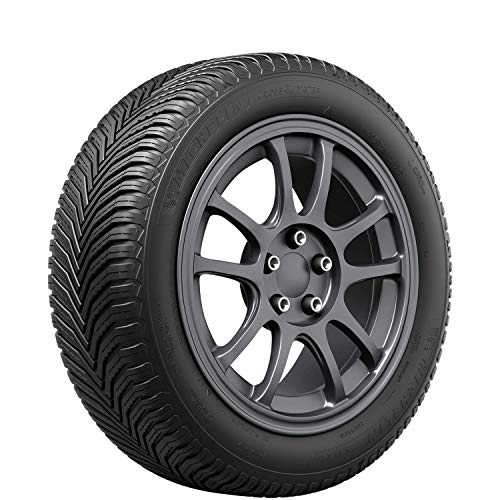
Best for year-round grip with real light-snow capability — confirm your tire size before ordering
- 3PMSF-rated all-weather benchmark
- Strong wet and light-snow traction
- Quiet, long-wearing touring ride
- Sold in dozens of car & CUV sizes
Why buy it: Michelin's all-weather benchmark and the safest year-round default — just confirm your exact tire size before you buy.

Best for all-weather grip at a friendlier price than the Michelin — confirm your tire size before ordering
- 3PMSF light-snow rating
- Strong wet and all-season traction
- Usually undercuts CrossClimate2 on price
- Frequent Goodyear rebates lower the set cost
Why buy it: Goodyear's answer to the CrossClimate2 — most of the all-weather ability for less money; confirm your tire size first.

Best for enthusiasts chasing benchmark dry and wet grip — confirm your tire size before ordering
- Widely rated the UHP summer gold standard
- Huge dry grip with real wet safety
- Reasonable tread life for a UHP tire
- Many staggered performance-car sizes
Why buy it: The street-and-track UHP tire reviewers treat as the benchmark — check your exact staggered tire size before ordering.
Prices are pulled from Amazon and were accurate as of Aug 22, 2026, 6:54 PM EDT. Product prices and availability are subject to change — the live price is shown on Amazon.
What actually separates Michelin from Goodyear
Both are top-tier tire makers, so this is not a case of good versus bad. The real difference is philosophy and price. Michelin builds to be the refinement and longevity benchmark and prices accordingly; Goodyear builds a broad, do-everything catalog and competes hard on value and availability. Understanding that gap is the whole comparison.
Michelin is the brand independent testers and owner surveys most often use as the reference point. Its flagship touring and all-weather tires — the Defender family and CrossClimate2 — consistently show up at or near the top of aggregated owner reviews for tread life, quietness and wet braking. That reputation is earned through silica-heavy compounds, its EverGrip wet-traction design and tread patterns engineered to spread contact pressure evenly (Michelin calls it MaxTouch). The trade-off is straightforward: you pay the highest mainstream price per tire.
Goodyear is a US icon with one of the deepest lineups in the business, spanning budget touring tires up to OEM sports rubber found on Corvettes and Mustangs. Rather than winning every survey, Goodyear wins on breadth, price and reach — its Assurance, Eagle and Wrangler families cover nearly any car, SUV or truck, usually at a lower sticker than the equivalent Michelin. The consensus among tire retailers is that Goodyear delivers a lot of tire for the money, with a few genuine standouts (Assurance WeatherReady, Assurance MaxLife) that go toe-to-toe with anything.
The most important thing to internalize before you shop: you are not really buying a brand, you are buying a specific model. Each company makes tires that range from merely good to class-leading. A great Goodyear line will out-perform a mismatched Michelin, so the brand name only narrows the field — the model choice decides the outcome.
Tread life, warranties and long-term value
Longevity is where Michelin built its name, and aggregated owner data still backs it up. The Defender2 carries an up-to-80,000-mile treadwear warranty, and owners routinely report the tread actually reaching those numbers rather than wearing out early — the gap between warranty and real-world life is what separates a premium tire from a merely advertised one.
Goodyear answers directly with the Assurance MaxLife, which carries an up-to-85,000-mile warranty — on paper the longest of the two headline touring tires. Owner reviews rate it highly for the money, though some note it trades a little ride plushness for that longevity. This is the pattern across the range: Goodyear matches or beats Michelin on warranty mileage in specific lines, while Michelin tends to win the softer, harder-to-measure qualities like even wear and quiet as the tire ages.
Where the value math gets interesting is total cost over the life of the tire. A Michelin might cost $40 more per tire — $160 more per set — but if it delivers 15,000 more usable miles and stays quieter and safer in the rain the whole time, the cost-per-mile can actually favor the premium tire. Conversely, if you lease, sell cars every few years, or drive low annual mileage, you may never use the extra tread you paid for, and Goodyear's lower entry price plus its frequent rebates and buy-three-get-one deals become the smarter spend. Longevity only pays off if you keep the car long enough to collect on it.
Wet, snow and all-weather grip
Wet braking is a Michelin strength that shows up repeatedly in independent testing and owner feedback. Its silica compounds and siping are tuned to keep grip as the tread wears, not just when new — a meaningful safety point, since most tires are driven well past half-worn. If your climate is genuinely rainy, Michelin's wet performance is one of the clearest reasons to pay the premium.
The all-weather category — tires that carry the 3PMSF (three-peak mountain snowflake) rating for light winter use while still working year-round — is a direct head-to-head. Michelin's CrossClimate2 is widely regarded as the benchmark, praised for combining all-season manners with real light-snow capability. Goodyear's Assurance WeatherReady is its strongest answer and a genuine standout in the lineup, earning strong owner reviews for wet and light-snow traction at a lower price. This is one of the closest match-ups between the two brands, and either is a defensible choice for a driver who sees occasional snow but doesn't want dedicated winter tires.
Neither brand's all-weather tire replaces a true winter tire in a hard-snow region. If you regularly drive on packed snow and ice, a dedicated winter set — from either maker or a winter specialist — will out-grip any all-season or all-weather tire. All-weather rubber is a convenience compromise, not a snow-tire substitute.
Performance and the UHP lineup
For enthusiasts, the flagship ultra-high-performance (UHP) summer tire is often the deciding line. Michelin's Pilot Sport 4S is the tire many reviewers and track-day drivers treat as the gold standard for a street-and-occasional-track UHP tire, balancing dry grip, wet safety and reasonable tread life better than most rivals. It is a repeated favorite in aggregated enthusiast reviews.
Goodyear competes here in two ways. Its Eagle F1 family — including Asymmetric variants — appears as original equipment on serious performance cars and is respected for dry grip, and the Eagle Exhilarate offers a lot of UHP all-season capability at a notably lower price than the Michelin. The consensus is that Michelin edges the outright performance and refinement crown, while Goodyear's Eagle lineup delivers most of the fun for less money — a familiar theme.
On the truck and SUV side the calculus shifts. Michelin's Defender LTX M/S2 is a longevity-focused highway tire with an excellent reputation, but Goodyear's Wrangler family is far broader, spanning highway, all-terrain and rugged-terrain options. For owners who actually take a truck off pavement, Goodyear's deeper Wrangler catalog often has a more appropriate tire than Michelin's more road-biased lineup.
Comfort, noise and what you really pay
Ride comfort and road noise are where Michelin's premium is most audible — literally. Owners consistently describe Michelin's flagship touring tires as among the quietest available, with a plush, composed ride. Goodyear's touring tires are good, but comfort varies more across its wider range, and the longest-wearing lines like Assurance MaxLife can feel a touch firmer as the price of their extra tread life.
On price, expect Michelin to run roughly $20–$50 more per tire than the comparable Goodyear in the same size and category — around $80–$200 more for a set of four. That is a real difference, but read it against Goodyear's frequent promotions: rebates and buy-three-get-one-free deals can close or erase the gap in any given month. Timing a Goodyear purchase to a rebate is one of the easiest ways to get near-premium tire for a value price.
Both brands manufacture in the United States, so "buy American" isn't a clean tiebreaker — Michelin runs major US plants even though the company is headquartered in France, while Goodyear is headquartered in Akron, Ohio. If country of origin matters to you, check the specific tire's build location rather than assuming from the badge.
Common myths and mistakes
"Michelin is always better than Goodyear." No. Michelin wins more surveys on average, but the model matters more than the badge. Goodyear's Assurance WeatherReady, Assurance MaxLife and Eagle lines each go head-to-head with Michelin equivalents, sometimes winning on warranty or value. A well-chosen Goodyear beats a wrong-for-you Michelin every time.
"The longer warranty means the tire lasts longer." Not necessarily. Warranty mileage is a marketing and confidence figure, not a guarantee of real-world tread life. Michelin's reputation rests partly on tires that reach their rated mileage in practice; a high warranty number from any brand only pays out prorated, so read owner reports on actual wear, not just the sticker.
"An all-weather tire is basically a winter tire." No. A 3PMSF-rated CrossClimate2 or Assurance WeatherReady handles light snow, but in a hard-winter region a dedicated snow tire out-grips both by a wide margin. Don't let an all-weather rating talk you out of real winter tires if you need them.
"I should buy the same brand my car came with." Not a rule. OEM tires are chosen partly on cost and fuel-economy targets, and the same model sold at retail can even differ from the OEM-spec version. Pick the best current tire for your size, climate and driving, regardless of what the factory fitted.
Which should you buy — and how to decide
Buy Michelin if you keep your cars a long time, drive a lot of annual miles, live somewhere rainy, or simply value the quietest ride and the strongest all-around survey record — and the premium price fits your budget. The Defender2, CrossClimate2 and Pilot Sport 4S are the safe, benchmark choices in their categories, and the cost-per-mile often justifies the sticker if you use the full tread life.
Buy Goodyear if value, availability or a specific standout line matters more than topping every chart. The Assurance WeatherReady is a genuinely excellent all-weather tire, the Assurance MaxLife chases the longest warranty in the class, and the Wrangler family covers truck and off-road needs Michelin's lineup doesn't reach as broadly. Time a purchase to a rebate and the value gap widens further in Goodyear's favor.
Whichever badge you lean toward, do the two things that actually decide tire satisfaction: match the exact model to your vehicle size, climate and driving style, and read aggregated owner reviews for that specific tire rather than the brand overall. Michelin is the higher-percentage default for most drivers who can absorb the premium, but a carefully chosen Goodyear is the smarter money more often than the brand's survey standing suggests.
Recommended Products
Our top picks in this category, ranked on aggregated owner reviews.
Best for year-round grip with real light-snow capability — confirm your tire size before ordering
- 3PMSF-rated all-weather benchmark
- Strong wet and light-snow traction
- Quiet, long-wearing touring ride
- Sold in dozens of car & CUV sizes
Why buy it: Michelin's all-weather benchmark and the safest year-round default — just confirm your exact tire size before you buy.
Best for all-weather grip at a friendlier price than the Michelin — confirm your tire size before ordering
- 3PMSF light-snow rating
- Strong wet and all-season traction
- Usually undercuts CrossClimate2 on price
- Frequent Goodyear rebates lower the set cost
Why buy it: Goodyear's answer to the CrossClimate2 — most of the all-weather ability for less money; confirm your tire size first.
Best for enthusiasts chasing benchmark dry and wet grip — confirm your tire size before ordering
- Widely rated the UHP summer gold standard
- Huge dry grip with real wet safety
- Reasonable tread life for a UHP tire
- Many staggered performance-car sizes
Why buy it: The street-and-track UHP tire reviewers treat as the benchmark — check your exact staggered tire size before ordering.

Best for long treadlife and a quiet touring ride — confirm your tire size before ordering
- Long-life all-season touring tire
- High owner-satisfaction and treadwear scores
- Quiet, comfortable highway manners
- Popular sedan & minivan fitments
Why buy it: Michelin's long-wear touring workhorse for drivers who keep a car years — confirm your tire size before you buy.

Best for maximum warranty mileage on a budget — confirm your tire size before ordering
- Up to 85,000-mile treadwear warranty
- One of the longest warranties in its class
- Strong value for the money
- Wide car & crossover size range
Why buy it: Goodyear's longest-warranty touring tire — a lot of tread for the money; confirm your tire size before ordering.
Best for UHP all-season grip for far less than the Pilot Sport — confirm your tire size before ordering
- UHP all-season performance
- ActiveGrip dry and wet handling
- Much cheaper than the Michelin UHP
- Popular performance-sedan sizes
Why buy it: Goodyear's UHP all-season that delivers most of the fun for less — confirm your exact tire size before you buy.
Prices are pulled from Amazon and were accurate as of Aug 22, 2026, 6:54 PM EDT. Product prices and availability are subject to change — the live price is shown on Amazon.