
Affiliate Disclosure
Some links on this page are affiliate links. As an Amazon Associate, we earn from qualifying purchases — at no extra cost to you. We do not buy, test, or physically handle the products we cover; our rankings come from aggregated owner reviews, ratings and expert consensus. Commissions never change our verdicts. How we rank & full disclosure.
Nitrogen
Purified nitrogen (typically 93–95% pure) pumped in after the tire is purged of ordinary air. Sold as a premium fill that leaks slower and holds pressure more steadily across temperature swings.
Best for: Track cars, fleets, aircraft, and owners who rarely check their own pressures and want the slowest possible seepage
Roughly $5–$10 per tire to fill, or $70–$180 for a full "nitrogen package" at new-car dealers; free top-offs at some tire chains (Costco)
- Larger molecule seeps through the rubber slightly slower, so pressure drifts down more gradually
- Dry gas carries almost no water vapor, so pressure swings less as tires heat up and cool
- No moisture inside means less internal corrosion of steel and alloy wheels over years
- Green valve caps make a nitrogen fill easy to identify at a glance
- Genuinely useful where pressure stability is critical — racing, aviation, heavy fleets
- Real-world benefit for a daily driver is small — a few tenths of PSI per month at best
- Costs money up front and often at every top-off, versus free air almost everywhere
- A single air top-off in a pinch dilutes the purity and erases much of the advantage
- Not a substitute for checking pressures — under-inflation still kills tires and MPG
Compressed Air
Ordinary shop or gas-station air, which is about 78% nitrogen already, plus oxygen and whatever water vapor the compressor picked up. The default fill in essentially every tire on the road.
Best for: The overwhelming majority of street-driven cars whose owners check pressure every month or two
Free to about $1.50 at gas stations; free at most tire shops and many service bays
- Free or nearly free, and available at every gas station, shop and home compressor
- Top off anywhere, anytime — no waiting for a specialty nitrogen machine
- Already 78% nitrogen, so the gap to a pure fill is smaller than marketing implies
- Zero commitment — mixing, topping off and swapping is never a problem
- Oxygen molecules seep out slightly faster, so pressure drops a touch quicker
- Compressor moisture means bigger pressure swings between cold and hot tires
- Trapped water vapor can, over many years, promote corrosion inside the wheel
- Requires the same monthly pressure check that nitrogen does — no free pass
How they score, side by side
Scores reflect aggregated owner reviews and expert consensus — not our own bench testing.
- Cost value410
- Convenience / availability310
- Pressure stability86
- Slow-leak resistance86
- Moisture / corrosion control85
- Real benefit for daily driving48
Spec-by-spec comparison chart
| Factor | Nitrogen | Compressed Air |
|---|---|---|
| Gas purity | 93–95% nitrogen (purged fill) | ~78% nitrogen, ~21% oxygen |
| Cost to fill | $5–$10/tire, or $70–$180 package | Free to ~$1.50 |
| Availability | Tire chains & dealers only | Everywhere — every gas station |
| Leak / seepage rate | Slightly slower (larger molecule) | Slightly faster |
| Moisture content | Very dry — minimal water vapor | Variable — compressor moisture |
| Pressure stability with heat | More stable across temp swings | Larger cold-to-hot swing |
| Internal wheel corrosion | Reduced (dry, low-oxygen) | Possible over many years |
| Top-off convenience | Must find a nitrogen source | Top off anywhere |
| Monthly pressure check still needed | Yes | Yes |
| Best use case | Track, fleet, aviation, set-and-forget | Everyday street driving |
Our Top 3 Picks
The three highest-rated options in this category, if you'd rather skip straight to a proven pick.
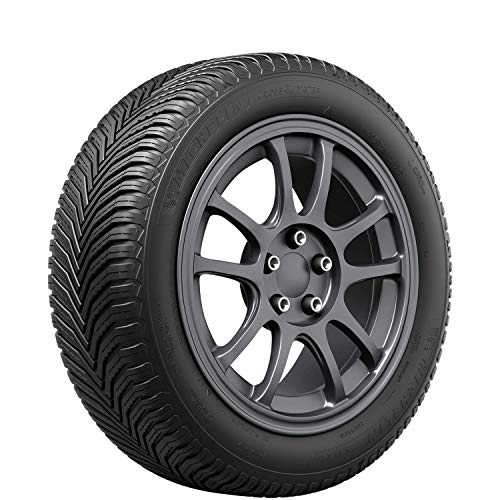
Best for the best all-round grip, wear and light-snow ability
- V-shaped tread with 3-peak-mountain-snowflake rating
- Class-leading wet and dry braking
- 60,000-mile treadwear warranty
- Real light-snow traction for an all-season
Why buy it: the tire owners and experts keep crowning as the best all-rounder — it brakes shorter in the wet than most rivals and genuinely handles snow, so it fits almost any driver in a four-season climate.

Best for the longest tread life on a sedan or minivan
- Up to 80,000-mile treadwear warranty
- Quiet, comfortable highway ride
- Strong wet grip and even wear
- Michelin’s longest-lasting all-season
Why buy it: the set-and-forget touring tire owners rate for outlasting everything else — fit it once and forget about tires for years.

Best for premium wet braking at a mid-range price
- Up to 80,000-mile treadwear warranty
- EcoPlus compound for shorter wet stops
- Fuel-efficient, low rolling resistance
- Wear indicators built into the tread
Why buy it: a hugely popular touring tire that delivers premium-brand wet performance and an 80k warranty for less than the flagships.
Prices are pulled from Amazon and were accurate as of Aug 22, 2026, 6:54 PM EDT. Product prices and availability are subject to change — the live price is shown on Amazon.
What nitrogen actually changes inside a tire
Start with the fact that surprises most people: the air you already breathe, and the air already in your tires, is about 78% nitrogen. The rest is roughly 21% oxygen with a little argon, carbon dioxide and — the part that matters most — a variable amount of water vapor. So "filling with nitrogen" does not mean adding something exotic. It means purging the tire of ordinary air and refilling it with a dry gas that is around 93–95% nitrogen instead of 78%. You are removing most of the oxygen and nearly all of the moisture.
That distinction is the whole story. Nitrogen's supposed advantages don't come from nitrogen being magic — they come from what you took out. Oxygen is a smaller, more chemically active molecule that permeates rubber slightly faster and can slowly oxidize the tire and wheel from the inside. Water vapor expands and contracts far more dramatically than dry gas when temperature changes, which is what makes a moist air fill swing more in pressure between a cold morning and a hot highway run.
The consensus among tire engineers is that the physics are real but the magnitude is modest. A pure nitrogen fill genuinely seeps out a little slower and holds a steadier pressure — but on a street car driven normally, "a little" often works out to a fraction of a PSI difference per month. Whether that fraction is worth paying for is the real question, and it depends entirely on how you use the car and how often you actually check your tires.
The four nitrogen claims, tested against physics
Nitrogen is sold on four promises. Here is how each holds up against published data and the consensus among tire professionals, not marketing copy.
1. "It leaks out slower." True, and measurable. The nitrogen molecule is fractionally larger than the oxygen molecule, so it permeates through the rubber carcass and around the bead a bit more slowly. Studies referenced by the tire industry put the difference at roughly 1.3 PSI per month for air versus about 0.7 PSI for nitrogen on a typical passenger tire — real, but a matter of tenths of a PSI over a month. A healthy tire holding proper pressure barely notices; a tire that already leaks from a bad valve or a nail will leak regardless of the gas inside.
2. "Pressure stays more stable with temperature." Also true, and this is nitrogen's strongest card. Every tire gains roughly 1 PSI for every 10°F of temperature rise — that's basic gas law and it applies to both fills. The extra swing comes from moisture: water vapor in a moist air fill flashes and expands far more than dry gas, exaggerating the cold-to-hot change. A dry nitrogen fill behaves more predictably, which is exactly why racers and aircraft use it — consistent pressure means consistent grip and handling.
3. "It prevents corrosion inside the wheel." True in principle. Oxygen plus moisture is what rusts steel wheels and oxidizes alloys and the inner tire liner over the years. Strip out the oxygen and water and you slow that process. In practice, on a car that gets new tires every 5–6 years anyway, the corrosion you avoided rarely becomes a problem you would have noticed.
4. "It improves fuel economy and tire life." This one is misleading. Proper inflation improves MPG and tread life — and nitrogen only helps here to the extent that it holds that proper pressure slightly longer between checks. It is the correct pressure doing the work, not the nitrogen. A driver who checks and corrects air monthly gets the same MPG and wear as one running nitrogen. Nitrogen mainly helps the person who never checks at all.
Who actually benefits from nitrogen
Nitrogen is not a scam, and dismissing it entirely is as wrong as overselling it. There are clear cases where the dry, low-oxygen fill earns its cost:
- Racing and track days — where a predictable pressure rise as tires heat up translates directly into predictable grip. Race teams fill with nitrogen precisely because they can't tolerate moisture-driven pressure spikes mid-session.
- Aircraft and heavy commercial fleets — where the temperature extremes are huge, moisture is dangerous, and the cost of a blowout is enormous. This is where nitrogen has been standard for decades, and it's the origin of the whole idea.
- Set-and-forget owners — the driver who realistically will not check tire pressure for months at a time. For them, the slower seepage is a real safety cushion, keeping pressures closer to spec between the rare checks.
- Long-term or stored vehicles — collector cars and low-mileage vehicles that sit, where the reduced internal corrosion and slow pressure loss genuinely matter over years of inactivity.
Notice the pattern: nitrogen shines when pressure stability is critical or when you won't be checking often. For the average commuter who tops off at the gas station every month or so, the benefit shrinks to almost nothing — the free air and a $10 gauge deliver the same real-world result.
Real cost and whether it pays off
Air is free or costs about a dollar in quarters at a gas station. Nitrogen is not. New-car dealers frequently bundle a "nitrogen package" for $70 to $180, and independent tire shops may charge $5 to $10 per tire to convert. Some warehouse chains — Costco is the common example — fill and top off with nitrogen at no extra charge on tires bought there, which is the one scenario where the math is genuinely free.
The hidden cost is the top-off problem. Nitrogen's advantage depends on purity. The moment you top off a low nitrogen tire with ordinary gas-station air — because that's all you can find on a road trip — you dilute the fill back toward regular air and give back much of the benefit. To keep the purity high you have to return to a nitrogen source every time, which is far less convenient than the compressor at any gas station. Over the life of the tires, that convenience gap is the real cost, not the initial fill.
The honest bottom line on value: if nitrogen is free with your tire purchase and there's a convenient top-off nearby, take it — there is no downside. If you're being asked to pay $150 for it on a daily commuter, that money is far better spent on a good digital pressure gauge and the two-minute monthly habit of using it. The habit outperforms the gas.
Common myths and mistakes
"Nitrogen means I never have to check my tires." False, and it's the most dangerous myth. Nitrogen leaks slower, not zero. Tires still lose pressure, still pick up nails, and still need a monthly check. Treating a nitrogen fill as maintenance-free is how people end up driving on 20 PSI without realizing it.
"You can't mix nitrogen and air." You can — nothing bad happens. Topping off a nitrogen tire with regular air is completely safe; it just lowers the purity and reduces the benefit. There is no chemical risk, no damage, no warning light. It's purely a dilution question.
"Green caps mean the tire is better." The green valve caps are just a marker so a shop knows the tire was filled with nitrogen. They don't do anything mechanical. A tire with green caps and low pressure is still a low, unsafe tire.
"Nitrogen gives me noticeably better MPG." Only indirectly, and only versus a neglected tire. The fuel savings come from correct pressure. Keep any tire — air or nitrogen — at spec and the economy is the same. Marketing that promises fuel savings is really promising the benefits of proper inflation.
Which should you use — and how to decide
For the vast majority of drivers, compressed air is the right call. It's free, it's everywhere, it's already mostly nitrogen, and paired with a monthly pressure check it delivers essentially the same real-world result as a premium fill. The versatility of being able to top off at any gas station, home compressor or service bay outweighs a fraction of a PSI in monthly seepage.
Choose nitrogen if it comes free with your tires (as at some warehouse clubs), if you track the car or tow heavy loads where pressure stability matters, if the vehicle sits for long periods, or if you're honest with yourself that you will almost never check the pressures manually. In those cases the slower seepage and steadier pressure are worth having.
Do not pay a big premium for nitrogen on a normal commuter expecting a transformation — the benefit is real but small, and it evaporates the first time you top off with air. Whatever you fill with, buy a decent digital gauge, set the pressures to the number on your door-jamb placard (not the max on the sidewall), and check them monthly and before long trips. That single habit does more for safety, fuel economy and tire life than the choice between nitrogen and air ever will.
Recommended Products
Our top picks in this category, ranked on aggregated owner reviews.
Best for the best all-round grip, wear and light-snow ability
- V-shaped tread with 3-peak-mountain-snowflake rating
- Class-leading wet and dry braking
- 60,000-mile treadwear warranty
- Real light-snow traction for an all-season
Why buy it: the tire owners and experts keep crowning as the best all-rounder — it brakes shorter in the wet than most rivals and genuinely handles snow, so it fits almost any driver in a four-season climate.
Best for the longest tread life on a sedan or minivan
- Up to 80,000-mile treadwear warranty
- Quiet, comfortable highway ride
- Strong wet grip and even wear
- Michelin’s longest-lasting all-season
Why buy it: the set-and-forget touring tire owners rate for outlasting everything else — fit it once and forget about tires for years.
Best for premium wet braking at a mid-range price
- Up to 80,000-mile treadwear warranty
- EcoPlus compound for shorter wet stops
- Fuel-efficient, low rolling resistance
- Wear indicators built into the tread
Why buy it: a hugely popular touring tire that delivers premium-brand wet performance and an 80k warranty for less than the flagships.

Best for the most tire for the money
- Up to 75,000-mile treadwear warranty
- "Replace Tire" wear indicator in the tread
- Reliable wet braking and light-snow grip
- Backed by Continental’s parent company
Why buy it: the value pick owners rate again and again — a genuinely good touring tire with a 75k warranty at a bargain price.

Best for confidence in rain and winter slush
- 3-peak-mountain-snowflake certified
- Evolving Traction Grooves for wet grip
- 60,000-mile treadwear warranty
- Strong all-weather safety focus
Why buy it: the pick for drivers who see a lot of rain and the occasional storm — a true all-weather tire that carries the winter certification most all-seasons lack.

Best for sporty cars that still need year-round use
- Ultra-high-performance all-season design
- Excellent dry, wet and light-snow grip
- Tread wear indicators (DWS letters)
- A perennial enthusiast favorite
Why buy it: the enthusiast’s all-season — near-summer-tire dry grip with real wet and light-snow ability, so a sports sedan can run one set all year.
Prices are pulled from Amazon and were accurate as of Aug 22, 2026, 6:54 PM EDT. Product prices and availability are subject to change — the live price is shown on Amazon.