
Affiliate Disclosure
Some links on this page are affiliate links. As an Amazon Associate, we earn from qualifying purchases — at no extra cost to you. We do not buy, test, or physically handle the products we cover; our rankings come from aggregated owner reviews, ratings and expert consensus. Commissions never change our verdicts. How we rank & full disclosure.
NOCO Genius
A modern smart charger and maintainer line built around the popular GENIUS1, GENIUS5 and GENIUS10. It charges, maintains, desulfates and can force-charge dead batteries most maintainers refuse to touch.
Best for: Owners who want one do-everything charger for multiple vehicle types, deeply drained batteries, and lithium (LiFePO4) packs
Roughly $30 (GENIUS1) to $100 (GENIUS10); GENIUS5 around $70
- Charges AND revives — a Force/Repair mode can wake batteries down to 1V that a plain maintainer skips
- Native lithium (LiFePO4) support alongside AGM, gel, flooded and calcium chemistries
- Higher amp options (5A, 10A) actually recharge a flat battery in hours, not days
- Built-in desulfation and temperature compensation across the whole range
- One unit covers 6V and 12V, powersports, car and marine
- The tiny GENIUS1 (1A) is a trickle unit — slow for anything bigger than a motorcycle
- More modes and buttons mean a steeper first-time learning curve
- Owners report the eyelet/clamp leads are shorter than they would like
- Higher-amp models cost noticeably more than a basic Battery Tender Junior
Battery Tender
The Deltran brand that made "battery tender" almost a generic term. The Junior (0.75A) and Plus (1.25A) are simple, set-and-forget float maintainers trusted for seasonal storage.
Best for: Seasonal storage of motorcycles, classics, ATVs, boats and RVs where a battery just needs to be held topped-up over winter
Roughly $30 (Junior 0.75A) to $60 (Plus 1.25A); higher-amp Plus models more
- Dead simple — plug in and walk away, no mode selection to get wrong
- Proven four-step float logic that will not overcharge a stored battery
- Very affordable, especially the ubiquitous Junior
- Long, generous lead length that owners consistently praise
- Huge installed base and easy-to-find quick-connect pigtail accessories
- Low amperage means slow recovery — poor at charging a truly flat battery quickly
- Standard units will not revive a deeply discharged/sulfated battery
- Lithium support varies by model — the classic Junior/Plus target lead-acid
- Fewer diagnostic modes; it maintains well but does not "repair"
How they score, side by side
Scores reflect aggregated owner reviews and expert consensus — not our own bench testing.
- Storage / maintenance99
- Fast recharging83
- Reviving dead batteries92
- Lithium compatibility94
- Ease of use710
- Value for pure storage69
Spec-by-spec comparison chart
| Factor | NOCO Genius | Battery Tender |
|---|---|---|
| Primary job | Charge, maintain, desulfate & revive | Maintain / float (some models charge) |
| Amp options | 1A, 5A, 10A (and larger) | 0.75A (Junior), 1.25A (Plus), higher on select models |
| Recovers a dead battery | Yes — Force/Repair mode down to ~1V | No — needs a battery already holding charge |
| Lithium (LiFePO4) support | Yes, native across GENIUS line | Model-dependent; classic Junior/Plus are lead-acid |
| Desulfation mode | Yes, automatic | Limited / not a headline feature |
| Chemistries | AGM, gel, flooded, calcium, lithium; 6V & 12V | Primarily lead-acid (AGM/flooded); 6V & 12V variants |
| Ease of use | More modes — slight learning curve | Plug-and-forget simplicity |
| Lead length | Shorter (common owner gripe) | Longer (common owner praise) |
| Typical price | $30 (1A) to $100 (10A) | $30 (Junior) to $60+ (Plus) |
| Best use case | One charger for everything + rescue duty | Cheap dedicated storage maintainer |
Our Top 3 Picks
The three highest-rated options in this category, if you'd rather skip straight to a proven pick.

Best for one do-everything charger that recharges fast, maintains and revives
- 5A charge, then auto float-maintain
- Force mode revives batteries to ~1V
- Native lithium (LiFePO4) + lead-acid
- Automatic desulfation & temp compensation
Why buy it: The sweet-spot NOCO — enough amperage to actually charge, small enough to trickle-maintain, and it rescues dead batteries a plain maintainer won't touch.
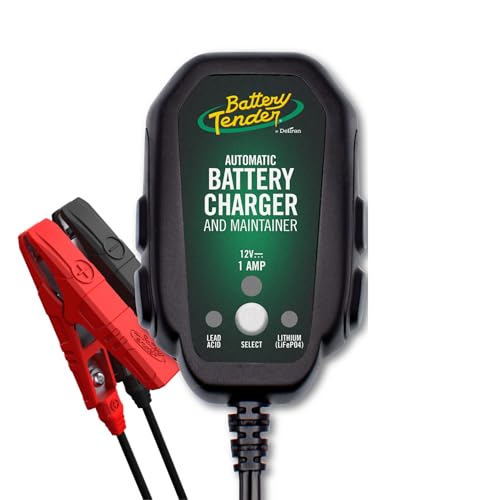
Best for cheap, foolproof seasonal storage of bikes, classics and ATVs
- Plug-and-forget float maintenance
- Four-stage logic that won't overcharge
- Long leads owners consistently praise
- Lead-acid and lithium switchable
Why buy it: The default winter maintainer — dead simple, dirt cheap, and it holds a healthy battery full for months without a thought.

Best for bigger truck, marine and dual-battery setups where 5A is too slow
- 10A for fast recovery of large batteries
- Force/repair + desulfation modes
- Lithium, AGM, gel, flooded, calcium
- 6V and 12V, marine-ready
Why buy it: The high-amp NOCO for garages with big batteries — turns a multi-day recharge into an afternoon, then floats gently once full.
Prices are pulled from Amazon and were accurate as of Aug 22, 2026, 6:44 PM EDT. Product prices and availability are subject to change — the live price is shown on Amazon.
What actually separates NOCO from Battery Tender
Ask around any garage or motorcycle forum and both names come up constantly, often used as if they were interchangeable. They aren't. The consensus among owners and enthusiasts is that these two brands solve overlapping but genuinely different problems, and buying the wrong one is how people end up disappointed with a perfectly good charger.
Battery Tender, made by Deltran, built its reputation on the float maintainer — a small, low-amperage device you connect to a stored battery so it never goes flat. The classic Junior pushes just 0.75 amps; the Plus, 1.25 amps. That is deliberate. A maintainer's whole job is to sip a tiny current, top the battery to full, then hold it there indefinitely with a four-stage float cycle that will not cook the plates. It is the definition of set-and-forget, which is exactly why it became the default for winter motorcycle storage.
NOCO's GENIUS line approaches the problem as a full smart charger first and a maintainer second. The GENIUS1 mirrors a trickle maintainer at 1 amp, but the GENIUS5 (5A) and GENIUS10 (10A) are built to actually recharge a battery in a reasonable number of hours, not just hold one that is already full. On top of that, NOCO layers desulfation, temperature compensation, native lithium support, and a Force/Repair mode that can wake a battery so deeply discharged that most maintainers — including a standard Battery Tender — simply refuse to start.
The cleanest way owners frame it: a Battery Tender is a maintainer that can charge a little; a NOCO GENIUS is a charger that also maintains. That single distinction drives almost every buying decision below.

Amperage: why it decides which one you need
Amperage is the number most first-time buyers overlook, and it is the one that matters most. Charge current roughly determines how long a flat battery takes to come back. A useful rule of thumb owners cite is that recharge time in hours is close to the battery's amp-hour capacity divided by the charger's amps, plus overhead for the final absorption stage.
- A 0.75A Battery Tender Junior topping a drained 50Ah car battery is doing you no favors — you are looking at the better part of a couple of days. As a maintainer on an already-charged battery, though, that low current is perfect and safe.
- A 5A NOCO GENIUS5 brings that same 50Ah battery back in a small number of hours, then automatically drops to a float/maintain trickle. It behaves like a maintainer once the battery is full, so you get both jobs from one unit.
- A 10A NOCO GENIUS10 is the choice for bigger truck, marine or dual-battery setups where 5A would still feel slow.
This is where matching the tool to the task pays off. If your battery only ever sits over winter and never actually goes dead, the low amperage of a Tender is a feature, not a flaw — and it costs less. If you routinely deal with drained batteries, short-trip cars, or a project car that sits and gets jump-started, the higher-amp NOCO earns its price by turning a two-day wait into an afternoon.

Reviving dead and sulfated batteries
This is the single biggest practical gap between the two, and the reason so many owners eventually add a NOCO to a shelf that already has a Battery Tender on it. Most smart chargers, the standard Battery Tender included, use a safety interlock: they measure voltage first, and if the battery reads too low — often under about 2 volts — they assume something is wrong and never begin charging. That protects against charging a shorted or reversed battery, but it also means a battery that self-discharged flat in storage can leave you stuck.
NOCO's answer is the Force mode (labeled Repair or manual override depending on model). It lets the charger push current into a battery reading as low as roughly 1 volt, and its automatic desulfation cycle sends controlled pulses aimed at breaking down the lead-sulfate crystals that build up on neglected plates. Owners consistently report reviving batteries with a NOCO that their old maintainer flatly refused to acknowledge. It is not magic — a battery with a dead cell or physical damage is still scrap — but for the common case of a good battery that simply sat too long, the Force/desulfation combination is a real, repeatable advantage.
Battery Tender's core lineup is honest about not chasing this use case. It is engineered to keep a battery from ever getting there, which is a legitimate and arguably smarter strategy — a battery that is maintained never needs reviving. But if you are the person who inherits a flat classic-car battery every spring, that is a NOCO job.
Lithium batteries and chemistry support
Battery chemistry has moved fast, and this is where the age of a design shows. Lithium iron phosphate (LiFePO4) batteries — now common in powersports, some marine and lightweight aftermarket setups — need a charging profile with a different voltage curve and absolutely no old-school desulfation pulsing, which can confuse or stress a lithium BMS.
The NOCO GENIUS range supports lithium natively: you select a lithium mode and the charger applies the correct algorithm across its 1A, 5A and 10A models, alongside AGM, gel, flooded and calcium lead-acid. That flexibility, plus 6V and 12V handling, is why the GENIUS is the more future-proof single purchase if your garage runs mixed chemistries.
Battery Tender does make lithium-specific chargers, but the ubiquitous Junior and Plus that most people actually buy are tuned for lead-acid. Owners who put a classic lead-acid Tender on a lithium pack — or vice versa — are the source of many "my charger killed my battery" complaints. The lesson is not that one brand is wrong; it is that you must match the charger's mode to the battery. NOCO simply bundles more of those modes into one box.
Real cost and long-term value
On sticker price, the entry points are surprisingly close: a Battery Tender Junior and a NOCO GENIUS1 both land around $30, and both are 1-ish-amp trickle units. If pure seasonal maintenance is all you need, the Tender Junior is the value pick — proven, simple, and with the longer leads owners appreciate.
The math changes as you climb. A NOCO GENIUS5 (~$70) or GENIUS10 (~$100) costs more than a Battery Tender Plus (~$60), but you are buying meaningfully more capability: faster charging, dead-battery recovery, desulfation and native lithium. The honest way to think about value is by counting how many chargers you would otherwise own. If a single NOCO GENIUS5 replaces a maintainer and a separate bench charger and handles your lithium powersports battery, its higher price is actually the cheaper path.
Conversely, if you own three motorcycles that each just need a maintainer over winter, three Battery Tender Juniors are cheaper than three NOCO units and do that one job flawlessly. Neither answer is universally right — it depends entirely on whether you need charging muscle and rescue ability or only quiet, reliable maintenance.

Common myths and mistakes
"A Battery Tender will recharge my dead battery overnight." Not realistically. At 0.75–1.25A it is a maintainer; on a truly flat battery it may take days, and if the battery dropped below its startup threshold it may not begin at all. For fast recovery you want a higher-amp charger like a NOCO GENIUS5.
"NOCO and Battery Tender are the same thing." They overlap only at the low-amp trickle end. Above that, NOCO adds real charging amperage, Force/desulfation recovery, and native lithium modes that the classic Tenders don't offer.
"Any maintainer is safe on my lithium battery." No. A lead-acid charging profile — especially desulfation pulsing — is wrong for LiFePO4 and can trip or damage the BMS. Use a lithium mode (NOCO) or a lithium-specific model. Match the mode to the chemistry, every time.
"More amps is always better." Not for storage. Blasting a small, healthy motorcycle battery with 10A when it only needs a float trickle is unnecessary; the smart move is a unit that maintains gently once full — which both a Tender and a NOCO do, but the Tender does it for less.
Which should you buy — and how to decide
There is no single winner here, because the two are tuned for different jobs. The decision comes down to one honest question: do you need to maintain, or to maintain and rescue?
Buy a Battery Tender if your batteries are healthy and you mainly need to hold them full through storage — a motorcycle, classic, ATV, boat or RV that sleeps for the winter. The Junior is cheap, foolproof, has the leads people love, and is the best value for pure maintenance duty.
Buy a NOCO GENIUS if you want one charger to do everything: recharge drained batteries in hours, revive a battery that already died, run desulfation, and support lithium as well as lead-acid. For most mixed garages the GENIUS5 is the sweet spot — enough amperage to actually charge, small enough to still trickle-maintain, and versatile across every battery you own.
Plenty of experienced owners simply keep both: a stack of cheap Battery Tenders on the stored bikes, and one NOCO GENIUS on the bench for whatever shows up flat. Match the tool to the task, keep the charger's mode aligned with the battery chemistry, and either brand will serve you well for years.
Recommended Products
Our top picks in this category, ranked on aggregated owner reviews.
Best for one do-everything charger that recharges fast, maintains and revives
- 5A charge, then auto float-maintain
- Force mode revives batteries to ~1V
- Native lithium (LiFePO4) + lead-acid
- Automatic desulfation & temp compensation
Why buy it: The sweet-spot NOCO — enough amperage to actually charge, small enough to trickle-maintain, and it rescues dead batteries a plain maintainer won't touch.
Best for cheap, foolproof seasonal storage of bikes, classics and ATVs
- Plug-and-forget float maintenance
- Four-stage logic that won't overcharge
- Long leads owners consistently praise
- Lead-acid and lithium switchable
Why buy it: The default winter maintainer — dead simple, dirt cheap, and it holds a healthy battery full for months without a thought.
Best for bigger truck, marine and dual-battery setups where 5A is too slow
- 10A for fast recovery of large batteries
- Force/repair + desulfation modes
- Lithium, AGM, gel, flooded, calcium
- 6V and 12V, marine-ready
Why buy it: The high-amp NOCO for garages with big batteries — turns a multi-day recharge into an afternoon, then floats gently once full.

Best for set-and-forget storage with a bit more topping-up muscle than the Junior
- 1.25A four-step float charging
- Won't overcharge a stored battery
- Generous lead length
- Huge pigtail-accessory ecosystem
Why buy it: The step up from the Junior — the proven Deltran float logic with a little more current for slightly bigger stored batteries.

Best for a NOCO-smart trickle unit for motorcycles and small batteries
- 1A trickle charge and maintain
- Desulfation + temp compensation
- Native lithium and lead-acid modes
- 6V and 12V in a tiny footprint
Why buy it: NOCO's entry point — priced like a Tender Junior but adds desulfation and lithium modes for small-battery maintenance.

Best for faster car/SUV/truck charging while staying in the Tender family
- 4A smart automatic charging
- Switchable 12V or 6V
- Lead-acid, AGM and lithium modes
- Steps up to maintain when full
Why buy it: Deltran's answer when the Junior is too slow — real charging amps for car and truck batteries with the brand's simple, safe logic.
Prices are pulled from Amazon and were accurate as of Aug 22, 2026, 6:44 PM EDT. Product prices and availability are subject to change — the live price is shown on Amazon.