

Affiliate Disclosure
Some links on this page are affiliate links. As an Amazon Associate, we earn from qualifying purchases — at no extra cost to you. We do not buy, test, or physically handle the products we cover; our rankings come from aggregated owner reviews, ratings and expert consensus. Commissions never change our verdicts. How we rank & full disclosure.
OBD1
The first-generation on-board diagnostics found on most cars built before the mid-1990s. Each automaker used its own connector, its own trouble codes and its own way of reading them, so nothing was standardized across brands.
Best for: Owners and restorers keeping a pre-1996 vehicle on the road who need to read manufacturer-specific codes
Brand-specific readers $20–$120; many GM/Ford/Toyota systems flash codes for free with a jumper wire or paperclip
- On many cars you can pull codes with no scanner at all — jump two pins and count the check-engine flashes
- Simple, well-documented systems with big enthusiast communities for each brand
- Cheap brand-specific readers and cables exist for popular platforms like GM and Ford
- Fewer monitored systems means fewer nuisance codes on an older engine
- No standard connector or code list — a Ford reader will not work on a Honda
- Very limited live data; most systems show codes and little else
- Cannot be smog-tested by plug-in OBD readout in states that require it
- Tools and documentation get harder to find every year as the cars age out
OBD2
The federally mandated second-generation standard on every US-market car since 1996. It uses one universal 16-pin port, a shared list of standardized P-codes, and live sensor data any generic scanner can read.
Best for: Anyone with a 1996-or-newer vehicle — DIYers, smog testing, and anyone who wants one scanner that works on every car
Generic code readers $20–$40; Bluetooth dongles $15–$30; capable bidirectional scan tools $150–$600+
- One universal 16-pin connector and one shared code list across every make and model
- Rich live data — fuel trims, O2 sensors, misfire counts, freeze-frame snapshots
- Cheap $15–$30 Bluetooth dongles turn a phone into a full scan tool
- Required for emissions readiness monitors, so it plugs straight into smog testing
- Huge tool ecosystem, from free apps to professional bidirectional scanners
- Generic P-codes point to a system, not always the exact failed part
- Manufacturer-specific faults may still need a brand-level scan tool to decode fully
- Cheap dongles vary wildly in quality and can drain the battery if left plugged in
- The flood of monitored systems means more codes to interpret than an old OBD1 car
How they score, side by side
Scores reflect aggregated owner reviews and expert consensus — not our own bench testing.
- Ease of reading codes today69
- Tool cost & availability59
- Depth of live data39
- Cross-brand compatibility110
- Smog / emissions readiness29
- Simplicity of the system86
Spec-by-spec comparison chart
| Factor | OBD1 | OBD2 |
|---|---|---|
| Model years covered | Most cars before ~1996 (varies by brand) | All US-market cars 1996 and newer |
| Standardized? | No — each automaker did its own thing | Yes — federally mandated standard |
| Connector | Brand-specific plugs, various pin counts | Universal 16-pin (SAE J1962) port |
| Trouble codes | Manufacturer-specific 2–3 digit codes | Standard 5-character P/B/C/U codes |
| Live data (PIDs) | Very limited or none on most systems | Rich — fuel trims, O2, misfires, more |
| Freeze-frame data | Rarely | Yes — snapshot saved when a fault sets |
| Read without a scanner | Often yes — jumper/paperclip flash codes | No — needs a scan tool or dongle |
| Emissions / smog readiness | Not via a standard plug-in readout | Built-in readiness monitors for smog |
| Typical reader cost | $20–$120 brand-specific (or free jumper) | $15–$40 generic; $150–$600+ pro tools |
| Tool availability today | Shrinking, brand-by-brand | Enormous, universal ecosystem |
Our Top 3 Picks
The three highest-rated options in this category, if you'd rather skip straight to a proven pick.

Best for the most bang-for-buck bolt-on airflow gain
- Washable, reusable cotton-gauze filter
- Polished aluminum intake tube
- Powder-coated heat shield included
- Vehicle-specific fit — check your model
Why buy it: the value default owners keep pointing beginners to — rated 4.5 across thousands of reviews for a real airflow and sound bump at a price that barely dents the build fund.

Best for the cheapest branded way to open up intake sound
- Universal cone filter and tube components
- Cotton-gauze element, cleanable
- Mix-and-match couplers and clamps
- Best for custom or open-element setups
Why buy it: the budget entry point — owners rate it 4.4 for a throaty intake growl and easy airflow gain, ideal if you want the sound and DIY flexibility on the cheap.

Best for the best-known washable filter and finish
- K&N cotton-gauze filter, ~100k-mile service
- Mandrel-bent tube for smooth flow
- Aggressive intake growl on throttle
- Model-specific fit — verify part number
Why buy it: the trusted-name pick — rated 4.6, owners praise the lifetime-washable K&N filter and clean bolt-in fit that turns intake noise into part of the fun.
Prices are pulled from Amazon and were accurate as of Aug 22, 2026, 6:54 PM EDT. Product prices and availability are subject to change — the live price is shown on Amazon.
What OBD1 and OBD2 actually are
On-board diagnostics (OBD) is the system in a car's computer that watches the engine and emissions hardware and stores a trouble code when something drifts out of spec. OBD1 and OBD2 are not competing products you choose between — they are two generations of that system, separated by roughly the 1996 model year. Which one your car has was fixed the day it left the factory.
OBD1 is the first generation, used broadly through the late 1980s and early 1990s. The critical thing to understand is that it was never standardized. Each automaker designed its own diagnostic connector, its own list of trouble codes, and its own procedure for reading them. A General Motors ALDL connector, a Ford EEC-IV self-test plug and a Honda service connector are all "OBD1," yet they share almost nothing — different shapes, different pinouts, different code numbers, different tools.
OBD2 is the second generation, and it exists because the EPA and CARB forced the industry onto a single standard. Every car sold new in the United States from the 1996 model year onward must use OBD2: one universal 16-pin connector (the SAE J1962 port, almost always under the dash on the driver's side), one shared list of five-character trouble codes, and a defined set of live data parameters any generic scanner can request. The mechanic consensus is blunt — OBD2 turned diagnostics from a brand-by-brand puzzle into something a $20 tool can handle on any car.
So "OBD1 vs OBD2" is really a question of era and capability, not a shootout. The newer standard is more capable in almost every measurable way — but you only get to use the one your vehicle was born with.
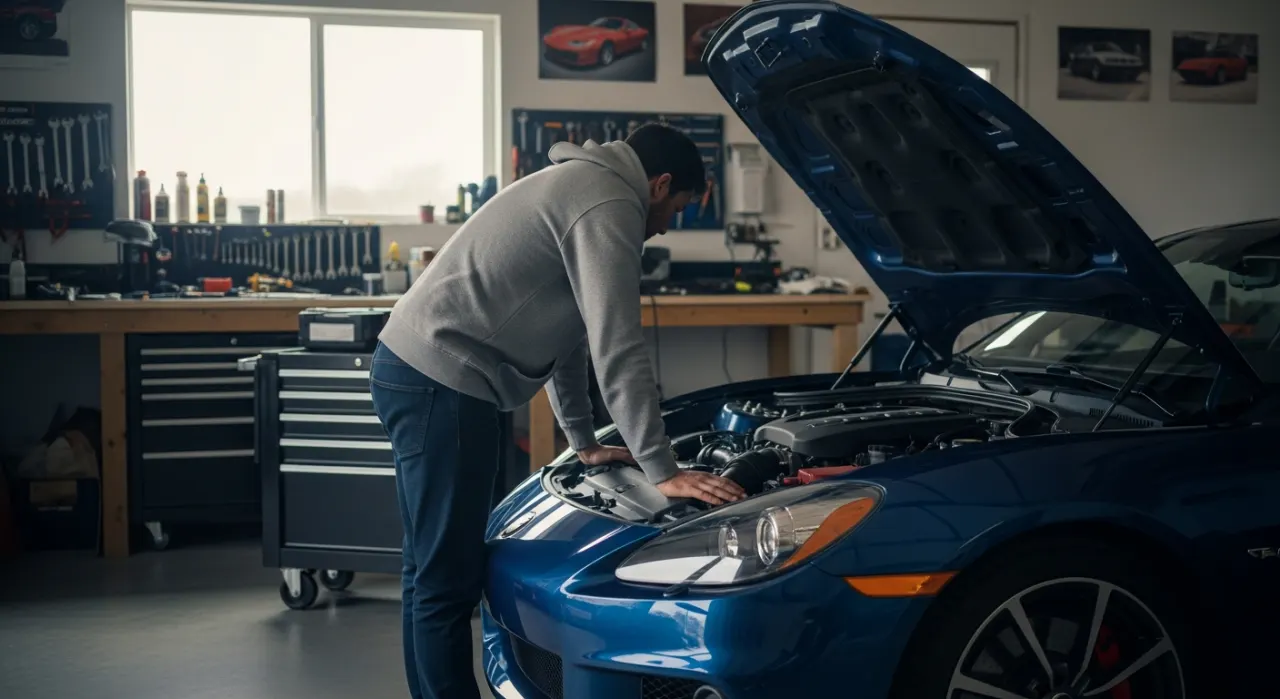
Which one does your car use?
The single most useful fact in this whole comparison is the cutoff. For US-market vehicles, the rule of thumb is:
- 1996 model year and newer: OBD2, guaranteed. It was federally mandated, so there are no exceptions among cars and light trucks sold new in the US.
- 1995 and older: almost always OBD1, using whatever brand-specific system that automaker fitted.
- The 1994–1995 gray area: a handful of models rolled out OBD2 early as manufacturers phased it in. If you own a mid-90s car, don't guess — check.
Two fast checks confirm it without tools. First, look at the connector: a trapezoidal 16-pin port under the dash near the steering column is OBD2, while an oddly shaped plug in the engine bay points to OBD1. Second, read the underhood emissions label — most OBD2 vehicles carry a line stating the car is "OBD II certified." That label is the definitive answer for borderline mid-90s cars, because it reflects exactly which standard the factory built the car to meet.
Remember this cuts across brands, not within them. A 1995 Civic and a 1997 Civic are the same nameplate but different diagnostic worlds. Match the tool to the era, not the badge.
How you actually read codes on each
This is where the practical gap shows up, and it's the part owners find genuinely surprising. On many OBD1 cars you can read codes with no scanner at all. Because the systems were simple, most automakers built in a way to make the check-engine light blink out the stored codes:
- GM (ALDL): bridge two specific terminals on the connector with a jumper wire or paperclip, turn the key on, and the Service Engine light flashes the two-digit codes — a long flash for the tens, short flashes for the ones. Code 12 (one flash, pause, two flashes) confirms the system is working.
- Ford (EEC-IV): jump the self-test connector and count the flashes, or use a cheap analog code reader that does the counting for you.
- Toyota, Honda and others: similar jumper-and-count procedures, each documented brand by brand.
The catch is that every brand's procedure and code list differs, so you have to know your specific car's method, and the codes are shorthand you then look up. It's cheap and satisfying, but fiddly, and there is little the system tells you beyond "this circuit faulted."
OBD2 flips the trade-off. There's no paperclip trick — but plug any generic scanner or a $15 Bluetooth dongle into the 16-pin port and it reads a standardized five-character code instantly. A P0301 means the same thing (cylinder 1 misfire detected) on a Chevy, a Kia or a BMW. That universality is the point: one tool, one code language, every car.
Live data and why OBD2 changed everything
Trouble codes are only half the story. The bigger leap with OBD2 is live data — the standardized parameter IDs (PIDs) that let a scanner stream real-time sensor readings while the engine runs. Most OBD1 systems offer little to none of this; you get codes and not much else. OBD2 exposes a rich, defined data set that transforms how you diagnose a problem:
- Short- and long-term fuel trims — the numbers that reveal a vacuum leak, a failing O2 sensor or a fuel-delivery problem long before it throws a hard code.
- Oxygen sensor voltages switching in real time, so you can see a lazy sensor instead of guessing.
- Misfire counts per cylinder, coolant and intake temps, RPM, load, timing advance and more.
- Freeze-frame data — a snapshot of all those values captured at the exact moment a fault set, so you can see the conditions that triggered it.
- Readiness monitors — the self-tests the car runs on its emissions systems, which a smog station checks before it will even test the car.
The consensus among mechanics is that live data, not the codes, is what solves hard driveability problems. A code tells you which system is unhappy; the live PIDs tell you why. That's why a modern $30 dongle can out-diagnose an entire brand's worth of OBD1 tooling — it isn't the price, it's the data the standard exposes.

Tools, cost, and what to buy
The buying decision follows directly from which standard you're dealing with, and the honest picture on cost is lopsided in OBD2's favor.
For an OBD2 car (1996+): options run from nearly free to professional. A basic plug-in code reader is $20–$40. A Bluetooth or Wi-Fi dongle is $15–$30 and turns your phone into a live-data scanner with a cheap app — the best value in car diagnostics, period. Owners consistently report that a known-good dongle avoids the flaky clones that drop connection or misread data; the cheapest units are a lottery. At the top end, bidirectional scan tools ($150–$600+) can command components, run active tests and read manufacturer-specific codes the generic protocol doesn't cover. One caveat from aggregated owner reports: unplug Bluetooth dongles when idle, because some keep the car's network awake and drain the battery.
For an OBD1 car (pre-1996): you're shopping brand-specific. On GM and Ford the flash-code method costs nothing but a paperclip and a few minutes. Beyond that, brand-specific readers and cables run roughly $20–$120 depending on the platform. The real cost here isn't dollars, it's availability — the tools and printed code charts get scarcer every year, so restorers tend to buy the reader for their platform while they still easily can.
Common myths and mistakes
"OBD2 codes tell you exactly which part to replace." They don't. A generic P-code identifies the affected system or circuit, not the failed component. A P0171 (system too lean) could be a vacuum leak, a weak fuel pump, a dirty MAF sensor or a bad O2 sensor. The code narrows it down; the live data and your diagnosis find the actual part. Throwing parts at a code is the single most expensive mistake owners make.
"An OBD2 scanner will work on my classic." No. If the car is pre-1996, it almost certainly has no 16-pin port and doesn't speak the OBD2 protocol. Plugging a generic reader into an adapter won't conjure standardized data that the car was never built to produce. You need the tool made for that brand's OBD1 system.
"All OBD2 scanners are the same." Only for basic code reading. The generic standard guarantees you can pull and clear standard P-codes and see standard live data. It does not guarantee access to manufacturer-specific codes, ABS/airbag systems, or bidirectional tests — those often need a more capable or brand-level tool.
"Clearing the code fixes the problem." Clearing a code just erases the record and resets the readiness monitors. If the underlying fault remains, the code returns — and wiping the monitors right before a smog test guarantees a failed inspection, because the car won't have re-run its self-tests yet.
Which matters for you — and what to do
There's no winner to declare, because you don't get to choose — your car already did. The productive move is to identify your standard and buy the right tool for it.
If your car is 1996 or newer, you have OBD2, and you're in the easy lane. For most owners a quality $15–$30 Bluetooth dongle plus a reputable app is all you'll ever need — it reads codes and streams the live data that actually solves problems. Step up to a bidirectional scan tool only if you work on cars often and want active tests and deeper manufacturer coverage.
If your car is 1995 or older, you have a brand-specific OBD1 system. Start free: look up your make's flash-code procedure, since GM, Ford, Toyota and Honda owners can often pull codes with nothing but a jumper wire. If you want more than blink codes, buy the reader built for your platform while they're still easy to find, and keep a printed code chart with your service records.
If you're in the 1994–1995 gray zone, don't assume — check the port shape and the underhood emissions label before spending a cent on a tool. Buying the wrong generation's scanner is the most common and most avoidable mistake here. Confirm the standard first, and the right tool is obvious.
Recommended Products
Our top picks in this category, ranked on aggregated owner reviews.
Best for the most bang-for-buck bolt-on airflow gain
- Washable, reusable cotton-gauze filter
- Polished aluminum intake tube
- Powder-coated heat shield included
- Vehicle-specific fit — check your model
Why buy it: the value default owners keep pointing beginners to — rated 4.5 across thousands of reviews for a real airflow and sound bump at a price that barely dents the build fund.
Best for the cheapest branded way to open up intake sound
- Universal cone filter and tube components
- Cotton-gauze element, cleanable
- Mix-and-match couplers and clamps
- Best for custom or open-element setups
Why buy it: the budget entry point — owners rate it 4.4 for a throaty intake growl and easy airflow gain, ideal if you want the sound and DIY flexibility on the cheap.
Best for the best-known washable filter and finish
- K&N cotton-gauze filter, ~100k-mile service
- Mandrel-bent tube for smooth flow
- Aggressive intake growl on throttle
- Model-specific fit — verify part number
Why buy it: the trusted-name pick — rated 4.6, owners praise the lifetime-washable K&N filter and clean bolt-in fit that turns intake noise into part of the fun.
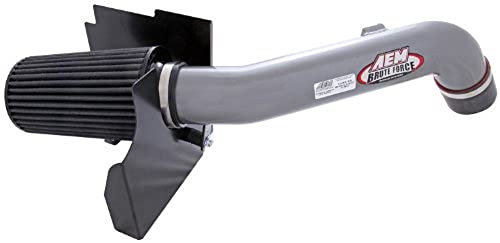
Best for big-engine trucks and SUVs that want more air
- Heavy-duty tube built for larger engines
- Washable AEM synthetic or cotton filter
- Designed for V6 and V8 truck airflow
- Application-specific — confirm fitment
Why buy it: the hauler’s choice — buyers rate it 4.6 for noticeably freer breathing and a deeper note on trucks and SUVs, where the extra tube diameter actually earns its keep.

Best for the cleanest fit-and-finish and intake note
- 6061-T6 aluminum tube, CNC brackets
- SuperNano-Web dry filter, no oiling
- MR Technology tuning for smooth power
- Tuned per application — check your model
Why buy it: the enthusiast’s pick — rated 4.7 for show-quality fit and a crisp intake note, the step up worth stretching for if looks and sound matter as much as airflow.

Best for documented, dyno-tested power gains
- Dyno-proven horsepower and torque figures
- Airbox or heat shield to pull cooler air
- Oversized washable filter element
- Vehicle-specific engineering — verify fit
Why buy it: the pick for owners who want numbers, not vibes — rated 4.7, Mishimoto publishes dyno figures for each application so you know exactly what the intake buys before you bolt it on.
Prices are pulled from Amazon and were accurate as of Aug 22, 2026, 6:54 PM EDT. Product prices and availability are subject to change — the live price is shown on Amazon.