
Affiliate Disclosure
Some links on this page are affiliate links. As an Amazon Associate, we earn from qualifying purchases — at no extra cost to you. We do not buy, test, or physically handle the products we cover; our rankings come from aggregated owner reviews, ratings and expert consensus. Commissions never change our verdicts. How we rank & full disclosure.
OEM Brake Pads
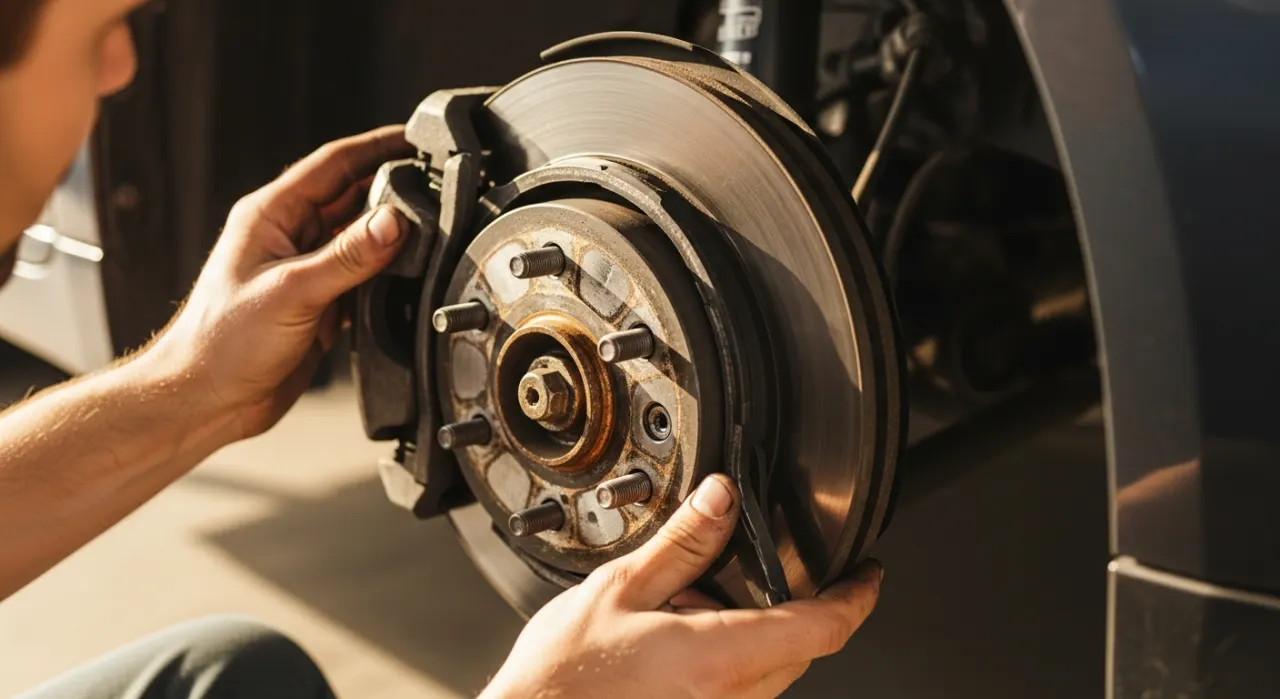
The exact pad the automaker specified for your car, sold through the dealer or as an OE-supplier equivalent. It is tuned to the factory brake system for a known feel, noise level and lifespan.
Best for: Owners who want factory-matched feel, quiet operation and predictable wear — especially newer cars still under warranty
Typically $80–$180 per axle set (dealer counter), sometimes more for luxury and EV models
- Engineered and validated for your exact vehicle — friction level, noise and dust are a known quantity
- Consistently quiet and low-dust for the type of driving the car was designed around
- Predictable pedal feel that matches how the car left the factory
- Backed by dealer parts warranties and keeps things clean during a factory warranty claim
- Owner reviews rarely mention fitment or backing-plate surprises
- The most expensive option, often double an equivalent aftermarket pad
- Only one formulation — no choice of low-dust, towing or performance compounds
- Dealer-only stock can mean a wait or a trip you did not plan
- Not always the longest-wearing pad for the money
Aftermarket Brake Pads
Pads from independent brands — Akebono, Bosch, Wagner, PowerStop, Hawk and dozens more — sold in ceramic, semi-metallic and organic compounds. Quality ranges from bargain-bin to better-than-factory.
Best for: Owners who want to match the pad to how they actually drive — quieter, cheaper, longer-wearing or higher-performance than stock
Typically $25–$90 per axle set, up to $120+ for premium ceramic or performance compounds
- Huge price range, and a good ceramic set often undercuts OEM by half
- Choice of compound — low-dust ceramic, heavy-duty semi-metallic, or performance friction
- Premium brands (Akebono, Bosch) frequently match or beat OEM on noise and dust
- Stocked everywhere — parts stores, online, next-day delivery
- Easy to tailor to towing, spirited driving or a daily commute
- Quality is wildly inconsistent — cheap pads can be noisy, dusty and short-lived
- Wrong compound choice can hurt braking, add noise or glaze early
- Some budget sets skip shims or hardware the OEM pad includes
- You have to do a little homework to separate the good brands from the junk
How they score, side by side
Scores reflect aggregated owner reviews and expert consensus — not our own bench testing.
- Value for money59
- Predictable feel97
- Low noise & dust87
- Compound choice29
- Best-case performance79
- Availability69
Spec-by-spec comparison chart
| Factor | OEM Brake Pads | Aftermarket Brake Pads |
|---|---|---|
| Source | Automaker / OE supplier (dealer) | Independent brands (parts stores, online) |
| Compound choice | One factory formulation | Ceramic, semi-metallic & organic options |
| Price per axle set | $80–$180+ | $25–$120+ (huge range) |
| Noise & dust | Low, consistent, matched to car | Low on premium ceramic; poor on budget pads |
| Fitment | Exact — no surprises | Excellent on quality brands; verify on cheap ones |
| Hardware / shims included | Yes, complete | Premium yes; some budget kits omit them |
| Best-case performance | Factory-matched, predictable | Can exceed OEM (performance / towing compounds) |
| Worst-case performance | Consistently acceptable | Noisy, dusty, short life on cheap pads |
| Typical service life | 30,000–70,000 miles | 20,000–70,000 miles (compound dependent) |
| Warranty impact | None — keeps factory claims clean | Fine in the US (Magnuson-Moss protects you) |
| Availability | Dealer counter, may need order | Everywhere, often same/next day |
Our Top 3 Picks
The three highest-rated options in this category, if you'd rather skip straight to a proven pick.

Best for quiet, clean, low-dust daily driving
- Very low dust
- Near-silent braking
- Long pad life
- OE-quality feel
Why buy it: the quietest, cleanest daily-driver pad — a genuine upgrade.

Best for stronger bite for spirited driving
- Carbon-fiber ceramic
- Strong cold bite
- Low dust for the grip
Why buy it: more stopping power without the noise or dust of race pads.

Best for OE-quality on a budget
- Quiet ceramic/semi-met
- Includes hardware & shims
- Great price
Why buy it: OE-grade quiet braking with the hardware included.
Prices are pulled from Amazon and were accurate as of Aug 22, 2026, 6:54 PM EDT. Product prices and availability are subject to change — the live price is shown on Amazon.
OEM vs aftermarket: what actually differs
This comparison confuses people because the two pads can look identical on the shelf and bolt into the same caliper. The difference isn't the shape — it's who formulated the friction material and how tightly it was validated to your specific car.
An OEM pad (Original Equipment Manufacturer) is the exact pad the automaker specified when the car was engineered. It came from a supplier like Akebono, Bosch, TRW or Continental, but it was tuned to that car's rotor size, caliper, weight and ABS calibration for a known set of targets: a certain pedal feel, a certain noise ceiling, a certain dust level, a certain wear rate. When you buy OEM, you are buying that validated known quantity — and the dealer markup that comes with it.
An aftermarket pad is anything made by an independent brand for the replacement market. That is a huge tent. At one end sit premium brands — often the same suppliers who make OEM pads — selling ceramic and performance compounds that can match or beat factory friction. At the other end sit bargain-bin pads built to a price, with cheaper binders, thinner backing plates and sometimes missing hardware. Both are "aftermarket," which is exactly why the word tells you almost nothing on its own.
The cleanest way mechanics frame it: OEM is one guaranteed answer; aftermarket is a range that includes better answers and much worse ones. Your job isn't to pick a team — it's to land on a quality pad in the right compound for how you drive.
Compounds matter more than the OEM label
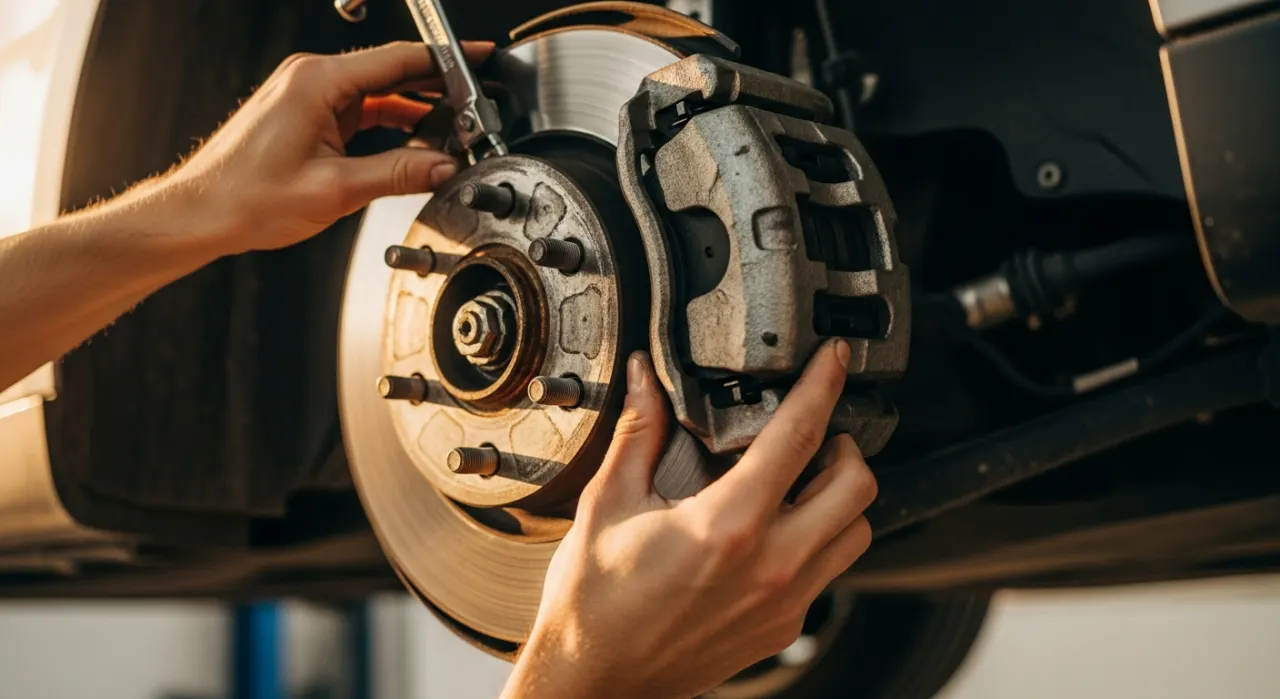
Before you even weigh OEM against aftermarket, the more important variable is the friction compound. Owner reviews and shop consensus consistently show that compound choice drives noise, dust, bite and lifespan far more than the badge on the box. There are three broad families:
- Ceramic — the default for most modern daily drivers. Quiet, produces light-colored dust that clings less to wheels, and offers stable, progressive bite. It's what most OEM pads on passenger cars effectively are, and it's where premium aftermarket brands compete hardest. Slightly less outright bite from cold than semi-metallic, but for street driving that rarely matters.
- Semi-metallic — steel-fiber based, with strong bite and excellent heat handling. Preferred for towing, trucks, and spirited or track-adjacent driving. The trade-off is more noise, more black dust, and faster rotor wear. Many trucks ship with semi-metallic from the factory for exactly this reason.
- Organic (NAO) — softer, quiet and gentle on rotors, but wears faster and fades sooner under heat. Common on older and economy cars and at the cheap end of the aftermarket shelf.
The practical point: a premium aftermarket ceramic pad is usually a closer match to a modern car's OEM behavior than a cheap "OEM-replacement" organic pad would be. If your OEM pad was ceramic and quiet, the way to keep that feel is to buy a good ceramic pad — not necessarily to buy from the dealer.
The real divide: cheap vs quality aftermarket
The honest version of this comparison isn't OEM against aftermarket at all — it's quality aftermarket against bargain-bin aftermarket. That gap is where owner reviews split hard, and it's where most brake regret actually comes from.
Premium aftermarket brands — Akebono, Bosch, Wagner ThermoQuiet, PowerStop for towing, Hawk for performance — are engineered with the same priorities as OEM pads: chamfers and slots to kill noise, proper stainless shims, positive-mold construction for even wear, and validated friction levels. Several of these companies literally supply OEM pads to automakers, so their premium lines are frequently indistinguishable from factory in daily use. Aggregated reviews for these brands read a lot like OEM reviews: quiet, clean-enough, predictable.
Budget pads are a different story. To hit a $20 price they cut where you can't see it — cheaper resin binders that fade and glaze under heat, thinner or bare backing plates, and frequently no shim or hardware kit. The consensus among mechanics is blunt: cheap pads are the single most common cause of brake noise complaints, early glazing, and uneven wear that chews rotors. The money you save at the counter often comes back as a squeal, a pulsation, or a second brake job.
So the useful mental model is a three-tier ladder: premium aftermarket ≈ OEM for most drivers, OEM as the guaranteed-safe premium option, and budget pads as the tier to approach with real caution unless it's a beater you're nursing to the next trade-in.
Do aftermarket pads void your warranty?
This is the myth that pushes people to overpay at the dealer, so it's worth being precise. In the United States, the Magnuson-Moss Warranty Act makes it illegal for an automaker to void your warranty simply because you used an aftermarket part. A dealer can't deny a warranty claim just because you fitted Bosch pads instead of factory ones.
The nuance: a manufacturer can decline a specific claim if it proves an aftermarket part caused the failure. If a bargain pad overheated and cracked a rotor, that specific rotor claim could be contested — but that's a causation question, not automatic voiding, and the burden is on them to prove it. In practice, fitting a reputable pad correctly carries essentially no warranty risk.
Where OEM genuinely earns its keep on warranty grounds is convenience and paper trail: if your car is new and you'd rather not have any argument at all, factory pads keep the whole system single-sourced and remove the conversation entirely. That peace of mind is real — it's just not the same thing as "aftermarket voids your warranty," which it does not.
Real cost and value over the life of the car
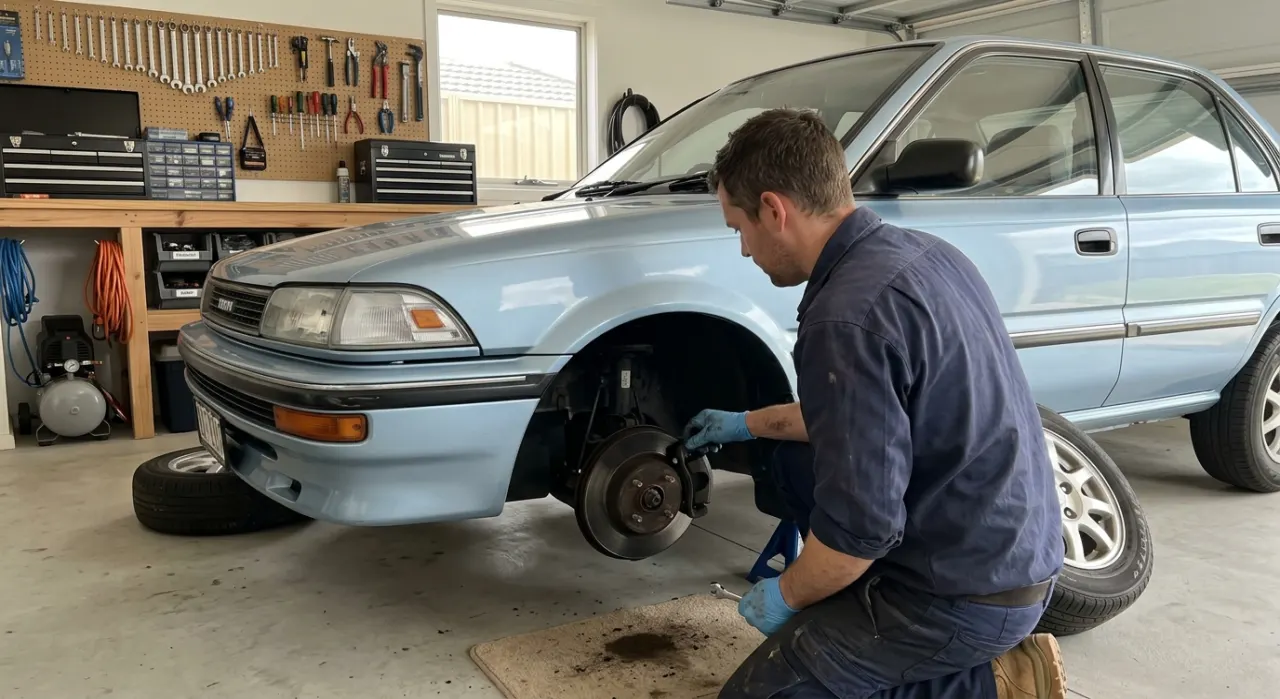
On the counter, the gap is stark. An OEM axle set often runs $80–$180, while a comparable premium aftermarket ceramic set frequently lands at $40–$90 — and a budget set can be $25. But the honest comparison is cost per mile of quiet, safe braking, not the sticker.
Here's how it usually shakes out. A premium aftermarket ceramic set typically delivers OEM-like noise, dust and lifespan (often 30,000–70,000 miles depending on driving) for roughly half the OEM price. That's the value sweet spot, and it's why most independent shops fit quality aftermarket by default. OEM costs more for the same real-world outcome on most mainstream cars, so you're paying a premium for certainty and the dealer relationship rather than for better braking.
The false economy is the budget pad. A $25 set that squeals, glazes at 15,000 miles, or scores a rotor doesn't save money — it adds a return trip, possible rotor replacement ($50–$150 per pair), and the labor to do the job twice. Owner reviews are full of exactly this story. Factor in that risk and the cheapest pad is often the most expensive over the life of the car. Buy quality once and the math favors you.
Common myths and mistakes
"OEM is always better than aftermarket." No. Many OEM pads are made by the same companies whose premium aftermarket lines you can buy for less. OEM is a guaranteed-good pad, but "aftermarket" spans everything from better-than-OEM to junk. The brand and compound matter far more than the label.
"Aftermarket pads void my warranty." False in the US — the Magnuson-Moss Warranty Act protects you. A dealer can only contest a claim if a specific part demonstrably caused a specific failure, which correctly fitted quality pads won't.
"Ceramic is always the best choice." Not for every use. Ceramic is ideal for daily street driving, but if you tow heavy or drive hard, a semi-metallic pad handles heat better and resists fade. Match the compound to the job, not to the marketing.
"Just match the price of what came out." Pads wear, so the set you're removing is worn — matching its current thickness or its bargain price tells you nothing. Match the compound and quality tier instead.
"Cheap pads are fine, they all stop the car." They stop it — until they're hot, wet or worn. The difference between good and cheap pads shows up in fade under repeated braking, noise, dust, and how quickly they chew a rotor. That's exactly where safety and long-term cost live.
Which should you buy — and how to decide
For most drivers, a premium aftermarket ceramic pad is the winner — it matches OEM feel and quietness for roughly half the money, and it's stocked everywhere. Start there and you'll rarely go wrong.
Buy OEM if your car is new and under warranty and you want zero argument, if it's a luxury or EV model where the factory friction is unusually well tuned, or if you simply value the guaranteed known quantity and don't mind paying for it. There's nothing wrong with OEM — you're just paying a premium for certainty.
Buy premium aftermarket if you want the best value, want to choose a compound that fits your driving, or your car is out of warranty. Stick to reputable names — Akebono, Bosch, Wagner ThermoQuiet, PowerStop for towing, Hawk for performance — and pick the compound to match: ceramic for daily driving, semi-metallic for towing or spirited use.
Avoid the bottom shelf unless you're nursing a car to trade-in. The savings on a $25 pad are usually erased by noise, dust and a shortened rotor life. Whatever you choose, replace pads in axle pairs, inspect the rotors while you're in there, and bed the new pads in properly — good pads fitted well is what actually matters more than the OEM-versus-aftermarket question people obsess over.
Recommended Products
Our top picks in this category, ranked on aggregated owner reviews.
Best for quiet, clean, low-dust daily driving
- Very low dust
- Near-silent braking
- Long pad life
- OE-quality feel
Why buy it: the quietest, cleanest daily-driver pad — a genuine upgrade.
Best for stronger bite for spirited driving
- Carbon-fiber ceramic
- Strong cold bite
- Low dust for the grip
Why buy it: more stopping power without the noise or dust of race pads.
Best for OE-quality on a budget
- Quiet ceramic/semi-met
- Includes hardware & shims
- Great price
Why buy it: OE-grade quiet braking with the hardware included.

Best for reliable everyday value
- One-piece design
- Quiet operation
- Widely available
Why buy it: a dependable, quiet everyday pad at a low price.

Best for fast street and light track
- High-friction ceramic
- Great fade resistance
- Fast street bite
Why buy it: strong, fade-resistant bite for fast road driving.

Best for performance cars driven hard
- High-performance street compound
- Strong, consistent bite
- Track-day capable
Why buy it: a track-capable street pad for enthusiasts who push it.
Prices are pulled from Amazon and were accurate as of Aug 22, 2026, 6:54 PM EDT. Product prices and availability are subject to change — the live price is shown on Amazon.