
Affiliate Disclosure
Some links on this page are affiliate links. As an Amazon Associate, we earn from qualifying purchases — at no extra cost to you. We do not buy, test, or physically handle the products we cover; our rankings come from aggregated owner reviews, ratings and expert consensus. Commissions never change our verdicts. How we rank & full disclosure.
OPTIMA RedTop
A pure starting battery built for high cranking amps and fast recovery. Its SpiralCell AGM design delivers a big, brief punch to fire the engine, then hands off to the alternator.
Best for: Stock and lightly modified vehicles that start and drive — daily drivers, trucks and hot-rods with a working charging system
Typically $220–$300 for a Group 34/78 RedTop
- Very high cranking amps — 800 CCA on the popular 34/78, strong cold-morning starts
- Fast recharge and low internal resistance for quick engine turnover
- Sealed AGM: spill-proof, vibration-resistant and mountable in almost any position
- Lighter and cheaper than the equivalent YellowTop
- Ideal when the alternator does all the heavy lifting after start-up
- Not built for deep discharge — repeatedly draining it kills it fast
- Poor choice for big audio, winches or heavy key-off accessory loads
- No meaningful reserve for running electronics with the engine off
- Wrong battery for any true dual-purpose or house-power role
OPTIMA YellowTop
A true dual-purpose AGM that both starts the engine and survives repeated deep discharges. It trades some peak cranking punch for far greater reserve capacity and cycle life.
Best for: Vehicles with heavy electrical demand — big car audio, winches, inverters, RVs, and stop-start or accessory-heavy builds
Typically $280–$360 for a Group 34/78 YellowTop
- Deep-cycle capable — recovers from being run down again and again
- Higher reserve capacity (about 120 min RC on the 34/78) for key-off loads
- Handles big amplifiers, winches, inverters and off-grid draws without damage
- Same sealed AGM toughness — vibration- and spill-resistant, flexible mounting
- Longer usable life in cycling and dual-purpose duty than a starting battery
- Lower cranking amps than the RedTop (about 750 CCA vs 800 on the 34/78)
- Costs $40–$80 more for the same case size
- Overkill and wasted money for a stock car that just starts and drives
- Heavier than the RedTop of the same group size
How they score, side by side
Scores reflect aggregated owner reviews and expert consensus — not our own bench testing.
- Cold cranking / start power98
- Deep-discharge survival39
- Reserve for key-off loads49
- Value for a stock daily driver95
- Value for accessory-heavy builds39
- Vibration & mounting flexibility99
Spec-by-spec comparison chart
| Factor | OPTIMA RedTop | OPTIMA YellowTop |
|---|---|---|
| Battery type | Pure starting (SLI) | Dual-purpose (starting + deep-cycle) |
| Deep-cycle capable | No — starting duty only | Yes — designed for repeated discharge |
| Cranking amps (34/78) | ~800 CCA | ~750 CCA |
| Reserve capacity (34/78) | ~100 min | ~120 min |
| Best electrical role | Fire the engine, then hand off to alternator | Start engine and power heavy key-off loads |
| Handles big audio / winch / inverter | No | Yes |
| Chemistry | SpiralCell AGM (sealed, spill-proof) | SpiralCell AGM (sealed, spill-proof) |
| Group 34/78 price | ~$220–$300 | ~$280–$360 |
| Relative weight | Lighter | Heavier |
| Cycle life under deep draws | Short — degrades quickly | Long — built for it |
Our Top 3 Picks
The three highest-rated options in this category, if you'd rather skip straight to a proven pick.
Best for stock and lightly modified vehicles that just start and drive on a healthy alternator
- ~800 CCA — strong cold starts
- SpiralCell AGM, spill-proof
- Dual SAE + GM terminals
- Popular truck/car group size
Why buy it: The default OPTIMA for most trucks and cars — hardest cranking, best value for pure starting duty. Confirm your vehicle takes Group 34/78 before buying.
Best for big audio, winches, inverters and heavy key-off loads in the same 34/78 case size
- Deep-cycle capable AGM
- ~750 CCA + ~120 min reserve
- Survives repeated deep discharge
- Same 34/78 case as the RedTop
Why buy it: The dual-purpose YellowTop in the same fitment as our top RedTop — choose this line if you regularly discharge the battery. Verify Group 34/78 fits your tray.
Best for Group 35 vehicles — many Subaru, Nissan, Honda and Toyota applications
- ~720 CCA starting power
- Lightweight SpiralCell AGM
- SAE top-post terminals
- Common import group size
Why buy it: The RedTop for Group 35 cars — pure starting punch at the lower end of OPTIMA pricing. Check your battery tray is Group 35 first.
What actually separates RedTop from YellowTop
Walk into any parts store and the OPTIMA lineup looks like the same battery in different-colored lids. Underneath, though, the RedTop and YellowTop are engineered for two genuinely different jobs, and picking the wrong one is one of the most common — and most expensive — battery mistakes owners make. Both use OPTIMA's SpiralCell AGM construction: tightly wound coils of lead plate and absorbed-glass-mat separator, sealed, spill-proof and highly vibration-resistant. That shared case is why they get confused. The chemistry inside is tuned very differently.
The RedTop is a pure starting battery — what the industry calls an SLI (starting, lighting, ignition) unit. It is built to dump a huge burst of current for a few seconds to spin the starter, then immediately hand the electrical load back to the alternator. Its plates are optimized for maximum surface area and low internal resistance, which is exactly what you want for cranking and nothing else. Spec sheets show the common Group 34/78 RedTop rated around 800 cold cranking amps.
The YellowTop is a true dual-purpose battery. It still starts the engine, but its thicker, denser plate design lets it be discharged deeply and recharged hundreds of times without the rapid degradation a starting battery suffers when you do that to it. It trades a little peak cranking punch — the 34/78 YellowTop is rated around 750 CCA — for meaningfully more reserve capacity and dramatically better cycle life. The consensus among installers is the simplest way to remember it: RedTop is a sprinter, YellowTop is a marathon runner that can still sprint.
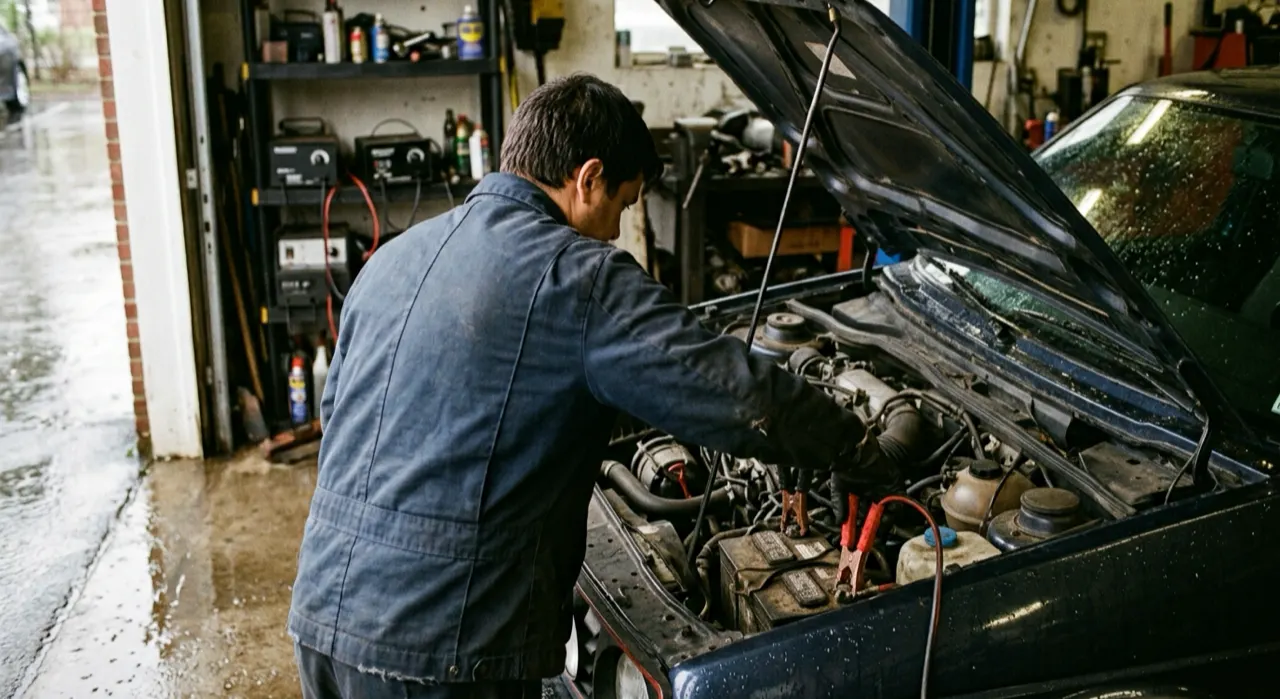
Which one does your build actually need?
Because the two are optimized for different duty cycles, the real decision is not "which is better" but "how does my vehicle actually use the battery." Owner reports and shop recommendations line up cleanly here:
- Stock or lightly modified vehicles that start and drive — a daily commuter, a work truck, a weekend hot-rod with a healthy alternator — want the RedTop. The alternator carries every load once the engine is running, so the battery only ever needs to crank. Paying for deep-cycle ability you never use is wasted money.
- Big car-audio systems — high-wattage amplifiers that pull the voltage down at idle or with the engine off — want the YellowTop. Those repeated heavy draws are exactly the deep discharges that destroy a RedTop but a YellowTop shrugs off.
- Winches, inverters and off-road accessory loads — a winch can pull hundreds of amps for a sustained pull, often with the engine barely charging. That is deep-cycle territory, so the YellowTop is the correct call.
- Stop-start, heavy key-off electronics, RV house duty, or show cars idling with everything on — anything that regularly runs the battery down while the alternator isn't keeping up points to the YellowTop.
The practical test is one question: does my battery ever get discharged significantly while the engine is off or barely charging? If the honest answer is "no, it just starts the car," buy the RedTop and pocket the difference. If it is "yes, regularly," the YellowTop is the only one of the two that will survive it.
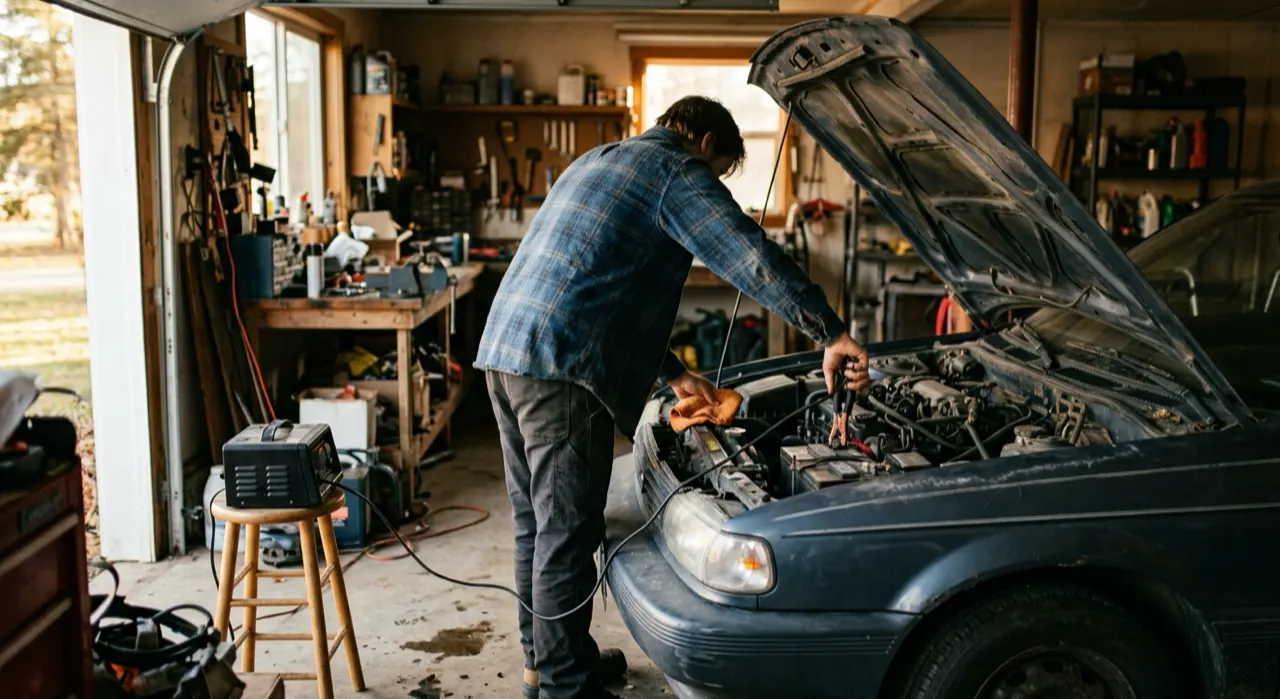
Cranking amps vs reserve capacity, explained
The two numbers that actually separate these batteries are cold cranking amps (CCA) and reserve capacity (RC), and understanding them ends most of the confusion. CCA measures the short, violent burst of current the battery can deliver to start a cold engine — the RedTop's specialty. Reserve capacity measures how many minutes the battery can supply a steady load on its own before it runs flat — the YellowTop's specialty.
On the popular Group 34/78 size, spec sheets put the RedTop near 800 CCA against the YellowTop's roughly 750 CCA, while the YellowTop offers around 120 minutes of reserve versus about 100 for the RedTop. That gap looks small on paper, but it reflects the whole design philosophy: the RedTop pours its energy out fast, the YellowTop meters it out longer and can be refilled from empty far more times.
Here is the part owners miss: a higher CCA number does not make the YellowTop a worse starting battery in any way you will feel. Around 750 CCA is still ample to start virtually any street engine, in any climate short of extreme arctic cold. So the RedTop's cranking advantage is real but rarely decisive, while the YellowTop's deep-cycle ability is decisive the moment you add heavy accessories. That asymmetry is why the honest advice is not "get the one with the bigger CCA number" — it is "get the one whose job matches your electrical load."
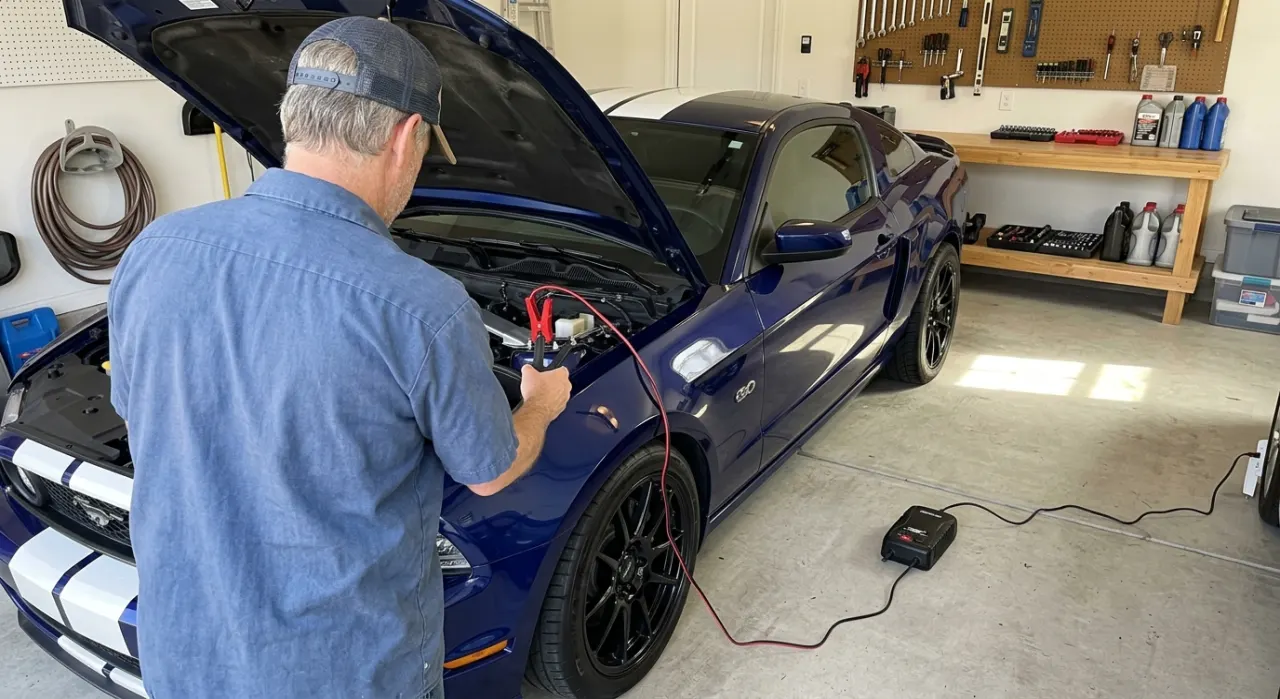
Real cost and value over the life of the battery
Street pricing usually puts a Group 34/78 RedTop around $220–$300 and the same-size YellowTop around $280–$360 — a $40–$80 premium for the dual-purpose design. For a stock daily driver, that premium buys deep-cycle capability the car will never use, and the honest math says the RedTop is the better value: it cranks harder, weighs less, and costs less to do the one job the vehicle asks of it.
The value calculus flips completely the moment deep discharge enters the picture. Put a RedTop behind a 2,000-watt amplifier or a winch and it will be run down and recharged over and over — abuse it was never designed for. Owners consistently report starting batteries failing within a season or two under that duty, while a YellowTop in the same role lasts for years. In that scenario the YellowTop's higher sticker price is not a premium at all; it is the cheaper battery over time because you are not replacing it every year. Buying a RedTop to save $60 and then killing it in eighteen months is the classic false economy here.
One more cost note that applies to both: OPTIMA's sealed AGM design tolerates vibration and off-angle mounting far better than a flooded battery, which is part of what justifies the premium over a conventional battery. That toughness is identical across the two colors — it is not a reason to choose one over the other, only a reason both cost more than a bargain-bin flooded unit.
Common myths and mistakes
"The YellowTop is just the better, higher-end battery." Not for most cars. It is the better battery for deep-cycle and dual-purpose duty. For a stock vehicle that only needs to start, the RedTop cranks harder and costs less — the YellowTop is simply the wrong tool, not the upgrade.
"More cranking amps is always better, so get the RedTop." CCA is only one dimension. If your build discharges the battery deeply, the RedTop's extra cranking amps are irrelevant against its inability to survive cycling. Around 750 CCA already starts nearly any street engine.
"A RedTop can handle my big stereo if I get the biggest one." Size doesn't change chemistry. A starting battery repeatedly drained by audio or a winch degrades fast no matter how large it is. Deep, repeated discharge calls for the deep-cycle-capable YellowTop, full stop.
"An AGM battery never needs a healthy charging system." It still does. Neither OPTIMA is a substitute for a working alternator. If the charging system is weak, even a YellowTop will sit chronically undercharged — fix the alternator, then choose the battery.
"They're interchangeable since the case is the same." The Group 34/78 case is identical, so either physically fits, but that is exactly the trap. Fit is not the same as fit-for-purpose — match the battery to the load, not the tray.
Which should you buy — and how to decide
There is no universal winner here, because it isn't really a versus. The right answer is dictated by your vehicle's electrical demand, not by which battery is "nicer." Identify how the battery is actually used and the choice makes itself.
You want the RedTop if your vehicle starts and drives on a healthy charging system with no heavy key-off loads — the vast majority of daily drivers, trucks and street cars. You get more cranking amps, lower weight and a lower price for exactly the job the car needs done.
You want the YellowTop if you run big car audio, a winch, an inverter, stop-start, an RV house load, or anything else that regularly discharges the battery while the alternator isn't keeping up. It is the only one of the two that survives repeated deep discharge, and in that role it is also the cheaper battery over time because it lasts.
Whichever you choose, match the group size to your vehicle, confirm the charging system is healthy first, and mount the sealed AGM securely — its vibration resistance is only an advantage if it's bolted down properly. Get the duty cycle right, and the color on the lid takes care of itself.
Recommended Products
Our top picks in this category, ranked on aggregated owner reviews.
Best for stock and lightly modified vehicles that just start and drive on a healthy alternator
- ~800 CCA — strong cold starts
- SpiralCell AGM, spill-proof
- Dual SAE + GM terminals
- Popular truck/car group size
Why buy it: The default OPTIMA for most trucks and cars — hardest cranking, best value for pure starting duty. Confirm your vehicle takes Group 34/78 before buying.
Best for big audio, winches, inverters and heavy key-off loads in the same 34/78 case size
- Deep-cycle capable AGM
- ~750 CCA + ~120 min reserve
- Survives repeated deep discharge
- Same 34/78 case as the RedTop
Why buy it: The dual-purpose YellowTop in the same fitment as our top RedTop — choose this line if you regularly discharge the battery. Verify Group 34/78 fits your tray.
Best for Group 35 vehicles — many Subaru, Nissan, Honda and Toyota applications
- ~720 CCA starting power
- Lightweight SpiralCell AGM
- SAE top-post terminals
- Common import group size
Why buy it: The RedTop for Group 35 cars — pure starting punch at the lower end of OPTIMA pricing. Check your battery tray is Group 35 first.
Best for accessory-heavy Group 35 builds that need deep-cycle survival
- Dual-purpose deep-cycle AGM
- ~620 CCA, strong reserve
- Handles amps, winches, inverters
- Group 35 dual-purpose fitment
Why buy it: The YellowTop for Group 35 vehicles with heavy electrical demand. Confirm Group 35 fitment before ordering.
Best for Group 25 vehicles that only ever need to crank and drive
- ~720 CCA starting power
- SpiralCell AGM toughness
- Vibration- and spill-resistant
- Common Nissan/Ford group size
Why buy it: The pure-starting RedTop for Group 25 fitments — cheapest good result for a stock car. Verify your vehicle uses Group 25.
Best for compact imports and Group 51R applications with accessory loads
- Small-case dual-purpose AGM
- ~450 CCA, deep-cycle capable
- Fits tight import battery boxes
- Group 51R fitment
Why buy it: The deep-cycle YellowTop for small Group 51R battery boxes. Group sizes are not interchangeable — confirm 51R fits your car.