
Affiliate Disclosure
Some links on this page are affiliate links. As an Amazon Associate, we earn from qualifying purchases — at no extra cost to you. We do not buy, test, or physically handle the products we cover; our rankings come from aggregated owner reviews, ratings and expert consensus. Commissions never change our verdicts. How we rank & full disclosure.
Ryobi Pressure Washers
A Home Depot–exclusive line spanning corded electric, 40V cordless and Honda/Ryobi gas units. Best known for the value-priced 2000–2300 PSI electric models most homeowners actually buy.
Best for: Home Depot shoppers and anyone wanting a gas option or a corded electric with a brass-headed pump
Electric $99–$199; 40V cordless ~$299–$399; gas 3000–3300 PSI $329–$599
- Wide ladder from $99 electric to 3300 PSI gas — you can stay in one ecosystem as needs grow
- Electric models widely praised for a metal/brass pump head that resists cracking over cheaper all-plastic pumps
- 40V cordless runs off the same batteries as Ryobi mowers, blowers and the huge ONE+/40V tool line
- Onboard hose reel, detergent tank and accessory storage on most mid-tier units
- Home Depot ubiquity means easy in-store returns, parts and swappable accessories
- Locked to Home Depot — no Lowe's stock, and third-party parts are thinner than for a name-brand gas pump
- Gas models use a lighter-duty axial pump, not a triplex, so they are not built for daily commercial use
- 40V cordless runtime is short at full pressure — realistically 15–25 minutes of continuous trigger time
- Heavier and bulkier than the equivalent Greenworks on several corded models
Greenworks Pressure Washers
A battery-and-electric specialist sold at Lowe's, Amazon and Costco. Its corded 1800–3000 PSI electrics and 60V/80V cordless washers dominate the value and cordless categories.
Best for: Lowe's/Amazon shoppers, apartment and townhouse owners, and anyone already in the 60V/80V battery line
Electric $99–$249; 60V/80V cordless ~$199–$449; higher-PSI "Pro" electric ~$249–$349
- Excellent value electrics — the 1800–2000 PSI models are frequent budget-pick recommendations
- Strong cordless lineup (24V, 60V, 80V) that shares batteries with Greenworks mowers and blowers
- Generally lighter and more compact, which owners like for stair-carrying and small-space storage
- Sold across Lowe's, Amazon and Costco, so pricing is competitive and stock is easy to find
- TruBrushless motors on Pro models run quiet and are rated for long life
- No true consumer gas lineup — if you need gas-level flow, Greenworks is not the brand
- Some budget electrics use plastic-heavy pump housings that owners report cracking if stored in freezing temps
- Cordless high-PSI models drain batteries fast and can need two packs for a full driveway
- Accessory and replacement-pump availability is thinner than for established gas brands
How they score, side by side
Scores reflect aggregated owner reviews and expert consensus — not our own bench testing.
- Electric value89
- Pump durability86
- Cordless lineup68
- Gas / high-flow option82
- Portability & weight68
- Store & parts access88
Spec-by-spec comparison chart
| Factor | Ryobi Pressure Washers | Greenworks Pressure Washers |
|---|---|---|
| Sold at | Home Depot (exclusive) | Lowe's, Amazon, Costco |
| Electric PSI range | 1600–2300 PSI | 1500–3000 PSI |
| Gas option | Yes — 3000–3300 PSI axial-pump units | No true consumer gas line |
| Cordless platform | 40V (shares ONE+/40V batteries) | 24V / 60V / 80V |
| Typical electric flow | ~1.1–1.2 GPM | ~1.1–1.2 GPM |
| Pump construction | Metal/brass head on many electrics | Mostly plastic on budget; brushless Pro |
| Electric price each | $99–$199 | $99–$249 |
| Onboard storage | Hose reel + detergent tank (mid-tier) | Hose hooks + detergent tank |
| Weight (mid electric) | ~16–21 lb | ~14–18 lb |
| Best-known model | 2300 PSI brushless electric (RY142300) | 2000 PSI electric & 60V cordless |
Our Top 3 Picks
The three highest-rated options in this category, if you'd rather skip straight to a proven pick.
Best for the most durable homeowner electric — metal pump head and onboard storage
- 2300 PSI · 1.2 GPM brushless motor
- Metal/brass pump head resists freeze cracking
- Onboard hose reel, detergent tank & nozzle storage
- 35 ft GFCI cord + turbo nozzle
Why buy it: Ryobi's flagship electric — the metal-headed pump and integrated storage make it the safest long-term bet of the two brands.

Best for the cheapest capable electric for cars, patios and outdoor furniture
- 1800 PSI · 1.1 GPM, PWMA certified
- Light and compact for stairs and small spaces
- Sold at Lowe’s, Amazon and Costco
- Perennial budget-pick recommendation
Why buy it: Greenworks' value champion — enough pressure for everyday jobs at the lowest sensible price.
Best for owners who want the highest electric flow and a quiet, long-life brushless motor
- 2300 PSI · up to 2.3 GPM Max flow
- TruBrushless motor — quiet and long-rated
- Steel frame with foldable handle
- 25 ft hose + 35 ft GFCI cord
Why buy it: Greenworks' top electric — the high GPM and brushless motor deliver near-gas cleaning speed without a cord.
Prices are pulled from Amazon and were accurate as of Aug 22, 2026, 6:54 PM EDT. Product prices and availability are subject to change — the live price is shown on Amazon.
What actually separates Ryobi from Greenworks
On the shelf these two look like the same machine wearing different plastic — both sell a compact wheeled electric washer in the 1800–2300 PSI band for around a hundred to two hundred dollars, both push roughly 1.1 to 1.2 gallons per minute, and both anchor a battery-tool ecosystem you can grow into. The differences that actually matter are less about raw numbers and more about where you buy, what battery line you already own, and how the pump is built.
The cleanest way to frame it comes straight from how the brands are distributed. Ryobi is a Home Depot exclusive. You will not find it at Lowe's, and its accessories, spare pumps and battery packs live inside the Home Depot ecosystem. Greenworks is sold at Lowe's, Amazon and Costco, so it tends to be the value brand people land on when they are not Home Depot shoppers. For a lot of buyers the decision is honestly settled by which store is closer and which cordless tools are already in the garage.
Beyond the store, the real technical fork is scope. Ryobi builds a full ladder that runs all the way up to a 3300 PSI gas unit, so a Ryobi buyer can stay in one brand as their needs grow from a patio to a gas-hungry driveway. Greenworks, by contrast, is a battery-and-electric specialist — it has no true consumer gas lineup, but its cordless range (24V, 60V and 80V) is deeper and its electrics are consistently among the best-reviewed budget picks. In short: Ryobi spans further up the power curve; Greenworks is sharper in the value-electric and cordless middle.
The electric models most people are choosing between
Search volume for "Ryobi vs Greenworks pressure washer" is almost entirely people comparing corded electric homeowner units, so start there. Both brands' bread-and-butter machines land in the same envelope, and aggregated owner reviews put them very close on cleaning performance:
- Greenworks 1800–2000 PSI electrics are perennial budget recommendations. Reviewers repeatedly cite the value, the light weight, and enough pressure for cars, patios, siding and outdoor furniture. The trade-off owners flag most is a plastic-heavy pump housing on the cheapest models.
- Ryobi's 1900–2300 PSI electrics — especially the brushless 2300 PSI unit — draw praise for a sturdier metal/brass pump head and useful onboard storage (hose reel, detergent tank, nozzle holders). They typically cost a little more than the entry Greenworks and weigh a touch more.
The honest performance verdict is that at the same PSI and GPM, cleaning speed is effectively a wash — both will strip a season of grime off a driveway at similar pace. What separates them for the electric buyer is the surrounding hardware: Ryobi tends to win on pump metal and integrated storage, Greenworks tends to win on price and portability. If you routinely carry the unit up stairs or store it in a tight apartment closet, the lighter Greenworks is the easier machine to live with. If you want the pump most likely to survive a decade of weekend use, the metal-headed Ryobi is the safer long-term bet.
Cordless and gas: where the brands diverge
This is where "vs" finally means something, because the two brands stop overlapping. If you want cordless, Greenworks has the deeper, more mature battery lineup. Its 60V and 80V washers deliver meaningful pressure without a cord, and they share packs with a large range of Greenworks mowers, blowers and trimmers. Ryobi answers with a 40V cordless washer that runs off the same 40V batteries as its outdoor-power line, and it is a genuinely handy grab-and-go tool — but on both brands the same physics applies: pushing water at pressure drains batteries fast. Owners consistently report roughly 15–25 minutes of continuous trigger time at full pressure per charge, so a big driveway realistically wants a second pack. Cordless here is for quick jobs, spot cleaning and places you cannot run a cord and hose easily — not for a two-hour deck-stripping session.
If you want gas, the comparison is effectively over. Ryobi sells 3000–3300 PSI gas units (some with Honda engines) that will out-flow any electric either brand makes, which matters for long driveways, two-story siding and stripping paint. Greenworks simply does not field a true consumer gas washer. So anyone whose honest answer to "do I need gas-level flow?" is yes should look at Ryobi's gas line — or, more accurately, at a dedicated gas washer with a triplex pump, since even Ryobi's gas units use a lighter-duty axial pump aimed at homeowners rather than daily commercial crews.
Pump construction and why it drives longevity
The single most predictive spec for how long a homeowner washer lasts is not PSI — it is the pump. The consensus among owners and repair techs is blunt: the pump head material and whether it is user-serviceable matter far more than a couple hundred PSI on the box.
Most budget electric washers, including several Greenworks models, use an axial pump with a largely plastic head. It works fine, but it has two documented failure modes owners run into. First, plastic pump housings are far more prone to cracking if water is left inside and the unit freezes over winter — the number-one killer of cheap electric washers. Second, the internal seals and check valves are often not economically replaceable, so a failed pump usually means a new machine.
Ryobi's advantage on its mid and upper electric models is a metal or brass pump head, which resists both freeze cracking and general wear better than all-plastic. That does not make Ryobi immortal — you still must drain and store it properly — but it meaningfully shifts the odds toward a longer service life. Greenworks closes some of this gap on its higher-end "Pro" and TruBrushless models, which use better housings and quieter, longer-rated brushless motors; the durability concern is mainly with its cheapest units. Whichever you buy, the practical rule is the same and it is free: run the pump dry for a few seconds after each use, disconnect the hoses, and store it above freezing. Owners who do this report far fewer pump failures across both brands.
Real cost and value over the life of the machine
On the electric side the price gap is small and mostly explained by hardware. A budget Greenworks electric starts around $99–$129; a comparable Ryobi runs $129–$199, with the premium buying the metal pump head, brushless motor and onboard hose reel on the upper units. Over a five-to-ten year life that up-front difference is trivial compared to the cost of replacing a machine that cracked its pump in the first hard winter — which is why the durability story tends to dominate the value math more than the sticker.
Cordless changes the arithmetic because the batteries carry most of the cost. A bare-tool cordless washer is cheap; a kit with a large-capacity 60V/80V (Greenworks) or 40V (Ryobi) pack is where the money goes. If you already own the matching battery platform, cordless is a bargain and an easy add. If you do not, you are effectively buying into an ecosystem, and the honest advice is to pick the brand whose other outdoor tools you want — the washer should follow the battery, not the other way around.
Running costs are otherwise negligible for both: electric units cost pennies per use and need only occasional pump-saver oil and nozzle cleaning. Ryobi's gas line adds the usual gas-engine upkeep — fuel stabilizer, oil changes, pump saver — which is the price of the extra flow. For the typical homeowner staying electric, both brands are cheap to own; the value question is really durability up front and battery lock-in on the cordless side.
Common myths and buying mistakes
"More PSI means it cleans better." Only up to a point. Cleaning power is PSI multiplied by GPM (flow), and both brands' electrics sit near 1.1–1.2 GPM, so a 2300 PSI unit is not dramatically faster than a 1900 PSI one in real use. Chasing the highest PSI number on the box is the most common mistake; flow and nozzle choice matter just as much.
"Cordless is basically as strong as corded." No. Cordless washers trade sustained pressure and runtime for convenience. They are excellent for quick jobs and cord-free spots, but a full driveway at full pressure will flatten a battery in well under half an hour on either brand. Buy cordless for the freedom, not to replace a corded or gas unit.
"They're both the same machine, so just buy the cheapest." They aren't. The pump head material differs, the battery ecosystems are incompatible, and one is Home Depot–only while the other is Lowe's/Amazon. Buying purely on price ignores the freeze-durability and ecosystem factors that decide long-term satisfaction.
"I can leave it in the garage over winter." The fastest way to kill either brand's pump. Water left inside a plastic-headed pump expands when it freezes and cracks the housing — a failure that is rarely worth repairing. Drain it every time and keep it above freezing.
Which should you buy — and how to decide
There is no universal winner here, because the right pick is set by your ecosystem and your store more than by any spec. For the homeowner electric machine most people are comparing, they are genuinely close, so decide on the factors that actually change your ownership experience.
Buy Ryobi if you shop at Home Depot, want the more durable metal/brass pump head and onboard storage, are already in the ONE+/40V battery family, or think you may eventually want a gas unit and prefer to stay in one brand. It is the pick that scales furthest up the power curve.
Buy Greenworks if you shop at Lowe's, Amazon or Costco, want the lightest and most compact machine for stairs and small spaces, are chasing the best value on a straightforward electric, or already own its 60V/80V battery line. It is the sharper pick in the value-electric and cordless middle.
Whichever badge you choose, weight your decision toward the pump (favor metal heads and brushless motors), match the cordless washer to a battery platform you actually want to own, and be realistic about whether you need gas-level flow at all — most homeowners genuinely do not. Get those three questions right and the brand choice mostly answers itself.
Recommended Products
Our top picks in this category, ranked on aggregated owner reviews.
Best for the most durable homeowner electric — metal pump head and onboard storage
- 2300 PSI · 1.2 GPM brushless motor
- Metal/brass pump head resists freeze cracking
- Onboard hose reel, detergent tank & nozzle storage
- 35 ft GFCI cord + turbo nozzle
Why buy it: Ryobi's flagship electric — the metal-headed pump and integrated storage make it the safest long-term bet of the two brands.
Best for the cheapest capable electric for cars, patios and outdoor furniture
- 1800 PSI · 1.1 GPM, PWMA certified
- Light and compact for stairs and small spaces
- Sold at Lowe’s, Amazon and Costco
- Perennial budget-pick recommendation
Why buy it: Greenworks' value champion — enough pressure for everyday jobs at the lowest sensible price.
Best for owners who want the highest electric flow and a quiet, long-life brushless motor
- 2300 PSI · up to 2.3 GPM Max flow
- TruBrushless motor — quiet and long-rated
- Steel frame with foldable handle
- 25 ft hose + 35 ft GFCI cord
Why buy it: Greenworks' top electric — the high GPM and brushless motor deliver near-gas cleaning speed without a cord.
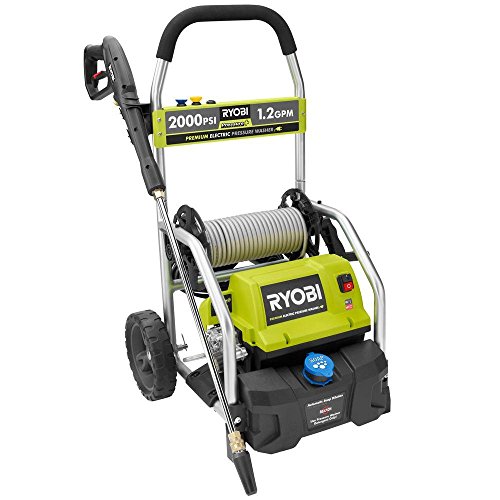
Best for a well-priced Home Depot corded electric for regular home use
- 2000 PSI · 1.2 GPM
- Compact wheeled cart design
- Onboard nozzle and hose storage
- Home Depot parts and returns
Why buy it: Ryobi's mainstream 2000 PSI electric — the practical middle of the range for most driveways and decks.

Best for a light, easy-to-store 2000 PSI unit from the Lowe’s/Amazon side
- 2000 PSI · 1.2 GPM
- Lightweight, apartment-friendly
- Three quick-connect nozzle tips
- Widely stocked and competitively priced
Why buy it: Greenworks' 2000 PSI electric — a lighter, tidier answer to Ryobi's mid unit at similar pressure.
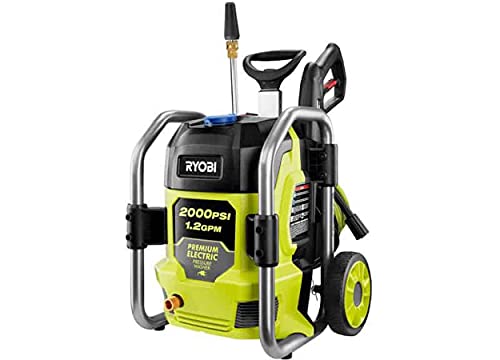
Best for a straightforward corded electric for quick weekend cleaning
- 2000 PSI · 1.2 GPM cold water
- Simple grab-and-go corded setup
- Turbo and adjustable nozzles
- Backed by the Home Depot ecosystem
Why buy it: Ryobi's no-frills corded electric — pressure where it counts for routine home cleaning.
Prices are pulled from Amazon and were accurate as of Aug 22, 2026, 6:54 PM EDT. Product prices and availability are subject to change — the live price is shown on Amazon.