

Affiliate Disclosure
Some links on this page are affiliate links. As an Amazon Associate, we earn from qualifying purchases — at no extra cost to you. We do not buy, test, or physically handle the products we cover; our rankings come from aggregated owner reviews, ratings and expert consensus. Commissions never change our verdicts. How we rank & full disclosure.
Short Ram Intake (SRI)
A short, straight tube that replaces the factory airbox and drops the filter right beside the throttle body, inside the engine bay. Cheap, loud, and a 20-minute bolt-on.
Best for: Budget builds and drivers who mostly want intake noise and throttle response with zero fuss
Typically $40–$150 for the kit; a genuine DIY with basic hand tools
- Cheapest path to a freer-flowing intake and an aggressive induction sound
- Simplest install — usually no cutting, no fender liner removal, 20–40 minutes
- Shortest, most direct air path, which owners credit for a crisp throttle feel
- Filter stays high and dry, so hydrolock risk in deep water is very low
- Easy to service and re-oil; nothing buried behind the bumper
- Sits in hot underhood air, so it is prone to heat soak and can lose the gains it makes
- Dyno gains on naturally aspirated cars are usually small — often single-digit horsepower
- Louder is not the same as faster; the noise oversells the actual performance
- On many cars it can throw a lean or MAF code without a tune or heat shield
Cold Air Intake (CAI)
A longer tube that routes the filter away from engine heat — down in the fender, behind the bumper, or fed by a sealed box drawing outside air. Denser, cooler air is the whole point.
Best for: Drivers chasing the small real-world power edge, especially on turbo or forced-induction cars
Typically $150–$400+ for a name-brand kit; install runs longer and sometimes needs a tune
- Pulls cooler outside air, which is denser and makes marginally more power at speed
- A sealed airbox or fender-mounted filter largely defeats heat soak
- Bigger measured gains than a short ram on forced-induction engines
- Deeper, smoother induction note rather than a raspy underhood bark
- Two to three times the cost of a comparable short ram
- Harder install — often removing the fender liner, wheel, or bumper trim
- Low-mounted filters raise hydrolock risk in deep water or heavy rain
- Many "cold air" kits still sit in the engine bay and are cold air in name only
How they score, side by side
Scores reflect aggregated owner reviews and expert consensus — not our own bench testing.
- Real-world power68
- Heat-soak resistance48
- Value for money86
- Install simplicity95
- Induction sound87
- Wet-weather safety85
Spec-by-spec comparison chart
| Factor | Short Ram Intake (SRI) | Cold Air Intake (CAI) |
|---|---|---|
| Where the filter sits | In the engine bay, near the throttle body | In the fender / behind bumper / sealed box |
| Air temperature drawn | Warm underhood air (heat-soak prone) | Cooler outside air (denser) |
| Typical NA power gain | ~3–8 hp (often less after heat soak) | ~5–12 hp when it draws truly cold air |
| Gain on turbo / forced induction | Modest | Larger and more repeatable |
| Kit price | $40–$150 | $150–$400+ |
| Install time / difficulty | 20–40 min, easy | 1–3 hrs, moderate (liner/bumper off) |
| Hydrolock risk | Low (filter mounted high) | Higher if filter is low in the fender |
| Sound character | Loud, raspy induction bark | Deeper, smoother induction growl |
| May need a tune / heat shield | Sometimes, to avoid lean codes | Sometimes on tuned or MAF cars |
| Serviceability | Very easy — filter is exposed | Harder — filter may be buried |
Our Top 3 Picks
The three highest-rated options in this category, if you'd rather skip straight to a proven pick.

Best for the most bang-for-buck bolt-on airflow gain
- Washable, reusable cotton-gauze filter
- Polished aluminum intake tube
- Powder-coated heat shield included
- Vehicle-specific fit — check your model
Why buy it: the value default owners keep pointing beginners to — rated 4.5 across thousands of reviews for a real airflow and sound bump at a price that barely dents the build fund.

Best for the cheapest branded way to open up intake sound
- Universal cone filter and tube components
- Cotton-gauze element, cleanable
- Mix-and-match couplers and clamps
- Best for custom or open-element setups
Why buy it: the budget entry point — owners rate it 4.4 for a throaty intake growl and easy airflow gain, ideal if you want the sound and DIY flexibility on the cheap.

Best for the best-known washable filter and finish
- K&N cotton-gauze filter, ~100k-mile service
- Mandrel-bent tube for smooth flow
- Aggressive intake growl on throttle
- Model-specific fit — verify part number
Why buy it: the trusted-name pick — rated 4.6, owners praise the lifetime-washable K&N filter and clean bolt-in fit that turns intake noise into part of the fun.
Prices are pulled from Amazon and were accurate as of Aug 22, 2026, 6:54 PM EDT. Product prices and availability are subject to change — the live price is shown on Amazon.
What actually separates the two
Both a short ram intake and a cold air intake do the same basic thing: they throw out the factory airbox and its restrictive plumbing and replace it with a smoother, freer-flowing tube and a high-flow filter. The engine breathes a little easier, the induction note gets louder, and the throttle feels a touch sharper. Where they split apart is one variable that turns out to matter more than any other — the temperature of the air they feed the engine.
A short ram intake keeps everything short and simple. The filter mounts on a stubby tube just past the throttle body, sitting right there in the engine bay. That short, straight path is why owners consistently report a crisp, immediate throttle response and an aggressive bark under acceleration. The catch is location: the filter is surrounded by a hot engine, a hot radiator, and hot exhaust manifolds, so the air it gulps is warm.
A cold air intake takes the opposite approach. It runs a longer tube that carries the filter away from the heat — down into the wheel well behind the fender liner, behind the front bumper, or inside a sealed airbox that draws from an outside vent. Cooler air is denser, denser air carries more oxygen, and more oxygen per stroke is what actually makes power. The trade is a harder install and, on many designs, a filter mounted low enough to matter when it rains.
The physics is the whole story. An engine is an air pump, and the mass of oxygen it can pack into each cylinder sets the ceiling on power. Cold, dense air raises that ceiling slightly; hot, thin air lowers it. The consensus among enthusiasts and tuners is blunt: a short ram flows well but sabotages itself with heat, while a properly routed cold air intake protects the one thing — air temperature — that a bolt-on intake can realistically improve.
Do either of them actually add power?
This is where honesty matters, because intake marketing wildly oversells both. On a naturally aspirated street car, aggregated owner dyno logs and independent shop testing land in a narrow, unglamorous range: a short ram might show roughly 3–8 horsepower on the dyno, and a genuine cold air intake maybe 5–12, with the exact figure swinging by platform, weather, and how restrictive the factory box was to begin with. Many stock airboxes are already surprisingly good, which is why plenty of cars gain almost nothing measurable.
The picture changes on forced-induction engines. A turbo or supercharger multiplies the value of cooler, denser inlet air, and it also makes the factory intake a more meaningful restriction because it is moving far more air. Owners of turbocharged cars report the most consistent, repeatable gains from a cold air intake, and it is the one scenario where an intake upgrade earns its keep as a performance part rather than a sound part.
The important caveat, and the reason a cold air intake earns the nod for outright performance, is that a short ram's dyno number is measured on a cool dyno with fans blowing. Out on the road in stop-and-go traffic, the short ram's warm-air disadvantage eats into that figure in a way the dyno chart never shows. A cold air intake's number holds up better in the real world because it was never relying on cool engine-bay air in the first place.

Heat soak: the whole reason cold air exists
Heat soak is the single concept that decides this comparison, and most buyers never hear it explained. When a short ram's filter sits in the engine bay, it draws air that has been warmed by the radiator, the block, and the exhaust. At highway speed with air rushing through the bay it isn't catastrophic, but at idle, in traffic, or after a hard pull, underhood temperatures climb and the intake can end up feeding air 30–50°F hotter than ambient. Hotter air is less dense, so the engine makes less power exactly when the short ram was supposed to be helping.
This is why owners describe short rams as feeling strongest on a cool morning and flat on a hot afternoon in city driving — the part is working, but heat soak is quietly clawing the gains back. A well-designed short ram fights this with a heat shield or an enclosed panel that walls the filter off from the engine and steers cooler air toward it, and if you go the short-ram route, a kit with a proper shield is worth insisting on.
A cold air intake sidesteps the whole problem by moving the filter out of the hot zone. A filter tucked in the fender or fed by a sealed box draws close to ambient temperature regardless of how hot the engine gets, so its advantage doesn't evaporate in traffic. That resistance to heat soak, more than any peak dyno figure, is the honest reason a cold air intake tends to be the better performance choice.
Hydrolock and the real risks
The cold air intake's strength is also its biggest liability. Mounting a filter low in the fender puts it closer to standing water, and if the engine ingests a slug of water through the intake it can hydrolock — water doesn't compress, so a cylinder full of it can bend a connecting rod and destroy the engine. This is not a theoretical risk; it is the most common serious failure owners report with low-mounted cold air kits, and it happens in flooded intersections and deep puddles that a stock airbox would have shrugged off.
The mitigations are real but require diligence. A quality bypass valve (a secondary filter that lets the engine breathe from higher up if the main filter submerges) helps, and a well-designed kit positions the filter as high as the routing allows. Drivers in rainy or flood-prone regions should weigh this seriously, because a $250 intake that leads to a hydrolocked engine is the most expensive "upgrade" you can buy.
A short ram carries almost none of this risk. Its filter sits high in the engine bay, well above any water line you would sanely drive through, so hydrolock is a non-issue in normal conditions. If you routinely see deep water, that safety margin is a genuine point in the short ram's favor and can outweigh the cold air intake's power edge.
Sound, install and daily livability
For a lot of buyers the honest motivation is sound, and here the two differ in character more than volume. A short ram, with its filter open in the bay and a short path to the throttle body, produces a loud, raspy induction bark and a pronounced intake honk under load — the sound most people picture when they think "aftermarket intake." A cold air intake, with its longer tube and enclosed or fender-mounted filter, tends toward a deeper, smoother growl. Neither is objectively better; it is a preference.
Installation is where the short ram wins outright. Most short rams are a 20-to-40-minute bolt-on with basic hand tools, no cutting, and nothing to remove beyond the old airbox. A cold air intake commonly requires pulling the fender liner, sometimes the wheel or a section of bumper trim, and routing the tube carefully — an hour to three, and a job many owners would rather hand to a shop. On some cars, either intake can trip a lean or mass-airflow code and want a heat shield, a MAF recalibration, or a light tune to run cleanly, so budget for that possibility.
Day to day, the short ram is also easier to live with: the filter is exposed and takes minutes to clean and re-oil, while a buried cold air filter is a knuckle-scraping chore. None of this changes the power verdict, but livability is a fair reason a lot of daily drivers happily accept the short ram's heat trade-off.
Common myths and mistakes
"Louder means faster." The most expensive myth in the intake aisle. A short ram is louder because the filter is open and close by, not because it is making more power. Induction noise and horsepower are not the same thing, and plenty of loud intakes are net-neutral or worse once heat soak is counted.
"Any cold air intake draws cold air." Not true. Many kits sold as "cold air intakes" still park the filter in the engine bay and are cold air in name only. Before buying, confirm the filter actually reaches outside air through the fender or a sealed box — otherwise you are paying cold-air money for a short ram's air temperature.
"An intake alone is a big power mod." On a stock naturally aspirated car it usually isn't. The gains are small and are best treated as one piece of a package with a tune, exhaust, or forced induction. Owners chasing real numbers from an intake alone are almost always disappointed.
"Cold air intakes always hydrolock." Overstated the other way. With a sensibly mounted filter, a bypass valve, and normal driving, most owners never have an issue. The risk is real but manageable — it is a reason to choose the kit and driving conditions carefully, not to avoid cold air intakes entirely.
Which should you buy — and how to decide
If your priority is performance, buy the cold air intake. It protects the one variable a bolt-on intake can actually improve — inlet air temperature — so its modest gains survive real-world heat and traffic instead of evaporating. On a turbo or supercharged car the case is even stronger, and it is the closest thing to a genuine power part in this comparison.
Buy the short ram if you mainly want the sound and the sharp throttle feel, you are on a tight budget, you want a 20-minute install, or you regularly drive through deep water where a low-mounted filter is a liability. It is not a lesser choice for those goals — it is the honest, correct one, and a version with a proper heat shield closes much of the temperature gap.
Whatever you pick, keep expectations grounded: on a stock naturally aspirated street car, both parts deliver far more noise and feel than measurable speed. Choose a reputable brand with a sealed or shielded design for your specific platform, plan for a possible tune or MAF recalibration, and match the part to how and where you actually drive. Get those right and the "which one" question mostly answers itself.
Recommended Products
Our top picks in this category, ranked on aggregated owner reviews.
Best for the most bang-for-buck bolt-on airflow gain
- Washable, reusable cotton-gauze filter
- Polished aluminum intake tube
- Powder-coated heat shield included
- Vehicle-specific fit — check your model
Why buy it: the value default owners keep pointing beginners to — rated 4.5 across thousands of reviews for a real airflow and sound bump at a price that barely dents the build fund.
Best for the cheapest branded way to open up intake sound
- Universal cone filter and tube components
- Cotton-gauze element, cleanable
- Mix-and-match couplers and clamps
- Best for custom or open-element setups
Why buy it: the budget entry point — owners rate it 4.4 for a throaty intake growl and easy airflow gain, ideal if you want the sound and DIY flexibility on the cheap.
Best for the best-known washable filter and finish
- K&N cotton-gauze filter, ~100k-mile service
- Mandrel-bent tube for smooth flow
- Aggressive intake growl on throttle
- Model-specific fit — verify part number
Why buy it: the trusted-name pick — rated 4.6, owners praise the lifetime-washable K&N filter and clean bolt-in fit that turns intake noise into part of the fun.
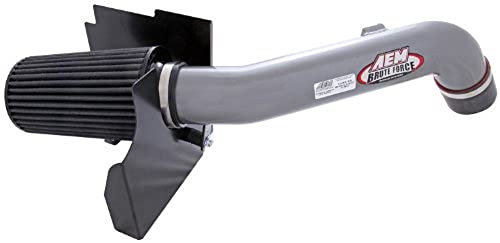
Best for big-engine trucks and SUVs that want more air
- Heavy-duty tube built for larger engines
- Washable AEM synthetic or cotton filter
- Designed for V6 and V8 truck airflow
- Application-specific — confirm fitment
Why buy it: the hauler’s choice — buyers rate it 4.6 for noticeably freer breathing and a deeper note on trucks and SUVs, where the extra tube diameter actually earns its keep.

Best for the cleanest fit-and-finish and intake note
- 6061-T6 aluminum tube, CNC brackets
- SuperNano-Web dry filter, no oiling
- MR Technology tuning for smooth power
- Tuned per application — check your model
Why buy it: the enthusiast’s pick — rated 4.7 for show-quality fit and a crisp intake note, the step up worth stretching for if looks and sound matter as much as airflow.

Best for documented, dyno-tested power gains
- Dyno-proven horsepower and torque figures
- Airbox or heat shield to pull cooler air
- Oversized washable filter element
- Vehicle-specific engineering — verify fit
Why buy it: the pick for owners who want numbers, not vibes — rated 4.7, Mishimoto publishes dyno figures for each application so you know exactly what the intake buys before you bolt it on.
Prices are pulled from Amazon and were accurate as of Aug 22, 2026, 6:54 PM EDT. Product prices and availability are subject to change — the live price is shown on Amazon.