

Affiliate Disclosure
Some links on this page are affiliate links. As an Amazon Associate, we earn from qualifying purchases — at no extra cost to you. We do not buy, test, or physically handle the products we cover; our rankings come from aggregated owner reviews, ratings and expert consensus. Commissions never change our verdicts. How we rank & full disclosure.
Single DIN
The original standardized head-unit size — a slim 2-inch-tall, 7-inch-wide chassis. It fits a single-height dash opening and usually pairs a small fixed display with physical buttons, though flip-out and motorized-screen versions exist.
Best for: Older cars, trucks and any dash that only has a single-height radio opening, plus budget builds and simple audio-first setups
Typically $40–$200 for a standard unit; $150–$450 for a flip-out or motorized-screen single DIN
- Fits the widest range of dashes, including older and compact-opening cars
- Far cheaper at the entry level — solid mechless units start around $40–$60
- Leaves room below the radio for a storage cubby or auxiliary gauge pod
- Simpler wiring and less to go wrong, since most are button-driven
- Flip-out screen versions can add a large display to a single-height opening
- Fixed-face units have a tiny display — hard to use maps or album art
- Wireless CarPlay and Android Auto are rare and pricey in this size
- Motorized flip-out screens add a moving part that can eventually fail
- Touch controls, if present, are cramped compared to a full double-DIN screen
Double DIN
A head unit twice as tall — roughly 4 inches by 7 inches — that fills a double-height dash opening. The extra real estate is used almost entirely for a large 6.2"–7" touchscreen with modern smartphone integration.
Best for: Modern cars with a double-height opening, and anyone who wants a big touchscreen, CarPlay/Android Auto, or a backup-camera display
Typically $120–$500 for a wired-CarPlay unit; $250–$800+ for wireless CarPlay/Android Auto with nav
- Large 6.2"–7" touchscreen makes maps, media and reversing cameras genuinely usable
- Wireless Apple CarPlay and Android Auto are common at this size
- On-screen menus replace dozens of tiny buttons, which most owners prefer
- Better platform for a backup camera, dash cam feed and 360 systems
- Higher resale appeal and a more finished, factory-like dash look
- Will not physically fit a car that only has a single-DIN opening
- More expensive across the board, especially for wireless smartphone mirroring
- Glossy touchscreens attract fingerprints and can wash out in direct sun
- Touch-only controls are harder to use by feel while driving
How they score, side by side
Scores reflect aggregated owner reviews and expert consensus — not our own bench testing.
- Dash compatibility (fits your car)96
- Screen size & usability49
- Smartphone integration59
- Value at entry price96
- Backup-camera support49
- Ease of driving by feel85
Spec-by-spec comparison chart
| Factor | Single DIN | Double DIN |
|---|---|---|
| Faceplate size | Approx. 2" tall × 7" wide (50 × 180 mm) | Approx. 4" tall × 7" wide (100 × 180 mm) |
| Dash opening needed | Single-height slot | Double-height slot |
| Typical screen | None, small fixed, or flip-out | Fixed 6.2"–7" touchscreen |
| Wireless CarPlay / Android Auto | Rare and expensive | Common |
| Backup-camera display | Only on screen-equipped models | Standard on nearly all units |
| Physical buttons | Usually many | Few — mostly on-screen |
| Entry price | $40–$60 (mechless) | $120–$180 (wired CarPlay) |
| Typical loaded price | $150–$450 (flip-out) | $250–$800+ (wireless + nav) |
| Install difficulty | Easy–moderate | Moderate (dash kit often needed) |
| Best-fit vehicles | Older cars, trucks, compact dashes | Most modern cars with tall openings |
Our Top 3 Picks
The three highest-rated options in this category, if you'd rather skip straight to a proven pick.

Best for the cleanest all-round upgrade over factory paper
- 6.5" two-way with a lightweight IMPP cone
- Bright, non-harsh PEI dome tweeter
- 40W RMS / 240W peak per speaker
- Shallow mount fits most factory doors
Why buy it: the pair owners keep telling newcomers to buy first — rated 4.6 across more than 20,000 reviews for a crisp, balanced sound that embarrasses stock speakers without touching the wallet.

Best for the most detailed top end on a budget
- 6.5" three-way A-Series coaxial
- 70W RMS / 320W peak per speaker
- Multilayer mica matrix cone
- Separate tweeter and midrange for clarity
Why buy it: owners consistently report the extra tweeter and midrange give it the most open, detailed sound in this price bracket — the pick if vocals and cymbals matter more than raw thump.

Best for the toughest build that survives real doors
- 6.5" three-way full-range coaxial
- 45W RMS / 90W peak per speaker
- Integrated concave tweeter + midrange
- Sealed motor tolerates door moisture
Why buy it: rated 4.7 across thousands of owner reviews, the R165X3 is the durability favorite — buyers routinely praise how it holds up in wet doors where cheaper cones give out.
Prices are pulled from Amazon and were accurate as of Aug 22, 2026, 6:54 PM EDT. Product prices and availability are subject to change — the live price is shown on Amazon.
What DIN actually means and how the sizes differ
DIN is not a brand or a feature — it is a size standard. It comes from the German Deutsches Institut für Normung, which decades ago standardized the dimensions of a car-radio opening so that any compliant head unit would drop into any compliant dash. That single decision is why aftermarket stereos exist as a healthy market at all, and why the whole "single vs double" question is fundamentally about physical dimensions, not sound quality.
A single-DIN unit measures roughly 2 inches tall by 7 inches wide (about 50 by 180 mm). That is the original radio size, and it is what the vast majority of cars used for years. Because the faceplate is short, there is only room for a small display and a row of physical buttons and knobs — or, on fancier units, a screen that motorizes out and up when you turn the stereo on.
A double-DIN unit is exactly what it sounds like: the same 7-inch width, but twice the height, at roughly 4 inches (about 100 mm). Manufacturers use nearly all of that extra vertical space for a fixed touchscreen, typically 6.2 to 7 inches measured diagonally. The consensus among installers is simple: the two sizes share a width but not a height, so the entire buying decision starts with which opening your dashboard was built around.
It helps to remember that DIN describes the chassis, not the capability. A single-DIN unit can have Bluetooth, a good amplifier section and preamp outputs for a full component system; a double-DIN unit is not automatically better-sounding. What the extra height buys you is screen and interface, not fidelity.
Which size does your dash actually take?
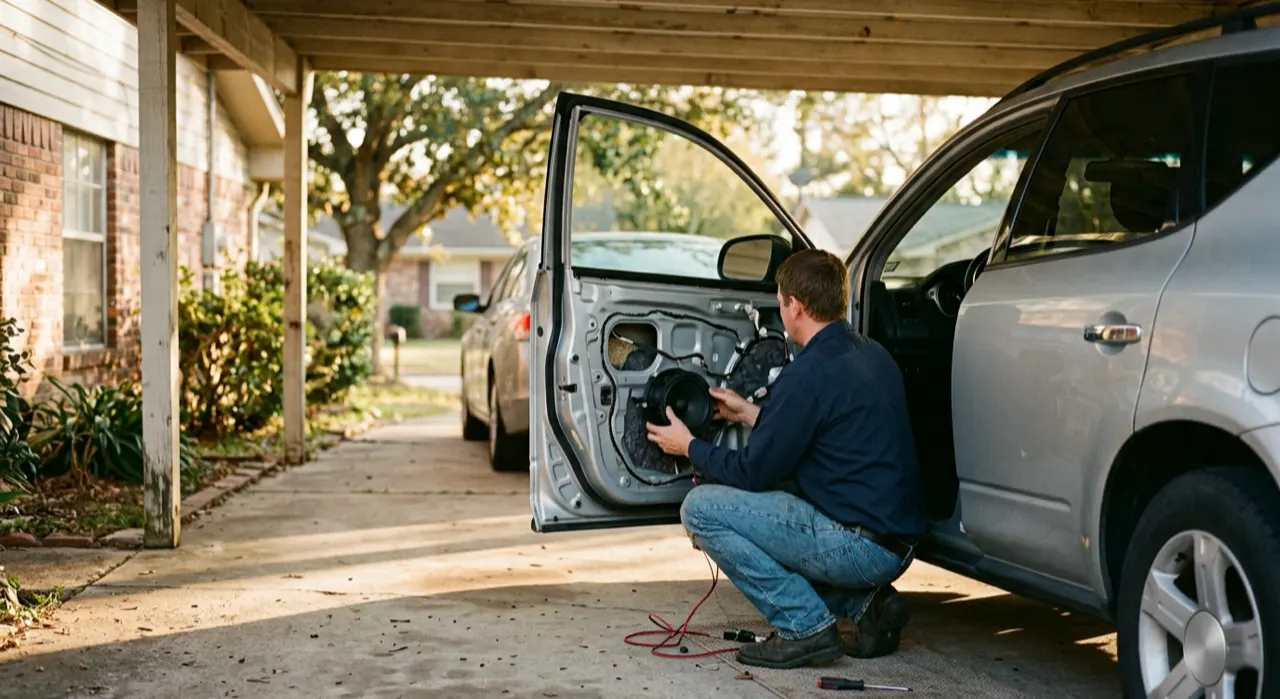
Before you compare a single feature, you have to know what your car's dash opening will physically accept — because a double-DIN unit will not squeeze into a single-DIN hole, full stop. Owners get burned here constantly by buying on features and ignoring fitment. Here is how it usually breaks down:
- Many older cars and a lot of trucks shipped with a single-DIN opening. These take a single-DIN unit directly, and a double-DIN simply will not fit without major dash surgery.
- Most cars from the last 10–15 years have a double-DIN opening, which is why double-DIN touchscreens dominate the aftermarket today. These can take a double-DIN unit, or a single-DIN unit paired with a pocket/trim kit to fill the extra height.
- Some vehicles have a proprietary or oversized factory opening that needs a specific dash kit to adapt down to a standard single- or double-DIN cavity. This is common on domestic trucks and many European cars.
The reliable move is to measure the opening — height especially — or look up your exact year, make and model against a fitment guide before buying anything. A double-DIN opening gives you the most freedom, because you can fit either size. A single-DIN opening usually locks you into single-DIN units unless you're willing to modify the dash. Spec sheets list the required opening for every unit, so match that number to your car first and let features come second.
Screens, CarPlay and the features gap
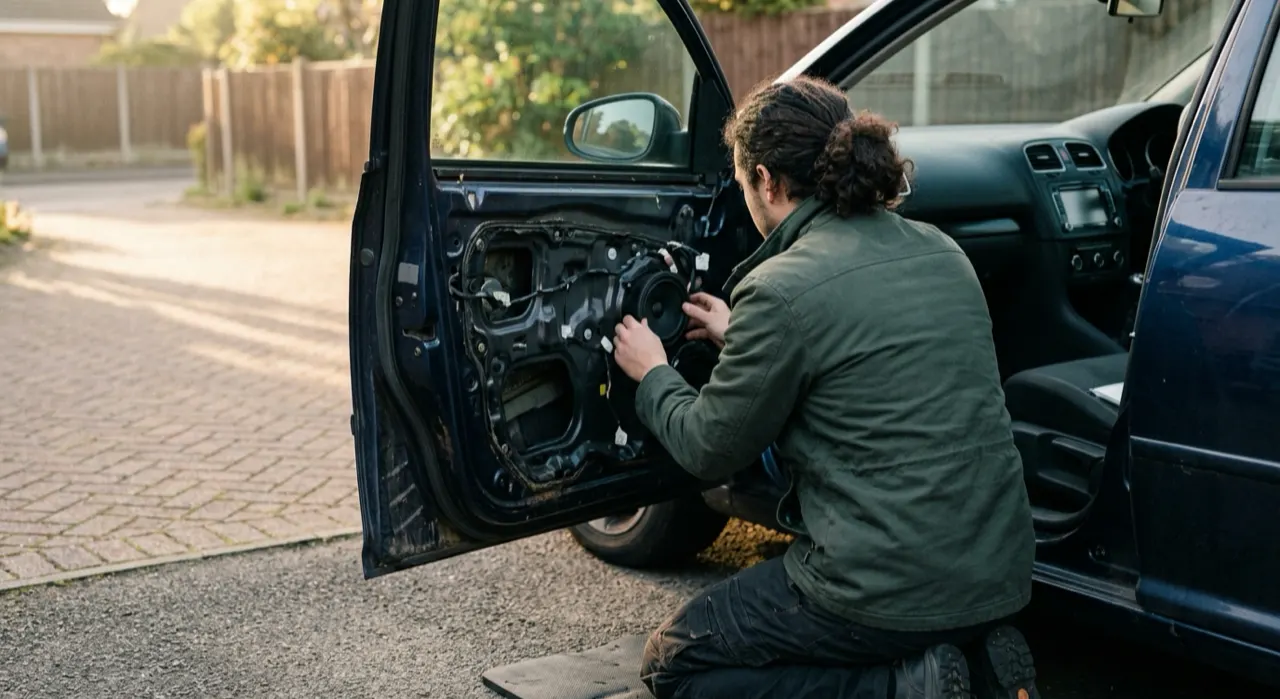
Once fitment is settled, the honest feature gap between the two sizes is mostly about the screen — and it is a real gap. A standard single-DIN unit either has no display or a small monochrome/color readout that is fine for track names but useless for maps or a reversing camera. A double-DIN unit's 6.2"–7" touchscreen changes the whole experience: turn-by-turn navigation is readable, album art and app menus are usable, and a backup camera actually shows you what's behind the bumper at a glance.
The single most requested feature in aggregated owner reviews is Apple CarPlay and Android Auto, and this is where the sizes diverge most. Wireless CarPlay/Android Auto is common and affordable in double-DIN units; in single-DIN it is rare, and when it exists it usually comes on a pricier flip-out-screen model. If smartphone mirroring is your priority and your dash allows it, a double-DIN unit is the path of least resistance.
Single-DIN keeps one quiet advantage, though: tactile controls. A knob you can find by feel and buttons you can press without looking are genuinely safer and easier to operate while driving than a flat sheet of glass. Enthusiasts who care more about audio and less about screens often prefer a good single-DIN unit with real volume and tuning knobs, paired with Bluetooth, precisely for that reason.
Real cost, from bare units to wireless CarPlay
On price, single-DIN wins at the bottom of the range and the two converge as features climb. A basic mechless single-DIN receiver — Bluetooth, USB, no disc slot — starts around $40–$60, which is the cheapest legitimate way to modernize an old car's audio. A double-DIN unit with a wired CarPlay/Android Auto touchscreen typically starts around $120–$180.
The real spend is in the features, not the size. Add a flip-out motorized screen to a single-DIN unit and you're often at $150–$450, brushing right up against double-DIN territory. Go for a double-DIN unit with wireless CarPlay/Android Auto and built-in navigation and you're commonly in the $250–$800+ range. Detailers and installers point out that the wireless-mirroring premium is the biggest single line item in most builds, regardless of DIN size.
Factor the install into the budget too. A single-DIN swap into a single-DIN car is often the cheapest job. A double-DIN install may add a dash kit, a wiring harness adapter and sometimes a steering-wheel-control interface, which can add $30–$120 in parts before labor. None of that changes which is "better" — it just means the sticker price of the head unit is not the whole cost.
Install reality: dash kits, harnesses and cameras
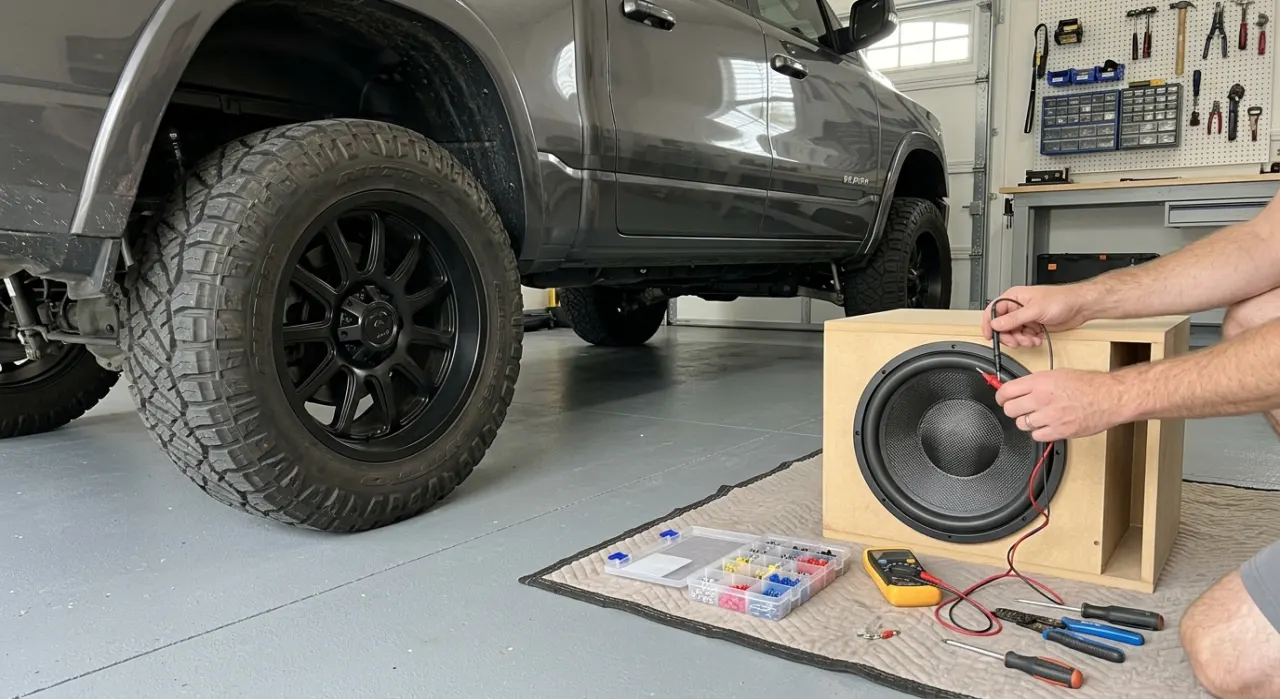
Neither size installs into thin air — both usually need adapters, and this is where a lot of first-time buyers underestimate the job. A proper install almost always involves a wiring harness adapter that plugs into your car's factory connector on one end and the new radio's harness on the other, so you're not cutting factory wires. That part is size-agnostic; both single- and double-DIN units need it.
The size difference shows up in the dash kit. Dropping a single-DIN unit into a single-DIN opening may need nothing more than the metal mounting sleeve that ships with the radio. Fitting a double-DIN unit — or fitting a single-DIN unit into a double-DIN opening with a storage pocket — typically requires a model-specific trim kit so the finished dash looks clean and factory. Buy the kit for your exact vehicle; a generic one rarely sits flush.
If a backup camera is on your list, that tips the scales toward a screen-equipped unit, which in practice usually means double-DIN. The reverse trigger wire tells the head unit to switch to the camera feed when you shift into reverse. Single-DIN units without a screen can't display that feed at all, so camera-minded buyers with a single-DIN dash usually step up to a flip-out single-DIN or add a dedicated mirror/monitor.
Common myths and mistakes
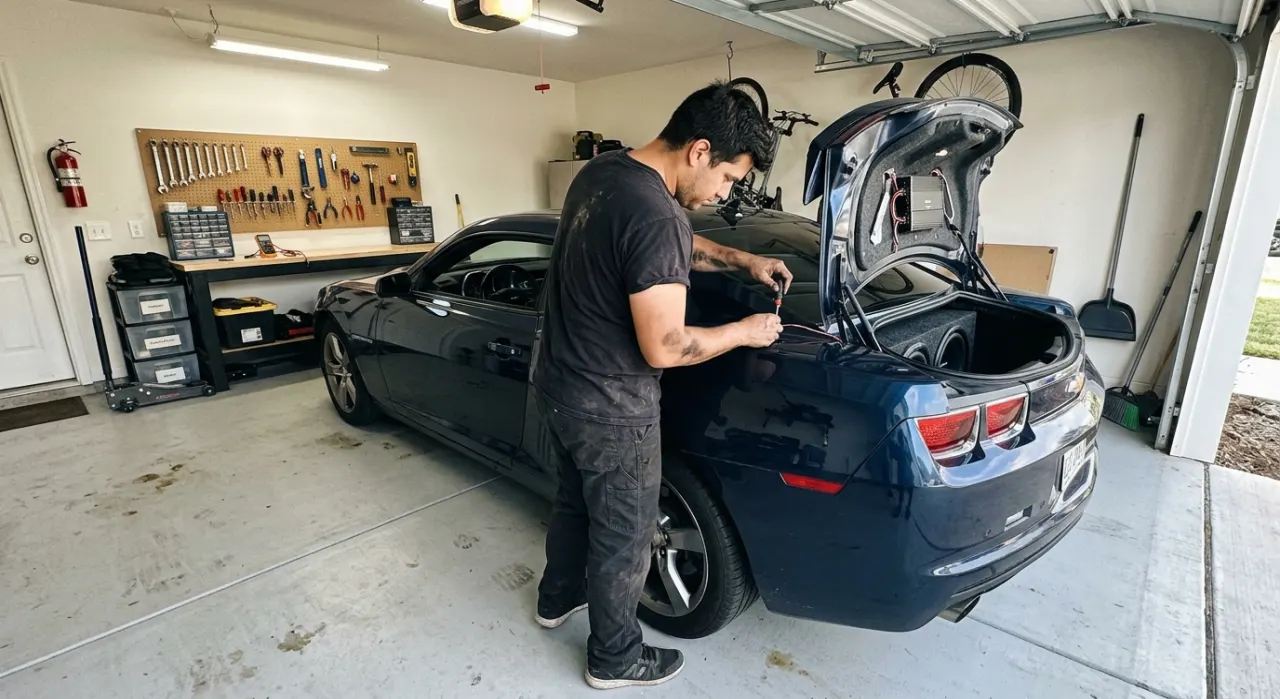
"Double-DIN sounds better than single-DIN." Not inherently. Sound quality comes from the amplifier section, the DAC, your speakers and how it's tuned — not the height of the chassis. A well-specced single-DIN unit with good preamp outputs can drive a better system than a cheap double-DIN touchscreen.
"I can just make a double-DIN fit my single-DIN dash." Realistically, no. That requires cutting and rebuilding the dash structure, which is a fabrication job most people shouldn't attempt and which can hurt resale. If you have a single-DIN opening, buy a single-DIN unit or a flip-out screen model.
"A single-DIN unit will leave an ugly gap in my double-DIN dash." Only if you skip the trim kit. A pocket or plate kit made for your vehicle fills the extra height cleanly and even adds a little storage cubby, so a single-DIN unit can look perfectly finished in a double-DIN opening.
"Wireless CarPlay is standard on any touchscreen unit." No — plenty of budget touchscreen units are wired CarPlay/Android Auto only, meaning you must plug your phone in every drive. Read the spec sheet: "wireless" is a specific, more expensive feature, not a given.
Which should you buy — and how to decide
There's no universal winner, because the right answer is dictated by your dash first. Measure your radio opening or check a fitment guide before anything else, then let features decide within what fits.
Buy a double-DIN unit if your car has a double-height opening and you want the modern experience — a big touchscreen, wireless CarPlay or Android Auto, and an easy backup-camera display. For most late-model cars this is the better, more resale-friendly choice, and it's what the majority of today's aftermarket units are built to be.
Buy a single-DIN unit if your dash only takes a single-height radio, you're building on a budget, or you specifically want physical knobs and a simpler audio-first setup. A quality single-DIN receiver with Bluetooth is the cheapest legitimate way to modernize an older car, and a flip-out-screen single-DIN can add a big display where a fixed double-DIN won't fit.
Whichever way you go, buy the correct dash kit and wiring harness for your exact year, make and model, prefer a reputable brand with published specs for your platform, and confirm CarPlay/Android Auto is wireless if that matters to you. Get the fitment right first, and the "which size" question mostly answers itself.
Recommended Products
Our top picks in this category, ranked on aggregated owner reviews.
Best for the cleanest all-round upgrade over factory paper
- 6.5" two-way with a lightweight IMPP cone
- Bright, non-harsh PEI dome tweeter
- 40W RMS / 240W peak per speaker
- Shallow mount fits most factory doors
Why buy it: the pair owners keep telling newcomers to buy first — rated 4.6 across more than 20,000 reviews for a crisp, balanced sound that embarrasses stock speakers without touching the wallet.
Best for the most detailed top end on a budget
- 6.5" three-way A-Series coaxial
- 70W RMS / 320W peak per speaker
- Multilayer mica matrix cone
- Separate tweeter and midrange for clarity
Why buy it: owners consistently report the extra tweeter and midrange give it the most open, detailed sound in this price bracket — the pick if vocals and cymbals matter more than raw thump.
Best for the toughest build that survives real doors
- 6.5" three-way full-range coaxial
- 45W RMS / 90W peak per speaker
- Integrated concave tweeter + midrange
- Sealed motor tolerates door moisture
Why buy it: rated 4.7 across thousands of owner reviews, the R165X3 is the durability favorite — buyers routinely praise how it holds up in wet doors where cheaper cones give out.

Best for the warmest low end without adding a sub
- 6.5" two-way with a stiff polypropylene cone
- 100W RMS / 300W peak per speaker
- Heavy-duty motor for extra mid-bass
- Zero-protrusion tweeter, easy drop-in
Why buy it: based on thousands of owner reviews, the CSC65 is the one people reach for when they want punch — the beefier motor gives it noticeably fuller mid-bass than most speakers at the price.

Best for filling out the rear deck on the cheap
- 6x9" four-way A-Series coaxial
- 100W RMS / 450W peak per speaker
- Larger cone moves more air than a 6.5"
- Drop-in fit for most rear-deck cutouts
Why buy it: the rear-deck default — owners rate it 4.6 for the extra low-end body a 6x9 brings, an easy way to round out the sound before you ever think about a subwoofer.

Best for the absolute cheapest step up from blown factory speakers
- 6.5" two-way, sold as a pair
- 125W RMS / 250W peak per pair
- Poly-injection cone, rubber surround
- Shallow 2.1" mount depth
Why buy it: a wildly popular throwaway-price pair with 15,000+ reviews — nobody claims it is audiophile, but owners agree it is a real, dirt-cheap improvement over dead or crackling stock speakers.
Prices are pulled from Amazon and were accurate as of Aug 22, 2026, 6:54 PM EDT. Product prices and availability are subject to change — the live price is shown on Amazon.