
Affiliate Disclosure
Some links on this page are affiliate links. As an Amazon Associate, we earn from qualifying purchases — at no extra cost to you. We do not buy, test, or physically handle the products we cover; our rankings come from aggregated owner reviews, ratings and expert consensus. Commissions never change our verdicts. How we rank & full disclosure.
Spray Wax
A ready-to-use liquid you mist onto panels and buff off with a microfiber towel. Most are polymer- or hybrid-based sealants marketed as "wax," built for speed rather than maximum longevity.
Best for: Quick monthly maintenance, drying aids after a wash, and busy owners who want protection in minutes
Typically $8–$20 for a 16–22 oz bottle (roughly 15–40+ applications)
- Fastest protection there is — a whole car in 10–15 minutes with no cure time
- Almost impossible to smear or streak if you use a clean towel
- Doubles as a drying aid or clay lubricant, so the bottle earns its keep
- Great as a "topper" to refresh gloss on top of an existing wax or sealant
- No applicator pads, no haze wait, minimal learning curve
- Thinner protective film — durability is measured in weeks, not months
- Depth and warmth of shine usually trails a good carnauba paste
- Needs reapplying far more often to keep continuous protection
- Cheaper formulas can flash-dry and streak in direct sun or on hot paint
Paste Wax
A solid wax in a tin — traditionally carnauba, often blended with polymers — that you apply with a foam pad, let haze, then buff off. It lays down a thicker, more durable layer of protection.
Best for: Owners who want the deepest carnauba glow and the longest protection from a single application
Typically $12–$30 for a tin that lasts many applications ($20–$50+ for premium carnaubas)
- Thicker, more durable film — real protection measured in months, not weeks
- Carnauba delivers the warm, wet, deep look enthusiasts chase
- A single tin lasts a long time, so cost per application is very low
- Beads water aggressively and hides fine swirls better than most sprays
- Slower — apply, wait for it to haze, then buff every panel by hand
- Easy to apply too thick, which makes buffing off a chore
- Can be tricky to remove from trim, seams and textured plastic
- Needs a genuinely clean, cool surface or it streaks and hazes
How they score, side by side
Scores reflect aggregated owner reviews and expert consensus — not our own bench testing.
- Durability59
- Depth of shine79
- Speed of application105
- Beginner friendliness96
- Value per application79
- Versatility96
Spec-by-spec comparison chart
| Factor | Spray Wax | Paste Wax |
|---|---|---|
| Form | Liquid you mist and buff | Solid wax in a tin |
| Typical base | Polymer / synthetic hybrid | Carnauba (often polymer-blended) |
| Application time (full car) | ~10–15 minutes | ~45–90 minutes |
| Cure / haze wait | None — buff immediately | Wait for a haze, then buff |
| Durability per application | ~2–6 weeks | ~2–4 months |
| Depth of shine | Good, slightly flatter | Deeper, warmer "wet" look |
| Water beading | Tight beads, shorter lived | Aggressive, longer-lasting beads |
| Ease for beginners | Very easy | Moderate — technique matters |
| Applicator needed | Just clean microfiber towels | Foam pad + buffing towels |
| Price | $8–$20 per bottle | $12–$50 per tin |
| Best role | Maintenance topper / fast protection | Durable base coat / show shine |
Our Top 3 Picks
The three highest-rated options in this category, if you'd rather skip straight to a proven pick.

Best for anyone who wants one do-it-all wax
- Synthetic hydrophobic polymer
- Deep, wet-look gloss
- 3–5 months of durability
- Kit includes pad + microfiber towel
Why buy it: the best balance of shine, months-long durability and beginner-easy application.

Best for maximum durability between coats
- 5–7 months of protection
- A little goes a long way
- Cheapest per use
Why buy it: nothing here survives weather longer — the durability champion.

Best for fast, cheap protection in minutes
- SiO₂ spray-on / wipe-off
- Fastest application here
- Strong water beading
Why buy it: the cheapest, fastest protection — spray on wet or dry and go.
Prices are pulled from Amazon and were accurate as of Aug 22, 2026, 6:54 PM EDT. Product prices and availability are subject to change — the live price is shown on Amazon.
What actually separates spray wax from paste wax
On the shelf they both promise gloss and protection, but they get there in different ways and are built for different jobs. The honest way to think about it is not "which wax is better" but "how much time do you want to spend, and how long do you want it to last."
Spray wax is a thin, ready-to-use liquid. Most products sold today as "spray wax" are actually polymer or hybrid sealants in a mist bottle — the word "wax" survives mostly as marketing. You spray a light coat onto a clean panel and wipe it off with a microfiber towel, and it is done in seconds per panel with no cure time. Because the film it lays down is very thin, it protects well but not for long.
Paste wax is a solid you scoop or wipe from a tin, traditionally made from carnauba — a hard Brazilian palm wax prized for its warm, deep look — usually blended with polymers or solvents to make it spreadable. You apply a thin layer with a foam pad, wait for it to haze as the carrier flashes off, then buff the residue away. That extra step lays down a thicker, more durable layer that lasts longer and, to most eyes, looks deeper.
The consensus among detailers is that neither one is objectively superior — they trade the same two things against each other: a spray wax spends durability and depth to buy speed and convenience, and a paste wax spends speed and convenience to buy durability and depth. Everything below is really about which of those trade-offs fits how you use your car.
How long each actually lasts
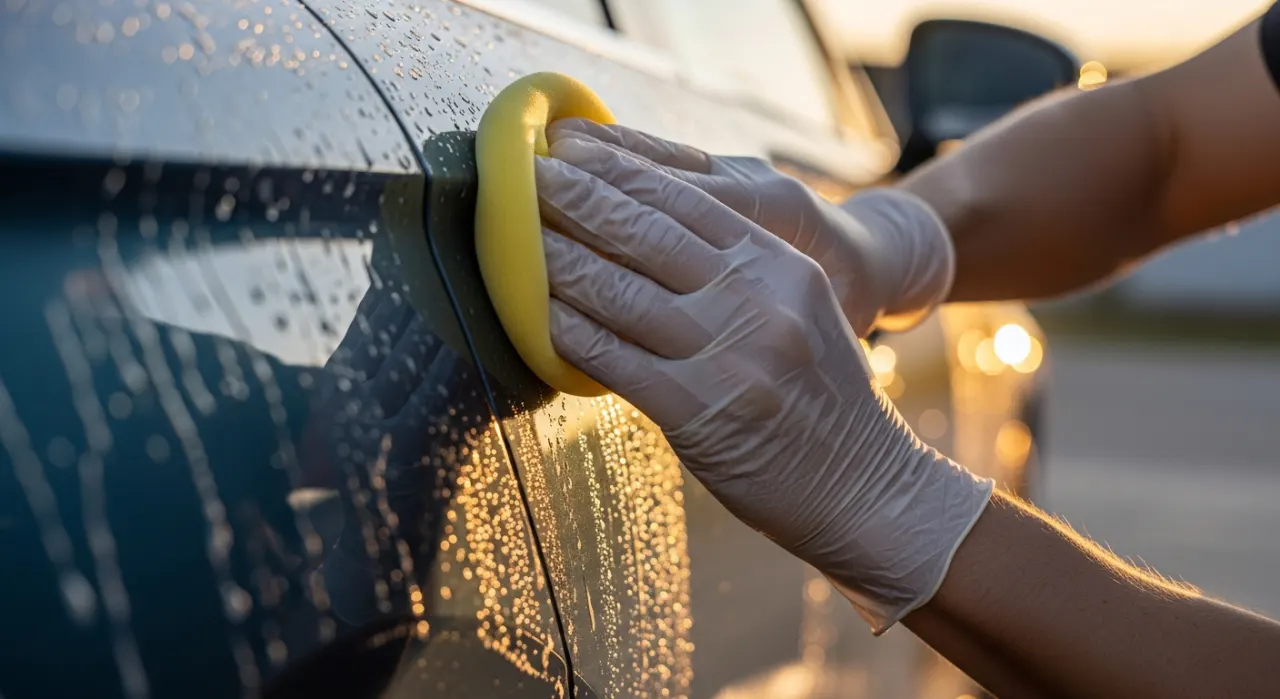
This is the single biggest practical difference, and it is where aggregated owner reports are the clearest. A typical spray wax holds up for roughly two to six weeks depending on the formula, how often you wash, and whether the car lives outside. A quality paste wax more commonly lasts two to four months, and premium carnauba or hybrid pastes can push toward a full season under good conditions.
The reason is simply film thickness. A paste lays down more material per application and bonds a thicker sacrificial layer to the clear coat, so it takes longer for washing, UV and road grime to strip it. A spray wax leaves a much thinner film, so it looks great immediately but wears through faster.
Two honest caveats keep this from being a slam-dunk for paste. First, "spray wax" that is really a synthetic sealant can outlast a soft pure-carnauba paste — the chemistry matters as much as the format, so read what is actually in the bottle. Second, durability numbers assume a properly prepped, clean surface; wax over a dirty or contaminated panel fails fast no matter which format you chose. The takeaway is that paste generally wins on longevity, but a good synthetic spray narrows the gap more than the format alone suggests.
Applying each — effort, tools and pitfalls
Effort is where spray wax pulls decisively ahead. The workflow is about as simple as detailing gets:
- Spray wax — wash and dry the car, then mist one or two panels at a time and buff dry with a clean microfiber towel. No pad, no haze wait, no second towel strictly required. Many owners simply spray it onto a wet car as a drying aid and wipe it off with the water, protecting the paint in the same pass they dry it.
- Paste wax — wash, dry, and ideally decontaminate the paint first, then work a thin layer onto one section with a foam applicator, let it haze for a minute or two, and buff the residue off with a clean towel. Repeat panel by panel. Done right on a whole car it is a genuine 45-to-90-minute job.
The classic paste-wax mistakes all come from a few predictable places. Applying too thick is the big one — more wax does not mean more protection, it just means more residue to fight off, so a thin, even coat is the goal. Working in direct sun or on hot paint makes both formats flash-dry and streak, which is why the standard advice is a cool panel in the shade. And letting paste dry onto trim, rubber seals or textured plastic leaves a white haze that is a pain to remove, so careful application near those areas saves cleanup later. Spray wax sidesteps most of this simply because there is no haze stage to get wrong.
Shine, depth and finish
Both formats leave a car looking glossy and slick to the touch, but there is a real, if subtle, difference in character. Carnauba paste is famous for a warm, deep, almost "wet" glow that enthusiasts describe as adding depth to the color, especially on dark and metallic paint. A spray wax gives a clean, bright shine that most people are perfectly happy with, but it tends to read a touch flatter side by side with a good carnauba.
Water behavior follows the same pattern. Both make water bead and sheet off the paint, but a fresh paste typically throws tighter, more aggressive beads that last longer between washes, while a spray wax beads nicely at first and loses that behavior sooner as the thin film wears. If you judge protection partly by how long the car keeps beading, paste usually holds the look longer.
It is worth being honest that the visual gap is smaller than forum lore suggests, and much of it disappears in normal daylight on a well-prepped car. The bigger driver of shine is the paint prep underneath — a properly washed, decontaminated and lightly polished surface will out-shine either wax applied over swirls and grime.
Real cost per year
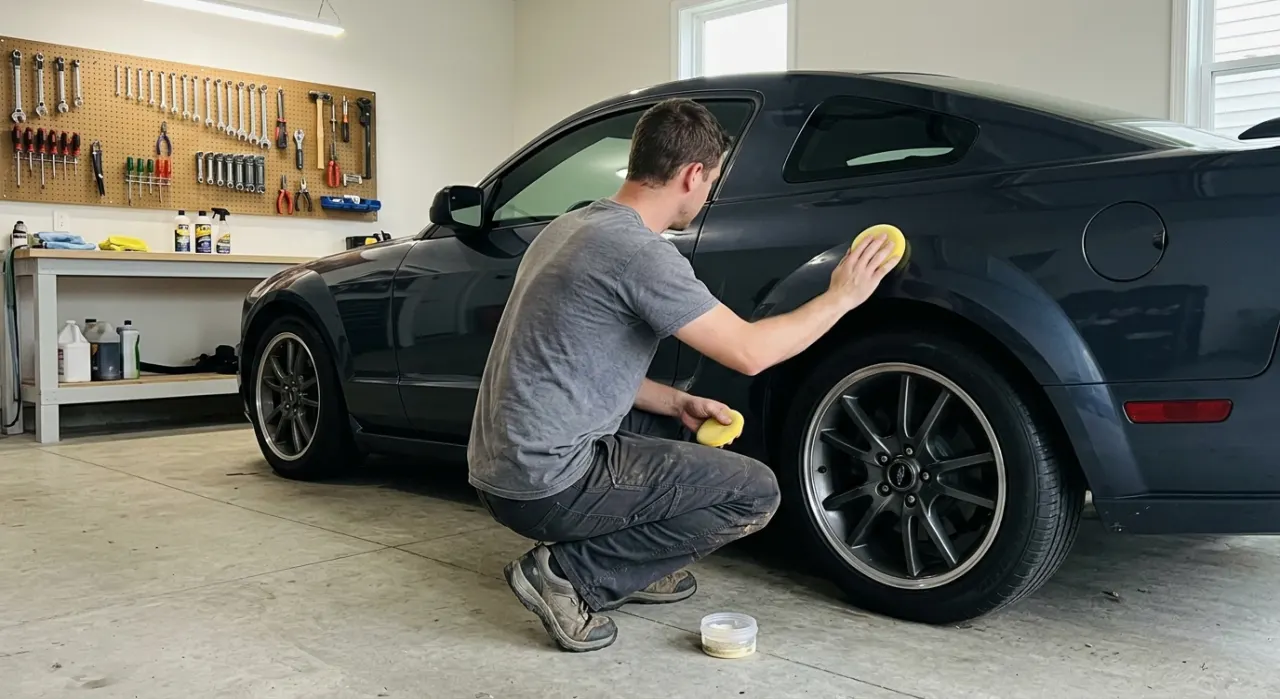
Sticker price barely tells the story here; cost-per-year depends on how often you reapply. A $10–$18 bottle of spray wax covers dozens of light applications, but because it lasts a few weeks, keeping continuous protection on a daily driver means applying it most washes — call it monthly or more. A $15–$30 tin of paste wax is more expensive up front but lasts a very long time, and because each coat protects for months you might only wax three or four times a year.
Run the math and the two formats land surprisingly close on annual spend. Where they diverge is time: the spray route is cheap in dollars but asks for frequent short sessions, while the paste route asks for a handful of longer sessions. Most owners who dislike detailing value the ten-minute spray; most who enjoy it happily trade the afternoon for the deeper, longer-lasting result.
The genuinely economical approach many detailers land on is to use both — a durable paste (or a dedicated sealant) laid down two to four times a year as the base, topped up with a quick spray wax after washes to refresh gloss and slickness. That stretches the paste's life, keeps the car protected continuously, and costs very little per bottle.
Common myths and mistakes
"Spray wax isn't real wax, so it's worthless." Not true. Many spray products are synthetic sealants rather than carnauba, but they protect the clear coat perfectly well — often more durably than a soft pure-carnauba paste. Judge by what the label lists and how long it lasts, not by the format.
"More paste wax means more protection." The opposite is closer to true. A thick coat does not bond any better; it just leaves stubborn residue and can haze. A thin, even layer is what protects, buffs off cleanly, and looks best.
"Wax fixes swirls and scratches." No wax removes defects — that is what polishing does. Wax and spray sealants can temporarily fill and mask fine swirls so they show less, but the marks return as the wax wears. If you want swirls gone, you polish first, then protect.
"You can wax straight over a dirty car to save time." Waxing over grime traps contaminants against the paint and wears off in days. Both formats need a clean, dry surface — the spray is only fast because you have already washed the car, not instead of washing it.
"Paste and spray can't be used together." They are actually a natural pair. A spray wax makes an excellent topper over a paste or sealant base, refreshing the shine and slickness between full applications without stripping what is underneath.
Which should you buy — and how to decide
There is no universal winner, because they optimize for opposite things. Pick based on how much time you want to spend and how long you want protection to last, not on which one is "better."
Buy spray wax if you want protection in minutes, you wash often and don't mind refreshing frequently, or you want a versatile bottle that doubles as a drying aid and a topper. It is the easiest, most beginner-proof way to keep a car protected and slick, and it is hard to go wrong with it.
Buy paste wax if you want the deepest carnauba glow, the longest protection from a single application, and you actually enjoy spending an hour on the car a few times a year. On dark paint especially, a good paste rewards the extra effort with depth a spray can't quite match.
Buy both if you want the best real-world result for the least ongoing effort — lay down a durable paste or sealant as the base a few times a year, then top it up with a quick spray wax after washes. That combination is what most experienced detailers actually run, and it sidesteps the whole either-or question.
Recommended Products
Our top picks in this category, ranked on aggregated owner reviews.
Best for anyone who wants one do-it-all wax
- Synthetic hydrophobic polymer
- Deep, wet-look gloss
- 3–5 months of durability
- Kit includes pad + microfiber towel
Why buy it: the best balance of shine, months-long durability and beginner-easy application.
Best for maximum durability between coats
- 5–7 months of protection
- A little goes a long way
- Cheapest per use
Why buy it: nothing here survives weather longer — the durability champion.
Best for fast, cheap protection in minutes
- SiO₂ spray-on / wipe-off
- Fastest application here
- Strong water beading
Why buy it: the cheapest, fastest protection — spray on wet or dry and go.

Best for first-timers who want a foolproof shine
- Foolproof carnauba liquid
- Warm, wet look
- Wipes off clean even if it dries
Why buy it: almost impossible to mess up — the perfect first wax.

Best for show cars and dark paint
- Premium carnauba paste
- Concours-grade warm gloss
- Easy to apply for a paste
Why buy it: stunning depth on dark paint — a show finish you use for the ritual.

Best for detailing hobbyists chasing gloss
- Soft carnauba paste
- Excellent gloss
- Buffs off easily
Why buy it: a detailing-hobbyist favorite that finishes beautifully.
Prices are pulled from Amazon and were accurate as of Aug 22, 2026, 6:54 PM EDT. Product prices and availability are subject to change — the live price is shown on Amazon.