
Affiliate Disclosure
Some links on this page are affiliate links. As an Amazon Associate, we earn from qualifying purchases — at no extra cost to you. We do not buy, test, or physically handle the products we cover; our rankings come from aggregated owner reviews, ratings and expert consensus. Commissions never change our verdicts. How we rank & full disclosure.
Struts
A structural suspension unit that combines the shock absorber, spring and a load-bearing mount into one assembly. On most front-wheel-drive cars it is literally part of what holds the wheel in place.
Best for: Most modern FWD cars, crossovers and SUVs that came with MacPherson struts from the factory
Typically $150–$350 per loaded (quick) strut, plus $150–$300+ labor per pair
- Load-bearing — carries suspension geometry and the vehicle's weight, not just damping
- Compact, which is why nearly all FWD platforms use them up front
- "Quick struts" ship pre-assembled with spring and mount, cutting install risk and time
- Replacing them typically restores ride height stiffness and steering feel in one shot
- Fewer separate parts to fail on the corner they cover
- Two to three times the parts cost of a bare shock
- Replacement almost always requires a four-wheel alignment afterward
- A bare strut cartridge needs a spring compressor — genuinely dangerous DIY without one
- When one wears, the whole corner assembly usually gets replaced together
Shocks (Shock Absorbers)
A damping-only cylinder that controls spring bounce. It bolts in separately from the coil or leaf spring and carries no vehicle weight — it just keeps the tire settled.
Best for: Trucks, body-on-frame SUVs, and the rear of many cars that use a separate spring and shock
Typically $40–$120 per shock, plus $100–$200 labor per pair
- Cheap — a bare shock is a fraction of a loaded strut
- Simple bolt-in on most applications; no spring compressor needed
- Rarely disturbs alignment, so you often skip that added cost
- Easy to upgrade for towing, off-road or ride tuning without touching geometry
- Only damps — cannot restore ride height or fix worn geometry
- A car with front struts still needs those struts serviced separately
- On leaking or blown units, ride and braking distance both suffer
- Does nothing for a sagging spring, which is a separate failure
How they score, side by side
Scores reflect aggregated owner reviews and expert consensus — not our own bench testing.
- Structural / load role102
- Damping performance88
- Part affordability59
- Install simplicity48
- DIY safety48
- Alignment friendliness39
Spec-by-spec comparison chart
| Factor | Struts | Shocks (Shock Absorbers) |
|---|---|---|
| Primary job | Structural support + damping | Damping only |
| Carries vehicle weight | Yes — load-bearing | No — spring carries the load |
| Contains the spring | Yes (coil mounted on the assembly) | No — spring is separate |
| Affects wheel alignment | Yes — alignment needed after service | Rarely — usually no alignment |
| Typical location | Front of most FWD cars; some rears | Rear of many cars; trucks & body-on-frame |
| Part cost each | $150–$350 (loaded / "quick" strut) | $40–$120 (bare shock) |
| Labor per pair | ~$150–$300+ (plus alignment) | ~$100–$200 |
| Spring compressor needed | Yes for bare cartridges (skip with quick struts) | No |
| Typical service life | 50,000–100,000 miles | 50,000–100,000 miles |
| DIY difficulty | Moderate–hard (safety risk with springs) | Easy–moderate |
Our Top 3 Picks
The three highest-rated options in this category, if you'd rather skip straight to a proven pick.

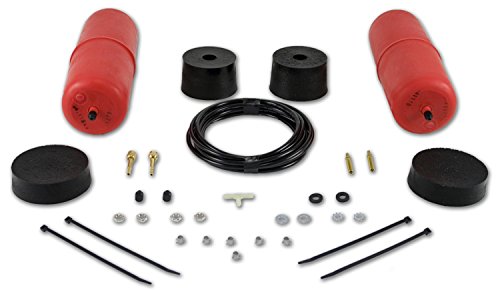
Best for universal load leveling inside coil springs
- Up to 1,000 lb leveling capacity
- Fits most open coil springs
- Inflate 5–35 PSI to level load
- Limited lifetime warranty
Why buy it: the air helper kit owners recommend first — two air springs fit inside your coils to kill sag under a load, adjust with a hand pump or compressor, and carry a lifetime warranty for around a hundred dollars.
Best for application-specific coil-spring leveling
- Vehicle-specific fitment
- Up to 1,000 lb capacity
- Installs inside coil springs
- Adjustable air pressure
Why buy it: the value pick owners choose for a bolt-in, application-specific fit — the same Air Lift 1000 leveling in a kit matched to common coil-spring vehicles, at a friendly price.

Best for heavy towing and hauling on trucks
- Convoluted air springs, 5–100 PSI
- Adds thousands of lb of support
- Improves braking and reduces sway
- No-drill install on many trucks
Why buy it: the premium towing pick owners trust for serious loads — heavy-duty Ride-Rite bags level a loaded truck, cut squat and sway, and improve braking, with a much higher pressure range than a light helper kit.
Prices are pulled from Amazon and were accurate as of Aug 22, 2026, 6:54 PM EDT. Product prices and availability are subject to change — the live price is shown on Amazon.
What actually separates a strut from a shock
This is the comparison people get wrong most often, because the two parts look similar in a photo and both control the same thing you feel — bounce. But they occupy completely different roles in the suspension, and only one of them is holding your wheel in place.
A shock absorber is a damping-only device. Inside is a piston that forces hydraulic fluid (and often nitrogen gas) through small valves as the wheel moves up and down. That resistance converts the spring's energy into heat and stops the car from bouncing like a trampoline after every bump. Crucially, a shock carries none of the car's weight. It bolts in alongside a separate spring, and if you unbolted it the car would still sit at the same ride height — it would just wallow uncontrollably.
A strut does that same damping job, but it is also a structural member of the suspension. On a typical MacPherson setup the strut assembly includes the shock cartridge, the coil spring seated around it, and an upper mount with a bearing that the whole corner pivots on when you steer. It bears vehicle weight, locates the wheel, and sets a chunk of the alignment geometry. Remove a strut and the corner effectively falls apart — the wheel has nothing holding it upright.
The consensus among mechanics is the cleanest way to remember it: every strut is a shock, but not every shock is a strut. A strut is a shock absorber that has been given a second job — holding the suspension together — which is exactly why it costs more, takes longer to fit, and drags an alignment along with it.
Which one does your car actually use?
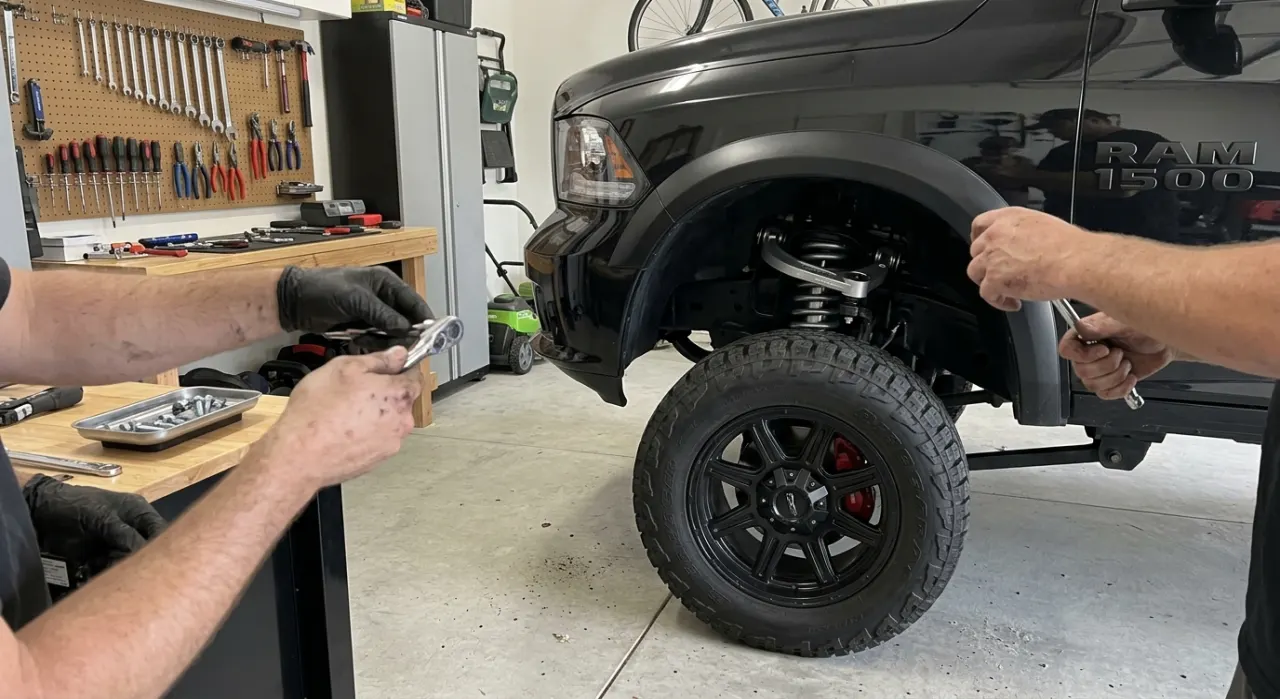
Because they are not interchangeable, the first real decision is not "which is better" but "which did the factory fit to the corner I'm working on." Owners get tripped up here constantly, so it is worth being precise:
- Front-wheel-drive cars and most crossovers almost always use MacPherson struts up front. The compact strut packages the damper and spring into the tight space beside the transaxle, which is the whole reason the design took over.
- The rear of those same cars frequently uses separate shocks with their own coil springs — a cheaper, simpler layout where there's more room and less steering load.
- Trucks, vans and body-on-frame SUVs commonly run shocks at all four corners, paired with coil or leaf springs, because the frame and control arms handle the structural duty a strut would otherwise carry.
- Performance and some rear-drive cars may use a double-wishbone or multilink design with separate shocks, or struts, depending on the platform.
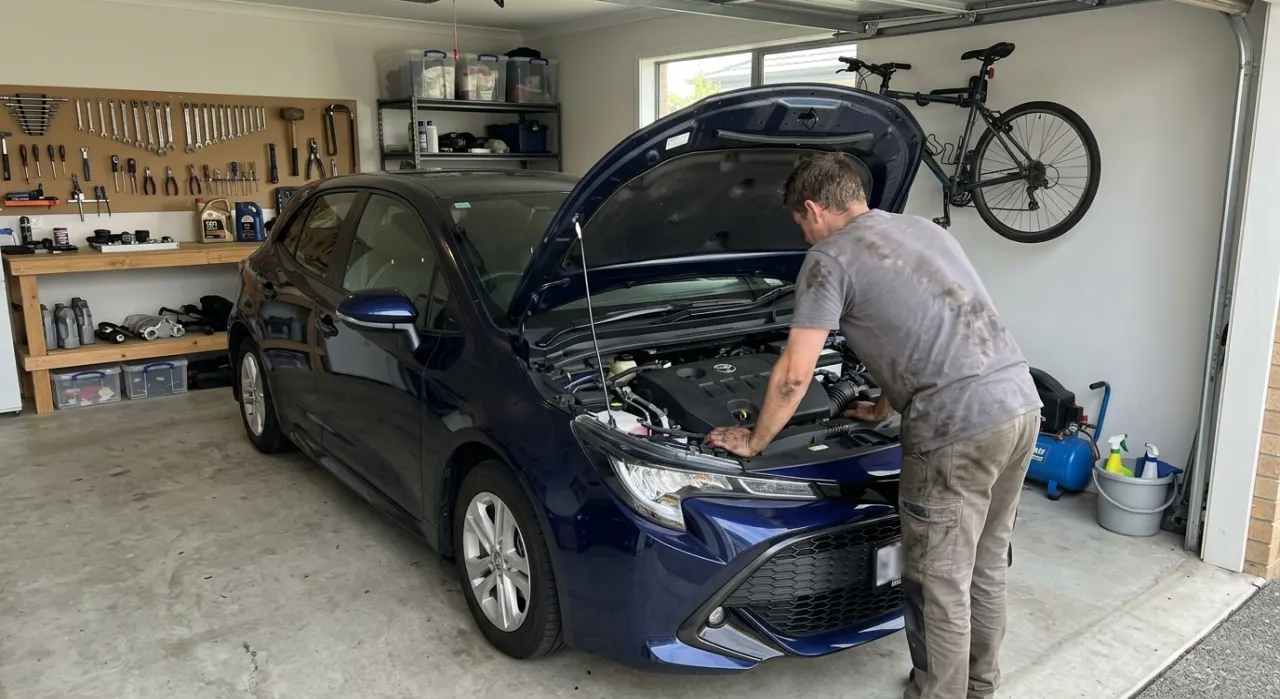
The practical takeaway is that many everyday cars have both: struts in front, shocks in back. So "struts vs shocks" as an either/or purchase rarely applies to a whole vehicle — you match each end to what it already has. If you are unsure, the fastest check is to look at the part: if the coil spring wraps around the damper as one assembly, it is a strut; if the spring sits separately and the damper is a slim standalone cylinder, it is a shock.
Symptoms and when to replace either
The failure symptoms overlap heavily because both parts control damping, and that shared symptom list is why so many people confuse the two. Aggregated owner reports and shop diagnoses put these at the top:
- Excessive bounce after a bump — the classic sign the damping is worn on either part. The old "push down on the fender and count the rebounds" test still holds: more than one or two settles means it's tired.
- Nose-dive under braking and squat under acceleration — worn damping lets the body pitch, which lengthens stopping distances.
- Cupped or uneven tire wear — a bouncing tire scallops the tread, a tell-tale of dead dampers.
- Fluid on the body of the unit — a visible oily film means the seal has failed and it is leaking, which applies to both struts and shocks.
- Clunks over bumps — more common with a worn strut mount or bearing, since that's the structural part a plain shock doesn't have.
- A corner that sits low — this points to a sagging or broken spring. On a strut car the spring is part of the assembly; on a shock car the spring is separate and the shock itself won't fix ride height.
Both parts are typically replaced in the 50,000–100,000 mile window, and the strong consensus is to replace in axle pairs — both fronts or both rears together — so the car doesn't damp unevenly side to side. Replacing one worn strut against a 90,000-mile partner just creates a new imbalance.
Why struts need an alignment and shocks usually don't
This is the hidden cost that catches people out, and it flows directly from the structural difference. Because a strut locates the wheel and often carries camber (and sometimes caster) adjustment at its lower mount or top hat, unbolting it disturbs the alignment geometry. Reassembling to exactly the same setting by eye is not realistic, so a four-wheel alignment after strut replacement is standard practice, usually adding $80–$150 to the job.
A shock, by contrast, only bolts to the axle or control arm at points that don't define alignment. Swapping shocks generally leaves camber and toe untouched, so most shops skip the alignment entirely. That single difference — an alignment tacked onto every strut job but almost no shock job — is a real part of the cost gap and worth factoring in before you assume a strut is "just a pricier shock."
There is one caveat: if a shop has to disturb control-arm or knuckle bolts to reach a shock on a cramped truck, an alignment check is still cheap insurance. But as a rule, struts pull an alignment along with them and shocks do not.
Real cost, parts and labor, over the life of the car
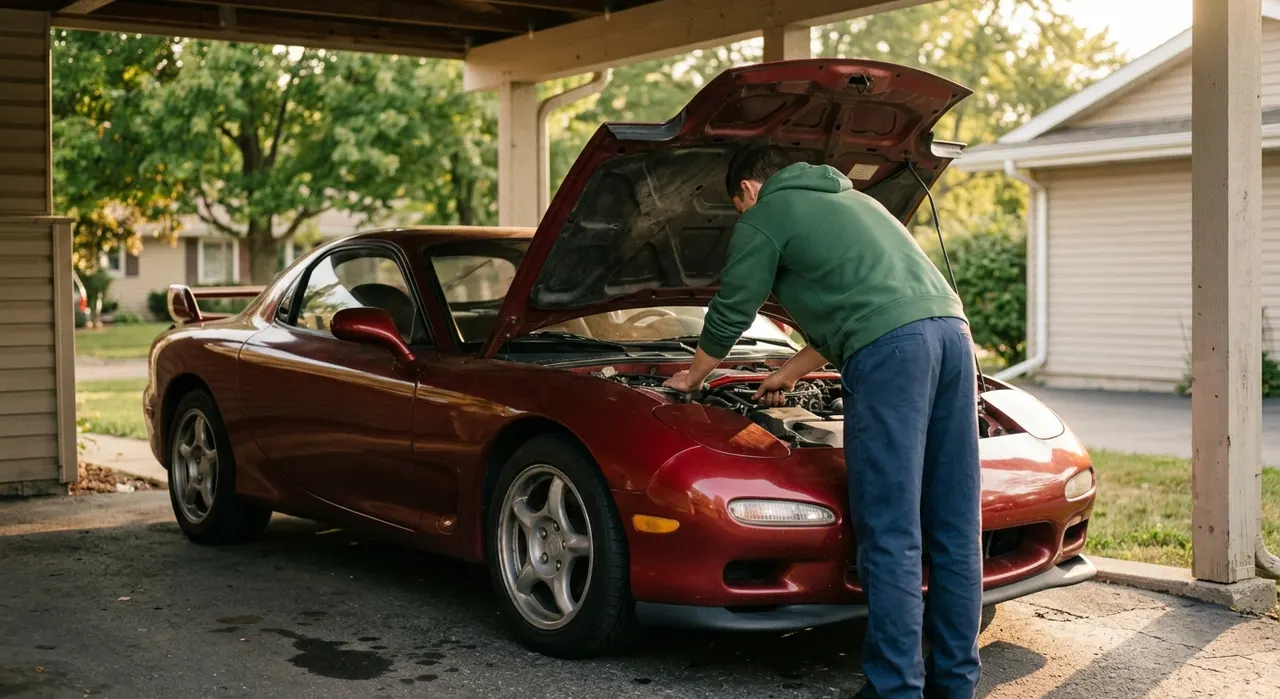
On paper the gap looks huge — a bare shock can be $40–$120 while a loaded strut runs $150–$350 each — but the honest comparison is the full installed job, and the strut's extra cost is doing extra work. A pair of rear shocks fitted often lands around $250–$500 all in. A pair of front struts, especially the pre-assembled "quick strut" units that include a new spring and mount, more commonly runs $500–$900+ once the mandatory alignment is added.
The quick strut is the single most important value decision here. A bare strut cartridge is cheaper to buy, but reusing your old spring and mount means compressing a spring under enormous stored energy — a genuinely dangerous operation without the right compressor and experience — and it leaves aging parts in the assembly. A loaded quick strut arrives with a fresh spring, mount and bearing already assembled, which removes the spring-compressor hazard, cuts labor time, and renews the whole corner at once. For most owners the modest price premium of a quick strut is money well spent.
Shocks rarely carry that complication. They bolt in, need no spring work, and skip the alignment, which is why a shock job is the friendlier DIY and the cheaper shop ticket. Over the life of the car you may replace each set once; the strut end simply costs more each time because it is renewing structure, spring and damping together, not just damping.
Common myths and mistakes
"I'll just upgrade my shocks to struts for a better ride." You can't. The two are not swappable — the chassis is engineered around one or the other at each corner, with different mounting points and load paths. You replace like with like.
"New shocks will fix my sagging corner." No. A low-sitting corner is a spring problem. A shock carries no weight, so a fresh one changes nothing about ride height. On a strut car the spring lives in the assembly, which is another reason strut jobs cost more — you're often renewing the spring too.
"Replace only the one that's leaking." Technically possible, but it leaves you damping unevenly across an axle. The consensus is to do them in pairs so the car settles symmetrically. Mixing a new unit with a worn one on the same axle can actually make handling feel worse.
"Struts and shocks last forever." They wear gradually, so the decline is easy to miss — most people forget how a tight car is supposed to feel. If yours has 80,000+ miles and floats over bumps, the parts are almost certainly tired even without a visible leak.
Which should you buy — and how to decide
There is no universal winner here, because it isn't a versus. The right answer is dictated by your specific vehicle and the specific corner. Identify what the factory fitted and match it: struts where the car has struts, shocks where it has shocks.
You're buying struts if you have a modern FWD car or crossover and the front corners are worn — expect a higher bill, plan for an alignment, and strongly prefer loaded quick struts to avoid spring-compressor risk and to renew the whole corner in one go.
You're buying shocks if you're working on the rear of that same car, or on a truck or body-on-frame SUV — the job is cheaper, simpler, usually alignment-free, and the easiest of the two to tackle in a driveway.
Whatever the corner, buy in pairs, choose a reputable brand with published valving for your platform, and match the part to how you use the vehicle — towing and off-road duty warrant firmer, purpose-built units. Get the corner identified correctly first, and the "which one" question answers itself.
Recommended Products
Our top picks in this category, ranked on aggregated owner reviews.
Best for universal load leveling inside coil springs
- Up to 1,000 lb leveling capacity
- Fits most open coil springs
- Inflate 5–35 PSI to level load
- Limited lifetime warranty
Why buy it: the air helper kit owners recommend first — two air springs fit inside your coils to kill sag under a load, adjust with a hand pump or compressor, and carry a lifetime warranty for around a hundred dollars.
Best for application-specific coil-spring leveling
- Vehicle-specific fitment
- Up to 1,000 lb capacity
- Installs inside coil springs
- Adjustable air pressure
Why buy it: the value pick owners choose for a bolt-in, application-specific fit — the same Air Lift 1000 leveling in a kit matched to common coil-spring vehicles, at a friendly price.
Best for heavy towing and hauling on trucks
- Convoluted air springs, 5–100 PSI
- Adds thousands of lb of support
- Improves braking and reduces sway
- No-drill install on many trucks
Why buy it: the premium towing pick owners trust for serious loads — heavy-duty Ride-Rite bags level a loaded truck, cut squat and sway, and improve braking, with a much higher pressure range than a light helper kit.

Best for coil-sprung SUVs and light trucks
- Fits inside coil springs
- Adjustable air support
- Levels loaded SUVs and vans
- Firestone durability
Why buy it: the coil-spring helper owners like for SUVs and vans — Firestone build quality in a bolt-in bag that fits inside the coil to level a loaded rig without a harsh empty ride.

Best for passenger cars and small crossovers
- Compact air springs for cars
- Up to 1,000 lb leveling
- Adjustable 5–35 PSI
- Restores level stance under load
Why buy it: the car-focused kit owners fit to stop the rear-end sag when the trunk or a small trailer is loaded — modest, adjustable support sized for lighter vehicles.

Best for SUVs and vans that carry or tow light
- SUV/van coil-spring fitment
- Up to 1,000 lb capacity
- Adjustable air pressure
- Levels a loaded rear
Why buy it: the SUV-and-van pick owners use to keep a loaded rear level — the Air Lift 1000 formula in a fitment aimed at family haulers and light towing.
Prices are pulled from Amazon and were accurate as of Aug 22, 2026, 6:54 PM EDT. Product prices and availability are subject to change — the live price is shown on Amazon.