
Affiliate Disclosure
Some links on this page are affiliate links. As an Amazon Associate, we earn from qualifying purchases — at no extra cost to you. We do not buy, test, or physically handle the products we cover; our rankings come from aggregated owner reviews, ratings and expert consensus. Commissions never change our verdicts. How we rank & full disclosure.
Sealed Enclosure
An airtight box that traps the air behind the subwoofer, letting that trapped air act as a spring on the cone. The result is tight, controlled, accurate bass with a smooth roll-off in the low end.
Best for: Sound-quality listeners, mixed genres, and people who want deep, punchy, accurate bass in a compact box
Typically $50–$150 for a prefab sealed box, or $30–$80 in raw MDF and materials to build one
- Tight, accurate, well-controlled bass — the consensus favorite for sound quality
- Smaller box volume, so it fits trunks and hatchbacks more easily
- Forgiving of box-volume errors, so a slightly-off build still sounds fine
- Gradual 12 dB/octave roll-off that often blends better with music
- Handles low-frequency transients and fast basslines cleanly
- Less output — needs noticeably more amplifier power for the same loudness
- Not as loud or "boomy" as ported for rap, EDM and SPL work
- Works the subwoofer harder, so cone excursion and heat run higher
Ported (Vented) Enclosure
A box with a tuned port or vent that lets the air behind the cone resonate and reinforce output around the tuning frequency. It trades some control for a big jump in efficiency and low-end volume.
Best for: Loud, bass-heavy genres (rap, EDM, reggae), SPL builds, and anyone chasing maximum output per watt
Typically $70–$200 for a prefab ported box, or $50–$120 in MDF and port materials to build one
- Louder — commonly 3 dB or more output near tuning for the same power
- More efficient, so the amp and sub run cooler at a given volume
- Emphasizes the deep, "boomy" low end many bass genres are built around
- Below tuning the port unloads the cone, protecting it from bottoming on hard hits
- Larger box — often 40–70% more volume than a sealed box for the same sub
- Looser, less accurate bass; a one-note "boom" if tuned or built poorly
- Very sensitive to box volume and port tuning errors — build precision matters
- Below the tuning frequency the cone unloads and can over-excurse without a subsonic filter
How they score, side by side
Scores reflect aggregated owner reviews and expert consensus — not our own bench testing.
- Sound quality / accuracy96
- Loudness / output69
- Deep low-end emphasis69
- Compact fit95
- Power efficiency59
- Ease of building right95
Spec-by-spec comparison chart
| Factor | Sealed Enclosure | Ported (Vented) Enclosure |
|---|---|---|
| Bass character | Tight, accurate, controlled | Loud, deep, "boomy" |
| Output / loudness | Lower — needs more power | Higher — ~3 dB+ near tuning |
| Box size for same sub | Smaller (e.g. ~0.7–1.25 cu ft) | Larger (e.g. ~1.25–2.0 cu ft) |
| Efficiency | Lower | Higher (louder per watt) |
| Low-end roll-off | Gradual, 12 dB/octave | Steep below tuning, 24 dB/octave |
| Best-suited genres | Rock, jazz, classical, mixed | Rap, EDM, reggae, SPL |
| Build tolerance | Forgiving of volume errors | Sensitive to volume & port tuning |
| Cone control below tuning | Air spring controls cone throughout | Cone unloads — needs subsonic filter |
| Amp power needed | More for the same loudness | Less for the same loudness |
| DIY difficulty | Easier (no port to calculate) | Harder (port area & length math) |
Our Top 3 Picks
The three highest-rated options in this category, if you'd rather skip straight to a proven pick.

Best for the cleanest all-round upgrade over factory paper
- 6.5" two-way with a lightweight IMPP cone
- Bright, non-harsh PEI dome tweeter
- 40W RMS / 240W peak per speaker
- Shallow mount fits most factory doors
Why buy it: the pair owners keep telling newcomers to buy first — rated 4.6 across more than 20,000 reviews for a crisp, balanced sound that embarrasses stock speakers without touching the wallet.

Best for the most detailed top end on a budget
- 6.5" three-way A-Series coaxial
- 70W RMS / 320W peak per speaker
- Multilayer mica matrix cone
- Separate tweeter and midrange for clarity
Why buy it: owners consistently report the extra tweeter and midrange give it the most open, detailed sound in this price bracket — the pick if vocals and cymbals matter more than raw thump.

Best for the toughest build that survives real doors
- 6.5" three-way full-range coaxial
- 45W RMS / 90W peak per speaker
- Integrated concave tweeter + midrange
- Sealed motor tolerates door moisture
Why buy it: rated 4.7 across thousands of owner reviews, the R165X3 is the durability favorite — buyers routinely praise how it holds up in wet doors where cheaper cones give out.
Prices are pulled from Amazon and were accurate as of Aug 22, 2026, 6:54 PM EDT. Product prices and availability are subject to change — the live price is shown on Amazon.
How a sealed and a ported box actually work
Both enclosures do the same core job — they stop the sound wave from the back of the cone from cancelling the wave off the front — but they manage the air behind the woofer in opposite ways, and that single difference drives everything you hear.
A sealed enclosure is exactly what it sounds like: an airtight box. When the cone pushes back, it compresses the trapped air; when it pulls forward, that air pulls back. The sealed air acts as a spring on the cone in both directions, damping its motion and keeping it under tight control at all frequencies. That mechanical control is why the consensus among installers is that sealed boxes produce the most accurate, best-defined bass — the cone does what the signal tells it and little else.
A ported (or vented) enclosure cuts a precisely-sized opening — the port — into the box. The volume of air inside the box and the mass of air in the port form a resonant system, a Helmholtz resonator, tuned to a specific frequency. Around that tuning frequency the port radiates in phase with the cone and reinforces the output, so the box gets substantially louder for the same input power. The trade is control: the air is no longer a pure spring, so the bass is a little looser and less accurate, and below the tuning frequency the port stops working and the cone rapidly loses its air-spring support.
The clean way installers summarize it: a sealed box controls the cone, a ported box amplifies it. One prioritizes accuracy, the other prioritizes output — and that framing tells you almost everything about which one belongs in your car.
Sound quality vs loudness — the real trade-off
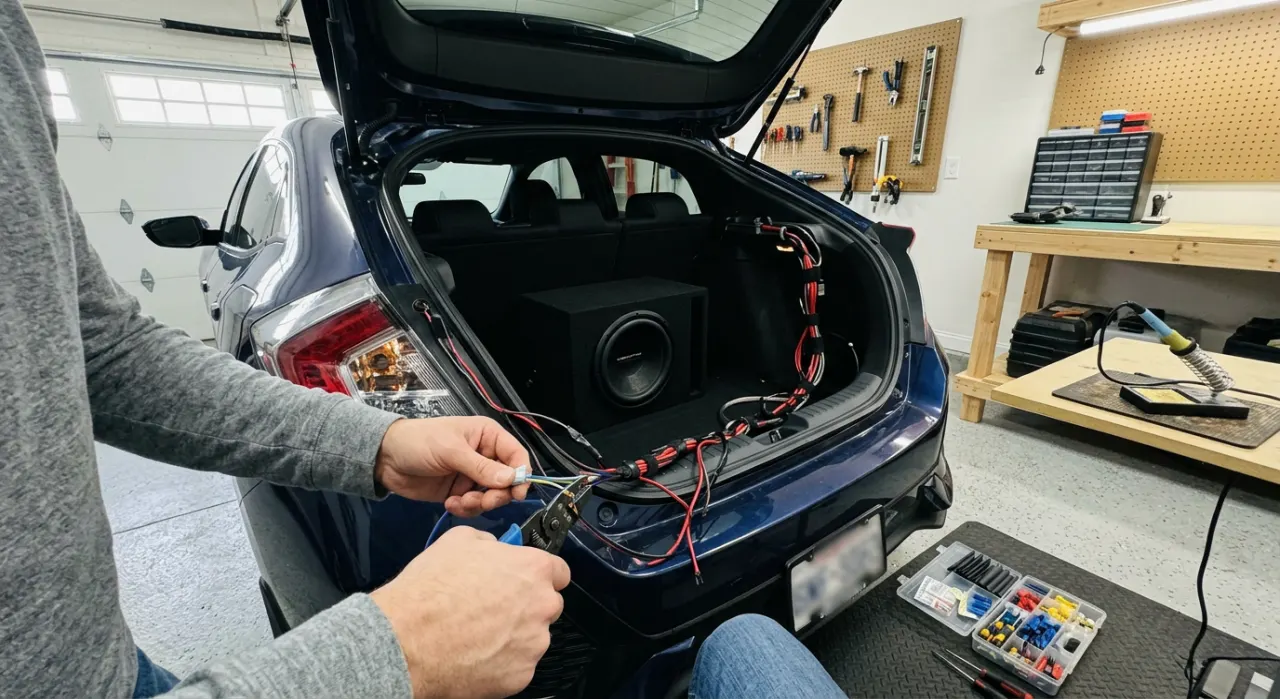
This is the heart of the decision, and it is genuinely a trade-off rather than a case of one box being better. Aggregated owner reviews and installer consensus line up remarkably well here:
- Sealed sounds tighter. Because the air spring damps the cone at every frequency, transients — the leading edge of a kick drum, a fast walking bassline — arrive crisp and stop cleanly. There is no port resonance coloring the sound. This is why sealed is the default recommendation for sound-quality builds.
- Ported plays louder. Near the tuning frequency a ported box commonly gains around 3 dB of output for the same power, which is a genuinely audible jump — roughly the equivalent of doubling amplifier power. For the same loudness, a ported setup asks less of the amp.
- Ported digs deeper on the right material. Tuned low, a vented box emphasizes the sub-40 Hz region that rap, EDM and reggae are built around, delivering the deep, chest-thumping "boom" those genres want.
- Sealed rolls off gracefully. A sealed box drops at a gentle 12 dB/octave, and in a car the cabin gain (the natural low-frequency boost from the small sealed space of the interior) often fills that back in, giving surprisingly deep, natural-sounding bass despite the smaller box.
Put simply: if the words that describe your ideal bass are "tight," "accurate," and "punchy," you want sealed. If they are "loud," "deep," and "boomy," you want ported. Neither is wrong — they are answers to different questions.
Match the box to your music
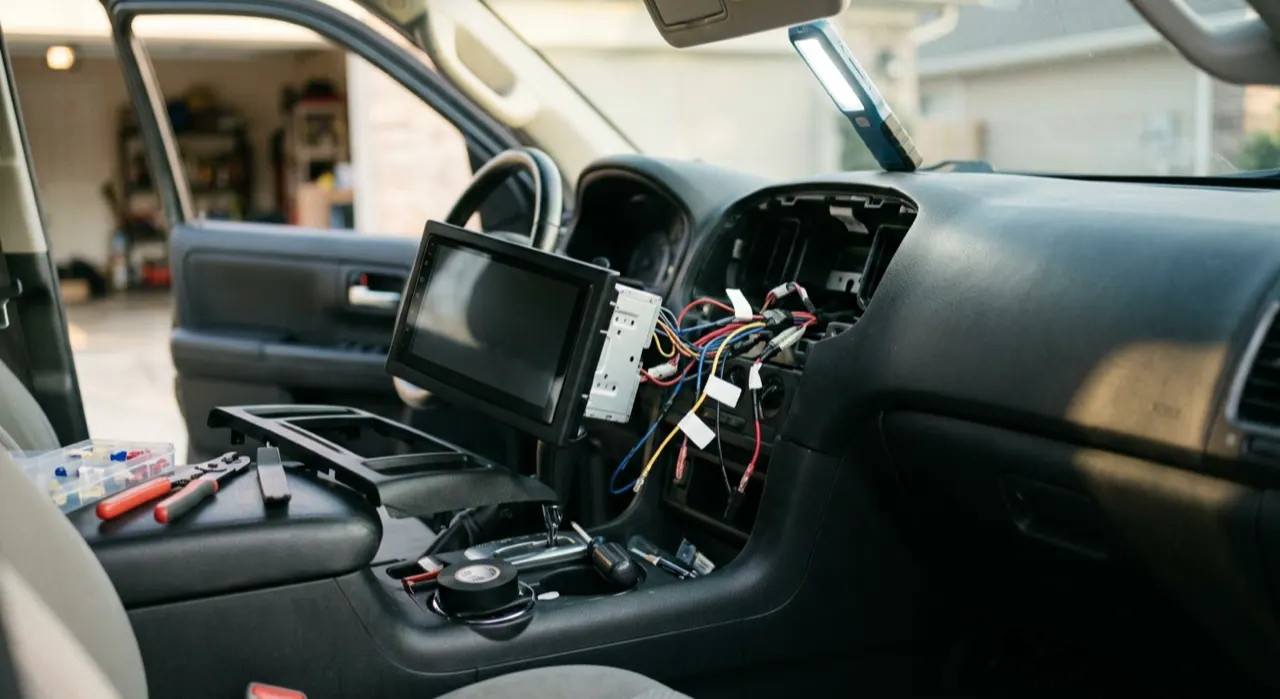
The most reliable way to choose is to be honest about what you actually listen to, because the box amplifies the character your genre already leans on. The consensus recommendations break down cleanly:
- Rock, metal, jazz, classical, acoustic and mixed playlists — sealed. These genres reward speed and accuracy over sheer low-end volume, and a sealed box keeps fast kick drums and plucked bass notes distinct instead of smearing them into one another.
- Rap, hip-hop, EDM, dubstep, reggae and trap — ported. These are built on sustained, deep low-frequency energy, and the extra output and low-end emphasis of a vented box is exactly what the music is asking for.
- A bit of everything, leaning loud — this is where it gets personal. Many owners who want one box for varied music land on ported tuned a little higher (around 32–35 Hz) for a good balance of output and control, while accuracy-first listeners with the same varied taste stay sealed. There is no wrong answer, only a preference.
If you genuinely cannot decide, the safest default is sealed: it is more forgiving, blends with more music, and rarely disappoints — you simply give up some maximum loudness to get there.
Box size, amp power and heat
Two practical constraints often make the decision for you before taste ever enters the picture: how much trunk space you have, and how much amplifier you are running.
Space. For the same subwoofer, a ported box typically needs 40–70% more internal volume than a sealed box to work properly, plus room for the port itself. A 12-inch sub that lives happily in a 1.0 cubic-foot sealed box may want 1.75 cubic feet ported. In a small trunk, hatch or truck cab, a sealed box is frequently the only enclosure that physically fits without eating your cargo space — a real and common reason installers steer daily drivers toward sealed.
Power. A sealed box is less efficient, so it needs more amplifier power to reach the same loudness a ported box hits on less. If your amp is modest, ported gets you more audible output from the watts you have. If you are running a big amp with headroom to spare, the sealed box's appetite for power is a non-issue and you get its accuracy "for free."
Heat and excursion. Because a sealed box makes the cone work harder for a given output, the voice coil runs hotter and the cone moves farther at high volume. A ported box, near tuning, lets the port do part of the work, so the cone moves less and the sub runs cooler there. Below tuning it flips — the cone unloads and can over-travel — which is why a ported build genuinely needs a subsonic (infrasonic) filter set just below the tuning frequency to protect the woofer. A sealed box, controlled by its air spring throughout, is far more forgiving on this front.
Building or buying: tuning, volume and mistakes
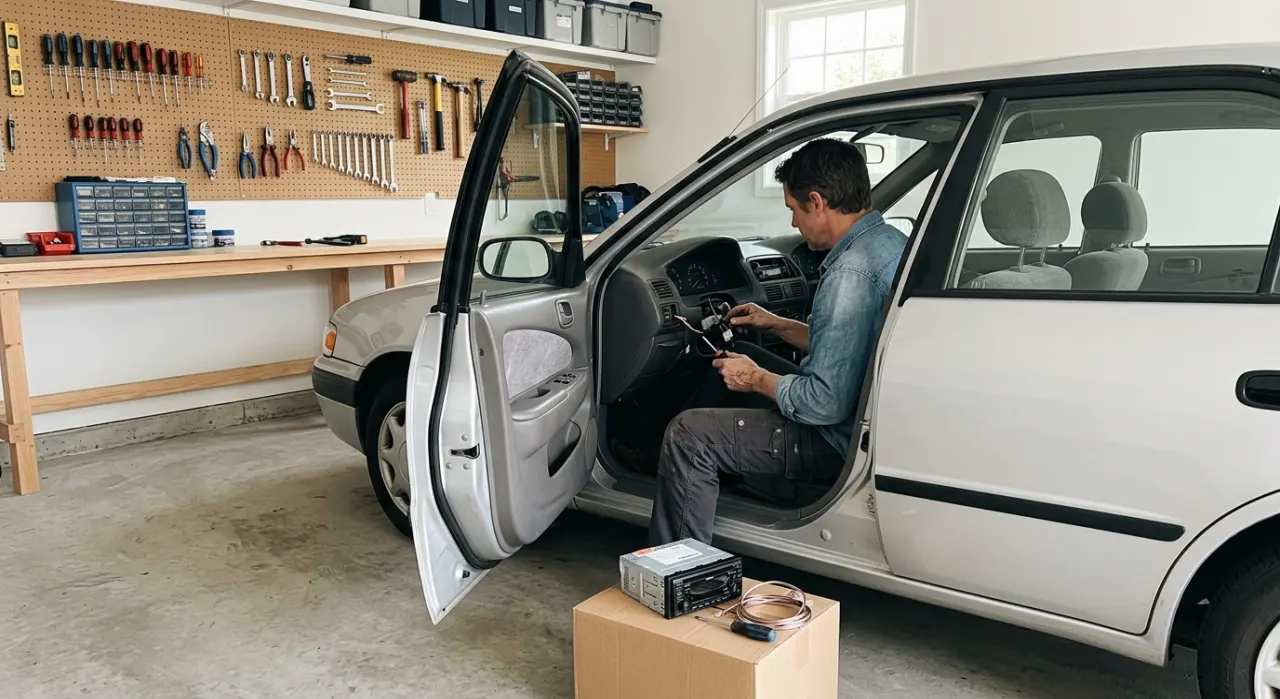
How the box is built matters more than most first-time buyers expect, and this is another area where sealed is the safer bet. A sealed enclosure only has to hit an internal volume in the ballpark of the manufacturer's recommendation; being off by ten or fifteen percent shifts the sound slightly but rarely ruins it.
A ported box is far less forgiving. Its performance depends on both the internal volume and the port's tuning, which is set by the port's cross-sectional area and length. Get the port area too small and you get "port noise" — an audible chuffing on hard bass hits. Get the length wrong and the tuning frequency lands somewhere you did not intend, changing the entire character of the bass. The consensus is unambiguous: build a ported box to the subwoofer manufacturer's published specs, not to a generic template, and use a port-tuning calculator to get the length right for your chosen frequency.
If you are buying a prefab box, the same logic applies — check that its rated volume and tuning frequency match what your specific subwoofer wants. A generic "12-inch ported box" tuned to 35 Hz may fight a sub that was designed for a smaller box tuned to 30 Hz. When in doubt, a sealed prefab box is the lower-risk purchase because there is no port tuning to mismatch.
Common myths and mistakes
"Ported is just better because it's louder." Louder is not the same as better. Ported trades accuracy and control for output. Plenty of serious listeners deliberately choose sealed and give up the volume to get cleaner, tighter bass.
"Sealed boxes can't do deep bass." They can. Cabin gain inside a car naturally reinforces low frequencies, and a good sealed setup delivers genuinely deep bass — just not at the maximum SPL a ported box hits. The depth is there; the raw loudness is what differs.
"Any box the sub fits in will work." Enclosure volume is a design parameter, not an afterthought. Too small a sealed box makes the bass peaky and stiff; too large makes it loose. Ported boxes are even fussier. Match the box to the sub's published specs.
"I don't need a subsonic filter." On a ported box you do. Below the tuning frequency the cone unloads and can slam past its safe travel on a deep hit, damaging the sub. A subsonic filter set just below tuning is standard practice and cheap insurance. Sealed boxes are self-protecting here and don't require one.
"A bigger port is always better." Bigger port area reduces chuffing but requires a longer port to keep the same tuning, and that eats box volume. Port design is a balance, not a "more is better" slider — follow the calculated numbers.
Which should you buy — and how to decide
There is no universal winner, because this isn't a better-versus-worse question — it's a matching question. Decide what you want the bass to do, then let that pick the box.
Choose sealed if you value sound quality and accuracy, listen to a wide mix of genres, have limited trunk space, are running a capable amp, or you're building your first box and want the forgiving option. Sealed rewards you with tight, defined, natural bass and almost never disappoints.
Choose ported if your music is bass-heavy — rap, EDM, reggae — you want maximum loudness per watt, you're chasing SPL, or your amp is modest and you need every decibel it can give. Just commit to building it to spec, add a subsonic filter, and make sure you have the room.
Whichever way you go, the enclosure matters as much as the subwoofer itself — a great sub in the wrong box sounds mediocre, and a modest sub in a well-designed box can genuinely impress. Match the enclosure to your music and your car, build or buy it to the manufacturer's published volume and tuning, and the "which is better" argument dissolves into "which is right for me."
Recommended Products
Our top picks in this category, ranked on aggregated owner reviews.
Best for the cleanest all-round upgrade over factory paper
- 6.5" two-way with a lightweight IMPP cone
- Bright, non-harsh PEI dome tweeter
- 40W RMS / 240W peak per speaker
- Shallow mount fits most factory doors
Why buy it: the pair owners keep telling newcomers to buy first — rated 4.6 across more than 20,000 reviews for a crisp, balanced sound that embarrasses stock speakers without touching the wallet.
Best for the most detailed top end on a budget
- 6.5" three-way A-Series coaxial
- 70W RMS / 320W peak per speaker
- Multilayer mica matrix cone
- Separate tweeter and midrange for clarity
Why buy it: owners consistently report the extra tweeter and midrange give it the most open, detailed sound in this price bracket — the pick if vocals and cymbals matter more than raw thump.
Best for the toughest build that survives real doors
- 6.5" three-way full-range coaxial
- 45W RMS / 90W peak per speaker
- Integrated concave tweeter + midrange
- Sealed motor tolerates door moisture
Why buy it: rated 4.7 across thousands of owner reviews, the R165X3 is the durability favorite — buyers routinely praise how it holds up in wet doors where cheaper cones give out.

Best for the warmest low end without adding a sub
- 6.5" two-way with a stiff polypropylene cone
- 100W RMS / 300W peak per speaker
- Heavy-duty motor for extra mid-bass
- Zero-protrusion tweeter, easy drop-in
Why buy it: based on thousands of owner reviews, the CSC65 is the one people reach for when they want punch — the beefier motor gives it noticeably fuller mid-bass than most speakers at the price.

Best for filling out the rear deck on the cheap
- 6x9" four-way A-Series coaxial
- 100W RMS / 450W peak per speaker
- Larger cone moves more air than a 6.5"
- Drop-in fit for most rear-deck cutouts
Why buy it: the rear-deck default — owners rate it 4.6 for the extra low-end body a 6x9 brings, an easy way to round out the sound before you ever think about a subwoofer.

Best for the absolute cheapest step up from blown factory speakers
- 6.5" two-way, sold as a pair
- 125W RMS / 250W peak per pair
- Poly-injection cone, rubber surround
- Shallow 2.1" mount depth
Why buy it: a wildly popular throwaway-price pair with 15,000+ reviews — nobody claims it is audiophile, but owners agree it is a real, dirt-cheap improvement over dead or crackling stock speakers.
Prices are pulled from Amazon and were accurate as of Aug 22, 2026, 6:54 PM EDT. Product prices and availability are subject to change — the live price is shown on Amazon.