
Affiliate Disclosure
Some links on this page are affiliate links. As an Amazon Associate, we earn from qualifying purchases — at no extra cost to you. We do not buy, test, or physically handle the products we cover; our rankings come from aggregated owner reviews, ratings and expert consensus. Commissions never change our verdicts. How we rank & full disclosure.
Tire Dressing (Water-Based)
A water-based emulsion of silicone and UV protectants that conditions the rubber and leaves a natural satin-to-semi-gloss finish. "Tire dressing" is the umbrella pro term, and the water-based versions prioritize protection over pure shine.
Best for: Daily drivers and anyone who wants a clean, natural look with UV protection and almost no sling
Typically $8–$20 per bottle (e.g., 303 Aerospace Protectant, Chemical Guys VRP)
- Natural satin finish that looks clean rather than plasticky
- Very low sling risk — it dries down instead of staying greasy
- Silicone-emulsion base plus UV blockers help slow rubber aging
- Attracts far less dust and road grime than an oily shine
- Can be layered coat-on-coat for more gloss if you want it
- Less dramatic wet-look pop straight out of the bottle
- Shorter per-application durability — often washes off in a week or two
- Usually needs a foam applicator and a wipe-down for an even coat
- May take two coats to reach the gloss a solvent spray gives in one
Tire Shine (Solvent-Based)
A solvent-based spray or gel that carries dimethyl silicone in petroleum distillates, engineered for an instant, glossy "wet look." Most products marketed simply as "tire shine" fall in this high-gloss camp.
Best for: Show days, quick spray-and-go gloss, and anyone chasing the deepest black, wettest finish
Typically $6–$18 per bottle (e.g., Armor All, Meguiar's Endurance Tire Gel)
- Instant, dramatic wet-look gloss in a single pass
- Fast spray-and-go application on most sprays
- Deep, glossy black that photographs well
- Often lasts longer per application than a thin water-based coat
- Slings onto paint and rockers if over-applied or not wiped
- Oily film attracts dust and turns tires brown faster
- Solvent/silicone chemistry is blamed for premature browning and cracking
- Easy to get slick residue on rims or brake components if sloppy
How they score, side by side
Scores reflect aggregated owner reviews and expert consensus — not our own bench testing.
- Instant gloss / wet look69
- Natural, clean appearance95
- Durability per application68
- Sling & mess resistance95
- Long-term rubber protection95
- Ease and speed of use79
Spec-by-spec comparison chart
| Factor | Tire Dressing (Water-Based) | Tire Shine (Solvent-Based) |
|---|---|---|
| Base chemistry | Water-based emulsion | Solvent-based (petroleum distillate + silicone) |
| Typical finish | Satin to semi-gloss | High-gloss "wet look" |
| Instant visual pop | Moderate | High |
| Durability per coat | ~1–2 weeks | ~2–4 weeks (but slings meanwhile) |
| Sling onto paint | Low | Higher if over-applied |
| Dust & grime attraction | Low | Higher — oily film holds dust |
| Long-term rubber health | Favored by detailer consensus | Debated — linked to faster browning |
| UV protection additives | Commonly included | Varies by product |
| Application | Foam pad / wipe for an even coat | Spray-and-go |
| Price per bottle | $8–$20 | $6–$18 |
Our Top 3 Picks
The three highest-rated options in this category, if you'd rather skip straight to a proven pick.
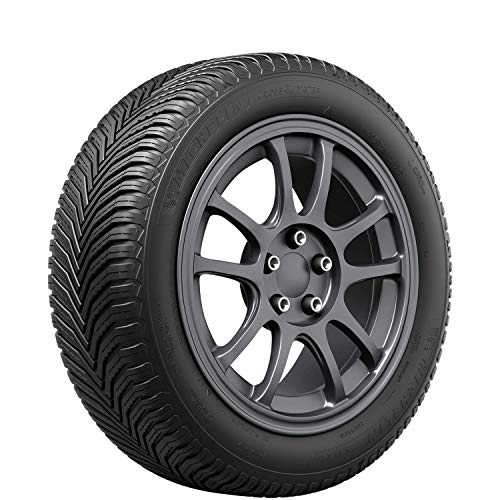
Best for the best all-round grip, wear and light-snow ability
- V-shaped tread with 3-peak-mountain-snowflake rating
- Class-leading wet and dry braking
- 60,000-mile treadwear warranty
- Real light-snow traction for an all-season
Why buy it: the tire owners and experts keep crowning as the best all-rounder — it brakes shorter in the wet than most rivals and genuinely handles snow, so it fits almost any driver in a four-season climate.

Best for the longest tread life on a sedan or minivan
- Up to 80,000-mile treadwear warranty
- Quiet, comfortable highway ride
- Strong wet grip and even wear
- Michelin’s longest-lasting all-season
Why buy it: the set-and-forget touring tire owners rate for outlasting everything else — fit it once and forget about tires for years.

Best for premium wet braking at a mid-range price
- Up to 80,000-mile treadwear warranty
- EcoPlus compound for shorter wet stops
- Fuel-efficient, low rolling resistance
- Wear indicators built into the tread
Why buy it: a hugely popular touring tire that delivers premium-brand wet performance and an 80k warranty for less than the flagships.
Prices are pulled from Amazon and were accurate as of Aug 22, 2026, 6:54 PM EDT. Product prices and availability are subject to change — the live price is shown on Amazon.
Are tire dressing and tire shine even different?
Here is the part the marketing rarely admits: "tire dressing" and "tire shine" describe the same job — putting a protectant and a finish onto the sidewall of a tire — and the labels blur into each other constantly. Plenty of products sold as "tire shine" are, chemically, tire dressings. So the honest way to compare them is not by the name on the bottle but by the two things that actually change how they look and behave: the base chemistry (water-based versus solvent-based) and the finish (natural satin versus high-gloss wet look).
"Tire dressing" is the professional, catch-all term detailers use for anything you apply to dress a tire. Within that umbrella, the products that lean toward protection and a natural look are almost always water-based. "Tire shine" is the consumer term that has come to mean the glossy, wet-look end of the spectrum, and those products are usually solvent-based. That is the split this comparison actually tracks, because it is the split that matters when you are standing in the aisle deciding.
The consensus among detailers is simple to remember: every tire shine is a tire dressing, but not every dressing is trying to be shiny. Once you frame it that way, "which is better" stops being a real question — you are choosing a look and a chemistry, not two rival products.
Water-based vs solvent-based: the real dividing line
This is the distinction that drives everything else, so it is worth understanding before you buy.
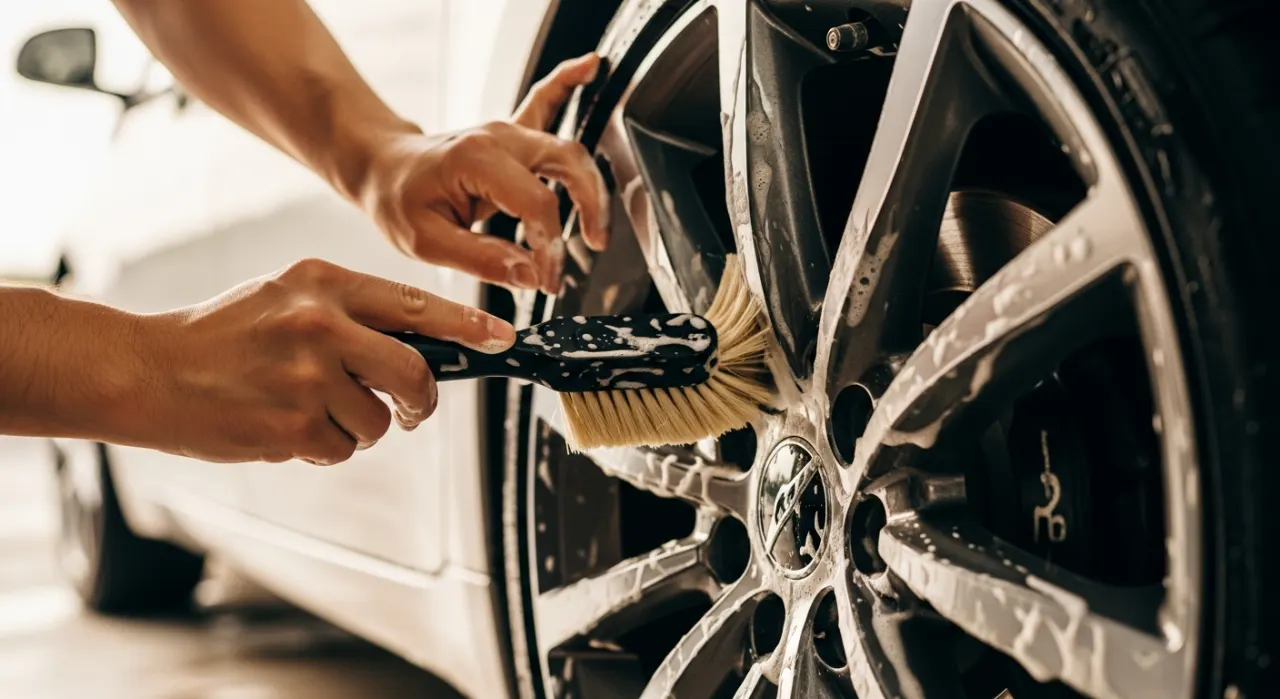
A water-based dressing is an emulsion — silicone (and often other conditioners and UV blockers) suspended in water. When you wipe it on, the water flashes off and leaves a thin, largely dry film. Because the carrier is water, these dressings tend to bond to a properly cleaned tire, dry down rather than staying greasy, and shed dust. Owners consistently report the finish looks like a clean, healthy tire rather than a wet one.
A solvent-based shine carries its silicone — commonly dimethyl silicone (PDMS) — in petroleum distillates. Those solvents let the product lay down a thick, glossy film fast and give that deep, wet black in a single pass. The trade-off is that the film stays oilier for longer, which is exactly why it can sling off the tire and why it holds road dust. Spec sheets and detailer breakdowns line up on this: the wetter and glossier a product looks straight out of the bottle, the more likely it is solvent-based.
Neither chemistry is "wrong." Water-based is the safer, cleaner, more natural choice; solvent-based buys you maximum gloss at the cost of mess. If you only remember one thing from this page, make it this pairing of carrier and behavior.
Satin dressing vs wet-look gloss
The finish is the most visible difference and usually the reason people pick a side. A water-based dressing produces a satin to semi-gloss result — the tire looks dark, clean and matte-ish, the way a new tire looks in good light. Some enthusiasts prefer this precisely because it reads as understated and factory-fresh rather than dressed.
A solvent-based shine goes for the wet look: high gloss, deep black, the "just detailed" appearance you see on show cars. It photographs beautifully and delivers the instant transformation most people picture when they think "tire shine."
There is a middle path worth knowing about. Because water-based dressings can be layered, you can build gloss coat-by-coat — two or three thin passes will get a water-based product noticeably shinier without the grease of a solvent spray. And plenty of gel dressings (Meguiar's Endurance Tire Gel is the classic example) split the difference with a durable, glossy-but-controlled finish. So the finish is less a hard wall between the two and more a dial you can turn.
Durability, sling and dust
On paper, solvent-based shine often lasts longer per application — a heavy glossy coat can look good for two to four weeks, while a thin water-based coat may fade in one to two weeks and typically won't survive a rain shower as well. But durability numbers hide two catches that aggregated owner reviews bring up again and again.
- Sling. The oily film that makes a solvent shine last also flings off the spinning tire onto your rockers, quarter panels and rims — a thin arc of greasy spots that is a pain to remove and, ironically, means the product is leaving the tire anyway. Over-applying or not wiping the excess is the usual culprit. Water-based dressings dry down and sling far less.
- Dust. A greasy sidewall is a magnet for road dust and brake dust. Within a few days a glossy tire can look dull and dirty, while a water-based satin finish tends to stay cleaner-looking for longer even if the raw "wow" was lower on day one.
So "lasts longer" deserves an asterisk. A solvent shine may technically hold its coating longer, but it can look worse sooner because of dust — and it may redecorate your paint on the way. For a car that gets driven and washed regularly, many detailers argue a water-based dressing you reapply more often is the lower-hassle choice.
The browning debate: which is safer for rubber?
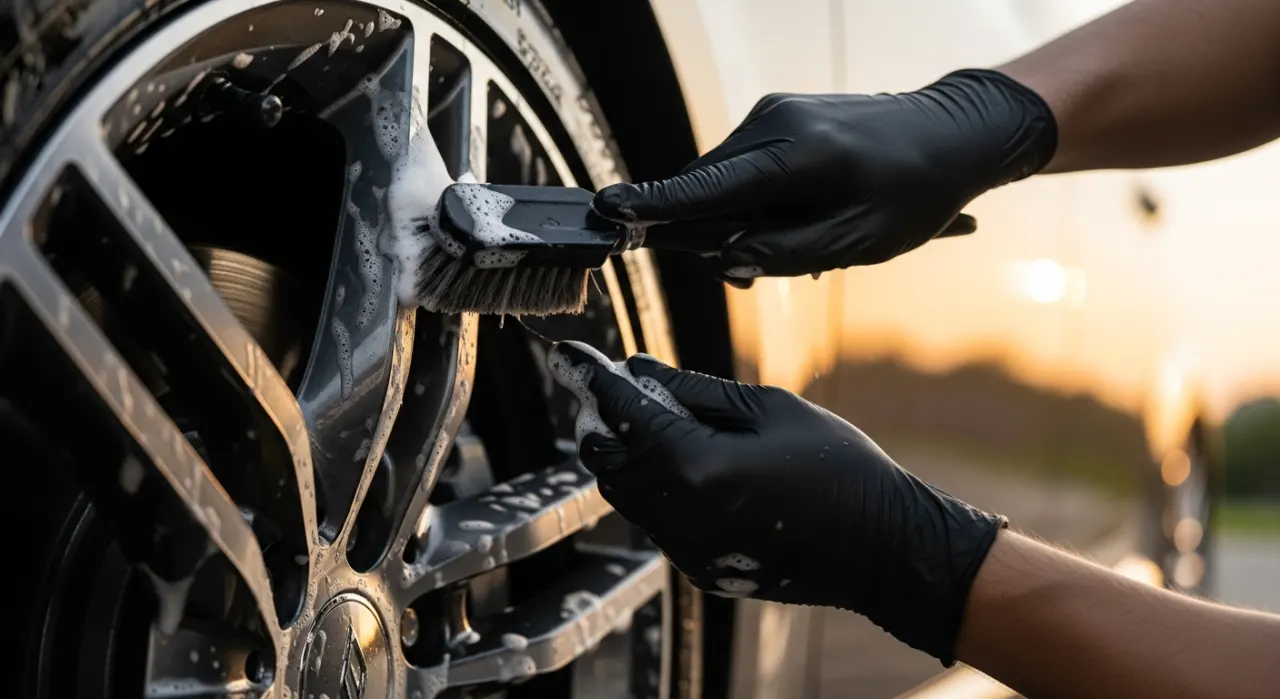
This is the most-argued point in the whole category, so here is the honest version. Tires contain protective compounds called antiozonants that migrate to the surface and shield the rubber from ozone and UV — that migration is also what causes the faint brown "blooming" you sometimes see. The concern with solvent-based products is that their petroleum solvents can, over repeated use, strip or interfere with those protective waxes and dry out the rubber, accelerating browning and eventually surface cracking. This is the widely repeated detailer consensus, and it is why many pros steer daily drivers toward water-based dressings.
The fair caveat: this is a long-term, cumulative worry, not a one-application danger, and tire manufacturers rarely publish hard data pinning cracking on dressings versus normal age, heat and UV. A tire will brown and crack eventually regardless. But given that water-based dressings often add UV protectants rather than strip protective compounds, the low-risk, protection-first choice for a car you plan to keep is clearly the water-based side. If you love the wet look, use a quality solvent shine but clean the tire well between applications and don't drown it every wash.
How to apply either without the mess
Most complaints about both products trace back to application, not the product itself. The consensus method is the same for either chemistry:
- Clean first. Dress a dirty tire and you seal grime under the coating and get uneven, blotchy results. Scrub the sidewall with all-purpose cleaner and a stiff brush, then let it dry.
- Apply to a dry tire. A damp sidewall dilutes the product and worsens sling. Let the tire dry after washing before you dress it.
- Use an applicator, not just the trigger. Spraying straight onto the tire overshoots onto the rim and wets the tread — where it becomes a slick, dust-grabbing mess. Spray onto a foam applicator (or the tire, then immediately spread with the pad) for an even film.
- Wipe the excess. The single biggest sling-killer, especially with solvent shines: after coating, wipe the sidewall with a clean microfiber to remove what didn't absorb. It costs one minute and saves your paint.
- Let it flash off before driving. Give it 5–20 minutes so the film sets instead of flinging off on the first corner.
Do that, and a solvent shine slings far less and a water-based dressing lays down more evenly. Skip it, and even the best product looks streaky and messy.
Which should you buy?
There's no universal winner, because it isn't really a versus — it's a preference. Match the product to what you actually want from the tire.
Buy a water-based dressing if you drive the car daily, want a clean and natural satin look, hate cleaning sling off your paint, and care about slowing rubber aging. It's the low-risk, low-mess default, and you can always layer it for extra gloss.
Buy a solvent-based shine if you want maximum wet-look gloss for a show, a sale listing or a photo, you don't mind reapplying and wiping carefully, and you'll keep the tires clean between coats. Just apply it sparingly and wipe the excess to keep it off your bodywork.
A practical middle ground many owners land on: keep a durable gel dressing for a controlled, long-lasting gloss and a water-based spray for quick maintenance between details. Whatever you choose, clean the tire first, use an applicator, and wipe the excess — that matters more to the final result than which name is on the bottle.
Recommended Products
Our top picks in this category, ranked on aggregated owner reviews.
Best for the best all-round grip, wear and light-snow ability
- V-shaped tread with 3-peak-mountain-snowflake rating
- Class-leading wet and dry braking
- 60,000-mile treadwear warranty
- Real light-snow traction for an all-season
Why buy it: the tire owners and experts keep crowning as the best all-rounder — it brakes shorter in the wet than most rivals and genuinely handles snow, so it fits almost any driver in a four-season climate.
Best for the longest tread life on a sedan or minivan
- Up to 80,000-mile treadwear warranty
- Quiet, comfortable highway ride
- Strong wet grip and even wear
- Michelin’s longest-lasting all-season
Why buy it: the set-and-forget touring tire owners rate for outlasting everything else — fit it once and forget about tires for years.
Best for premium wet braking at a mid-range price
- Up to 80,000-mile treadwear warranty
- EcoPlus compound for shorter wet stops
- Fuel-efficient, low rolling resistance
- Wear indicators built into the tread
Why buy it: a hugely popular touring tire that delivers premium-brand wet performance and an 80k warranty for less than the flagships.

Best for the most tire for the money
- Up to 75,000-mile treadwear warranty
- "Replace Tire" wear indicator in the tread
- Reliable wet braking and light-snow grip
- Backed by Continental’s parent company
Why buy it: the value pick owners rate again and again — a genuinely good touring tire with a 75k warranty at a bargain price.

Best for confidence in rain and winter slush
- 3-peak-mountain-snowflake certified
- Evolving Traction Grooves for wet grip
- 60,000-mile treadwear warranty
- Strong all-weather safety focus
Why buy it: the pick for drivers who see a lot of rain and the occasional storm — a true all-weather tire that carries the winter certification most all-seasons lack.

Best for sporty cars that still need year-round use
- Ultra-high-performance all-season design
- Excellent dry, wet and light-snow grip
- Tread wear indicators (DWS letters)
- A perennial enthusiast favorite
Why buy it: the enthusiast’s all-season — near-summer-tire dry grip with real wet and light-snow ability, so a sports sedan can run one set all year.
Prices are pulled from Amazon and were accurate as of Aug 22, 2026, 6:54 PM EDT. Product prices and availability are subject to change — the live price is shown on Amazon.