
Affiliate Disclosure
Some links on this page are affiliate links. As an Amazon Associate, we earn from qualifying purchases — at no extra cost to you. We do not buy, test, or physically handle the products we cover; our rankings come from aggregated owner reviews, ratings and expert consensus. Commissions never change our verdicts. How we rank & full disclosure.
Tire Plug
A rope-style repair pushed into the puncture from the outside, without removing the tire from the wheel. It is the fast, cheap fix you can do on the roadside in ten minutes.
Best for: Emergency and temporary repairs, DIY roadside fixes, and getting a nail-punctured tire mobile again fast
Typically $5–$15 for a plug kit (dozens of repairs); ~$20–$40 if a shop does it
- Fast — a plug can be installed in minutes without dismounting the tire
- Cheap, with a basic rope-plug kit covering many repairs for the price of one shop patch
- Doable on the roadside or in a driveway with no tire machine
- No need to break the bead or rebalance in a pinch
- Perfectly adequate as a get-you-home temporary fix
- Does not seal the inner liner, so it is considered temporary by tire-industry standards
- Cannot be inspected from inside for hidden internal damage
- Higher long-term failure and slow-leak rate than a proper patch
- Not recommended for large, angled, or sidewall-adjacent punctures
Tire Patch
A rubber patch bonded to the inside of the tire after it is dismounted and inspected. It seals the puncture from the airtight liner side, the way tire manufacturers actually specify.
Best for: Permanent, industry-approved repairs where the tire is dismounted, inspected, and you keep the car long-term
Typically $20–$40 installed at a shop; patches are rarely sold as roadside DIY
- Seals the airtight inner liner — the surface that actually holds pressure
- Requires dismounting, which lets a tech inspect for hidden internal damage
- Considered a durable, long-term repair when done to spec
- Lower slow-leak and re-failure rate than a bare plug
- Requires a tire machine to dismount, so it is a shop job, not roadside
- Costs more in labor and takes longer than a quick plug
- The wheel must be rebalanced afterward, adding time and a little cost
- Overkill for a tiny tread puncture that a combination repair handles better
How they score, side by side
Scores reflect aggregated owner reviews and expert consensus — not our own bench testing.
- Repair durability59
- Speed of repair95
- Cost to do it96
- DIY / roadside ability102
- Safety of the seal59
- Catches hidden damage29
Spec-by-spec comparison chart
| Factor | Tire Plug | Tire Patch |
|---|---|---|
| Repair type | Temporary (per industry standards) | Permanent when done to spec |
| Tire dismounted? | No — installed from outside | Yes — removed and inspected inside |
| Seals the inner liner | No — only fills the tread hole | Yes — bonded to the airtight liner |
| Internal inspection | Not possible | Yes — hidden damage can be caught |
| DIY / roadside friendly | Yes — 10-minute driveway fix | No — needs a tire machine |
| Rebalancing needed | No | Yes — wheel is rebalanced after |
| Cost | $5–$15 DIY kit; ~$20–$40 shop | ~$20–$40 installed |
| Time to complete | ~10 minutes | ~20–30 minutes plus balancing |
| Max puncture size | Best under ~1/4 in (6 mm) | Up to ~1/4 in (6 mm), tread only |
| Industry / RMA approved | Only as a temporary measure | Yes — patch-plug is the standard |
Our Top 3 Picks
The three highest-rated options in this category, if you'd rather skip straight to a proven pick.
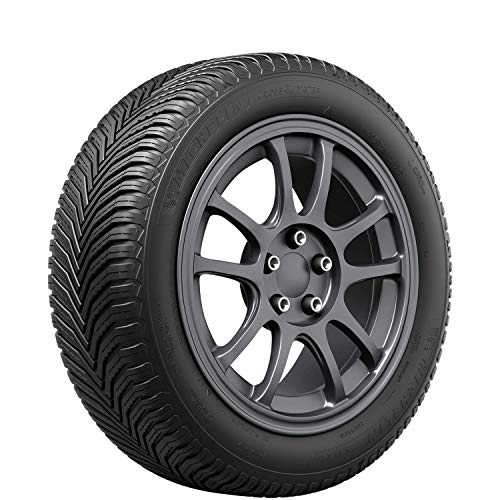
Best for the best all-round grip, wear and light-snow ability
- V-shaped tread with 3-peak-mountain-snowflake rating
- Class-leading wet and dry braking
- 60,000-mile treadwear warranty
- Real light-snow traction for an all-season
Why buy it: the tire owners and experts keep crowning as the best all-rounder — it brakes shorter in the wet than most rivals and genuinely handles snow, so it fits almost any driver in a four-season climate.

Best for the longest tread life on a sedan or minivan
- Up to 80,000-mile treadwear warranty
- Quiet, comfortable highway ride
- Strong wet grip and even wear
- Michelin’s longest-lasting all-season
Why buy it: the set-and-forget touring tire owners rate for outlasting everything else — fit it once and forget about tires for years.

Best for premium wet braking at a mid-range price
- Up to 80,000-mile treadwear warranty
- EcoPlus compound for shorter wet stops
- Fuel-efficient, low rolling resistance
- Wear indicators built into the tread
Why buy it: a hugely popular touring tire that delivers premium-brand wet performance and an 80k warranty for less than the flagships.
Prices are pulled from Amazon and were accurate as of Aug 22, 2026, 6:54 PM EDT. Product prices and availability are subject to change — the live price is shown on Amazon.
What actually separates a plug from a patch
This is one of the most argued-about repairs in car care, and most of the heat comes from people comparing two things that were never meant to do exactly the same job. Both close a puncture. But they attack it from opposite sides of the tire, and that single difference explains almost everything about durability, cost, and safety.
A plug is a sticky, rope-like strip of rubber that you push into the puncture from the outside of the tire, right through the tread, without ever removing the tire from the wheel. You ream the hole, coat the rope in vulcanizing cement, jam it in with a tool, trim the tail, and drive. The whole process takes about ten minutes and needs nothing more than a cheap kit. Because the plug only fills the tread hole and never touches the tire's airtight inner liner, the tire industry treats it as a temporary repair — a way to stop the leak and get moving, not a forever fix.
A patch comes at the same hole from the inside. The tire has to be dismounted from the wheel so a technician can buff the inner liner, apply cement, and bond a flat rubber patch over the puncture from the sealed side. Because the tire is off the rim, the tech can also look inside for the damage you cannot see from the tread — the frayed cords, the second nail, the run-flat bruising. A properly installed patch seals the surface that actually holds air pressure, which is why manufacturers consider it a durable, long-term repair.
The cleanest way to remember it: a plug fills the hole; a patch seals the liner. A plug is what you do on the shoulder of the highway. A patch is what a shop does once the tire is off the car and someone can see inside it.
The one both camps agree on: the patch-plug
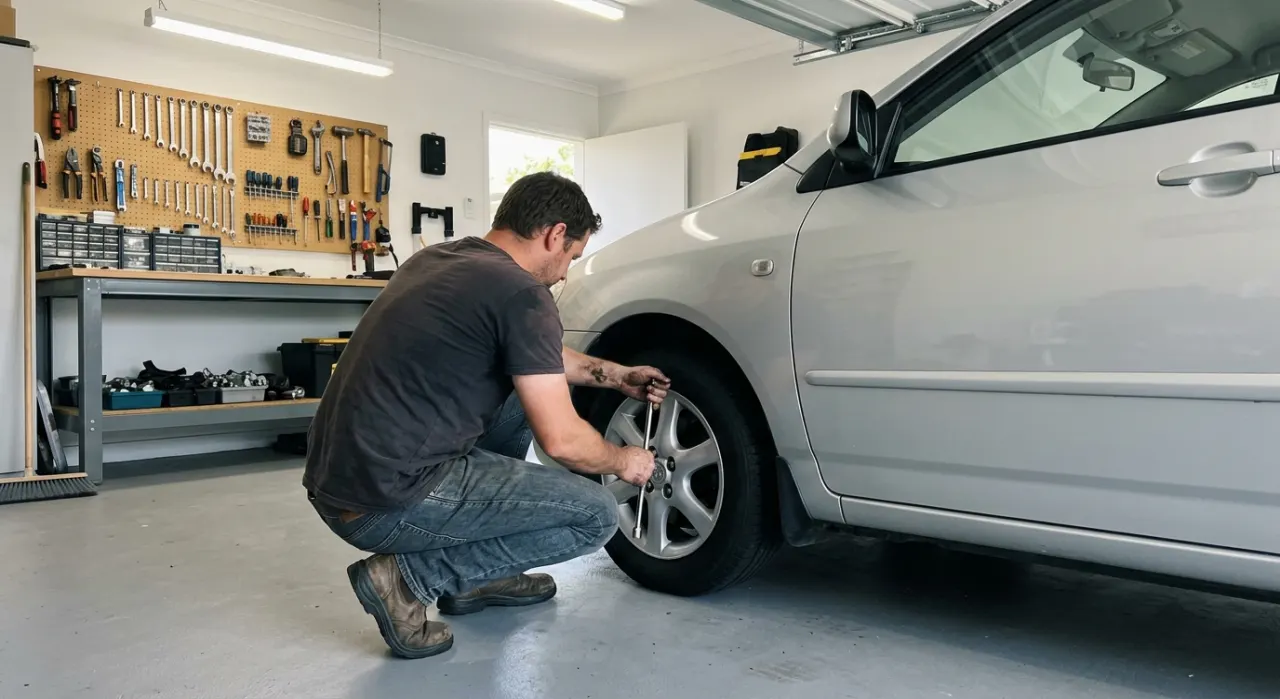
Here is the part the "plug vs patch" argument usually misses. The professional answer is not one or the other — it is a combination repair, sometimes called a patch-plug or a plug-patch. It is a single unit with a rubber stem that fills the puncture channel (the plug part) attached to a flat patch that bonds to the inner liner (the patch part). It seals the hole and the airtight surface in one piece.
This is the repair endorsed by the U.S. Tire Manufacturers Association (formerly the RMA) and by essentially every major tire maker as the correct, permanent way to fix a tread puncture. The reason it wins is that it addresses both failure modes at once: the stem stops air and moisture from wicking down the puncture channel into the steel belts (which causes rust and belt separation), and the patch seals the liner so the tire holds pressure the way it did new.
- A bare plug alone leaves the liner unsealed and lets moisture reach the belts over time — fine temporarily, risky as a permanent fix.
- A bare patch alone seals the liner but leaves the puncture channel open, so water can still creep into the tread and corrode belts.
- A combination patch-plug does both, which is why it is the shop-standard, permanent repair.
So when people ask "plug or patch," the honest answer from the trade is: use a plug to get home safely, then have a shop dismount the tire and install a proper combination repair for the long haul.
When a puncture can be repaired at all
Before either method matters, the puncture has to be repairable in the first place — and a surprising number are not. The industry rules here are consistent across manufacturers and worth knowing before you spend a dime:
- Tread area only. Repairs are only valid in the central tread. A puncture in the sidewall or the shoulder (the outer edge of the tread) cannot be safely repaired, because those areas flex too much to hold a seal. That tire needs replacing.
- Size limit of about 1/4 inch (6 mm). Holes larger than a quarter-inch are generally beyond a standard repair. A big gash or a slice is not plug-or-patch territory.
- One repair per area, limited total. Most makers cap overlapping or closely spaced repairs; two repairs too close together compromise the casing.
- Never repair a tire driven flat. If a tire ran while deflated, the internal structure may be damaged even if it looks fine — this is exactly the hidden damage a patch's dismount-and-inspect step is designed to catch.
- Angle matters. A nail that went in at a steep angle can be hard to seal reliably with a straight rope plug, which is another point in favor of the inside patch.
This is the single biggest argument for the patch route over a blind plug. When you plug from the outside, you never see the inside of the tire, so you cannot confirm the puncture qualifies as repairable at all. A dismount lets a tech verify there is no internal bruising, no second object, and no liner damage before committing to the fix.
Real cost, DIY versus the shop
On sticker price the plug wins in a landslide, but the honest comparison is what you are actually paying for. A rope-plug kit costs roughly $5–$15 and contains enough plugs and cement for many repairs, so the per-fix cost of a DIY plug is close to nothing. That is the entire appeal: it is the cheapest, fastest way to stop a leak, and you can keep the kit in the trunk indefinitely.
A shop repair — whether a patch or, more commonly, a combination patch-plug — typically runs $20–$40 installed, and many tire shops will do it free or near-free if you bought the tires there. That price buys three things the DIY plug does not: the tire comes off and gets inspected inside, the liner gets sealed properly, and the wheel gets rebalanced afterward so you do not develop a vibration.
Over the life of the tire, the math usually favors the shop repair. A permanent patch-plug lets you run the tire out to its normal tread life with confidence, while a bare plug carries a meaningfully higher rate of slow leaks and eventual re-failure — meaning you may be back under the car, or buying a tire early, because the belts corroded. The plug is cheaper today; the patch-plug is usually cheaper per mile.
Common myths and mistakes
"A plug is a permanent repair." By industry standards, it isn't. A bare external plug that never seals the inner liner is classified as temporary. It can hold for a long time, and plenty of people run them for the life of the tire without incident — but the tire makers and the USTMA do not endorse it as a permanent fix, and the failure rate is higher than a proper patch-plug.
"A patch is stronger, so skip the plug part." A patch alone seals the liner but leaves the puncture channel open to moisture, which can corrode the steel belts from the tread side. That is why the endorsed repair is the combination unit, not a plain patch.
"You can plug a sidewall to get home." Never. Sidewall and shoulder punctures are non-repairable, full stop — those areas flex too much to hold any seal, and a failure there can be a blowout. A sidewall puncture means a new tire.
"If it's holding air, the repair is fine." A tire can hold air today and still be corroding internally around an unsealed plug, or hiding belt damage from being driven flat. Holding pressure is not the same as being structurally sound, which is the whole reason the dismount-and-inspect patch exists.
"Repair it as many times as you want." No. There are limits on how many repairs a tire should carry and how close together they can sit. Too many punctures, or two too close, and the tire should be replaced.
Which should you use — and how to decide
There is no universal winner, because these aren't really competing products — they're two stages of the same fix. The right call depends on where you are and how long you plan to keep the tire.
Reach for a plug when you're stranded, the tire took a nail in the tread, and you need to be mobile now. A ten-minute rope plug is a genuinely useful, legitimate temporary repair, and every driver should carry a kit. Treat it as get-you-home insurance, not the final answer.
Get a patch — really, a combination patch-plug — when you're keeping the car and want the repair done right. Have a shop dismount the tire, inspect it inside, confirm the puncture is repairable (tread only, under about 1/4 inch, no flat-run damage), and install the combination unit. That's the manufacturer-endorsed permanent fix, and it lets you run the tire out to its normal life.
The smartest approach is the one the trade actually uses: plug it to get home, then patch-plug it to keep it. If a puncture is in the sidewall, larger than a quarter-inch, or the tire was driven flat, skip both and buy a new tire — no repair is safe on damage like that.
Recommended Products
Our top picks in this category, ranked on aggregated owner reviews.
Best for the best all-round grip, wear and light-snow ability
- V-shaped tread with 3-peak-mountain-snowflake rating
- Class-leading wet and dry braking
- 60,000-mile treadwear warranty
- Real light-snow traction for an all-season
Why buy it: the tire owners and experts keep crowning as the best all-rounder — it brakes shorter in the wet than most rivals and genuinely handles snow, so it fits almost any driver in a four-season climate.
Best for the longest tread life on a sedan or minivan
- Up to 80,000-mile treadwear warranty
- Quiet, comfortable highway ride
- Strong wet grip and even wear
- Michelin’s longest-lasting all-season
Why buy it: the set-and-forget touring tire owners rate for outlasting everything else — fit it once and forget about tires for years.
Best for premium wet braking at a mid-range price
- Up to 80,000-mile treadwear warranty
- EcoPlus compound for shorter wet stops
- Fuel-efficient, low rolling resistance
- Wear indicators built into the tread
Why buy it: a hugely popular touring tire that delivers premium-brand wet performance and an 80k warranty for less than the flagships.

Best for the most tire for the money
- Up to 75,000-mile treadwear warranty
- "Replace Tire" wear indicator in the tread
- Reliable wet braking and light-snow grip
- Backed by Continental’s parent company
Why buy it: the value pick owners rate again and again — a genuinely good touring tire with a 75k warranty at a bargain price.

Best for confidence in rain and winter slush
- 3-peak-mountain-snowflake certified
- Evolving Traction Grooves for wet grip
- 60,000-mile treadwear warranty
- Strong all-weather safety focus
Why buy it: the pick for drivers who see a lot of rain and the occasional storm — a true all-weather tire that carries the winter certification most all-seasons lack.

Best for sporty cars that still need year-round use
- Ultra-high-performance all-season design
- Excellent dry, wet and light-snow grip
- Tread wear indicators (DWS letters)
- A perennial enthusiast favorite
Why buy it: the enthusiast’s all-season — near-summer-tire dry grip with real wet and light-snow ability, so a sports sedan can run one set all year.
Prices are pulled from Amazon and were accurate as of Aug 22, 2026, 6:54 PM EDT. Product prices and availability are subject to change — the live price is shown on Amazon.