

Affiliate Disclosure
Some links on this page are affiliate links. As an Amazon Associate, we earn from qualifying purchases — at no extra cost to you. We do not buy, test, or physically handle the products we cover; our rankings come from aggregated owner reviews, ratings and expert consensus. Commissions never change our verdicts. How we rank & full disclosure.
Trickle Charger
In the strict sense, a simple charger that pushes a low, constant current into the battery — usually 500mA to 2A — with no brain to stop it. It keeps charging as long as it is plugged in, whether the battery needs it or not.
Best for: Topping up a battery over a few supervised hours, or budget-minded users who unplug on schedule
Typically $15–$40 for a basic unit
- Cheapest way to put charge back into a battery
- Dead simple — plug in, clamp on, done
- A slow, gentle current is easier on plates than a fast bulk charge
- Widely available and light enough to toss in a trunk
- No microprocessor to fail or firmware quirks to troubleshoot
- A truly "dumb" unit never stops, so it can overcharge if left connected
- Overcharging boils off electrolyte and can warp plates over weeks
- No float stage — it does not taper off once the battery is full
- Needs supervision; not something to leave on for a month of storage
Battery Tender (Smart Maintainer)
Deltran's Battery Tender is the best-known brand of smart maintainer — a microprocessor charger that runs a multi-stage cycle, then drops to a float mode that only feeds the battery when voltage sags. It is built to stay connected indefinitely.
Best for: Long-term storage of seasonal vehicles, motorcycles, classics and anything parked for weeks or months
Roughly $30 (Junior 0.75A) to $50–$60 (Plus 1.25A)
- Automatically switches to float, so it is safe to leave connected for months
- Multi-stage charging is gentler and better for battery lifespan
- Reverse-polarity and spark protection on most models
- Quick-connect ring terminals let you leave a pigtail on the vehicle
- The de-facto standard among motorcycle, boat and classic-car owners
- Costs more than a basic trickle charger
- A microprocessor and firmware are more to go wrong than a plain transformer
- Low amperage means it is slow to revive a deeply drained battery
- Some very dead or badly sulfated batteries can confuse the smart logic
How they score, side by side
Scores reflect aggregated owner reviews and expert consensus — not our own bench testing.
- Safe to leave unattended310
- Battery lifespan care59
- Speed of charge65
- Up-front affordability96
- Ease / set-and-forget510
- Protection features39
Spec-by-spec comparison chart
| Factor | Trickle Charger | Battery Tender (Smart Maintainer) |
|---|---|---|
| Charging logic | Constant low current (no brain) | Microprocessor, multi-stage |
| Auto shut-off / float | No — keeps pushing current | Yes — drops to float when full |
| Safe to leave connected for months | No (dumb units) | Yes |
| Typical output | 500mA–2A | 0.75A (Junior) / 1.25A (Plus) |
| Overcharge risk | Real if left unattended | Very low by design |
| Reverse-polarity protection | Often none | Usually built in |
| Best use | Supervised top-up | Long-term storage maintenance |
| Quick-connect pigtail | Sometimes | Standard on most models |
| Price | $15–$40 | $30–$60 |
| Best for lifespan | Neutral to harmful if misused | Actively good for it |
Our Top 3 Picks
The three highest-rated options in this category, if you'd rather skip straight to a proven pick.

Best for recovering a flat car or truck battery in an afternoon
- 10A on 6V and 12V, 12V repair mode
- Selectable AGM and lithium profiles
- Thermal sensor adjusts for ambient temp
- Force mode charges from 0 volts
Why buy it: the 10-amp smart charger owners rate highest — fast enough to refill a dead group-35 battery in a few hours, then safe to leave on float indefinitely.

Best for one car, one charger, no complications
- 5A four-stage switch-mode charging
- Lead-acid, AGM, gel and lithium settings
- Automatic float when charging completes
- Clamps plus quick-connect ring harness
Why buy it: the sensible middle of the range — 5 amps suits a normal car battery, and owners like that it drops to float and can simply stay connected.
Best for app monitoring and adjustable charge profiles
- 15A adaptive multi-stage charging
- Bluetooth app with live and historic data
- IP65 water and dust resistant housing
- Lead-acid and LiFePO4 algorithms
Why buy it: the charger enthusiasts and van owners buy once — you can watch every stage on your phone and tune the profile to the exact battery.
Prices are pulled from Amazon and were accurate as of Aug 22, 2026, 6:44 PM EDT. Product prices and availability are subject to change — the live price is shown on Amazon.
What actually separates them (and the naming trap)
The single biggest reason this comparison confuses people is that "trickle charger" has come to mean two completely different things, and stores don't help by slapping the label on both. Get the terminology straight and the decision almost makes itself.
A true trickle charger is the old-school version: a simple transformer that feeds a low, steady current — commonly 500 milliamps to 2 amps — into the battery for as long as it is plugged in. It has no idea whether the battery is empty, full, or overflowing. It just trickles. That gentle, slow current is easy on the plates while the battery is genuinely low, which is the whole appeal, but it never knows when to quit.
A Battery Tender is a brand name — Deltran's line of chargers — that has become shorthand for the whole category of smart maintainers. Inside is a microprocessor that runs a proper charging sequence (bulk, then absorption) and then drops into a float or maintenance mode that only nudges the battery when its resting voltage sags. That float stage is the entire point: it lets the charger stay connected for weeks or months without ever overcharging.
So the honest framing is not "which low-power charger is better," it is dumb-and-continuous versus smart-and-self-regulating. Confusingly, many modern chargers sold as "trickle chargers" are actually smart maintainers with a float stage — the marketing borrowed the friendly old name. The consensus among mechanics is simple: read the box for the words "automatic," "float," "maintenance mode," or "microprocessor." If they're there, you have a smart maintainer regardless of what the front label says.

Smart charging vs a constant trickle
The difference between the two comes down to what happens once the battery is full — and a lead-acid battery reaches "full" a lot sooner than most people assume.
A smart maintainer watches battery voltage and steps through stages. It pushes harder while the battery is low, eases off as it fills, then settles into float, where it holds the battery at roughly 13.2–13.6 volts and only tops up the small self-discharge that every battery leaks on its own. Because it is regulating to a target voltage rather than blindly pushing current, it can sit on a battery indefinitely. Owners of motorcycles, boats, RVs and classic cars overwhelmingly report leaving smart maintainers connected all winter with no ill effects — that is exactly what they were designed for.
A dumb trickle charger has none of that logic. It delivers the same current at hour one and hour one thousand. While the battery is genuinely discharged, that trickle is helpful. Once the battery is full, that same current has nowhere useful to go, so it starts breaking down the electrolyte instead — the classic slow overcharge. This is why the old advice with a plain trickle charger was always "put it on for a few hours and take it off," never "leave it on all season."
There is a middle ground worth naming: some inexpensive units are dumb but very low output — a 500mA "float charger" — and on a big, healthy battery the tiny current may roughly balance self-discharge without doing obvious harm. That's the grain of truth behind people leaving cheap trickle chargers on for years. But it is a gamble on battery size, ambient temperature and the charger's exact output, and it is precisely the gamble a smart maintainer removes for a few dollars more.

The overcharging risk that ruins batteries
Overcharging is the failure mode that separates these two, so it is worth understanding what it actually does. When a lead-acid battery is held above its full voltage, the excess energy starts splitting water in the electrolyte into hydrogen and oxygen — the battery "gasses." In a sealed or AGM battery that vents electrolyte it can never get back; in a flooded battery you can top up water, but you are still losing it and stressing the plates.
Do that continuously for weeks and two things happen. The electrolyte level drops, exposing the top of the plates, and the plates themselves can warp or shed material as they run hot. Aggregated owner reports and shop diagnoses consistently tie "battery boiled dry" and "swollen case" failures to a dumb charger left connected too long. It is a quiet, gradual kill — the battery often looks fine until it suddenly won't hold a charge.
A smart maintainer sidesteps all of this because float voltage sits just below the gassing threshold. It is the difference between holding a glass under a slow drip and leaving the tap running into a full glass. For unattended storage, that safety margin is the entire reason to spend the extra money.
Which one fits your situation
Because the two really do different jobs, the cleanest way to choose is by how you plan to use it rather than by price:
- Winter or seasonal storage — a motorcycle, convertible, boat, RV, classic, or a second car parked for months. This is smart-maintainer territory, full stop. You want something you can connect and forget, and a dumb trickle charger is the wrong tool for a multi-week connection.
- A daily driver that sits a few days at a time — a smart maintainer on a quick-connect pigtail is still the easy answer, but a low-output float charger is unlikely to cause trouble over a long weekend.
- A quick, supervised top-up — you're in the garage, the battery is a little low, and you'll be around to unplug it in a few hours. A plain trickle charger does this fine and cheaply.
- Reviving a deeply dead battery — neither of these is ideal. Their low amperage means an overnight-plus crawl, and some smart units refuse to start on a battery that has sagged below a few volts. A higher-amp charger with a recovery mode is the better first step.
The practical takeaway: if the charger is ever going to be connected unattended for more than an afternoon, buy the smart maintainer. If it is strictly a hands-on top-up tool, a trickle charger will do.
Real cost and value over the battery's life
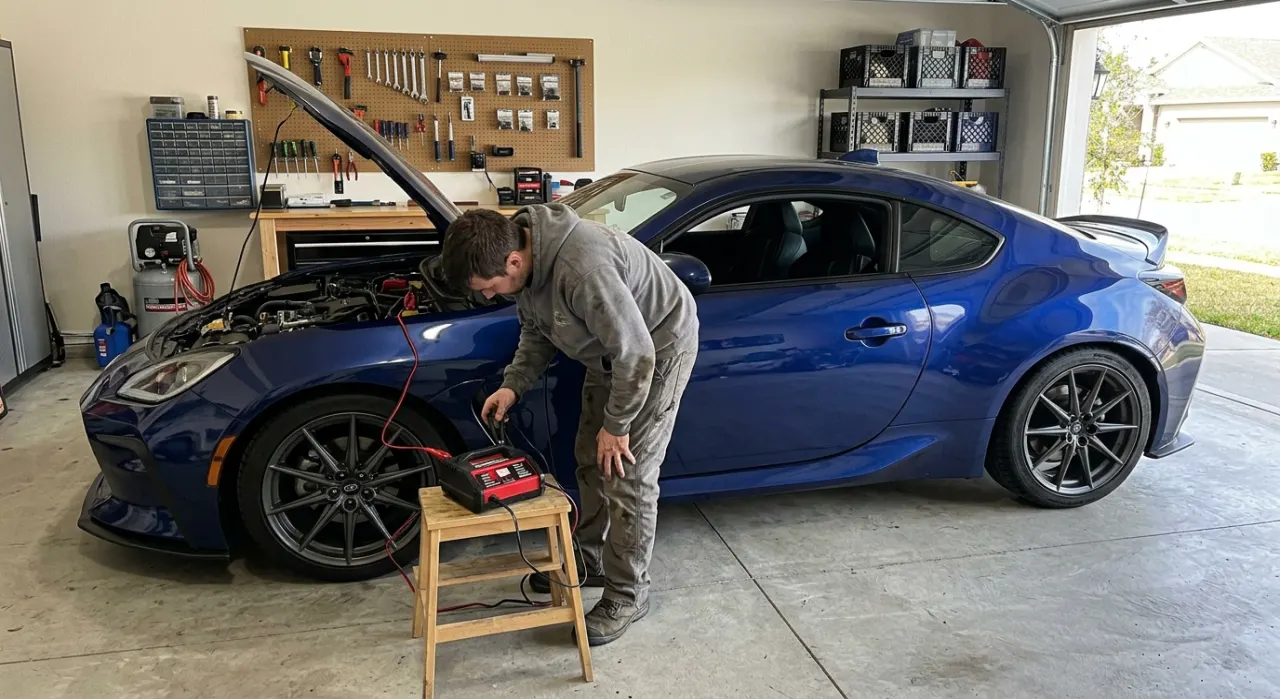
On the sticker, the trickle charger wins — $15–$40 against roughly $30 for a Battery Tender Junior or $50–$60 for a Plus. But the honest comparison is cost over the life of the battery, and that math flips fast.
A decent AGM or flooded battery runs $120–$250 to replace, and a single overcharge event from a dumb charger left on too long can end it years early. Spending $30 once to protect a $180 battery — and to keep a stored vehicle starting reliably every spring — is one of the better value calls in car care. Owners who switched after cooking a battery almost universally frame the smart maintainer as cheap insurance in hindsight.
There's a convenience dividend too. Most smart maintainers ship with a permanent ring-terminal pigtail you bolt to the battery once and tuck behind a panel; from then on you just clip the charger to the connector without opening the hood or fishing for terminals. Over years of seasonal storage that saves real hassle, and it removes the temptation to skip maintenance because getting to the battery is a chore.
Common myths and mistakes
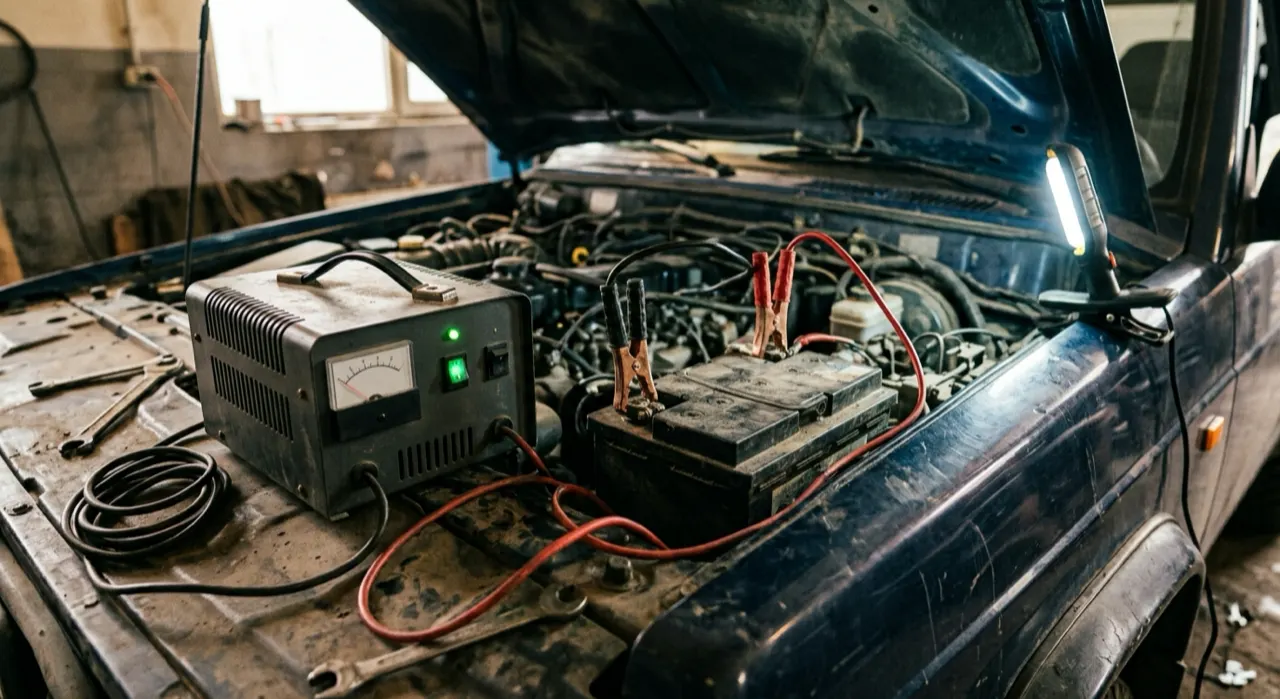
"A trickle charger and a Battery Tender are the same thing." They can be, if the "trickle charger" is secretly a smart maintainer — but a genuinely dumb trickle charger is not the same and cannot be left connected safely. Always check for a float or automatic mode before assuming.
"Leaving any charger on all winter keeps the battery healthy." Only true for smart maintainers. A dumb unit left all winter is a leading cause of boiled, ruined batteries. The float stage is what makes long-term connection safe.
"More amps is always better." Not for maintenance. These low-output chargers are meant to hold a battery, not fast-charge it. If you routinely need to revive dead batteries, that is a separate, higher-amp tool — don't judge a maintainer for being slow at a job it wasn't built for.
"A maintainer will fix a bad battery." No. If a battery is sulfated or has a dead cell, holding it at float won't repair it. Some smart chargers have a desulfation pulse that can help mild cases, but a truly failed battery needs replacing, not maintaining.
Which should you buy
For most people, buy the smart maintainer. If there's any chance the charger will be connected unattended — and for the storage jobs these are usually bought for, there always is — a Battery Tender or equivalent smart maintainer is the safer, more capable choice, and the price gap is small next to the battery it protects. It charges gently, floats safely, protects against reverse polarity, and you can genuinely set it and forget it.
Buy a plain trickle charger only if your use is strictly a supervised, few-hour top-up and you value the lowest possible price over walk-away safety. Even then, know its limit: unplug it when the battery is full and never leave it connected for days.
If you buy once, buy the maintainer. Match the model to the battery — a 0.75A Junior is plenty for a motorcycle or small car, while a 1.25A Plus suits larger batteries or a battery that drains a little between uses. Bolt on the pigtail, tuck it away, and you have a battery that starts on the first try every season.
Recommended Products
Our top picks in this category, ranked on aggregated owner reviews.
Best for recovering a flat car or truck battery in an afternoon
- 10A on 6V and 12V, 12V repair mode
- Selectable AGM and lithium profiles
- Thermal sensor adjusts for ambient temp
- Force mode charges from 0 volts
Why buy it: the 10-amp smart charger owners rate highest — fast enough to refill a dead group-35 battery in a few hours, then safe to leave on float indefinitely.
Best for one car, one charger, no complications
- 5A four-stage switch-mode charging
- Lead-acid, AGM, gel and lithium settings
- Automatic float when charging completes
- Clamps plus quick-connect ring harness
Why buy it: the sensible middle of the range — 5 amps suits a normal car battery, and owners like that it drops to float and can simply stay connected.
Best for app monitoring and adjustable charge profiles
- 15A adaptive multi-stage charging
- Bluetooth app with live and historic data
- IP65 water and dust resistant housing
- Lead-acid and LiFePO4 algorithms
Why buy it: the charger enthusiasts and van owners buy once — you can watch every stage on your phone and tune the profile to the exact battery.

Best for a charger that can also crank the engine right now
- 6A charge, 30A boost, 100A engine start
- 6V and 12V, automatic voltage detection
- Built-in battery and alternator tester
- Float mode for long-term maintenance
Why buy it: the do-everything wall charger — owners keep it for the engine-start mode that gets a dead vehicle moving without a second device.

Best for a small charger that still charges properly
- 5A on 6V and 12V, palm-sized housing
- AGM, lithium and repair modes
- Charges batteries down to 1 volt
- Mounting bracket and eyelets included
Why buy it: the charger that fits in a glovebox but behaves like a full smart charger — the best pick if garage wall space is the constraint.

Best for trucks, fleets and deeply discharged big batteries
- 30A bench charge, 80A engine start
- 2A maintainer mode built in
- 120V AC power outlet on the unit
- Digital display with alternator check
Why buy it: the shop-grade unit owners with diesel trucks and multiple vehicles buy — 30 amps refills a big battery fast when time actually matters.
Prices are pulled from Amazon and were accurate as of Aug 22, 2026, 6:44 PM EDT. Product prices and availability are subject to change — the live price is shown on Amazon.