
Affiliate Disclosure
Some links on this page are affiliate links. As an Amazon Associate, we earn from qualifying purchases — at no extra cost to you. We do not buy, test, or physically handle the products we cover; our rankings come from aggregated owner reviews, ratings and expert consensus. Commissions never change our verdicts. How we rank & full disclosure.
Wool Pads
Natural or synthetic wool fibers twisted into a pad that cuts fast and runs cooler than foam. The go-to for heavy correction, wet-sanding cleanup and hard, modern clear coats.
Best for: Heavy defect removal, hard ceramic clears, and pros who need to correct a lot of paint quickly
Typically $12–$30 per pad; quality twisted-wool and hybrid wool pads run $18–$35
- Cuts faster than almost any foam of equal aggressiveness — clears deep swirls and sanding marks in fewer passes
- Runs noticeably cooler because the fibers vent heat instead of trapping it, so less risk of burning an edge
- Bites into hard, ceramic-fortified clear coats that foam tends to skate over
- Uses less product and generates less compound dust than a matching foam cutting pad
- Long-lived — a quality wool pad survives many wash cycles that would tear up foam
- Leaves more haze and micro-marring, so it almost always needs a foam polishing follow-up step
- Sheds fibers, especially when new, that land in the compound and on the panel
- Harder for a beginner to control — aggressive enough to catch an edge or leave pigtails
- Needs thorough cleaning and drying between uses or it mats and hardens
Foam Pads
Molded open- or closed-cell foam in a full range of cut, from heavy cutting to ultra-soft finishing. The versatile, forgiving default for most DIY and finishing work.
Best for: Finishing, light-to-moderate correction, softer clears, and anyone learning to machine polish
Typically $8–$20 per pad; premium finishing and hybrid foams run $15–$28
- Available in a full cut range — one pad line covers heavy cut through final gloss
- Finishes down cleaner, so a good foam polishing pad can leave a swirl-free, ready-to-wax surface
- More forgiving and predictable for beginners — easier to keep flat and control heat
- No fibers to shed; cheaper to buy in the multi-packs most people need
- Wide compatibility with DA, forced-rotation and rotary machines alike
- A foam cutting pad works slower than wool and builds more heat doing the same correction
- Softer foams struggle to cut hard, modern ceramic clear coats
- Cells collapse and glaze over with use, so pads wear out and lose bite faster
- Heavy cutting foams can hold heat near an edge if you dwell too long
How they score, side by side
Scores reflect aggregated owner reviews and expert consensus — not our own bench testing.
- Cutting power96
- Runs cool95
- Finish quality49
- Versatility49
- Beginner friendliness48
- Value / durability87
Spec-by-spec comparison chart
| Factor | Wool Pads | Foam Pads |
|---|---|---|
| Primary job | Heavy correction / fast cutting | Versatile — cut through final finish |
| Cutting speed | Fastest for a given aggressiveness | Slower; needs more passes to match |
| Heat buildup | Runs cooler — fibers vent heat | Warmer — cells trap heat |
| Finish left behind | Hazy / micro-marred — needs a refining step | Can finish swirl-free with the right pad |
| Hard ceramic clears | Bites in and corrects | Softer foams tend to skate |
| Cut range available | Mostly cutting (some hybrid finishing wool) | Full range: heavy cut to ultra-soft finish |
| Sheds fibers | Yes, especially when new | No |
| Beginner friendliness | Harder to control | More forgiving and predictable |
| Product / dust | Uses less compound, less dust | Uses more product, more dust when cutting |
| Price each | $12–$35 | $8–$28 |
| Cleaning & care | Wash, rinse, air-dry fully or it mats | Rinse and spin-dry; simpler upkeep |
Our Top 3 Picks
The three highest-rated options in this category, if you'd rather skip straight to a proven pick.

Best for anyone who wants one do-it-all wax
- Synthetic hydrophobic polymer
- Deep, wet-look gloss
- 3–5 months of durability
- Kit includes pad + microfiber towel
Why buy it: the best balance of shine, months-long durability and beginner-easy application.

Best for maximum durability between coats
- 5–7 months of protection
- A little goes a long way
- Cheapest per use
Why buy it: nothing here survives weather longer — the durability champion.

Best for fast, cheap protection in minutes
- SiO₂ spray-on / wipe-off
- Fastest application here
- Strong water beading
Why buy it: the cheapest, fastest protection — spray on wet or dry and go.
Prices are pulled from Amazon and were accurate as of Aug 22, 2026, 6:54 PM EDT. Product prices and availability are subject to change — the live price is shown on Amazon.
What actually separates wool from foam
People frame this as "wool pad vs foam pad" like it's one-or-the-other, but the two aren't really competing — they're built to attack different stages of the same paint-correction job. Understanding what each one physically does clears up almost every buying question.
A wool pad is exactly what it sounds like: fibers — natural lamb's wool, synthetic acrylic, or a blend — twisted or looped into a pile and bonded to a backing. As the machine spins, thousands of individual fiber tips abrade the clear coat. Because the fibers stand up and channel air, a wool pad flushes heat away instead of storing it, and each tip acts like a tiny cutting edge. That structure is why wool cuts fast and stays cool, and it's why detailers reach for it on the toughest correction work.
A foam pad is molded cellular plastic — a matrix of open or closed cells whose size and stiffness set how aggressive the pad is. A dense, firm foam with abrasive-holding structure cuts; an open, plush, soft foam glides and refines. The same foam line usually spans the whole range, from a heavy orange or yellow cutting pad down to an ultra-soft black or blue finishing pad. Foam works the abrasive against the paint more gently and over a broader footprint, which is why it finishes cleaner but corrects slower.
The consensus among detailers is the cleanest way to hold it in your head: wool is a correction specialist, foam is the all-rounder. Wool removes defects in fewer passes but leaves haze; foam removes defects more slowly but can polish that haze away to a mirror. On a serious job you often use both in sequence — which is exactly why "versus" is the wrong lens.
Cutting power and heat: why wool wins the correction step
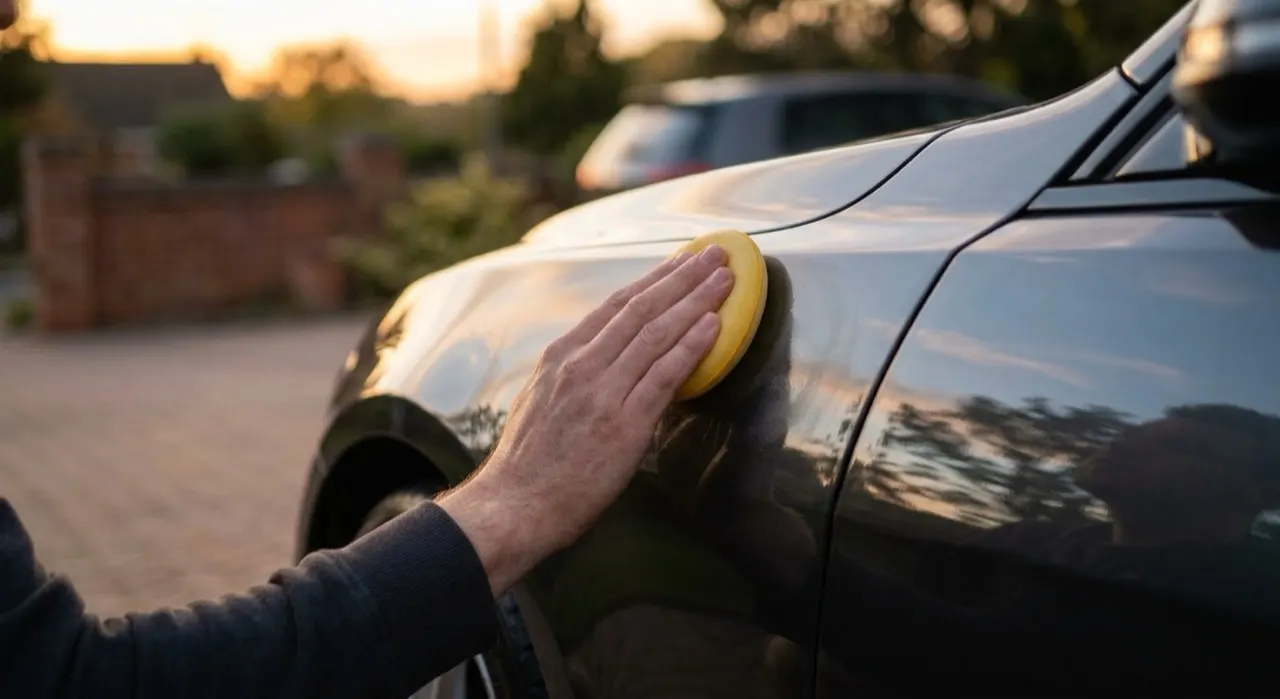
When the goal is to remove deep swirls, random isolated deep scratches (RIDS), oxidation, or sanding marks, cutting speed and heat control are what matter — and this is wool's home turf. Aggregated feedback from pro detailers is remarkably consistent on two points.
First, wool cuts faster for a given level of aggressiveness. Those upright fibers concentrate pressure into countless small contact points, so a wool pad with a medium compound will often correct in one pass what takes a foam cutting pad two or three. On a heavily swirled hood, that's the difference between an afternoon and an evening.
Second, wool runs cooler. Heat is the enemy of paint correction — too much and you risk burning through an edge or a thin panel. Foam is an insulator; its cells trap the friction heat right where the pad meets the clear. Wool's fibers vent that heat into the air as the pad spins, so the working surface stays at a safer temperature even under sustained pressure. Detailers who correct hard clears all day lean on wool largely for this reason.
The trade-off is the finish. Because wool cuts with thousands of tiny points, it leaves behind micro-marring and a light haze — sometimes called "wool marks" or "hazing." That is not a defect in the pad; it's the expected result of aggressive cutting, and it's precisely why a wool cutting step is almost never the last step. You correct with wool, then you refine with foam.
Finish quality: why foam owns the polishing step
If cutting is wool's job, finishing is foam's. Once the defects are gone, the remaining task is to erase the haze and bring up gloss — and a soft foam polishing or finishing pad is built for exactly that. Its plush, giving cells let a fine polish break down slowly and burnish the surface rather than abrade it, leaving a clarity that wool simply can't produce on its own.
This is where foam's versatility shines. A single quality foam pad line gives you a heavy cutting pad, a medium polishing pad, and a soft finishing pad — often colour-coded — so you can dial the aggressiveness up or down without changing your whole approach. Owners consistently report that a good foam finishing pad with a fine polish leaves a swirl-free, wax-ready surface on the first pass, especially on softer paints.
Foam is also the more forgiving tool, which is why it's the near-universal recommendation for anyone new to machine polishing. It's easier to keep flat on the panel, more predictable about how much it removes, and far less likely to catch an edge and leave a "pigtail" mark than an aggressive wool pad. If you own one type of pad and one machine and you're learning, a foam pad range is the sensible starting point.
The limitation is at the top of the cut scale. Even the firmest foam cutting pad struggles to match wool's speed and coolness on genuinely hard clear coats, and heavy foams glaze over — their cells collapse and stop biting — faster than wool wears out. Foam does everything reasonably well; wool does the hard-cutting one thing exceptionally.
Paint hardness and which pad your clear coat wants
The single factor that pushes most people toward wool is hard paint. Modern factory clears — particularly the ceramic-fortified and scratch-resistant systems on many German and Japanese cars — are notoriously hard, and a soft foam cutting pad will spin against them and barely touch a swirl. Detailers describe foam as "skating" on these finishes.
Wool's cutting fibers bite into that hardness where foam glides, so on a hard clear a wool pad may be the only realistic way to correct in a reasonable number of passes. On the opposite end, softer paints — many American and older single-stage or thin clears — mar easily, and an aggressive wool pad can be too much, leaving deeper hazing than the paint needs. On soft paint, foam is usually plenty and safer.
A quick field guide from detailer consensus:
- Hard clear (many German/Japanese, ceramic-fortified): wool cuts, foam skates. Reach for wool to correct, then refine with foam.
- Medium clear (much of the modern market): either works; a firm foam cutting pad handles moderate defects, wool if they're deep.
- Soft clear (many American, thin or single-stage): foam is usually enough and less likely to over-cut; save wool for genuinely severe defects.
- Unknown paint: always start with the least aggressive combination — a foam polishing pad and a fine polish in a test spot — and step up only if it isn't cutting.
The universal rule detailers repeat is to correct with the least aggressive setup that gets the job done. Jumping straight to a wool cutting pad on soft paint removes clear you didn't need to remove, and clear coat is a finite resource.
Machine, technique and common mistakes
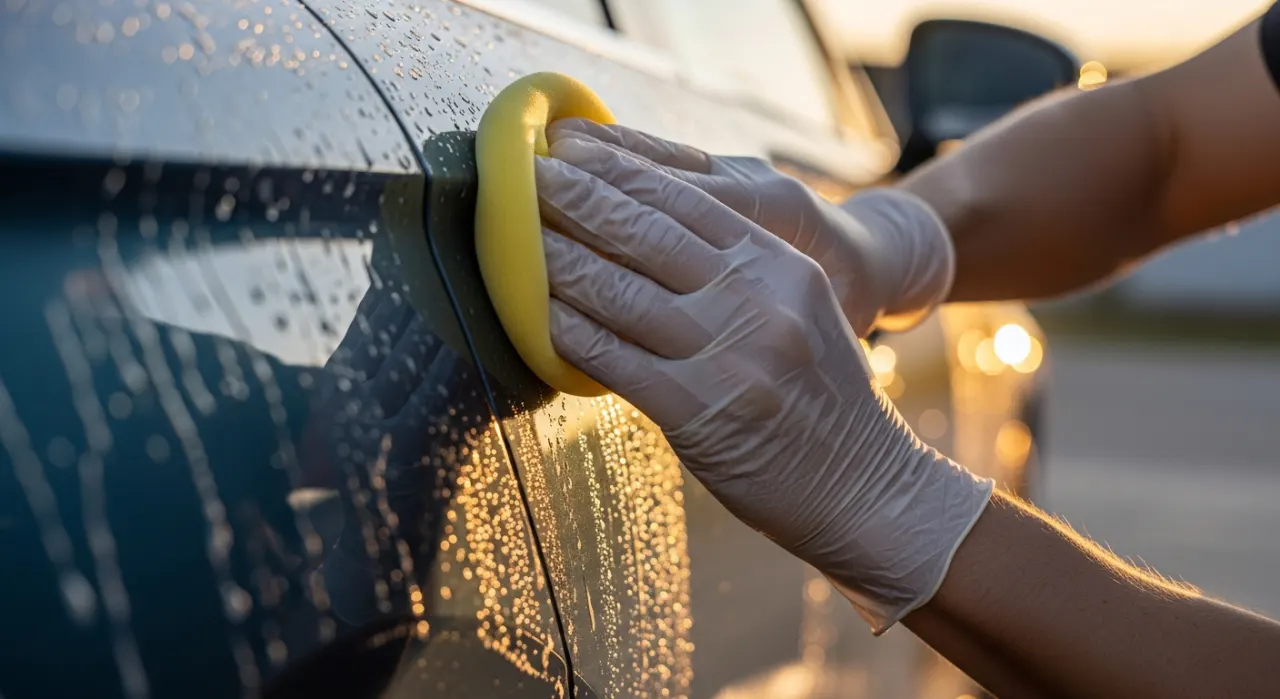
Pad choice interacts with the machine, and getting the pairing wrong is where beginners struggle. A few realities worth knowing before you buy:
- Wool historically pairs with rotary and forced-rotation polishers, where the constant rotation lets the fibers cut. On a free-spinning dual-action (DA) polisher, a heavy wool pad can bog the machine down and stall the rotation — though many modern hybrid and thinner wool pads are now designed to work well on a DA.
- Foam is happy on everything — DA, forced-rotation and rotary alike — which is another reason it's the beginner default.
- Pad size matters: smaller pads concentrate cut and are easier to control; larger pads cover ground but demand a more capable machine. Wool amplifies this — a big wool pad on an underpowered DA is a recipe for frustration.
The most common mistakes the consensus flags:
- Skipping the refine step after wool. Wool haze is expected — leaving it there and waxing over it just seals in the micro-marring. Always follow wool with a foam polishing step.
- Using a foam cutting pad on hard paint and blaming the compound. Often the pad, not the product, is why nothing's happening — the foam is skating and wool is the fix.
- Letting a pad clog. Both types load up with spent product and removed clear; brushing wool clean and "cleaning on the fly" keeps cut consistent. A glazed, clogged pad stops cutting and starts smearing.
- Not priming or cleaning pads properly. Wool especially must be washed, rinsed and air-dried fully or the fibers mat and harden into a useless disc.
Real cost and care over a pad set's life
Per pad, the two are close — wool typically $12–$35, foam $8–$28 — so price rarely decides the choice on its own. The bigger cost question is how many pads a job needs and how long each lasts.
Foam is usually bought in multi-packs because you rotate through several as they load up on a big correction, and because cutting foams glaze and wear out faster — their cells collapse under heat and pressure. Wool costs a little more up front but a quality twisted-wool pad is genuinely durable, surviving many more wash-and-reuse cycles than a foam cutting pad before it needs replacing. Over a few years of regular detailing, that durability can make wool the cheaper cutting solution despite the higher sticker price.
Care is where the running cost really diverges. Foam is simple: rinse it, spin or pat it dry, store it flat. Wool demands more — thorough washing to flush embedded compound, a full rinse, and complete air-drying, because a wool pad put away damp or dirty mats down and hardens into something you'll throw out. Owners who look after wool get years from it; owners who don't replace it far sooner than foam.
Factor in consumables too: wool uses less compound and throws less dust for the same correction, which is a small but real saving on a big job. Foam's forgiveness costs a little more product and a little more cleanup, but buys you control.
Which should you buy — and how to decide
There is no universal winner, because this isn't really a versus — it's a sequence. The right buy depends on the job in front of you, your paint, and your experience.
Buy wool if you're removing heavy defects, working on hard ceramic-fortified clear coats, cleaning up wet-sanding marks, or correcting a lot of cars and want speed with less heat. Pair it with a rotary or forced-rotation polisher (or a DA-specific hybrid wool), and always plan a foam refining step to follow — wool corrects, it doesn't finish.
Buy foam if you're finishing, doing light-to-moderate correction, working on softer paint, or you're still learning to machine polish and want a forgiving, do-everything pad range. A three-pad foam set — cut, polish, finish — covers the vast majority of DIY detailing on its own.
Buy both if you're serious about correction, which most people who ask this question eventually are. The classic workflow is wool (or a heavy foam) to knock out the defects, then a foam polishing and finishing pad to erase the haze and bring up gloss. That two-stage combination — aggressive cut, refined finish — is what produces a genuinely swirl-free, glossy result, and it's why the pros keep both in the bag rather than choosing one. Start with the least aggressive setup that works, test on a small spot first, and step up only when the paint tells you to.
Recommended Products
Our top picks in this category, ranked on aggregated owner reviews.
Best for anyone who wants one do-it-all wax
- Synthetic hydrophobic polymer
- Deep, wet-look gloss
- 3–5 months of durability
- Kit includes pad + microfiber towel
Why buy it: the best balance of shine, months-long durability and beginner-easy application.
Best for maximum durability between coats
- 5–7 months of protection
- A little goes a long way
- Cheapest per use
Why buy it: nothing here survives weather longer — the durability champion.
Best for fast, cheap protection in minutes
- SiO₂ spray-on / wipe-off
- Fastest application here
- Strong water beading
Why buy it: the cheapest, fastest protection — spray on wet or dry and go.

Best for first-timers who want a foolproof shine
- Foolproof carnauba liquid
- Warm, wet look
- Wipes off clean even if it dries
Why buy it: almost impossible to mess up — the perfect first wax.

Best for show cars and dark paint
- Premium carnauba paste
- Concours-grade warm gloss
- Easy to apply for a paste
Why buy it: stunning depth on dark paint — a show finish you use for the ritual.

Best for detailing hobbyists chasing gloss
- Soft carnauba paste
- Excellent gloss
- Buffs off easily
Why buy it: a detailing-hobbyist favorite that finishes beautifully.
Prices are pulled from Amazon and were accurate as of Aug 22, 2026, 6:54 PM EDT. Product prices and availability are subject to change — the live price is shown on Amazon.