

Affiliate Disclosure
Some links on this page are affiliate links. As an Amazon Associate, we earn from qualifying purchases — at no extra cost to you. We do not buy, test, or physically handle the products we cover; our rankings come from aggregated owner reviews, ratings and expert consensus. Commissions never change our verdicts. How we rank & full disclosure.
The short version: a pair of convex blind spot mirrors is one of the cheapest safety upgrades you can make — they widen your view to reveal the car hiding beside you, as long as you place them right and still shoulder-check. Ranked across owner reviews, our #1 pick is the Ampper Round: owners praise its crisp HD glass, low-profile frameless look and strong adhesive. Want to aim the angle precisely? An adjustable ball-joint model is the pick. Below is the full ranked field, how we rank, and the honest trade-offs.
Blind spot mirrors are one of the small electronics-and-safety upgrades in a well-sorted car — see the dash cams hub for another, and the car audio hub for the rest of your build.
Top Picks at a Glance
Our #1 Pick: Ampper 2-inch Round Blind Spot Mirror
The clean, effective default. Owners rate it highly because the HD convex glass gives a genuinely wider view, the frameless design keeps it low-profile so it does not eat into your side mirror, and the adhesive holds through weather and car washes. Pros: crisp glass, discreet, strong stick-on, cheap. Cons: the fixed mount means you must place the angle right the first time — adjustable models are more forgiving if you like to fine-tune.
Best for a clean, frameless convex mirror for any car
- 2 in HD glass convex mirror
- Frameless for a low-profile look
- Strong stick-on adhesive
- Pack of two
Why buy it: the blind-spot mirror owners rate highest — a crisp frameless convex glass that widens the view without hogging the side mirror, on rock-solid adhesive.
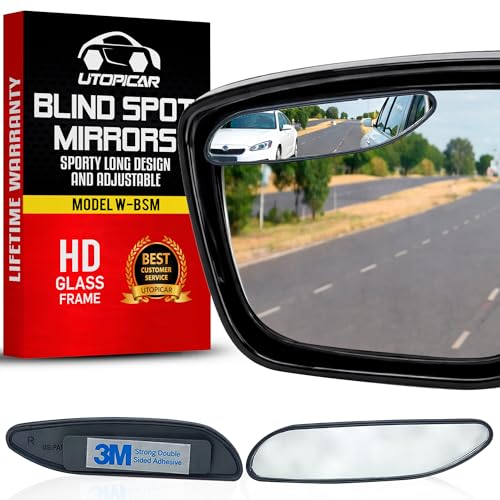
Best for a wide strip that shows more lane, less sky
- Long 5.3 x 1.3 in strip shape
- Up-and-down adjustable
- Shows the next lane, cuts sky glare
- Aesthetic low-profile design
Why buy it: the pick for a stylish install — a long horizontal strip that frames the next lane instead of the sky, adjustable to your exact angle.
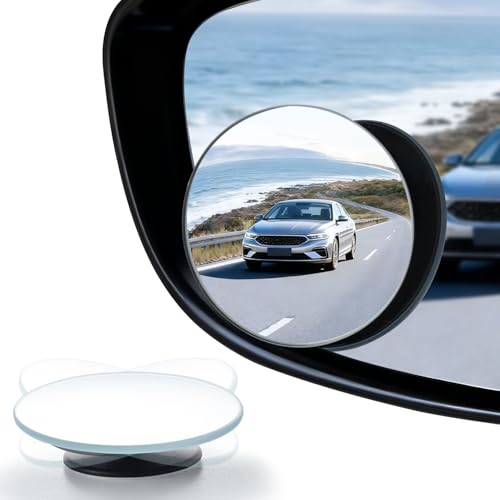
Best for adjustable convex mirrors on a budget
- 2 in HD frameless convex glass
- Wide-angle adjustable ball joint
- Strong 3M-style adhesive
- Pack of two
Why buy it: the value pick that adds an adjustable joint — swivel the wide-angle glass to your exact blind spot, for the price of a coffee.
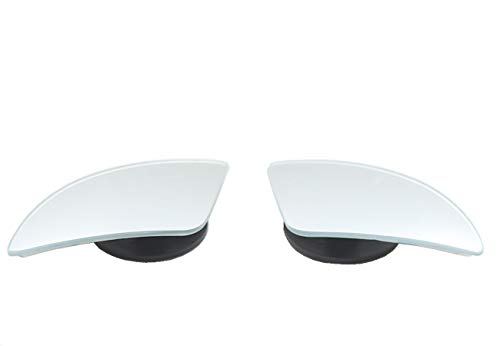
Best for fine-tuning the angle after mounting
- 360-degree adjustable convex mirror
- HD glass, frameless
- Sway-and-rotate ball mount
- Fits cars, SUVs and trucks
Why buy it: the pick for dialing it in — a fully rotating mount that lets you aim the convex glass precisely at your blind spot after it is stuck on.

Best for a long-arm swivel for trucks and vans
- Long-arm HD convex mirror
- Wide swivel adjustment range
- Universal fit for trucks and cars
- Clear wide-angle view
Why buy it: the pick for bigger vehicles — a longer adjustable arm that reaches out for a clearer wide-angle view around a truck or van’s larger blind spots.

Best for a rectangular shape that matches the mirror
- Rectangular HD convex glass
- Wide-angle adjustable stick
- Frameless, low-profile
- Pack of two
Why buy it: the pick for a factory look — a rectangular convex mirror that sits naturally in the corner of a rectangular side mirror without looking bolted-on.
Why Convex Mirrors Work
A blind spot mirror is a small convex mirror that curves the reflection to show a much wider angle than your flat side mirror — enough to bring the car sitting in your blind spot into view. They genuinely cut the lane-change guesswork, and drivers routinely report catching cars they would otherwise miss. The one caveat is inherent to convex glass: it makes objects look smaller and farther away than they are. So use the mirror to detect that something is beside you, then confirm with a head check. Used that way it is a cheap, effective upgrade — a supplement to the shoulder check, not a replacement.
Placement Is Everything
A blind spot mirror only helps if it points at the blind spot. Mount it on the outer corner of your side mirror — upper or lower, at the edge away from the part of the flat mirror you rely on — so it covers the area just behind and beside your car without blocking your main view. Clean and dry the spot, position the mirror, and before pressing it down permanently, sit in the driver’s seat and confirm the angle shows the lane beside you. Adjustable models let you tweak afterward; fixed ones you test-place first. Right placement is the whole difference between useful and pointless.
Round, Rectangular or Strip
Shape is mostly fit and taste. Round convex mirrors are the most common, give a wide field of view, and suit almost any side mirror. Rectangular ones tuck into the corner of a rectangular factory mirror for a more integrated, factory look and can sit flatter. Long strip mirrors show a wide horizontal slice of the lane and appeal to sports-car owners who want less sky in the reflection. They all use the same convex principle, so pick the shape that fits your mirror and looks right. An adjustable version of any shape is the most forgiving to aim.
Adhesion and Removal
These attach with strong adhesive built to survive weather and car washes, so once mounted they stay put — which is why placing them correctly the first time matters. To remove one later without residue, warm the adhesive with a hairdryer and peel slowly, then clean any leftover glue with adhesive remover. Yanking a cold mirror off fast is what risks marking the side mirror. On a lease, the warm-and-peel method takes them off cleanly at return. Treat them as effectively permanent, and take the extra minute to aim them right before you commit.
Installation and Vehicle Compatibility
Fitting one is a two-minute job, but the attachment step is what decides whether it lasts. Wipe the mounting spot with the supplied alcohol pad, let it dry fully, then press the mirror firmly for thirty seconds so the adhesive keys in — most owners who report a mirror working loose skipped that clean-and-cure step during installation. The convex glass is compatible with essentially any side mirror, flat or slightly curved, and sits happily alongside other side-mirror accessories like rain visors or rearview add-ons without interfering. Give the adhesive a full day to reach maximum grip before the first car wash.
Choosing for Trucks, SUVs and Vans
Bigger vehicles have bigger blind spots, so the pick shifts. On a truck, SUV or van, owner recommendations lean toward a longer-arm adjustable model — the extra reach lets the convex glass see past a wide body and a taller side mirror to show the lane beside you. A fixed round mirror still helps on any car, but for a larger rig the swivel range matters more than the shape. Aim it low enough to catch the road at the rear quarter and you gain a clear wide-angle view down the side that a flat factory mirror simply cannot cover.
The Utopicar Strip vs a Round Mirror
Owners who dislike a round dot on the glass often land on the Utopicar long strip instead. It swaps the circular field for a wide horizontal view that frames the next lane and trims out sky and ground. Sports-car drivers say the slim shape looks cleaner on a low, sculpted mirror, and the strip tilts up and down so you can drop the angle to catch the road at your rear quarter. It is a taste call more than a performance one. A long mirror and a round convex both reveal the blind spot — the strip simply shows a slimmer, lane-shaped slice of it.
Patented Frameless Designs
A few makers market a patented frameless mount or glass shape, and it helps to know what that actually buys you. The genuine benefit is a slimmer profile: a frameless edge sits flush and eats less of your factory mirror than a bezelled one. Owners report the low-profile look is the real draw, not any optical magic — the convex curve does the widening regardless of the frame. Treat a patent claim as a sign of a considered design, not a promise of a wider field. Clear glass and strong adhesive still matter more than the badge on the box.
Buying Tips: Sellers and Listings
Because these are cheap, the market is crowded, and a typical listing bundles a pair with an alcohol wipe and a vague fitment note. Stick to a seller with a long review history and thousands of ratings — that volume is the honest signal, since a good blindspot mirror is simple to make but a poor one ships with hazy glass or weak glue. Check what the listing actually offers: pack quantity, glass diameter, and whether the mount is fixed or adjustable. Owners who felt burned almost always bought the cheapest unbranded option with a handful of reviews rather than a proven pick.
How We Rank
A blind spot mirror earns its place by widening the view and staying stuck, so we rank by aggregated owner ratings, review volume, and the themes owners repeat. We weigh four things. Optics — clear HD glass with a genuinely wide angle. Adjustability — whether you can aim it after mounting. Adhesion — holding through weather and washes. And fit and finish — a low-profile look that suits the mirror. Prices were current at the time of writing.
Quick Comparison
Ampper 2-inch Round Frameless Blind Spot Mirror
Best for a clean, frameless convex mirror for any car
Best for Sports Cars
Utopicar Long Blind Spot Mirror
Check Price on Amazon
Best Value
LivTee 2-inch Round Blind Spot Mirror
Check Price on Amazon
Best Adjustable
KITBEST Blind Spot Mirror (Adjustable)
Check Price on Amazon
Best Swivel
Zone Tech Adjustable Round Blind Spot Mirror
Check Price on Amazon
Best Rectangular
LivTee Rectangular Blind Spot Mirror
Check Price on Amazon
The Verdict
For a crisp, discreet, effective mirror, the Ampper Round is the one owners rate above the rest. If you like to aim the angle, an adjustable KITBEST or LivTee is the pick, and sports-car owners should look at the Utopicar strip. Whatever you choose, place it on the outer corner, confirm the angle, and keep shoulder-checking. See the dash cams hub for another cheap safety upgrade. Check Price on Amazon →