

Affiliate Disclosure
Some links on this page are affiliate links. As an Amazon Associate, we earn from qualifying purchases — at no extra cost to you. We do not buy, test, or physically handle the products we cover; our rankings come from aggregated owner reviews, ratings and expert consensus. Commissions never change our verdicts. How we rank & full disclosure.
The short version: a line output converter is the bridge that lets you add an amp or subwoofer to a factory stereo with no RCA outputs — and on a modern car, an active LOC that restores rolled-off bass is worth the extra money. Ranked across owner reviews, our #1 pick is the AudioControl LC2i: owners praise its clean active circuit, AccuBASS and auto turn-on. Just adding a sub on a budget? The Scosche LOC2SL is the value pick. Below is the full ranked field, how we rank, and the honest trade-offs.
A LOC is one step in adding bass — pair it with the right amplifier and subwoofer, and see how to add a subwoofer. See the car audio hub for more.
Top Picks at a Glance
Our #1 Pick: AudioControl LC2i
The one that handles modern factory systems. Owners rate it highly because its active circuit accepts a strong factory signal without distorting, AccuBASS restores the bass a factory EQ rolls off, and signal-sense turn-on means no extra remote wire to run. Pros: clean active signal, AccuBASS, auto turn-on, high input tolerance. Cons: it costs more than a simple passive LOC — overkill if your factory signal is strong and you just want to add a basic sub.
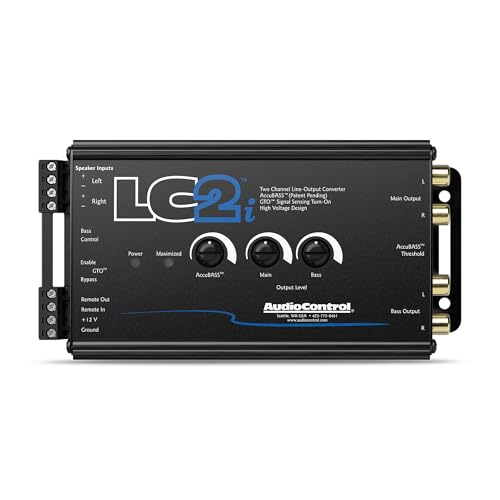
Best for adding an amp to a factory stereo the right way
- Active circuit accepts up to 400W input
- AccuBASS restores factory-rolled bass
- Signal-sense auto turn-on
- Clean line-level output
Why buy it: the LOC owners rate highest — an active converter that takes a strong factory signal, restores the bass a factory EQ rolls off, and turns your amp on automatically.
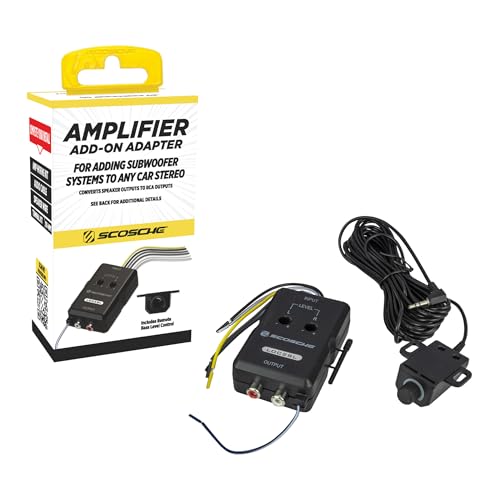
Best for a simple, cheap sub install with a bass knob
- 2-channel high/low RCA converter
- Included remote bass level knob
- Signal-sensing amp turn-on
- Compact and easy to install
Why buy it: the value pick owners praise — everything you need to add a sub amp for the price of lunch, including a dash bass knob and auto turn-on.

Best for the cleanest signal with a dash bass knob
- Active LOC with AccuBASS
- Includes ACR-1 dash bass remote
- Impedance matching and GTO turn-on
- High-headroom clean output
Why buy it: the premium pick for a serious sub — pristine signal, AccuBASS, impedance matching, and a dash knob to ride the bass level on the fly.

Best for a simple passive LOC with adjustable level
- Adjustable 2-channel passive LOC
- Isolated input/output stops ground noise
- Flat 20Hz-10kHz response
- Dash-friendly compact size
Why buy it: the pick for a clean, no-power install — a passive converter with a level knob and ground-loop isolation, ideal when your factory signal is already strong.

Best for a buffered signal with automatic turn-on
- Active 2-channel with auto turn-on
- Buffered output for a stronger signal
- Handles low or high input levels
- Simple wiring
Why buy it: the pick for a weak factory signal — an active, buffered converter that boosts a thin output and switches the amp on by itself.
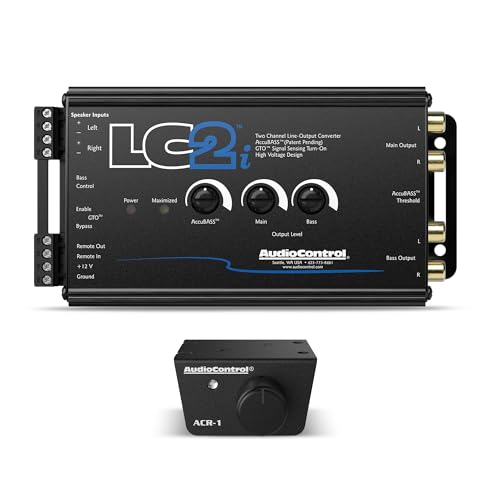
Best for the LC2i bundled with a bass knob
- LC2i active LOC plus ACR-1 remote
- AccuBASS bass restoration
- Dash-mounted bass level control
- Signal-sense turn-on
Why buy it: the pick for hands-on bass control — the trusted LC2i with the dash remote included, so you set the low end from the driver’s seat.
What a LOC Does
A line output converter solves one problem: your factory stereo has no RCA preamp outputs to feed an aftermarket amp. The LOC taps the factory speaker wires (a high, speaker-level signal) and converts them down to the low-level RCA signal an amplifier expects. That is the whole job — the standard bridge between a stock head unit and an aftermarket amp, used most often to add a subwoofer while keeping the factory system otherwise intact. Without one, you cannot get a clean line-level signal out of a stock stereo, which is why the LOC is the first part in most factory-plus-sub builds.
Active vs Passive
The core choice. A passive LOC is a simple transformer with no power connection — cheap, clean, and fine when the factory signal is already strong. An active LOC has power and ground and buffers or amplifies the signal, which matters when the factory output is weak or processed, and it unlocks features like signal-sense turn-on and AccuBASS. Modern factory systems often have quirky, rolled-off signals, so an active converter handles them far better. If your signal is strong and simple, passive saves money; if it is weak or heavily processed, spend up for active — it is the difference between clean bass and a thin, noisy result.
AccuBASS and the Factory Bass Roll-Off
Here is a trap in modern cars: many factory stereos automatically reduce bass as you raise the volume, to protect small factory speakers. Feed that signal to a subwoofer and the sub goes quiet at exactly the loud moments you wanted bass. AccuBASS (AudioControl’s feature) detects and corrects that roll-off so the sub keeps hitting. On a newer, processed factory system it is genuinely valuable; on a simple older stereo with flat output you may not need it. If your added sub seems to fade as you turn it up, factory bass roll-off is the likely cause — and an active LOC with AccuBASS is the fix.
Turn-On and Bass Control
Two conveniences round out a good LOC. Signal-sense (or auto) turn-on switches the amp on when it detects audio, so you do not have to run a separate remote-turn-on wire from the head unit — a real time-saver on a factory install. A remote bass knob mounts on the dash and lets you ride the subwoofer level to suit the music, up for a bass-heavy track and down for a podcast. Some LOCs include the knob (Scosche LOC2SL); others offer it as an add-on (AudioControl’s ACR-1). Decide whether you want set-and-forget or hands-on bass before you buy.
How We Rank
A line output converter earns its place by delivering a clean signal and installing without hassle, so we rank by aggregated owner ratings, review volume, and the themes owners repeat. We weigh four things. Signal quality — clean conversion, ground-loop isolation, high input tolerance. Bass integrity — AccuBASS or similar for processed systems. Convenience — auto turn-on and a bass remote. And value — features for the price, active where it matters. Prices were current at the time of writing.
Wiring a Line Output Converter: Channels and Diagrams
Wiring a LOC is the part that worries first-time installers, but owners consistently report it is manageable. A standard two-channel converter taps the front speaker wires; a four-channel unit taps front and rear when you want a full-range signal. Match wire colours to the maker’s wiring diagram — most brands publish one as a downloadable PDF — and a plug-and-play harness such as a Metra adapter can save you cutting into the factory loom on popular vehicles. Run the RCA output to your amp, ground the unit to bare metal, and if it is an active converter, feed it switched power. Take your time on the speaker-wire taps: a clean connection here is what separates quiet, hum-free bass from a ground-loop whine.
How Many Channels Your Subwoofer System Needs
How many channels you need comes down to what the converter has to feed. For a single subwoofer, a two-channel LOC summing the front signal is the standard, and it is all most sub installs require. If you are also driving new full-range speakers from an aftermarket amp, a four-channel converter keeps front and rear separate so your fader still works. Owners running a factory system they want to keep usually find a good two-channel unit is plenty — the sub gets a clean low-level signal and the rest of the system stays untouched. Buy more channels than your system actually uses and you are paying for inputs that sit idle.
Trusted Brands: Why a Few Are So Widely Considered Reliable
A handful of names dominate the LOC market, and it is worth knowing why. AudioControl and PAC are widely considered the reliable, industry-standard choice for active converters — their active-circuit technology handles the processed signals modern factory systems throw at them, which is why they stay among the best sellers year after year. Scosche earns its place on value, and you will also see full-range audio brands like Kicker sold as part of a wider amp-and-sub lineup. The performance owners describe over years of reviews — consistent, quiet, no failures — is what keeps these units recommended over cheaper unknowns.
Where the Pro Models Fit
The step-up Pro converters (such as the LC2i Pro) add impedance matching and an included dash bass remote. The core technology was designed to solve the exact roll-off and turn-on headaches owners report, so if your factory system is heavily processed the Pro tier is the safer buy.
Quick Comparison
AudioControl LC2i 2-Channel Line Output Converter
Best for adding an amp to a factory stereo the right way
Best Value
Scosche LOC2SL Line Output Converter
Check Price on Amazon
Best Premium
AudioControl LC2i PRO Active LOC
Check Price on Amazon
Best Passive
PAC SNI-35 Variable Line Output Converter
Check Price on Amazon
Best Auto Turn-On
PAC LPA-1.2 Active Line Output Converter
Check Price on Amazon
Best with Bass Remote
AudioControl LC2i with ACR-1 Dash Remote
Check Price on Amazon
The Verdict
For a modern factory system, the active AudioControl LC2i is the one owners rate above the rest, with AccuBASS solving the factory bass roll-off. Just adding a sub on a budget? The Scosche LOC2SL includes a bass knob and auto turn-on for far less. Next, pick the amplifier and subwoofer it will feed. Check Price on Amazon →