

Affiliate Disclosure
Some links on this page are affiliate links. As an Amazon Associate, we earn from qualifying purchases — at no extra cost to you. We do not buy, test, or physically handle the products we cover; our rankings come from aggregated owner reviews, ratings and expert consensus. Commissions never change our verdicts. How we rank & full disclosure.
The short version: the box matters as much as the sub — a sealed enclosure gives tight, accurate bass while a ported one goes louder, and either way it must match your subwoofer’s recommended volume. Ranked across owner reviews, our #1 pick is the Bbox E12S sealed: owners praise its solid MDF build and clean, controlled bass. Chasing maximum output? A tuned ported box is the pick. Below is the full ranked field, how we rank, and the honest trade-offs — including the sub-matching step people skip.
A box is one piece of a bass setup — pair it with the right subwoofer and amplifier, and see how to add a subwoofer. See the car audio hub for more.
Top Picks at a Glance
Our #1 Pick: Bbox E12S Single Sealed 12-inch Box
The box that sounds right for music. Owners rate it highly because the sealed design delivers tight, accurate, controlled bass, and the 3/4-inch MDF construction is rigid and airtight — no flex, no rattles, no leaks robbing output. Pros: tight accurate bass, solid build, compact, easy wiring. Cons: sealed is about accuracy, not maximum loudness — if you want the sub as loud as possible, a tuned ported box hits harder.

Best for tight, accurate bass from a single 12
- Sealed enclosure for tight, controlled bass
- 3/4 in MDF, no-flex construction
- Sized for one 12 in sub
- Spring terminals for easy wiring
Why buy it: the subwoofer box owners rate highest — a solid sealed enclosure that gives one 12 the tight, accurate bass that sounds right for music, not just loud.

Best for louder, punchier ported output
- Ported enclosure tuned for output
- Pro-tuned port for maximum SPL
- 3/4 in MDF, braced
- Sized for one 12 in sub
Why buy it: the pick for maximum output — a tuned ported box that makes a single 12 noticeably louder and punchier than a sealed enclosure at the tuned frequencies.
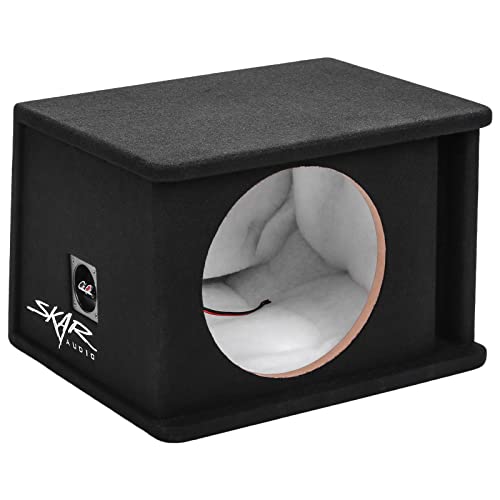
Best for a well-tuned ported box at a fair price
- 2.0 cu ft, tuned to 36 Hz
- Universal fit for most 12 in subs
- Kerf-cut port, sturdy MDF
- Designed for high output
Why buy it: the value pick for big bass — a properly tuned 2 cubic foot ported box that lets a 12 breathe, at a price well under boutique enclosures.

Best for a space-saving sealed box
- Compact sealed design
- Engineered enclosure volume
- Solid MDF build
- Fits a single 12 in sub
Why buy it: the pick for tight trunks — a compact sealed enclosure that still delivers accurate bass where a big ported box would never fit.
Best for a tough spray-coated ported enclosure
- Armor bed-liner-style coating
- Ported and tuned for output
- Rugged, moisture-resistant finish
- Universal 12 in fit
Why buy it: the pick for a truck bed or hard use — a bed-liner-coated ported box that shrugs off scuffs and moisture while hitting hard.
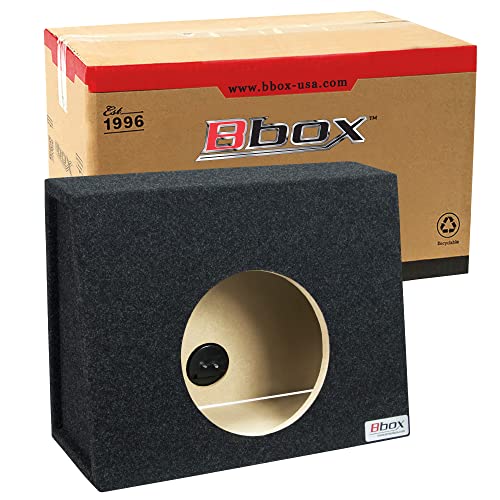
Best for a wedge shape that fits behind a truck seat
- Wedge shape fits truck cabs
- Sealed for tight bass
- 3/4 in MDF, no flex
- Sized for one 12 in sub
Why buy it: the pick for a pickup — a wedge sealed box shaped to slide behind the seat of a truck cab where a square box would never fit.
Sealed vs Ported: Accuracy or Loudness
This is the fundamental choice, and it is a genuine trade-off. A sealed box produces tight, accurate, controlled bass that blends with your speakers — the pick for music where you want the sub to sound clean rather than boomy. A ported (vented) box is tuned to a frequency where it gets significantly louder and punchier, trading some tightness for output — the pick for maximum volume and bass-heavy genres. Sealed boxes are also smaller and more forgiving. Neither is universally better: go sealed for sound quality, ported for sheer loudness, and be honest about which you actually want.
The Step Everyone Skips: Match the Box to the Sub
Here is the mistake that ruins good subs: buying a box because it fits a 12-inch sub physically, without checking it fits acoustically. Every subwoofer has a recommended enclosure volume (in cubic feet) and, for ported boxes, a tuning frequency, listed on its spec sheet. The box must match those numbers or the sub will sound weak, boomy, or even overexcurse and damage itself. Universal boxes state their internal volume and tuning precisely — compare them to what your sub calls for. A modest sub in the right box sounds great; an expensive sub in the wrong box sounds poor. Do this step first.
Why Build Quality Changes the Sound
A subwoofer box has to be rigid and airtight to work. Quality enclosures use 3/4-inch MDF because it is dense, non-resonant and does not flex; a thin or leaky box lets the panels vibrate and air escape, which steals output and adds rattles. Bracing and tightly sealed joints matter too. This is why a well-built box sounds clearly better than a cheap one with the same sub. The simple test: if you can flex a panel by hand or see gaps at the seams, the box will never deliver the bass the sub is capable of. Rigidity and a good seal are not optional.
Fitting It to Your Vehicle
The right box also has to fit your space. A sealed box is the most compact and forgiving for a small trunk. A ported box is larger because the port needs volume, so measure your space before committing to one. For a truck, a wedge-shaped enclosure slides behind the cab seats where a square box will not go. And an armor-coated box shrugs off the scuffs and moisture of a truck bed or hard-use install. Match the box shape and size to where it will live, not just to the sub — a great box that does not fit the trunk helps no one.
Prefab Boxes vs Custom-Fab Enclosures
Most owners buy a prefab box — a ready-made enclosure you purchase off the shelf, sized to a standard volume and ready to drop a sub into. The alternative is a custom-fab enclosure, built (often by small shops across the USA that fab boxes to order) to your exact sub and the shape of your trunk or truck cab. Custom work squeezes the most from a tight space and can be tailored to an unusual sub, but it costs more and takes time. For the great majority, a quality prefab box tuned to a sensible volume gets you most of the way for a fraction of the price and hassle.
Single, Dual and Deep-Bass Subwoofer Designs
Enclosure design is not just sealed-or-ported. A single-sub box suits most cars; a dual enclosure houses two subs for more output and headroom, at the cost of size and amplifier demand. For the lowest, deep bass, a ported box tuned to a low frequency with an extended port digs deeper than a sealed one, while a sealed box stays tighter up high. Decide what you actually want — chest-thumping deep bass for one genre, or clean, accurate bass across everything — before you choose single versus dual and sealed versus ported. The design has to serve the music you play.
Match the Enclosure Volume With a Box Calculator
If you are unsure whether a box suits your sub, a free box-volume calculator settles it. Enter your sub’s recommended air volume (and, for ported, its tuning frequency) and compare the result to the enclosure’s stated internal volume. A prefab box lists these numbers; a calculator confirms the match before you purchase, so the box is genuinely tailored to the sub rather than just the right diameter. This two-minute check is what separates a setup that sounds great from an expensive sub that sounds weak or boomy in a box that was never right for it.
How We Rank
A subwoofer box earns its place by delivering the bass the sub is capable of, so we rank by aggregated owner ratings, review volume, and the themes owners repeat. We weigh four things. Acoustic design — sealed accuracy or ported output, properly tuned. Build — rigid, airtight MDF that does not flex. Fit — a size and shape that suits real vehicles. And value — sound quality for the price. Always match the final box to your specific sub’s spec. Prices were current at the time of writing.
Quick Comparison
Bbox E12S Single Sealed 12-inch Subwoofer Box
Best for tight, accurate bass from a single 12
Best for Loud
Bbox E12SV Single Vented 12-inch Subwoofer Box
Check Price on Amazon
Best Value Ported
Skar Audio SK1X12V Ported 12-inch Enclosure
Check Price on Amazon
Best Compact Sealed
Atrend 12SA Single Sealed 12-inch Enclosure
Check Price on Amazon
Best Durable
Skar Audio AR1X12V Armor-Coated Ported Box
Check Price on Amazon
Best for Trucks
Bbox E12ST Wedge Sealed 12-inch Enclosure
Check Price on Amazon
The Verdict
For tight, accurate bass that suits music, the Bbox E12S sealed is the one owners rate above the rest; for maximum loudness, a tuned ported box like the Skar SK1X12V hits harder, and truck owners want a wedge. Whatever you pick, match the box volume to your sub’s spec. Next, choose the subwoofer and amplifier to complete the setup. Check Price on Amazon →