
Affiliate Disclosure
Some links on this page are affiliate links. As an Amazon Associate, we earn from qualifying purchases — at no extra cost to you. We do not buy, test, or physically handle the products we cover; our rankings come from aggregated owner reviews, ratings and expert consensus. Commissions never change our verdicts. How we rank & full disclosure.
Short version: Great detailing is more about the right tools than the fanciest chemicals. Two buckets with grit guards, a proper wash mitt, a plush drying towel, a set of brushes, good applicator pads, and a well-stocked microfiber drawer will out-perform a shelf full of exotic bottles used with cheap gear. These are the tools that touch your paint — get them right and everything else falls into place.
Why tools beat chemicals
New detailers obsess over which wax or soap to buy, then wash with a sponge and dry with a bath towel — and wonder where the swirls came from. Here's the uncomfortable truth: the products rarely cause damage. The tools do. Anything that physically drags across your clear coat is a potential scratch machine if it's the wrong tool or a dirty one.
So this guide is about the gear that touches paint. Spend your attention here and even mid-tier chemicals give you a clean, swirl-free, glossy finish. Skimp here and the best wax in the world can't save you.
The wash tools: where swirls are won or lost
The wash is the single riskiest moment for your paint, so this is where the essential tools live.
- Two buckets. Non-negotiable. One for soapy water, one for rinse water. This is the foundation of swirl-free washing — you rinse grit out of your mitt in the clean bucket before reloading with suds, so trapped dirt never goes back on the car.
- Grit guards. A plastic grate in the bottom of each bucket. Dirt sinks below it and stays put. Cheap, tiny, and one of the highest-value items in the whole hobby.
- A quality wash mitt. Deep-pile microfiber or chenille. It cradles grit away from the paint instead of grinding it in, the way a flat sponge does. This is a spend-here item — it touches every panel.
- A separate wheel mitt or brush. Wheels are the dirtiest part of the car. Keep their tools completely separate from your paint tools so brake dust never migrates onto your finish.
Drying tools: the second-riskiest moment
Right after the wash, drying is where a lot of avoidable scratches happen. Never air-dry — that leaves water spots — and never grab a household towel, which is far too harsh.
- A plush drying towel. A large, high-pile microfiber or waffle-weave towel soaks up water in one or two passes with minimal dragging. This is the other tool genuinely worth spending on.
- A filtered blower (optional upgrade). Blowing water off pushes it out of panel gaps and mirrors with zero contact. Lovely to have once the basics are covered, not essential to start.
Detailing brushes and applicators
Once the car's clean, these are the tools that let you work into the finer areas and lay down products evenly.
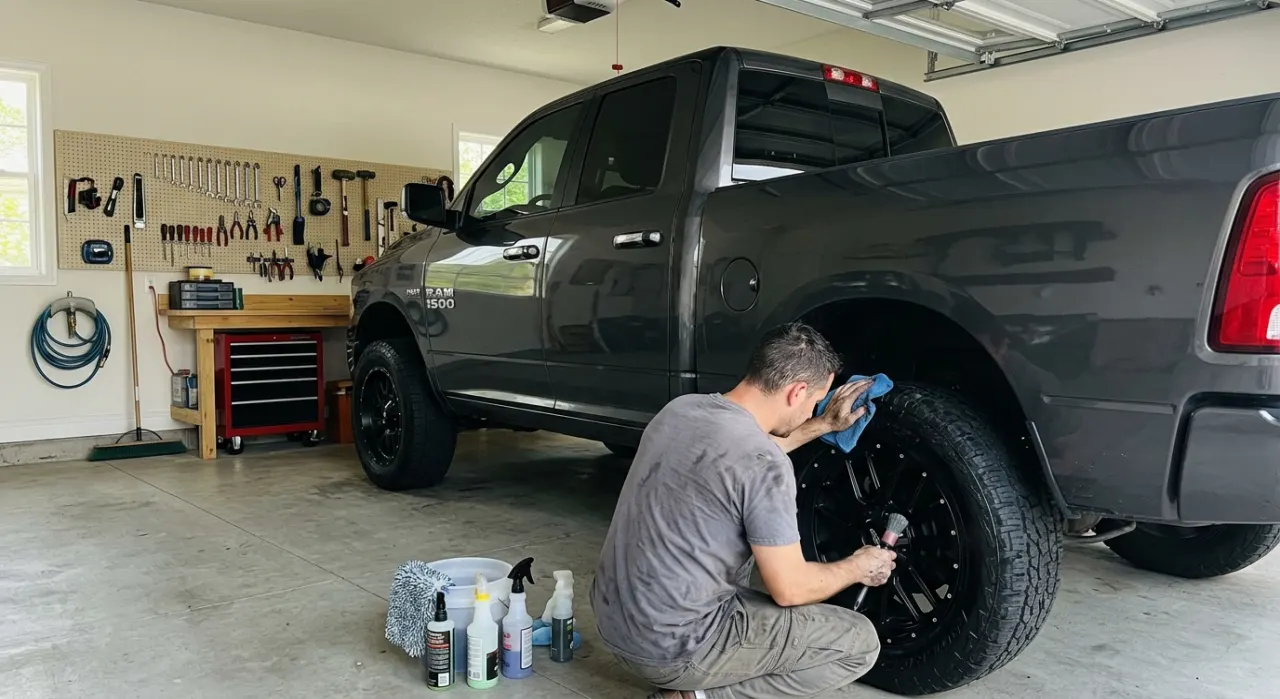
- Detailing brushes. A small set covers vents, badges, emblems, grille, trim gaps, and wheel spokes — all the spots a mitt can't reach. Softer synthetic brushes for delicate areas, stiffer ones for wheels and tires.
- Applicator pads. Foam or microfiber pads for applying wax, sealant, and dressings in a thin, even layer. Applying by hand with a good pad wastes less product and gives a more uniform finish than a rag.
- A clay mitt. For decontamination — it shears bonded contaminants off the paint that washing leaves behind. More reusable and easier than a traditional clay bar.
Microfiber: buy more than you think
Your microfiber drawer is a tool set in itself, and the number-one mistake is not owning enough. You want dedicated towels for each job: buffing wax, general wiping, glass, interior, and wheels. Use a wheel towel on your paint and you'll grind embedded brake-dust grit into the finish.
Start with at least a dozen and color-code them by task. It's a cheap habit that prevents an expensive problem. Glass towels should be tight-weave and lint-free; buffing towels plusher; wheel towels the ones you don't mind trashing.
Nice-to-have upgrades (not essentials)
Once the core kit above is sorted, these are the natural next buys — in roughly this order:
- Foam cannon + pressure washer. A thick foam pre-soak lifts grit before you touch the paint, making the whole wash safer and faster.
- A dual-action (DA) polisher. For paint correction — removing swirls and restoring gloss. Forgiving and beginner-safe, unlike a rotary.
- A wash bucket dolly or caddy. Small convenience that makes the whole process smoother.
None of these are needed to get a genuinely clean, protected car. They make the job faster and more enjoyable, which matters if you detail often.
The smart order to build your tool kit
If you're building from nothing, buy in this sequence: two buckets and grit guards first, then a good wash mitt and drying towel, then a microfiber multi-pack, then brushes and applicators. That order gets you washing safely on day one and fills in the finer tools as you go. It also keeps you from over-buying — a trap we break down in Kit vs Buying Separately.
You can assemble this entire essential lineup for very little — our Detailing Under $100 setup is built around exactly these tools. And if you'd rather grab a curated bundle, we compare the ones worth owning on our best detailing kits roundup.
Tools are only half of it — technique is the other half
Owning the right gear is step one; using it in the right order is step two. A grit guard does nothing if you skip the two-bucket rinse; a great mitt still swirls paint if you scrub in circles. Pair this tool kit with the process in our Car Detailing Kit hub and you've got both halves — the right gear and the right method — which is the whole game. Buy the tools that touch your paint carefully, keep them clean and separated by job, and they'll protect your finish for years.
Recommended Detailing Kits
We aggregate owner ratings rather than testing ourselves. If you would rather grab a curated bundle than piece the tools together, these are the well-reviewed kits built around exactly the gear above.

Best for a one-box start with the tools and chemicals that touch paint
- Bucket, wash media, applicators and microfiber included
- Skips the trap of buying fifteen bottles separately
- Everything here is the gear this guide calls essential
Why buy it: the fastest honest way to own the paint-safe tools at once instead of piecing them together over months.

Best for a genuine starter set on the tightest budget
- Covers wash, protect and interior basics
- Cheap enough to add your own mitt and towels to
- Good on-ramp before upgrading the wash media
Why buy it: a low-cost first kit that gets you washing safely today, with room to upgrade the mitt and towels later.

Best for the two-bucket, grit-guard foundation this guide is built on
- Bucket with grit guard to trap settled dirt
- Wash media and soap to match
- The single biggest swirl-prevention step, boxed
Why buy it: the grit-guard bucket system is the highest-value habit in detailing, and this kit sets it up in one purchase.

Best for a balanced wash-and-protect kit from a trusted brand
- Wash, wax and interior in one box
- Widely owned with strong owner feedback
- Easy to top up with dedicated microfiber
Why buy it: a dependable middle-ground kit that covers the whole process without overspending on exotic chemicals.

Best for buyers who want higher-end wash media from the start
- Plusher mitts and towels than budget kits
- Enthusiast-favourite chemicals included
- Fewer immediate upgrades needed
Why buy it: the step-up bundle for people who would rather buy the good tools once than replace cheap ones later.
Prices are pulled from Amazon and were accurate as of Aug 22, 2026, 6:54 PM EDT. Product prices and availability are subject to change — the live price is shown on Amazon.