
Affiliate Disclosure
Some links on this page are affiliate links. As an Amazon Associate, we earn from qualifying purchases — at no extra cost to you. We do not buy, test, or physically handle the products we cover; our rankings come from aggregated owner reviews, ratings and expert consensus. Commissions never change our verdicts. How we rank & full disclosure.
Short version: Yes, you can wax over a ceramic coating and it will not hurt the coating — but you usually should not. Traditional wax does not bond well to the slick ceramic surface, wears off fast, and can temporarily dull the coating's self-cleaning slickness. The right move is a dedicated SiO2 ceramic boost spray, which bonds with the coating and refreshes its water beading. Use those instead.
You spent good money on a ceramic coating, and now the water beading is looking a little tired. The instinct is to reach for wax — it is what you know, and it is sitting right there on the shelf. But putting old-school wax over a coating is a bit like slapping street tires on a track car: it will physically fit, but you are working against what the setup was built for. Let us sort out what actually belongs on top of a coating.
The honest answer
Can you do it? Yes. Waxing over a ceramic coating will not damage or degrade the coating in any way — the ceramic is dramatically harder and more durable than any wax you could lay on top of it. Nothing bad happens to the coating itself.
Should you do it? Usually not, and for a practical reason rather than a scary one. The wax simply does not do its job well up there, and it can get in the way of the coating doing its job. So it is less about harm and more about it being the wrong tool for the surface.
Why traditional wax is the wrong topper
Two things work against wax on a coated car.
- It barely bonds. A ceramic coating cures into an extremely smooth, slick, hydrophobic surface. That slickness is the whole point — it is what makes water and grime slide off. But the same slickness gives wax almost nothing to grab, so a wax layer just rests loosely on top and washes away within a wash or two. You are spending effort for protection that evaporates fast.
- It can dull the coating's behavior. A heavy carnauba or synthetic wax sitting on the surface can temporarily mask the coating's signature slick, self-cleaning feel and change how water sheets off. You paid for the coating's performance, and wax on top can partially hide it while it lingers.
So it is not dangerous — it is just pointless and slightly counterproductive. There is a better product made for exactly this.
What to use instead: SiO2 ceramic boost sprays
The correct maintenance topper for a coated car is a dedicated SiO2 spray — often called a ceramic boost, ceramic topper, or ceramic detailer. These are formulated with the same silica chemistry as the coating, so instead of resting loosely on the surface, they chemically bond with it. That means they actually stick, refresh the hydrophobic water beading, and extend the coating's life rather than fighting it.
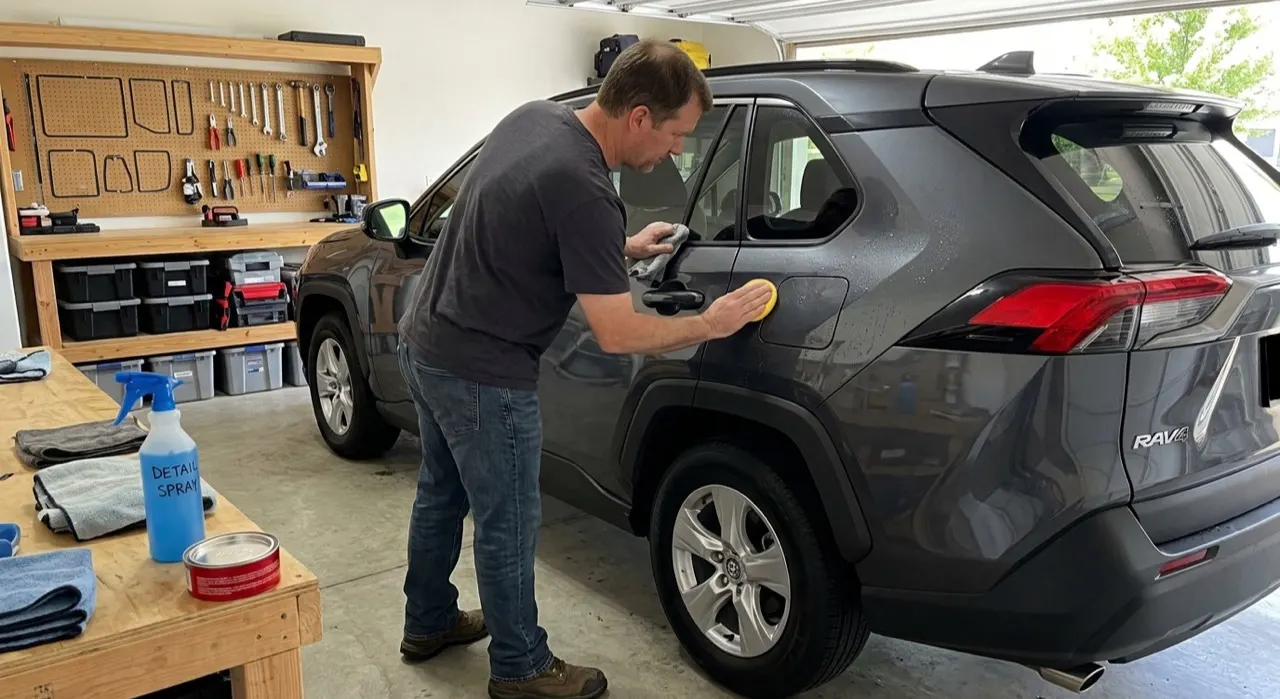
Using one is quick and follows the same easy method as any spray wax: mist onto a clean, freshly washed panel (often while still wet), spread, and buff with a clean microfiber. Do it every few washes and your coating keeps performing like new for years. This is the maintenance rhythm a coating is designed around.
When a topper wax is actually fine
There is nuance worth knowing. Some modern hybrid and SiO2-infused waxes are specifically marketed as coating-safe toppers, and those are a different story from a classic carnauba paste — they are built with the silica chemistry to be compatible. If a product explicitly says it is safe over ceramic coatings, it likely bonds properly and will not dull the surface. The thing to avoid is grabbing a random heavy carnauba and assuming it belongs there.
And of course, on a car with no coating at all, wax is the right protection — this whole discussion only applies to a surface that is already coated. If you are weighing wax against a coating in the first place, that is a bigger decision covered elsewhere on the site.
How to tell your coating needs a boost
Read the water, exactly like you would with wax. A healthy coating pulls water into tight beads that fly off the panel. When those beads start to flatten, or water begins to cling and sheet slowly instead of rolling, the top layer of the coating is wearing and it is time for a ceramic boost spray. Regular toppers between full coatings are what keep a coating performing at its peak over its multi-year life. Our how often should you wax guide covers reading that beading signal in detail, and the principle is identical for coatings.
How to apply a ceramic topper the right way
Applying a boost spray is genuinely quick, but a couple of details make the difference between a topper that bonds and one that streaks. The key is that SiO2 chemistry bonds best to a clean, cool surface, so the prep matters more than the spraying.
- Start with a properly washed car. Wash with a pH-neutral, coating-safe shampoo so there is no wax, oil, or grime on the surface for the topper to bond over. A contaminated surface is the number-one reason toppers do not stick.
- Work in the shade on a cool panel. Just like wax, SiO2 sprays flash off fast and streak in direct sun on a hot panel. Cool and shaded gives you a clean, even bond.
- Apply thin, one panel at a time. Mist a light coat, spread it with a clean microfiber, then immediately buff to a clear, slick finish with a second dry microfiber. Flip your towel often so you are not dragging residue.
- Let it cure. Most toppers want an hour or more before the car sees water so the silica can fully bond. Check the label, and if you can leave it overnight, even better.
Do this every few washes and the coating's water beading stays tight and lively for years. It is the same light, careful technique as any spray wax application — clean surface, thin coat, cool panel, clean towel.
The bottom line
You can wax over a ceramic coating without harming it, but traditional wax is the wrong topper — it barely bonds, wears off fast, and can dull the coating's slickness. Reach for a dedicated SiO2 ceramic boost spray instead, or a hybrid wax that is explicitly labeled coating-safe. That is what keeps the water flying off and the coating earning its money. And if you are shopping for protection for an uncoated car, see our top picks in the best car wax roundup, which includes SiO2 hybrid sprays that double as coating-friendly toppers. For every wax and protection guide in one spot, visit our Car Wax hub.
Recommended Products

Best for a quick SiO2 topper that bonds to a coating
- SiO2 spray-on / wipe-off in minutes
- Silica chemistry bonds to a ceramic coating rather than resting on it
- Refreshes hydrophobic water beading
- Cheapest, fastest way to top up a coating
Why buy it: the right kind of topper for a coated car — an SiO2 spray that bonds to the coating and restores the beading, exactly what a wax cannot do.

Best for fast spray-on ceramic maintenance
- Spray-on / wipe-off SiO2 layer
- Bonds with an existing coating to extend its life
- Beginner-friendly, no cure fuss
- Strong hydrophobic beading
Why buy it: a hugely reviewed SiO2 boost that is genuinely hard to get wrong — the easy way to keep a coating slick between full applications.
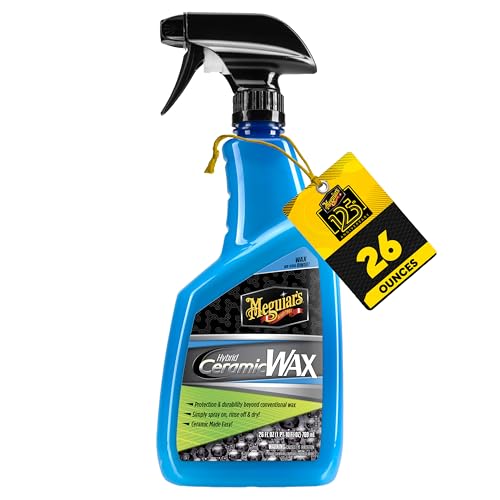
Best for cheap ceramic-style beading over a coating
- Spray on wet or dry, straight after a wash
- SiO2 formula that layers safely over a coating
- Strong water beading for the money
- Cheapest per use
Why buy it: a coating-safe SiO2 spray that is genuinely cheap per use — the value pick for refreshing beading every few washes.

Best for a durable DIY coating when it is time to re-coat
- Graphene-infused hardness
- 2–5 year durability
- Slick, high-gloss finish
- Beginner-friendly kit
Why buy it: the step beyond a topper — when the coating underneath is truly worn out, this is the DIY re-coat owners rate highest for durability and gloss.

Best for a car with no coating at all
- Synthetic hydrophobic polymer
- Deep, wet-look gloss
- 3–5 months of durability
- Kit includes pad + microfiber towel
Why buy it: if your paint is not coated, wax is the right protection — this is the do-it-all synthetic that balances shine, durability and easy application.
Prices are pulled from Amazon and were accurate as of Aug 22, 2026, 6:54 PM EDT. Product prices and availability are subject to change — the live price is shown on Amazon.