
Affiliate Disclosure
Some links on this page are affiliate links. As an Amazon Associate, we earn from qualifying purchases — at no extra cost to you. We do not buy, test, or physically handle the products we cover; our rankings come from aggregated owner reviews, ratings and expert consensus. Commissions never change our verdicts. How we rank & full disclosure.
Short version: a home Level 2 EV charger is worth it for most owners with a driveway or garage — it refills the car many times faster than a wall outlet, so you wake up full every day and stop thinking about charging entirely. It is not automatically necessary: low-mileage drivers can be perfectly happy on the slower Level 1 cord that came with the car, and renters may not be able to install one at all. So the honest answer is yes for the daily driver with a place to install it, and "maybe not" for the light user or the apartment dweller. Here is the straight case.
EV charging gets talked about in scary road-trip terms. But for most owners, charging is a home habit, not a road-trip problem — so the real question is how you want to refill in your own driveway. Here is what owners actually report.
The big one: you stop thinking about charging
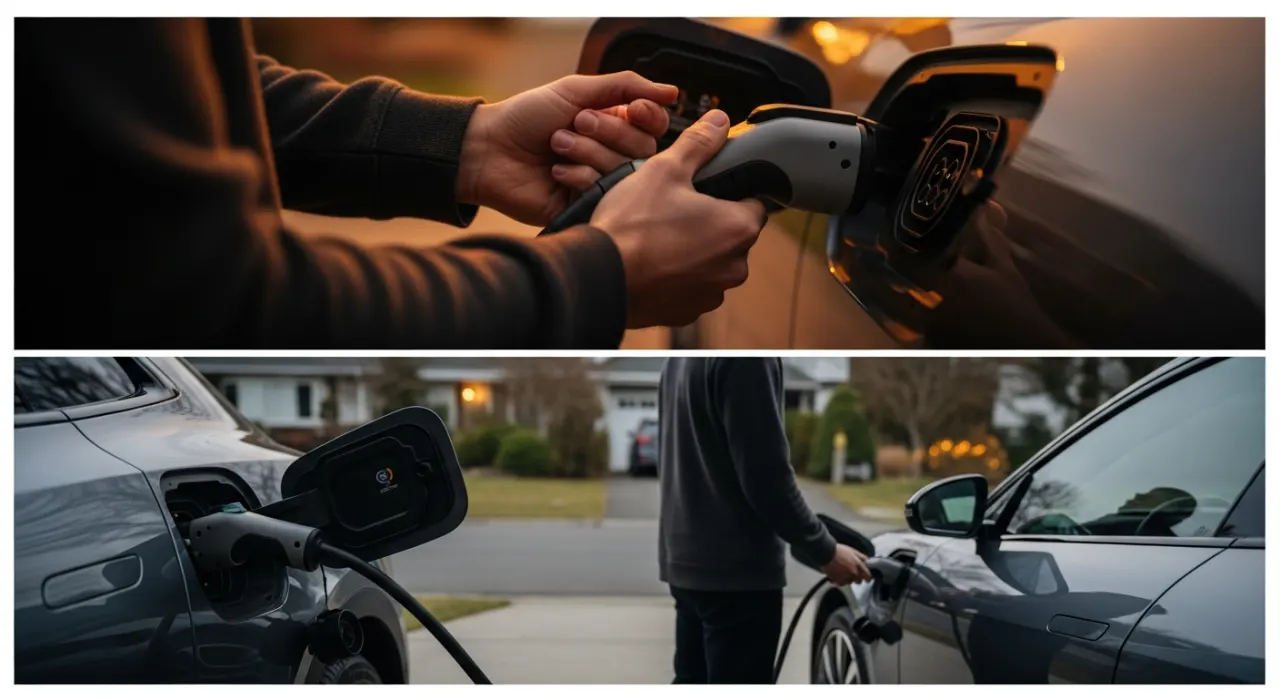
The core value of a home Level 2 charger is convenience that compounds every single day. A Level 2 unit refills your car roughly four to seven times faster than a standard household outlet, which is enough to fully recharge most EVs overnight. The practical result owners rave about: you plug in when you get home, and every morning you leave with a full battery — no gas stations, no public chargers, no planning. It quietly removes the one friction point that makes people nervous about EVs. We compare the tiers in Level 1 vs Level 2 charging, and cover the daily routine in how to charge an EV at home.
The honest question: do you even need Level 2?
We will not pretend everyone needs the faster charger. The car came with a Level 1 cord that plugs into a normal outlet, and for some drivers that is genuinely enough. Level 1 adds only a few miles of range per hour, but if you drive modestly and leave the car plugged in for long overnight stretches, it may quietly keep up with your usage. The honest test is simple: if Level 1 reliably replaces the miles you burn each day, you might not need to spend on Level 2. If you regularly wake up short, drive a lot, or run a big battery, that is when Level 2 earns its keep.
The cost side of the ledger
Being straight about money: there are two costs, the charger and the installation. The unit is a moderate one-time purchase. The installation is the variable — it depends on how far your electrical panel is from the parking spot, whether the panel has spare capacity, and local labor and permit costs. A short run to a modern panel is inexpensive; a long cable run or a panel upgrade is where the bill climbs. The honest move is to get a couple of electrician quotes before buying the charger, so there are no surprises. Also budget for the right connector for your car — see best EV charging adapter.
The running-cost payoff
Here is where a home charger quietly pays you back: cost per mile. Charging at home on residential rates — especially overnight on an off-peak plan — typically costs far less per mile than public fast chargers, which charge a premium for their speed. Owners consistently report their everyday driving cost dropping sharply once they charge at home. Public fast charging is best thought of as a road-trip tool; home charging is for daily life, and it is where the low running cost of an EV actually materializes. Over the years, that daily saving offsets a real chunk of the installation cost.
The middle-ground option
If a permanent hardwired install feels like too much, there is an honest middle path: a plug-in Level 2 charger on a suitable outlet, or a portable EV charger you can move and take with you. These give you much of the Level 2 speed without a full hardwired installation, and they suit renters with an appropriate outlet or owners who want flexibility. It is not always the cheapest per-watt route, but it lowers the commitment — a fair option to weigh before committing to a fixed wall unit.
Who it is (and isn't) worth it for
It is worth it for the owner with a driveway or garage who drives regular daily miles — the wake-up-full convenience and the low home-charging cost make it the upgrade that defines easy EV ownership. If you have somewhere to install one and you drive most days, it is an easy recommendation.
It is not essential for renters and apartment dwellers without a parking spot, for genuinely low-mileage drivers who keep up fine on Level 1, or for anyone with free convenient charging at work. In those cases it is a nice-to-have, not a necessity. We are not going to pretend every EV owner must buy one — but for most with a driveway, it is the piece that makes the car effortless. See what else earns a place in EV accessories worth buying.
The verdict
Is a home Level 2 EV charger worth it? For the daily driver with a place to install one — yes, the everyday convenience and the running-cost savings clearly outweigh the upfront cost. For light users happy on Level 1, or renters who cannot install one, it drops to optional. For most owners with a driveway, the honest recommendation is yes. When you are ready to choose, start with our best Level 2 EV charger ranking, weigh the portable option, and head back to the EV care hub for the full picture.
Recommended Products

Best for the best smart features for the money
- Up to 48A / 11.5kW hardwired, 40A on the plug
- WiFi app with scheduling and solar-aware charging
- UL listed and Energy Star certified
- Long 24ft cable, indoor/outdoor rated
Why buy it: the all-rounder owners rate highest — full smart features at a price that undercuts almost everything else, which is why it keeps topping the review boards.
Best for the most polished app and charging network
- Adjustable 16A to 50A output, up to 37 mi/hr
- Plug-in or hardwired install options
- Best-in-class app, Alexa and Google Home
- Ties into ChargePoint public network
Why buy it: owners consistently praise the app and reliability — the pick if you want the most refined software and public-network integration.

Best for harsh weather and set-and-forget simplicity
- Rugged metal case, NEMA 4 / IP67 rated
- DIP-switch amperage: 16/24/32/40A, no app needed
- Built for -22°F to 122°F extremes
- NEMA 14-50 plug, 24ft premium cable
Why buy it: built like a tank — owners in cold and coastal climates report it just keeps working, with no app or WiFi to drop out.

Best for a five-minute plug-in into an existing outlet
- 40A / up to 40 mi/hr of range
- Plugs into an existing NEMA 14-50 outlet
- WiFi + Bluetooth, adjustable amperage
- In-body holster, 25ft flexible cable
Why buy it: owners love how fast it goes up — plug into a 14-50 outlet and you are charging in minutes, with a genuinely useful app on top.
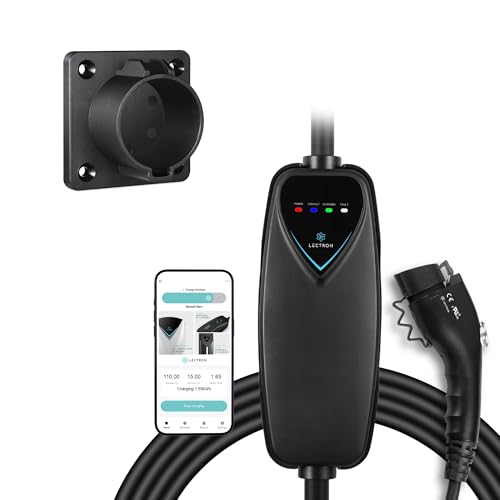
Best for the cheapest wall unit owners actually trust
- 240V, 40A charging with WiFi scheduling
- J1772 connector fits all non-Tesla EVs
- Includes nozzle holster dock
- Simple, budget-friendly wall mount
Why buy it: the value play for a fixed wall charger — most of the smart-charging experience for well under the flagship prices.
Prices are pulled from Amazon and were accurate as of Aug 22, 2026, 7:14 PM EDT. Product prices and availability are subject to change — the live price is shown on Amazon.