
Affiliate Disclosure
Some links on this page are affiliate links. As an Amazon Associate, we earn from qualifying purchases — at no extra cost to you. We do not buy, test, or physically handle the products we cover; our rankings come from aggregated owner reviews, ratings and expert consensus. Commissions never change our verdicts. How we rank & full disclosure.
Short version: Watery spray instead of thick foam is nearly always mechanical or dilution, not a broken cannon. Check, in order: enough water pressure and flow, the right orifice size, a clean orifice and filter, a real snow foam soap, a proper mix, no air pocket, tight connections, and warm water. Work the list and the foam almost always comes back.
Start here: it is probably not the cannon
When a foam cannon disappoints, the instinct is to blame the cannon and buy another. Resist that. In my experience, the hardware itself is rarely the problem. Thin foam is a symptom, and the cause is almost always one of a short list of fixable things: not enough pressure, the wrong orifice, a clog, or the wrong soap and mix. Work through these eight fixes in order and you will find your culprit far more often than not.
Fix 1: Confirm you have enough pressure and flow
Foam is built by forcing solution through a small hole with pressure and air. Too little of either and you get a drizzle. First, make sure the cannon is actually on a pressure washer, not a garden hose. A cannon needs a pressure washer, full stop. If you are on a hose, you need a foam gun instead, and our foam cannon vs foam gun guide explains why.
If you are on a pressure washer and still thin, check that the washer is reaching full pressure. Kinked hoses, a clogged inlet filter, or low water supply can starve it. Both pressure and flow rate matter, so a low-flow mini electric washer may need extra attention on the later fixes to compensate.
Fix 2: Match the orifice size to your washer
This is the fix people overlook most. The orifice is the small metering hole inside the cannon. If it is too large for your washer's flow, pressure drops across it and the foam thins. Many cannons ship with several orifice sizes exactly so you can match your machine. A smaller orifice suits lower-flow washers; a larger one suits high-flow gas units.
If your foam has always been weak with a particular cannon and washer combo, swapping to a different orifice size is often the single change that fixes everything. Check what came in the box.
Fix 3: Clear a clog
If the cannon worked and then suddenly stopped, this is almost certainly your answer. Dried soap or debris blocks the orifice, the intake filter, or the nozzle. Flush the whole thing with clean water, then remove and inspect the orifice and any inline filter. A pin or soft brush clears most blockages. Rinsing the cannon with clean water after every use prevents this from coming back.
Fix 4: Use an actual snow foam
Not every car soap foams. Regular wash shampoos are made for the bucket and will produce thin, fast-running suds in a cannon. A dedicated snow foam is formulated to cling and pile up. If you are trying to foam a general-purpose shampoo, that alone can explain weak results. Switch to a real foam soap. Our best foam cannon soap guide covers which formulas genuinely blanket a car.
Fix 5: Fix your dilution
Too little soap gives thin foam; wildly too much wastes product without helping. Start around 1 to 3 oz of foam soap in a 32oz bottle and adjust. If you are unsure where to begin for your specific soap, our dilution ratio cheat sheet gives reliable starting points and a dial-in method. Remember, past a certain point, more soap does nothing for foam thickness, so if extra soap is not helping, the problem is elsewhere on this list.
Fix 6: Kill the air pocket and set the knobs
When you fill the bottle, mix gently. Shaking hard whips air into the solution, which can disrupt the draw and lead to sputtering. Swirl instead. Then check your cannon's adjustments: the soap ratio knob should be toward the rich end and the fan nozzle open wide for a broad, clinging coat. A tight stream or a lean soap setting will look like a foaming failure when it is really just a settings issue.
Fix 7: Check connections and the pickup tube
A loose connection between the cannon and lance can bleed off pressure. Make sure everything is seated and tight, and that you are using the correct connector for your washer's brand. Inside the cannon, confirm the pickup tube is intact and reaching into the solution. If that tube is cracked or not drawing, the cannon cannot pull soap into the stream and you get plain water.
Fix 8: Try warm water
This is a small one, but it can nudge marginal foam over the line. Warm water dissolves soap and foams a little better than cold. If everything else checks out and your foam is close but not quite there, mixing with warm water can help. It will not rescue a genuinely broken setup, but as a final tweak it is worth a shot.
Work them in order
The reason this list is ordered matters. Pressure and orifice fixes solve the majority of foam problems, so start there rather than tinkering with soap ratios first. If the cannon suddenly stopped, jump straight to the clog check. Only once the mechanical basics are confirmed should you spend time on soap and dilution. This saves you from, say, buying three different soaps when the real fix was a wrong-sized orifice all along.
If you have worked the whole list and the foam is still genuinely weak, the cannon or the washer pairing may just be underpowered for your expectations. At that point, upgrading hardware is fair. Our best foam cannon roundup covers units that foam reliably, and the Foam Cannon hub helps you match cannon to washer so you do not repeat the mismatch.
Recap
Eight fixes, in order: pressure and flow, orifice size, clogs, real snow foam, dilution, air pocket and knob settings, connections and pickup tube, warm water. Almost every case of a foam cannon not foaming lives somewhere on that list. Work it methodically and you will nearly always turn a sad drizzle back into a proper blanket of foam, without spending a cent on a replacement.
Recommended Products

Best for almost everyone — best value cannon
- Thick, clinging foam
- Fits 1/4" quick-connect washers
- Wide foam adjustment knob
- Includes 5 nozzle tips to match your washer flow
Why buy it: thick foam and universal fit at a price nothing else touches — if a mismatched cannon is your problem, this is the safe replacement.
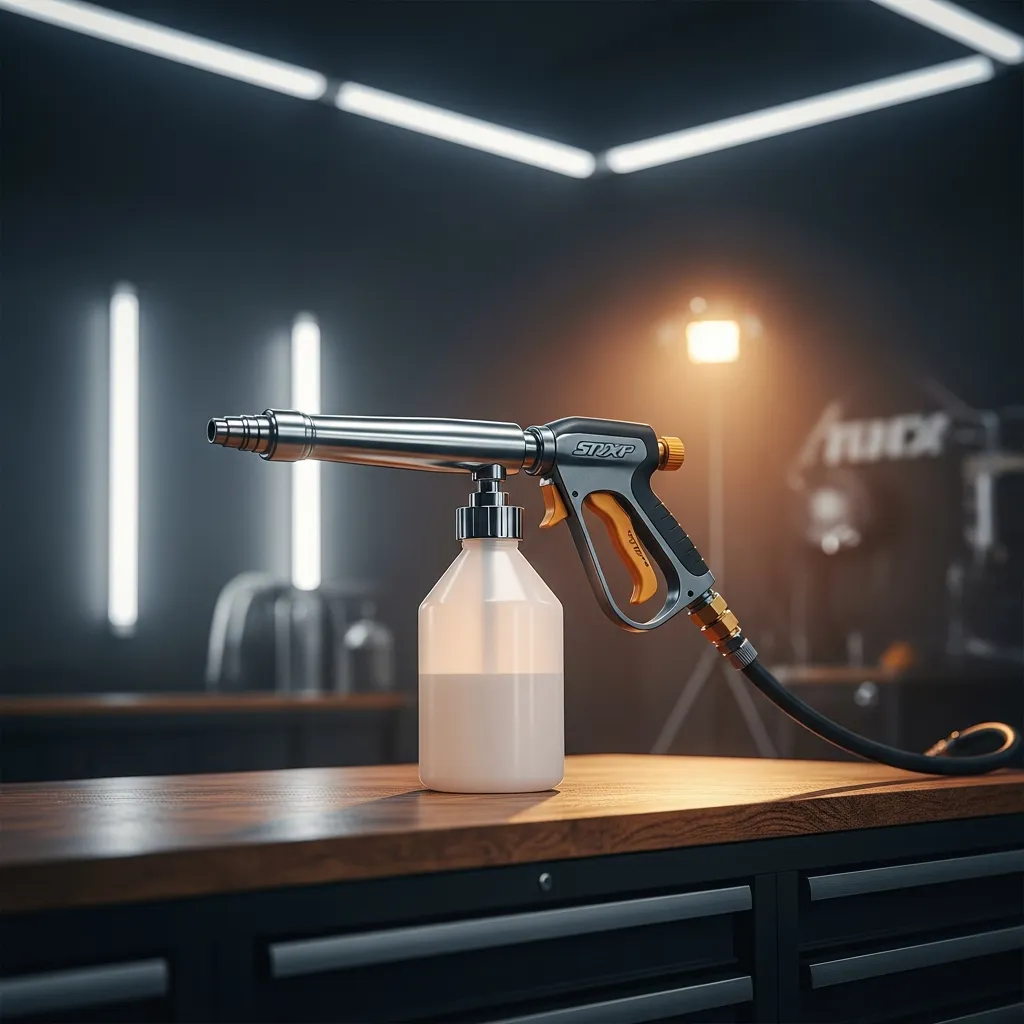
Best for enthusiasts who want the thickest foam
- Thickest foam of the field
- Metal-quality build
- Precise metering adjustment
Why buy it: the thickest, most consistent foam here — the upgrade to make when a working setup still underwhelms.

Best for premium foam without the top price
- Very thick foam
- Durable build
- Great value in the premium tier
Why buy it: community-favorite foam quality built to last, for less than the top-tier cannons.
Best for a real snow foam that actually blankets
- pH-balanced, will not strip wax, sealant or coatings
- High-foaming formula built for cannons
- The snow foam owners name most often
- Made to cling, unlike a regular wash shampoo
Why buy it: if you were foaming a regular shampoo, that alone explains thin suds — this is a true snow foam formulated to pile up and cling.
Best for a thick pre-wash blanket that dwells
- Formulated to cling and dwell as a pre-wash
- Thick, dense foam for maximum contact time
- Safe on cars, trucks and RVs
- High-sudsing concentrate
Why buy it: built specifically to grab vertical panels and stay put — the soap to reach for when you want maximum foam thickness and dwell.
Prices are pulled from Amazon and were accurate as of Aug 22, 2026, 6:54 PM EDT. Product prices and availability are subject to change — the live price is shown on Amazon.